Laura Ruiz de Elvira - Böcker
Visar alla böcker från författaren Laura Ruiz de Elvira. Handla med fri frakt och snabb leverans.
4 produkter
4 produkter
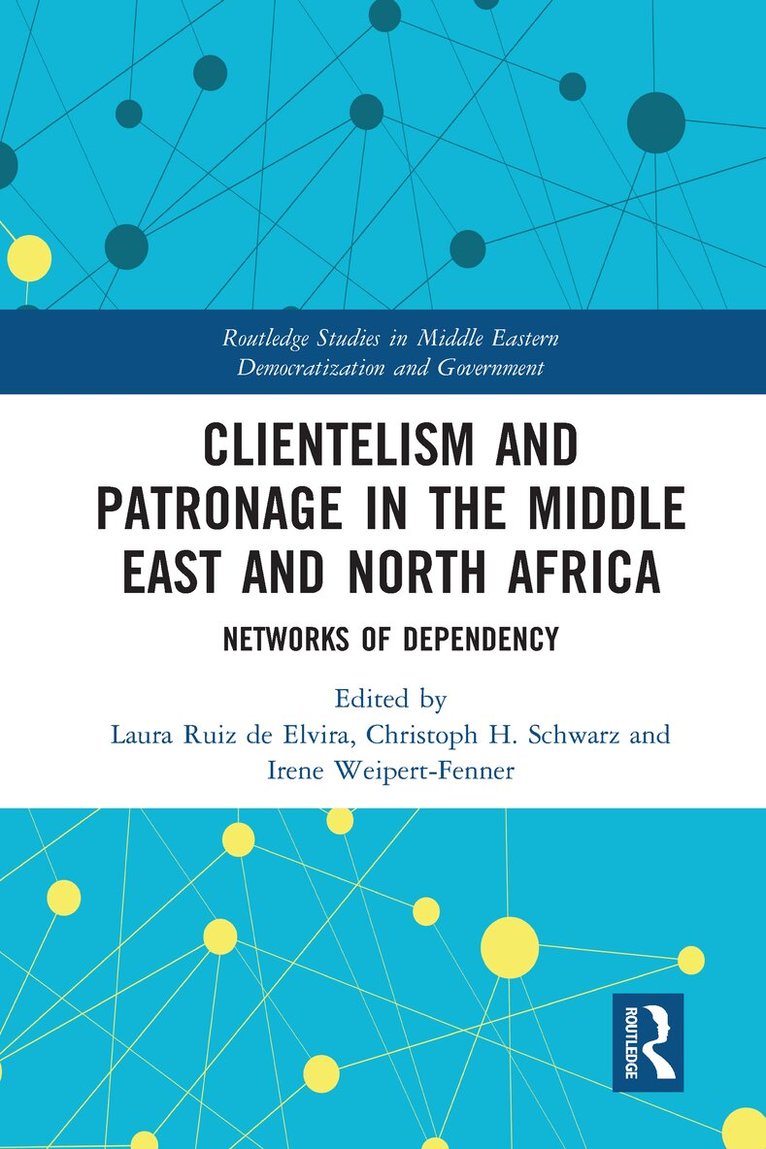
Clientelism and Patronage in the Middle East and North Africa
Networks of Dependency
Häftad, Engelska, 2020
641 kr
Skickas inom 10-15 vardagar
One common demand in the 2011 uprisings in the MENA region was the call for ‘freedom, dignity, and social justice.’ Citizens rallied against corruption and clientelism, which for many protesters were deeply linked to political tyranny. This book takes the phenomenon of the 2011 uprisings as a point of departure for reassessing clientelism and patronage across the entire MENA region. Using case studies covering Morocco, Tunisia, Egypt, Jordan, Lebanon, Turkey and the Gulf monarchies, it looks at how the relationships within and between clientelist and patronage networks changed before 2011. The book assesses how these changes contributed to the destabilization of the established political and social order, and how they affected less visible political processes. It then turns to look at how the political transformations since 2011 have in turn reconfigured these networks in terms of strategies and dynamics, and concomitantly, what implications this has had for the inclusion or exclusion of new actors. Are specific networks expanding or shrinking in the post-2011 contexts? Do these networks reproduce established forms of patron-client relations or do they translate into new modes and mechanisms? As the first book to systematically discuss clientelism, patronage and corruption against the background of the 2011 uprisings, it will be a valuable resource for students and scholars of Middle Eastern Studies. The book also addresses major debates in comparative politics and political sociology by offering ‘networks of dependency’ as an interdisciplinary conceptual approach that can ‘travel’ across place and time.
Clientelism and Patronage in the Middle East and North Africa
Networks of Dependency
Inbunden, Engelska, 2018
2 096 kr
Skickas inom 10-15 vardagar
One common demand in the 2011 uprisings in the MENA region was the call for ‘freedom, dignity, and social justice.’ Citizens rallied against corruption and clientelism, which for many protesters were deeply linked to political tyranny. This book takes the phenomenon of the 2011 uprisings as a point of departure for reassessing clientelism and patronage across the entire MENA region. Using case studies covering Morocco, Tunisia, Egypt, Jordan, Lebanon, Turkey and the Gulf monarchies, it looks at how the relationships within and between clientelist and patronage networks changed before 2011. The book assesses how these changes contributed to the destabilization of the established political and social order, and how they affected less visible political processes. It then turns to look at how the political transformations since 2011 have in turn reconfigured these networks in terms of strategies and dynamics, and concomitantly, what implications this has had for the inclusion or exclusion of new actors. Are specific networks expanding or shrinking in the post-2011 contexts? Do these networks reproduce established forms of patron-client relations or do they translate into new modes and mechanisms? As the first book to systematically discuss clientelism, patronage and corruption against the background of the 2011 uprisings, it will be a valuable resource for students and scholars of Middle Eastern Studies. The book also addresses major debates in comparative politics and political sociology by offering ‘networks of dependency’ as an interdisciplinary conceptual approach that can ‘travel’ across place and time.
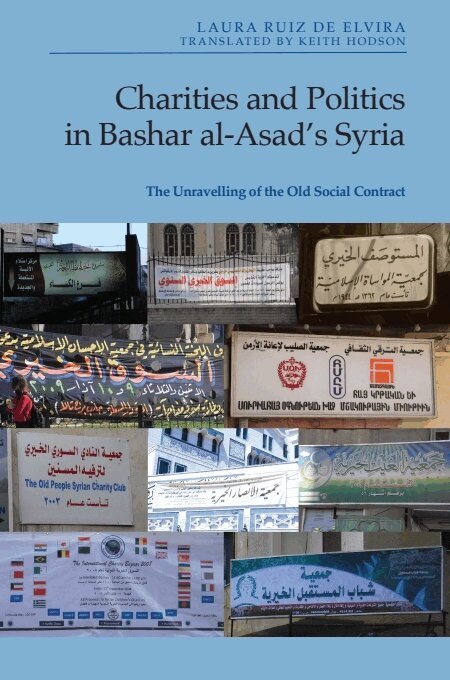
Charities and Politics in Bashar al-Asad’s Syria
The Unravelling of the Old Social Contract
Inbunden, Engelska, 2024
1 204 kr
Skickas
Charities and Politics in Bashar al-Asad's Syria analyses the renewal and revival of the role of Syrian charities during Bashar al-Asad's first ten years in power (2000-2010) in order to understand the political engineering deployed by the Syrian regime in the decade prior to the uprising. Based on extensive ethnographic fieldwork undertaken between 2007 and 2010, as well as on more than fifty interviews and other secondary sources, this book is the first comprehensive study of the country's poorly known sector of associations and charitable organisations at the beginning of the 21st century. It provides first?hand accounts of crucial issues that did not receive scholarly attention before the uprising such as the shift in state society relations, the opening of the civic arena, the partial outsourcing of welfare provision and social responsibilities and, eventually, the unravelling of the old social contract, which the protest movement dramatically brought to the forefront in 2011. By carrying out a unique analysis of the management of civil society by state institutions and the First Lady's government-operated NGOs, it also provides keys to understanding both the resilience of Bashar al-Asad's authoritarian regime in the 2000s and the simultaneous weakening of its credibility amongst the population.
Charities and Politics in Bashar al-Asad’s Syria
The Unravelling of the Old Social Contract
Häftad, Engelska, 2026
306 kr
Kommande
Charities and Politics in Bashar al-Asad’s Syria analyses the renewal and revival of the role of Syrian charities during Bashar al-Asad’s first 10 years in power (2000-2010) in order to understand the political engineering deployed by the Syrian regime in the decade prior to the uprising. Based on extensive ethnographic fieldwork undertaken between 2007 and 2010, as well as on more than 50 interviews and other secondary sources, this book is the first comprehensive study of the country’s poorly known sector of associations and charitable organisations at the beginning of the 21st century. It provides first‐hand accounts of crucial issues that did not receive scholarly attention before the uprising – such as the shift in state–society relations, the opening of the civic arena, the partial outsourcing of welfare provision and social responsibilities and, eventually, the unravelling of the old social contract, which the protest movement dramatically brought to the forefront in 2011. By carrying out a unique analysis of the management of civil society by state institutions and the First Lady’s government-operated NGOs, it also provides keys to understanding both the resilience of Bashar al-Asad’s authoritarian regime in the 2000s and the simultaneous weakening of its credibility amongst the population.