Laurel Elder - Böcker
Visar alla böcker från författaren Laurel Elder. Handla med fri frakt och snabb leverans.
7 produkter
7 produkter
Politics of Parenthood
Causes and Consequences of the Politicization and Polarization of the American Family
Häftad, Engelska, 2013
376 kr
Tillfälligt slut
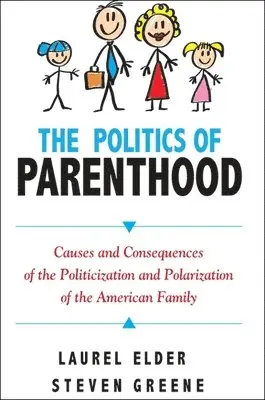
Traces the rising emphasis on parenthood in contemporary American politics.Certain events in one's life, such as marriage, joining the workforce, and growing older, can become important determinants of political attitudes and voting choice. Each of these events has been the subject of considerable study, but in The Politics of Parenthood, Laurel Elder and Steven Greene look at the political impact of one of life's most challenging adult experiences-having and raising children. Using a comprehensive array of both quantitative and qualitative analyses, Elder and Greene systematically reveal for the first time how the very personal act of raising a family is also a politically defining experience, one that shapes the political attitudes of Americans on a range of important policy issues. They document how political parties, presidential candidates, and the news media have politicized parenthood and the family over not just one election year, but the last several decades. They conclude that the way the themes of parenthood and the family have evolved as partisan issues at the mass and elite levels has been driven by, and reflects fundamental shifts in, American society and the structure of the American family.
Politics of Parenthood
Causes and Consequences of the Politicization and Polarization of the American Family
Inbunden, Engelska, 2012
1 057 kr
Tillfälligt slut
Traces the rising emphasis on parenthood in contemporary American politics.Certain events in one's life, such as marriage, joining the workforce, and growing older, can become important determinants of political attitudes and voting choice. Each of these events has been the subject of considerable study, but in The Politics of Parenthood, Laurel Elder and Steven Greene look at the political impact of one of life's most challenging adult experiences-having and raising children. Using a comprehensive array of both quantitative and qualitative analyses, Elder and Greene systematically reveal for the first time how the very personal act of raising a family is also a politically defining experience, one that shapes the political attitudes of Americans on a range of important policy issues. They document how political parties, presidential candidates, and the news media have politicized parenthood and the family over not just one election year, but the last several decades. They conclude that the way the themes of parenthood and the family have evolved as partisan issues at the mass and elite levels has been driven by, and reflects fundamental shifts in, American society and the structure of the American family.
1 105 kr
Skickas inom 7-10 vardagar
Despite intense political debate, attitudes on abortion were remarkably stable for decades. However, after the 2022 Dobbs decision, Americans' opinions began to change. Not Going Back explores the shifts in public opinion on this hot-button issue from the landmark passing of Roe v. Wade in 1973 through the 2024 election and into 2025.The authors ask, "What role do Americans want their government to play in protecting, regulating, or restricting abortion access?" and, "How will changing attitudes on abortion reshape American politics?" They offer cohesive, theoretically grounded explanations for both the continuity and the change in Americans' attitudes on this contentious topic. Using national data, they take a deep dive into the personal experiences and social forces behind these changes.Not Going Back ends with an examination of the consequences of these changes for election outcomes. While there has been a striking reversal in the prioritization of abortion as an issue among Democrats and Republicans, the full impact of this shift in thinking will be influenced by future policies, court decisions, and party reactions.
309 kr
Skickas
Despite intense political debate, attitudes on abortion were remarkably stable for decades. However, after the 2022 Dobbs decision, Americans' opinions began to change. Not Going Back explores the shifts in public opinion on this hot-button issue from the landmark passing of Roe v. Wade in 1973 through the 2024 election and into 2025.The authors ask, "What role do Americans want their government to play in protecting, regulating, or restricting abortion access?" and, "How will changing attitudes on abortion reshape American politics?" They offer cohesive, theoretically grounded explanations for both the continuity and the change in Americans' attitudes on this contentious topic. Using national data, they take a deep dive into the personal experiences and social forces behind these changes.Not Going Back ends with an examination of the consequences of these changes for election outcomes. While there has been a striking reversal in the prioritization of abortion as an issue among Democrats and Republicans, the full impact of this shift in thinking will be influenced by future policies, court decisions, and party reactions.
1 002 kr
Skickas inom 10-15 vardagar
WINNER OF THE 2022 VICTORIA SCHUCK AWARD, GIVEN BY THE AMERICAN POLITICAL SCIENCE ASSOCIATION Why Democratic women far outnumber Republican women in elective officesFrom Kamala Harris and Elizabeth Warren to Stacey Abrams and Alexandria Ocasio-Cortez, women around the country are running in—and winning—elections at an unprecedented rate. It appears that women are on a steady march toward equal representation across state legislatures and the US Congress, but there is a sharp divide in this representation along party lines. Most of the women in office are Democrats, and the number of elected Republican women has been plunging for decades.In The Partisan Gap, Elder examines why this disparity in women's representation exists, and why it's only going to get worse. Drawing on interviews with female office-holders, candidates, and committee members, she takes a look at what it is like to be a woman in each party. From party culture and ideology, to candidate recruitment and the makeup of regional biases, Elder shows the factors contributing to this harmful partisan gap, and what can be done to address it in the future. The Partisan Gap explores the factors that help, and hinder, women's political representation.
199 kr
Skickas
WINNER OF THE 2022 VICTORIA SCHUCK AWARD, GIVEN BY THE AMERICAN POLITICAL SCIENCE ASSOCIATION Why Democratic women far outnumber Republican women in elective officesFrom Kamala Harris and Elizabeth Warren to Stacey Abrams and Alexandria Ocasio-Cortez, women around the country are running in—and winning—elections at an unprecedented rate. It appears that women are on a steady march toward equal representation across state legislatures and the US Congress, but there is a sharp divide in this representation along party lines. Most of the women in office are Democrats, and the number of elected Republican women has been plunging for decades.In The Partisan Gap, Elder examines why this disparity in women's representation exists, and why it's only going to get worse. Drawing on interviews with female office-holders, candidates, and committee members, she takes a look at what it is like to be a woman in each party. From party culture and ideology, to candidate recruitment and the makeup of regional biases, Elder shows the factors contributing to this harmful partisan gap, and what can be done to address it in the future. The Partisan Gap explores the factors that help, and hinder, women's political representation.
251 kr
Skickas
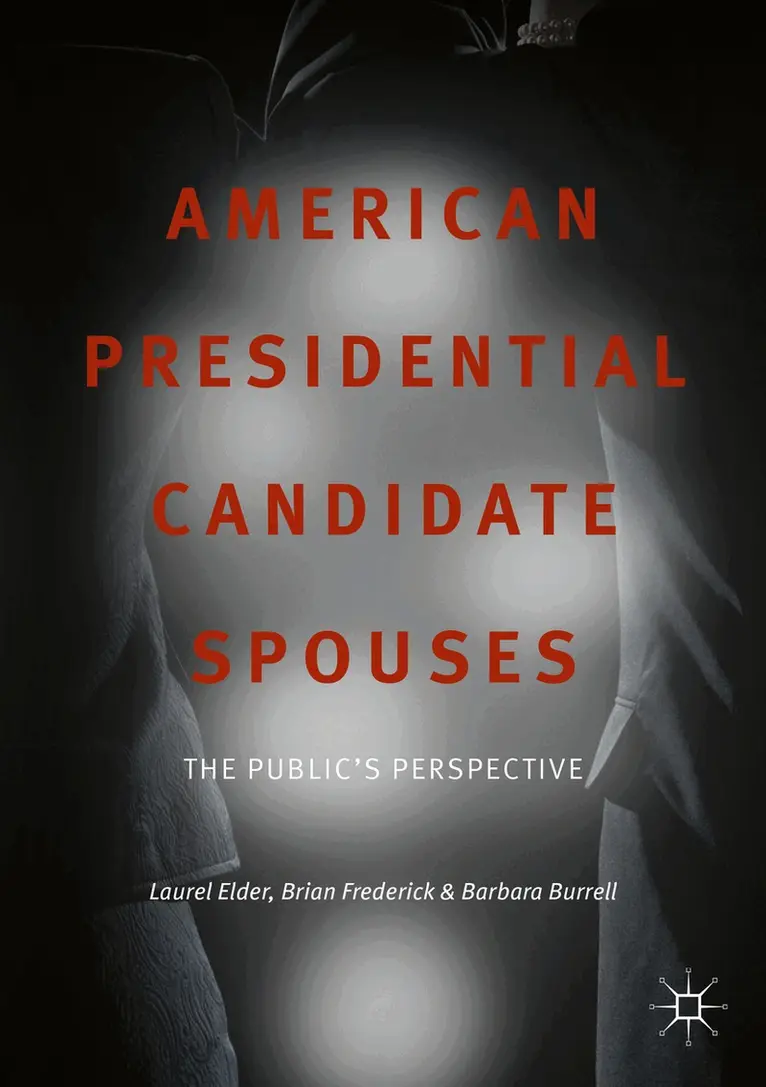
The book offers a comprehensive analysis of public opinion toward presidential candidate spouses over the course of three decades, drawing on multiple theoretical frameworks including the concept of “new traditionalism” and a plethora of empirical data to explore why some spouses engender greater support than others—and what these reactions reveal about the American public and the gendered nature of the American presidency. Recognizing that presidential candidate spouses are important but understudied political actors, this book provides extensive analysis of public evaluations of Bill Clinton and Melania Trump during the 2016 presidential election as well as the presidential candidate spouses in the 1992 and 2012 elections and places public reaction to these individuals in historical context. The book considers important trends in U.S. elections including party polarization from the distinctive vantage points of candidate spouses and explores the symbolic importance of historic firsts including the first African American candidate spouse and the first male candidate spouse. No other work provides a systematic exploration of public opinion towards candidate spouses as distinct political entities across the modern political era.