Lauren Downing Peters - Böcker
Visar alla böcker från författaren Lauren Downing Peters. Handla med fri frakt och snabb leverans.
5 produkter
5 produkter
349 kr
Skickas inom 7-10 vardagar
A revelatory new approach to understanding fashion in America that focuses on the stories told by worn, imperfect, and ordinary clothes2025 Winner of Midwest Art History Society Awards for Outstanding Catalogs Expanding the history of American fashion, this volume highlights garments that carry material traces of everyday wearers’ bodies, such as stains, rips, tears, mending, and signs of hand-craftsmanship. In-depth examinations of ten case-study objects—ranging from activist Jae Jarrell’s Urban Wall Suit (ca. 1969) to an unknown child’s pair of sneakers found at a migrant pickup site in the Sonoran Desert (2009–10)—reveal the ways worn objects are witnesses to American history.By foregrounding worn, ordinary, and imperfect garments, the essays in this volume respond to the fact that histories of American fashion have traditionally centered on mass-manufactured American sportswear, notable designers, whitewashed histories of Western wear, and the “American Look.” This canon, though familiar, stands starkly at odds with the lived realities of the American experience. Interviews with wearers and makers, family photographs, and detailed object photography illuminate absences and omissions in the dominant narratives of American fashion. (Re)Dressing American Fashion: Wear as Witness thus sheds new light on how fashion and dress have been used to shape and challenge constructs of American identity at the intersections of race, ethnicity, body size, ability, and gender over more than two centuries. Distributed for Bard Graduate Center Exhibition Schedule: Bard Graduate Center, New York(February 21–July 6, 2025)
1 223 kr
Skickas inom 7-10 vardagar
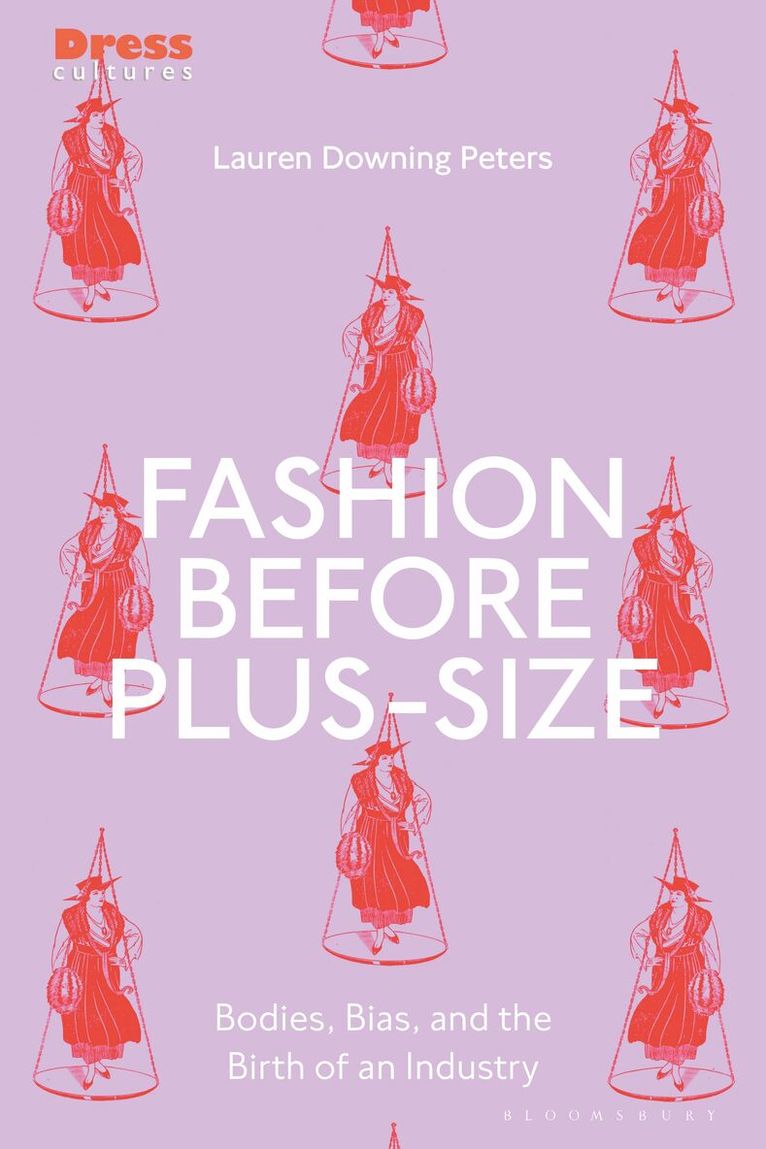
Shortlisted for the Association of Dress Historians Book of the Year Award, 2024In 2022, it was reported that plus-sizes accounted for nearly twenty percent of all women’s apparel sales in the United States and was one of the industry’s few growth sectors. For many, this news seemed to herald a remarkably inclusive turn for an industry that long bartered in exclusivity. Yet the recent success of plus-size fashion obscures a rather complicated history–one that can be traced back over a century, and which illuminates the fraught relationship between fashion, fat, and weight bias in American culture.Although many regard fat as a malady of the present, in the early twentieth century it was estimated that more than one-third of American women classified as “overweight.” While modern weight bias had yet to fully cement itself in the American imaginary, the limitations of mass garment manufacturing coupled with the ascendent slender beauty ideal had already relegated larger women to fashion’s peripheries. By 1915, however, fashion forecasters predicted that so-called “stoutwear” was well positioned to become one of the most lucrative subsectors of the burgeoning ready-to-wear trade. In the years that followed, stoutwear manufacturers set out to create more space for the fat woman in fashion but, in doing so, revealed an ancillary motivation: that of how to design fat out of existence altogether.Fashion Before Plus-Size considers what came “before” plus-size fashion while also shedding new light on the ways that the fashion industry not only perpetuates but produces weight bias. By situating stoutwear at the confluence of mass manufacturing, beauty ideals, standardized sizing, health discourse, and consumer culture, this book exposes the flawed foundations upon which the contemporary plus-size fashion industry has been built.
358 kr
Skickas inom 7-10 vardagar
An original contribution to fashion studies, Fashion in American Life challenges existing approaches to fashion in America by considering who ‘makes’ fashion—when, where, and how. Avoiding the usual emphasis on the ‘history of fashion’ which perpetuates the myth of fashion designers, and New York, as the originators of American fashion, this exploration of the everyday allows us to see American fashion as a form of agency, self-identification, creative engagement, and politics.Moving away from the well-trodden accounts of fashion designers and the dominance of New York, much of the fashion uncovered has been under-represented in previous accounts. Through contemporary and historical research, authors challenge the nature of both ‘fashion’ and ‘America’ by addressing the many complexities of a nation whose people have diverse histories and cultures, including stories and experiences that have been forgotten, marginalized and left out of the fashion ‘canon’.Race, gender, ethnicity, and class are employed as critical lenses to shed new light on how fashion might be defined and addressed within America (as a country, but not as a series of United States), with case studies looking at First Nations, Latinx and African American dress. The intellectual framing of the volume, and the methods and case studies included, also present tactics that can be applied to other contexts, making this book about revisiting ‘fashion’ more widely, not just in America. Fashion in American Life makes a unique contribution to the literature of fashion studies, fashion history, cultural studies, and beyond.
1 088 kr
Skickas inom 7-10 vardagar
An original contribution to fashion studies, Fashion in American Life challenges existing approaches to fashion in America by considering who ‘makes’ fashion—when, where, and how. Avoiding the usual emphasis on the ‘history of fashion’ which perpetuates the myth of fashion designers, and New York, as the originators of American fashion, this exploration of the everyday allows us to see American fashion as a form of agency, self-identification, creative engagement, and politics.Moving away from the well-trodden accounts of fashion designers and the dominance of New York, much of the fashion uncovered has been under-represented in previous accounts. Through contemporary and historical research, authors challenge the nature of both ‘fashion’ and ‘America’ by addressing the many complexities of a nation whose people have diverse histories and cultures, including stories and experiences that have been forgotten, marginalized and left out of the fashion ‘canon’.Race, gender, ethnicity, and class are employed as critical lenses to shed new light on how fashion might be defined and addressed within America (as a country, but not as a series of United States), with case studies looking at First Nations, Latinx and African American dress. The intellectual framing of the volume, and the methods and case studies included, also present tactics that can be applied to other contexts, making this book about revisiting ‘fashion’ more widely, not just in America. Fashion in American Life makes a unique contribution to the literature of fashion studies, fashion history, cultural studies, and beyond.
345 kr
Skickas inom 7-10 vardagar
Shortlisted for the Association of Dress Historians Book of the Year Award, 2024In 2022, it was reported that plus-sizes accounted for nearly twenty percent of all women’s apparel sales in the United States and was one of the industry’s few growth sectors. For many, this news seemed to herald a remarkably inclusive turn for an industry that long bartered in exclusivity. Yet the recent success of plus-size fashion obscures a rather complicated history–one that can be traced back over a century, and which illuminates the fraught relationship between fashion, fat, and weight bias in American culture.Although many regard fat as a malady of the present, in the early twentieth century it was estimated that more than one-third of American women classified as “overweight.” While modern weight bias had yet to fully cement itself in the American imaginary, the limitations of mass garment manufacturing coupled with the ascendent slender beauty ideal had already relegated larger women to fashion’s peripheries. By 1915, however, fashion forecasters predicted that so-called “stoutwear” was well positioned to become one of the most lucrative subsectors of the burgeoning ready-to-wear trade. In the years that followed, stoutwear manufacturers set out to create more space for the fat woman in fashion but, in doing so, revealed an ancillary motivation: that of how to design fat out of existence altogether.Fashion Before Plus-Size considers what came “before” plus-size fashion while also shedding new light on the ways that the fashion industry not only perpetuates but produces weight bias. By situating stoutwear at the confluence of mass manufacturing, beauty ideals, standardized sizing, health discourse, and consumer culture, this book exposes the flawed foundations upon which the contemporary plus-size fashion industry has been built.