Lauren M. MacLean - Böcker
Visar alla böcker från författaren Lauren M. MacLean. Handla med fri frakt och snabb leverans.
8 produkter
8 produkter
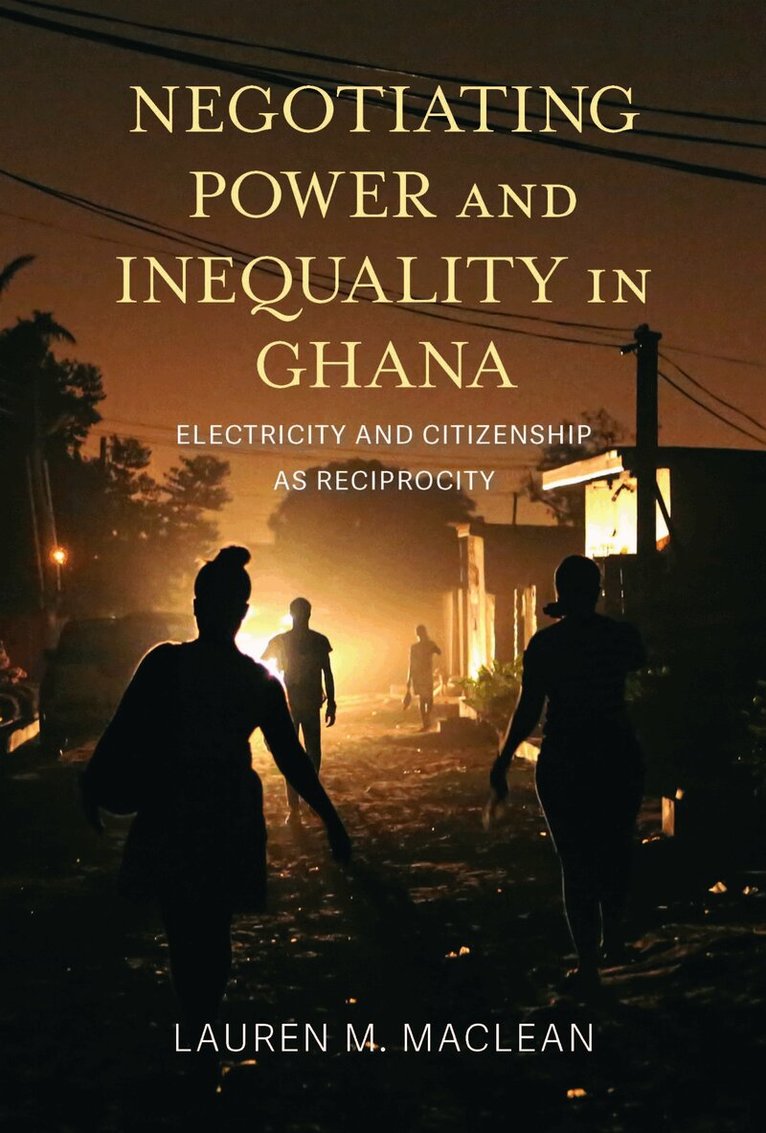
Negotiating Power and Inequality in Ghana
Electricity and Citizenship As Reciprocity
Inbunden, Engelska, 2026
1 096 kr
Skickas inom 7-10 vardagar
In Ghana, much as in other parts of the Global South, postcolonial leaders aimed for industrial growth through the establishment of affordable hydroelectric power. However, in the current rapidly changing climate, many nations face recurring droughts, which hinder electricity production just when demand is on the rise. This situation has led to challenges like load shedding and unplanned power outages, which have strained the bond between citizens and the government.Negotiating Power and Inequality in Ghana aims to unravel the puzzling reality that, despite enduring increasing difficulties from these electricity shortages, the Ghanaian citizens who suffer most harshly are also the least likely to demand political accountability from the state. Drawing on archival evidence, focus groups, qualitative interviews, survey data, and contemporary art and music, author Lauren M. MacLean explains how this disparity in experience – fueled by differences in income and geographical location – has led lower- and higher-income Ghanaians to form contrasting perspectives on their social rights regarding public services and to adopt varying approaches to political involvement. Rather than relying on a predetermined social contract, citizens in Ghana develop a more fluid relationship with the state, shaped by their histories, identities, and personal experiences. This reciprocity highlights their awareness of how climate change and the global shift toward green energy can significantly impact their lives while also underscoring the necessity for the government to take the lead and engage with Ghanaians to promote climate justice.Targeted at a diverse audience that includes academics, policymakers, activists, and the general public, Negotiating Power and Inequality in Ghana encourages readers to gain insight into the dynamics that lead to political crises and to explore potential solutions to energy poverty in a time marked by increasing inequality and global climate challenges.
Negotiating Power and Inequality in Ghana
Electricity and Citizenship As Reciprocity
Häftad, Engelska, 2026
483 kr
Skickas inom 7-10 vardagar
In Ghana, much as in other parts of the Global South, postcolonial leaders aimed for industrial growth through the establishment of affordable hydroelectric power. However, in the current rapidly changing climate, many nations face recurring droughts, which hinder electricity production just when demand is on the rise. This situation has led to challenges like load shedding and unplanned power outages, which have strained the bond between citizens and the government.Negotiating Power and Inequality in Ghana aims to unravel the puzzling reality that, despite enduring increasing difficulties from these electricity shortages, the Ghanaian citizens who suffer most harshly are also the least likely to demand political accountability from the state. Drawing on archival evidence, focus groups, qualitative interviews, survey data, and contemporary art and music, author Lauren M. MacLean explains how this disparity in experience – fueled by differences in income and geographical location – has led lower- and higher-income Ghanaians to form contrasting perspectives on their social rights regarding public services and to adopt varying approaches to political involvement. Rather than relying on a predetermined social contract, citizens in Ghana develop a more fluid relationship with the state, shaped by their histories, identities, and personal experiences. This reciprocity highlights their awareness of how climate change and the global shift toward green energy can significantly impact their lives while also underscoring the necessity for the government to take the lead and engage with Ghanaians to promote climate justice.Targeted at a diverse audience that includes academics, policymakers, activists, and the general public, Negotiating Power and Inequality in Ghana encourages readers to gain insight into the dynamics that lead to political crises and to explore potential solutions to energy poverty in a time marked by increasing inequality and global climate challenges.
460 kr
Skickas inom 7-10 vardagar
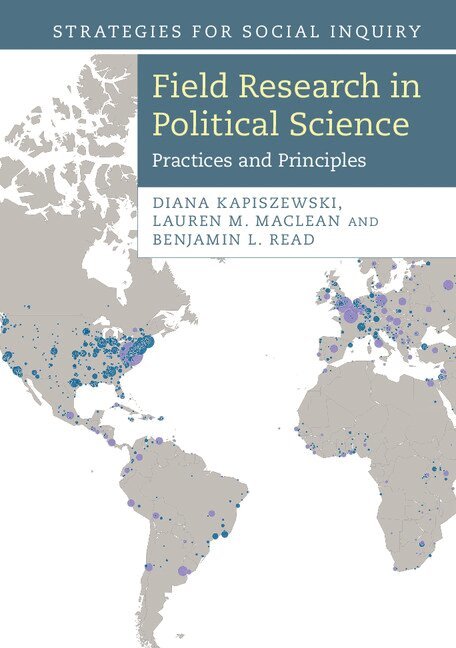
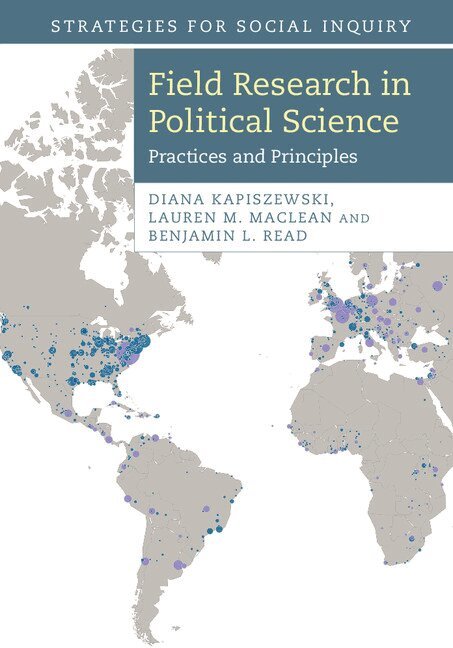
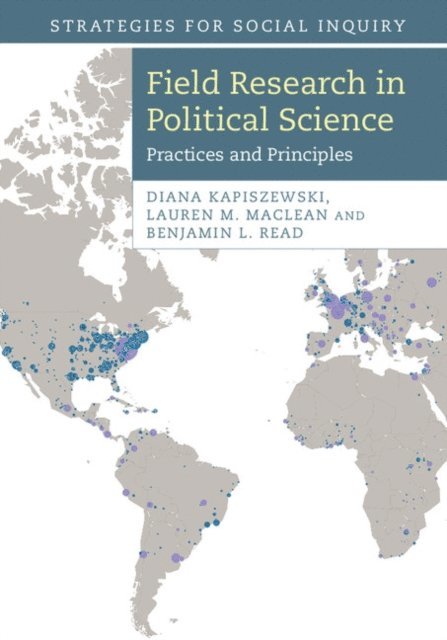
Field research - leaving one's home institution in order to acquire data, information or insights that significantly inform one's research - remains indispensable, even in a digitally networked era. This book, the first of its kind in political science, reconsiders the design and execution of field research and explores its role in producing knowledge. First, it offers an empirical overview of fieldwork in the discipline based on a large-scale survey and extensive interviews. Good fieldwork takes diverse forms yet follows a set of common practices and principles. Second, the book demonstrates the analytic benefits of fieldwork, showing how it contributes to our understanding of politics. Finally, it provides intellectual and practical guidance, with chapters on preparing for field research, operating in the field and making analytic progress while collecting data, and on data collection techniques including archival research, interviewing, ethnography and participant observation, surveys, and field experiments.
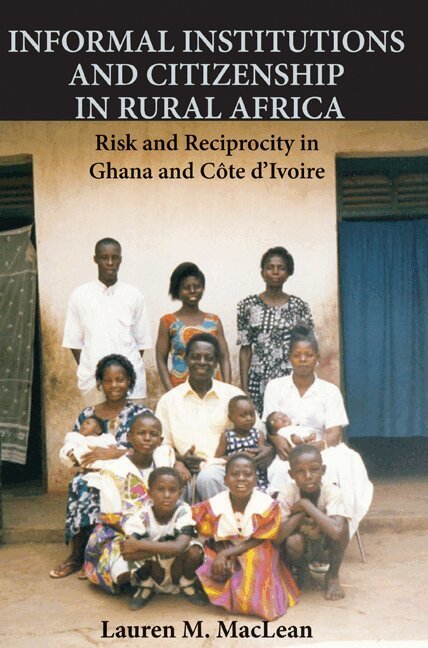
Informal Institutions and Citizenship in Rural Africa
Risk and Reciprocity in Ghana and Côte d'Ivoire
Inbunden, Engelska, 2010
1 245 kr
Skickas inom 7-10 vardagar
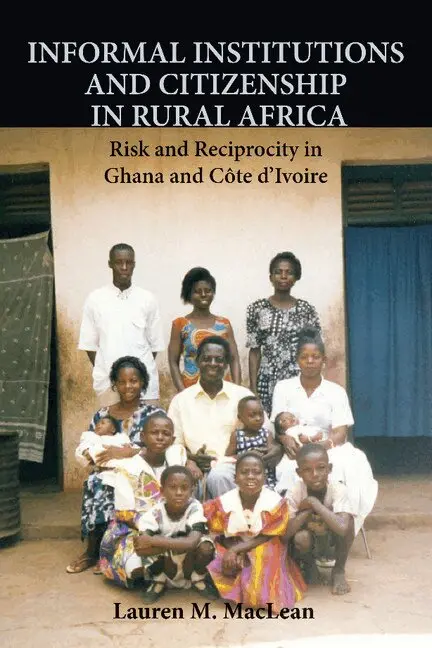
This book challenges previous assumptions about institutions, social capital, and the nature of the African state by investigating the history of political and economic change in villages on either side of the Ghana-Cote d'Ivoire border. Prior to European colonial rule, these Akan villages had very similar political and cultural institutions. By the late 1990s, however, Lauren M. MacLean found puzzling differences in the informal institutions of reciprocity and indigenous notions of citizenship. MacLean argues that divergent histories of state formation not only shape how villagers help each other but also influence how local groups and communities define citizenship and then choose to engage with the state on an everyday basis. She examines the historical construction of the state role in mediating risk at the local level across three policy areas: political administration, social service delivery, and agriculture.
1 525 kr
Skickas inom 10-15 vardagar
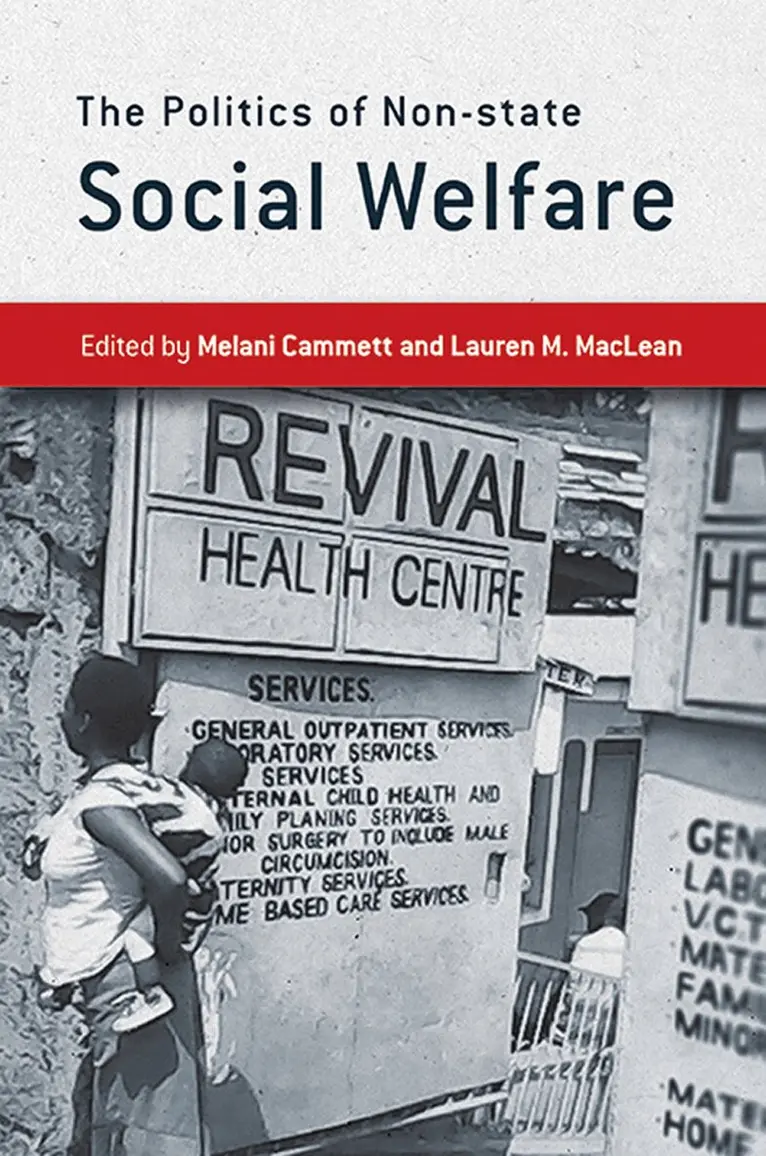
Across the world, welfare states are under challenge—or were never developed extensively in the first place—while non-state actors increasingly provide public goods and basic welfare. In many parts of the Middle East and South Asia, sectarian organizations and political parties supply basic services to ordinary people more extensively and effectively than governments. In sub-Saharan Africa, families struggle to pay hospital fees, and nongovernmental organizations (NGOs) launch welfare programs as states cut subsidies and social programs. Likewise, in parts of Latin America, international and domestic NGOs and, increasingly, private firms are key suppliers of social welfare in both urban and rural communities. Even in the United States, where the welfare state is far more developed, secular NGOs and faith-based organizations are critical components of social safety nets. Despite official entitlements to public welfare, citizens in Russia face increasing out-of-pocket expenses as they are effectively compelled to seek social services through the private market In The Politics of Non-State Social Welfare, a multidisciplinary group of contributors use survey data analysis, spatial analysis, in-depth interviews, and ethnographic and archival research to explore the fundamental transformation of the relationship between states and citizens. The book highlights the political consequences of the non-state provision of social welfare, including the ramifications for equitable and sustainable access to social services, accountability for citizens, and state capacity. The authors do not assume that non-state providers will surpass the performance of weak, inefficient, or sometimes corrupt states but instead offer a systematic analysis of a wide spectrum of non-state actors in a variety of contexts around the world, including sectarian political parties, faith-based organizations, community-based organizations, family networks, informal brokers, and private firms.
443 kr
Skickas inom 7-10 vardagar
Across the world, welfare states are under challenge—or were never developed extensively in the first place—while non-state actors increasingly provide public goods and basic welfare. In many parts of the Middle East and South Asia, sectarian organizations and political parties supply basic services to ordinary people more extensively and effectively than governments. In sub-Saharan Africa, families struggle to pay hospital fees, and nongovernmental organizations (NGOs) launch welfare programs as states cut subsidies and social programs. Likewise, in parts of Latin America, international and domestic NGOs and, increasingly, private firms are key suppliers of social welfare in both urban and rural communities. Even in the United States, where the welfare state is far more developed, secular NGOs and faith-based organizations are critical components of social safety nets. Despite official entitlements to public welfare, citizens in Russia face increasing out-of-pocket expenses as they are effectively compelled to seek social services through the private market In The Politics of Non-State Social Welfare, a multidisciplinary group of contributors use survey data analysis, spatial analysis, in-depth interviews, and ethnographic and archival research to explore the fundamental transformation of the relationship between states and citizens. The book highlights the political consequences of the non-state provision of social welfare, including the ramifications for equitable and sustainable access to social services, accountability for citizens, and state capacity. The authors do not assume that non-state providers will surpass the performance of weak, inefficient, or sometimes corrupt states but instead offer a systematic analysis of a wide spectrum of non-state actors in a variety of contexts around the world, including sectarian political parties, faith-based organizations, community-based organizations, family networks, informal brokers, and private firms.
1 050 kr
Skickas inom 7-10 vardagar
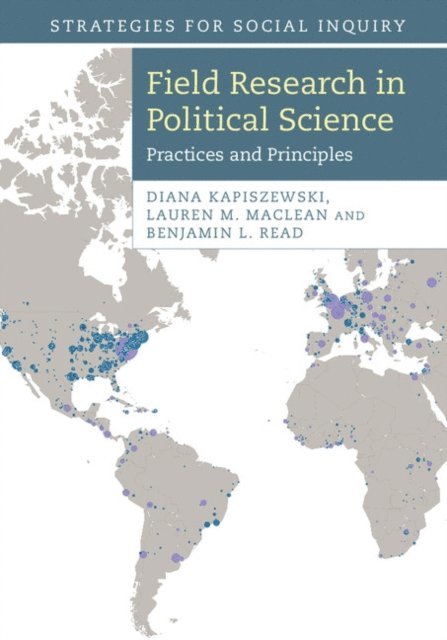
Field research - leaving one's home institution in order to acquire data, information or insights that significantly inform one's research - remains indispensable, even in a digitally networked era. This book, the first of its kind in political science, reconsiders the design and execution of field research and explores its role in producing knowledge. First, it offers an empirical overview of fieldwork in the discipline based on a large-scale survey and extensive interviews. Good fieldwork takes diverse forms yet follows a set of common practices and principles. Second, the book demonstrates the analytic benefits of fieldwork, showing how it contributes to our understanding of politics. Finally, it provides intellectual and practical guidance, with chapters on preparing for field research, operating in the field and making analytic progress while collecting data, and on data collection techniques including archival research, interviewing, ethnography and participant observation, surveys, and field experiments.
Informal Institutions and Citizenship in Rural Africa
Risk and Reciprocity in Ghana and Côte d'Ivoire
Häftad, Engelska, 2014
428 kr
Skickas inom 7-10 vardagar
This book challenges previous assumptions about institutions, social capital, and the nature of the African state by investigating the history of political and economic change in villages on either side of the Ghana-Cote d'Ivoire border. Prior to European colonial rule, these Akan villages had very similar political and cultural institutions. By the late 1990s, however, Lauren M. MacLean found puzzling differences in the informal institutions of reciprocity and indigenous notions of citizenship. MacLean argues that divergent histories of state formation not only shape how villagers help each other but also influence how local groups and communities define citizenship and then choose to engage with the state on an everyday basis. She examines the historical construction of the state role in mediating risk at the local level across three policy areas: political administration, social service delivery, and agriculture.