Laurence A. Rickels - Böcker
Visar alla böcker från författaren Laurence A. Rickels. Handla med fri frakt och snabb leverans.
14 produkter
14 produkter
382 kr
Tillfälligt slut
This book, like the post-Heideggerian reception of Nietzsche, rides out the splits and frays of the text offering an up-to-date look at international Nietzsche scholarship. Included are topics such as the collaboration of German thought with the rise of National Socialism and the alliance between Nietzschean genealogy and Freudian culture criticism in regard to technology and the unconscious, the status of moral imperatives from Kant to Heidegger, and Heidegger's alleged rediscovery of Nietzsche as the "last metaphysician." Looking After Nietzsche is nonexclusionary in the risks it takes; every thread of "Nietzsche" is pursued throughout its labyrinthine entanglements.
251 kr
Skickas inom 11-20 vardagar
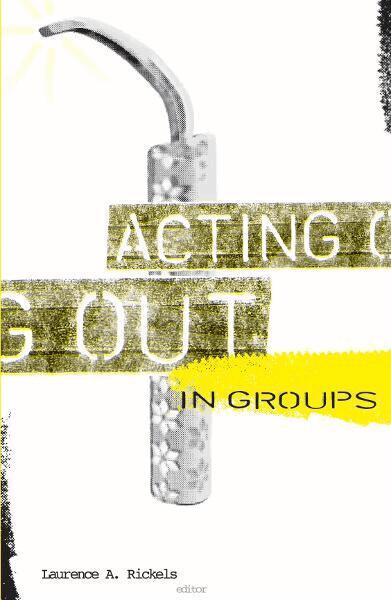
Examines outrageous public behavior and what it can tell us about cultural and political change.The International Psychoanalytic Congress gathered in 1967 to define the clinical concept of “acting out.” Thirty years later, our society, which once labeled those who exhibited excessive aggression as delinquent, celebrates outrageous public behavior. In Acting Out in Groups, writers, literary theorists, and cultural critics explore therapeutic descriptions of acting out in relation to the conduct condoned, even encouraged, on daytime TV talk shows, at political rallies, and in performance. Through a deconstruction of “acting out,” this collection seeks a new, performative style of critical discourse that incorporates the exuberance and intensity of acting out for analytical ends. Topics include the Jenny Jones murder trial; the response of psychoanalysts to the acclaimed documentary Crumb; the place of the Berlin Wall and other national symbols in German life; and the roles of aggression and discipline in childhood development.Contributors: Kathy Acker; Peter Canning; Julie Carlson, U of California, Santa Barbara; Susan Derwin, U of California, Santa Barbara; Andrew Hewitt, SUNY Buffalo; Gary Indiana; Rhonda Lieberman; Catherine Liu, U of Minnesota; Fred Moten, NYU; John Mowitt, U of Minnesota; Klaus Theweleit; Elisabeth Weber, U of California, Santa Barbara.
278 kr
Skickas inom 7-10 vardagar
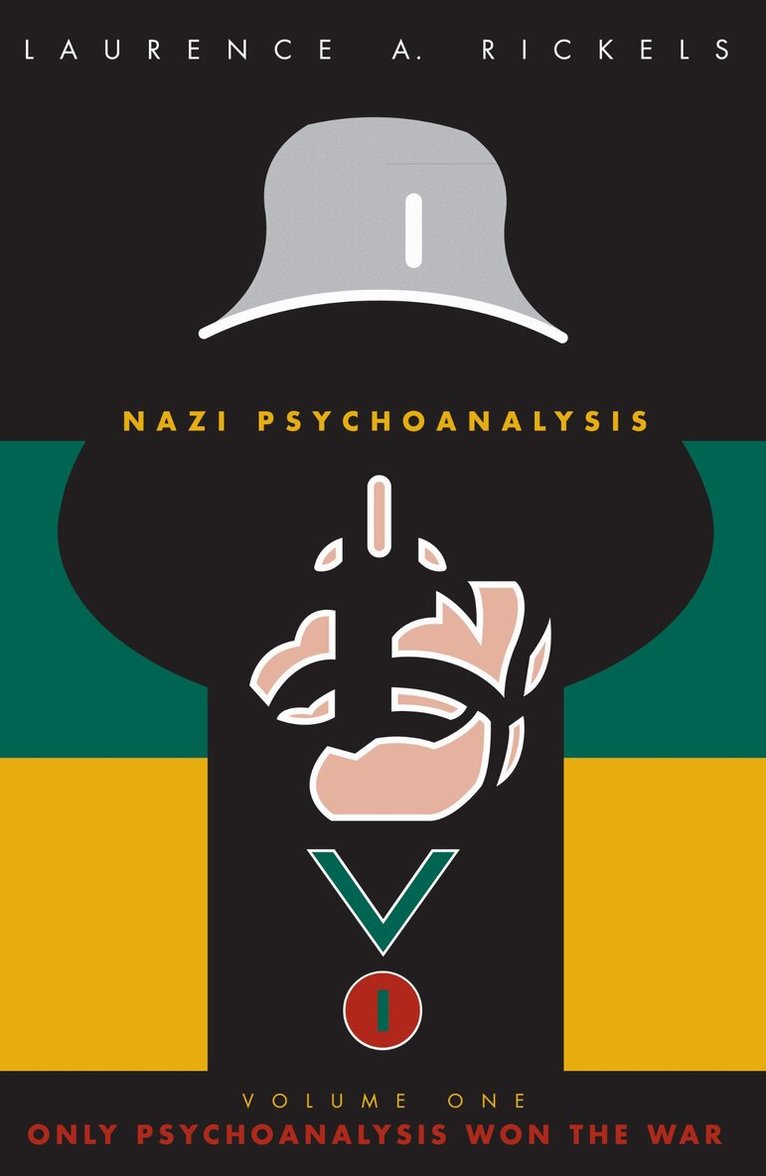
A revolutionary new approach to the place of Nazi ideology in twentieth-century thoughtPsychoanalysis was a symptom of everything the Nazis reviled: an intellectual assault on Kultur largely perpetrated by Jews. It was also, as this remarkable work shows, an inescapable symptom of modernity, practiced, transformed, and perpetuated by and within the Nazi regime. A sweeping, magisterial work by one of the most incisive and interesting scholars of modern philosophy, theory, and culture, Nazi Psychoanalysis studies the breadth of this phenomenon in order to clarify and deepen our understanding not only of psychoanalysis but of the twentieth century.Tracing the intersections of psychoanalysis and Nazism, Laurence A. Rickels discovers startling conjunctions and continuities in writers as diverse as Adler and Adorno, Kafka and Goethe, Lacan, H. Rider Haggard, and Heidegger, and in works as different as Der Golem, Civilization and Its Discontents, Frankenstein, Faust, and Brave New World. In a richly allusive style, he writes of psychoanalysis in multifarious incarnations, of the concept and actual history of "insurance," of propaganda in theory and practice, of psychological warfare, Walt Disney, and the Frankfurt School debates-a dizzying tour of the twentieth century that helps us see how the "corridor wars" that arise in the course of theoretical, clinical, social, political, and cultural attempts to describe the human psyche are related to the world wars of the century in an intimate and infinitely complicated manner. Though some have used its appropriation by the Nazis to brand psychoanalysis with the political odium of fascism, Rickels instead finds an uncanny convergence-one that suggests far-reaching possibilities for both psychoanalysis and psychoanalytic criticism. His work, with its enormous intellectual and historical span, makes a persuasive argument that no element of modernity-not psychoanalysis any more than Marxism or deconstruction, cultural revolutions or technological advances-can be adequately understood without a thorough consideration of its Nazi component.
257 kr
Skickas inom 7-10 vardagar
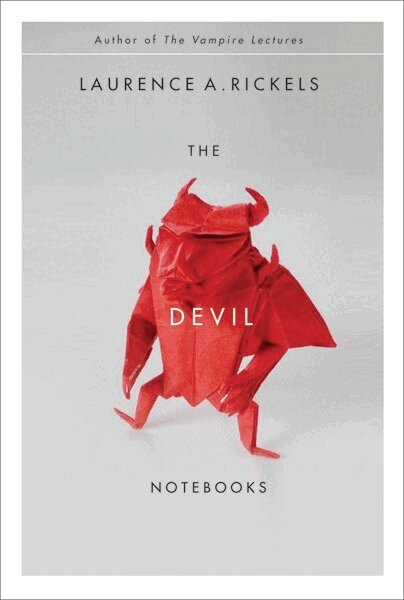
This sequel to The Vampire Lectures takes on the DevilMilton’s Paradise Lost. Goethe’s Faust. Aaron Spelling’s Satan’s School for Girls? Laurence A. Rickels scours the canon and pop culture in this all-encompassing study on the Devil. Continuing the work he began in his influential book The Vampire Lectures, Rickels returns with his trademark wit and encyclopedic knowledge to go mano a mano with the Prince of Darkness himself. Revealing our astonishing obsession with Satan in his many forms, Rickels guides us on an entertaining and enlightening journey down the darkest corridors that film, music, folklore, theater, and literature have ever offered. “The Devil represents the father,” Rickels writes in the opening pages, setting the stage to challenge foundational interpretations of Freudian psychology. The Devil presents not the usual fantasy of immortality, he explains, but instead provides victims with a paternal origin. Until their preordained deadline is reached, the Devil’s pitch goes, people will enjoy the pleasure of uninterrupted “quality time” without the threat of random death. Rickels terms it “Dad certainty”: you know where you came from and you know where you are going. Despite the grim outlook, Rickels keeps the proceedings amusing, with extravagant wordplay and buoyant prose.A stunning cultural and psychological analysis, The Devil Notebooks shows how the prince of occult has been used-throughout history and across cultures-to represent people’s primal fear of authority and humanity’s universal suffering. Sharing this cultural moment with the idea of evil being bandied about in our political discourse, the supposed satanic influence of pop music on our children, and a wildly popular book series on the end of the world, The Devil Notebooks is a sweeping and timely work that sheds light on the source of human fear and dread in the world.
276 kr
Skickas inom 10-15 vardagar
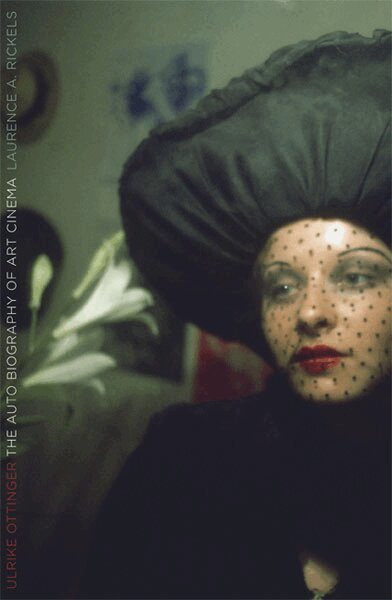
Since 1974, German filmmaker Ulrike Ottinger has created a substantial body of films that explore a world of difference defined by the tension and transfer between settled and nomadic ways of life. In many of her films, including Exile Shanghai, an experimental documentary about the Jews of Shanghai, and Joan of Arc of Mongolia, in which passengers on the Trans-Siberian Express are abducted by Mongolian bandits, she also probes the encounter with the other, whether exotic or simply unpredictable. In Ulrike Ottinger Laurence A. Rickels offers a series of sensitive and original analyses of Ottinger’s films, as well as her more recent photographic artworks, situated within a dazzling thought experiment centered on the history of art cinema through the turn of the twenty-first century. In addition to commemorating the death of a once-vital art form, this book also affirms Ottinger’s defiantly optimistic turn toward the documentary film as a means of mediating present clashes between tradition and modernity, between the local and the global. Widely regarded as a singular and provocative talent, Ottinger’s conspicuous absence from critical discourse is, for Rickels, symptomatic of the art cinema’s demise. Incorporating interviews he conducted with Ottinger and illustrated with stunning examples from her photographic oeuvre, this book takes up the challenges posed by Ottinger’s filmography to interrogate, ultimately, the very practice-and possibility-of art cinema today. Laurence A. Rickels is professor of German and comparative literature at the University of California, Santa Barbara, and the author of several books, including The Case of California, The Vampire Lectures, and the three-volume Nazi Psychoanalysis (all published by Minnesota). He is a recognized art writer whose reflections on contemporary visual art appear regularly in numerous exhibition catalogues as well as in Artforum, artUS, and Flash Art.
330 kr
Skickas inom 10-15 vardagar
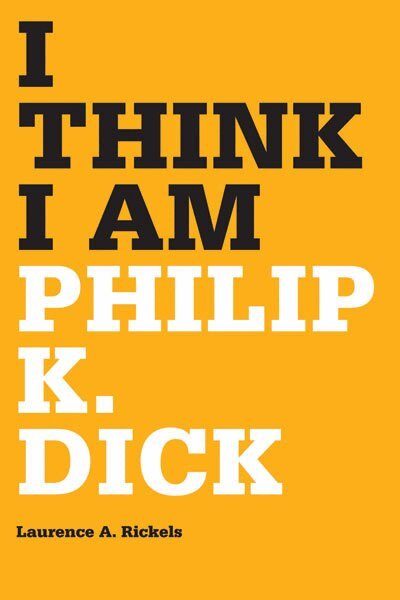
For years, noted writer Laurence A. Rickels often found himself compared to novelist Philip K. Dick-though in fact Rickels had never read any of the science fiction writer’s work. When he finally read his first Philip K. Dick novel, while researching for his recent book The Devil Notebooks, it prompted a prolonged immersion in Dick’s writing as well as a recognition of Rickels’s own long-documented intellectual pursuits. The result of this engagement is I Think I Am: Philip K. Dick, a profound thought experiment that charts the wide relevance of the pulp sci-fi author and paranoid visionary. I Think I Am: Philip K. Dick explores the science fiction author’s meditations on psychic reality and psychosis, Christian mysticism, Eastern religion, and modern spiritualism. Covering all of Dick’s science fiction, Rickels corrects the lack of scholarly interest in the legendary Californian author and, ultimately, makes a compelling case for the philosophical and psychoanalytic significance of Philip K. Dick’s popular and influential science fiction.
253 kr
Skickas inom 10-15 vardagar
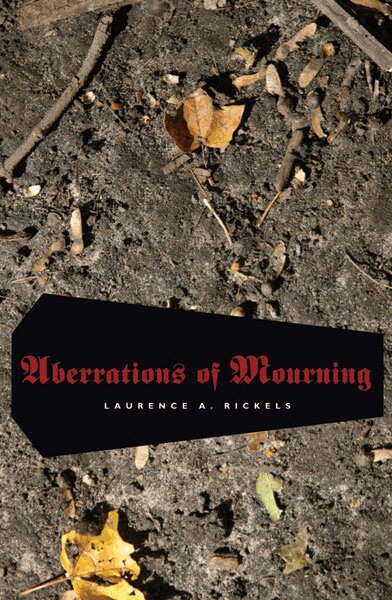
Aberrations of Mourning, originally published in 1988, is the long unavailable first book in Laurence A. Rickels’s “unmourning” trilogy, followed by The Case of California and Nazi Psychoanalysis.Rickels studies mourning and melancholia within and around psychoanalysis, analyzing the writings of such thinkers as Freud, Nietzsche, Lessing, Heinse, Artaud, Keller, Stifter, Kafka, and Kraus. Rickels maintains that we must shift the way we read literature, philosophy, and psychoanalysis to go beyond traditional Oedipal structures.Aberrations of Mourning argues that the idea of the crypt has had a surprisingly potent influence on psychoanalysis, and Rickels shows how society’s disturbed relationship with death and dying, our inability to let go of loved ones, has resulted in technology to form more and more crypts for the dead by preserving them-both physically and psychologically-in new ways.
297 kr
Skickas inom 5-8 vardagar
297 kr
Skickas inom 5-8 vardagar
443 kr
Tillfälligt slut
artUS Magazine collects international art criticism and is celebrated for its critical vigor and uncompromised perspective. Presenting new art reviews, essays, and features covering global contemporary art scenes and cultures, the magazine has gained a loyal following among scholars of international contemporary art and culture for its established yet alternative approach to the American and international art scene and its productions. As a critical and academic alternative to the more commercially driven, popular arts magazines, artUS is one of the world’s leading academic resources for vibrant and uncensored critical discussion. This collector’s edition gathers the print versions of artUS Magazine’s issues 31 through 33.
252 kr
Skickas inom 5-8 vardagar
298 kr
Skickas inom 5-8 vardagar
298 kr
Skickas inom 5-8 vardagar
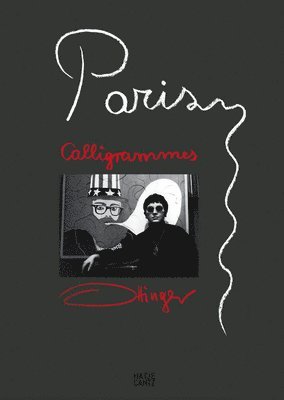
Paris Calligrammes: (English, German & French edition)
Landscape of memory. Ulrike Ottinger
Häftad, Engelska, 2019
222 kr
Skickas inom 7-10 vardagar
In Paris Calligrammes the filmmaker, photographer and collector of worlds Ulrike Ottinger links historical archival material with her own art and film works to create a sociogram of the era in which she came of age as an artist. In the grip of political upheavals, Paris of the 1960s attracted artists from all over the world and was a pulsating stream of energy hovering between trauma management and the utopia of Europe. From the Librairie Calligrammes, a meeting place of exiled German intellectuals, to the Cinémathèque française, which sparked her love of film, Ulrike Ottinger charts a city and its utopias. They live on in her collaged landscape of memories in a workshop exhibition complimenting her film Paris Calligrammes (2019).Ulrike Ottinger's (*1942 Konstanz, Germany) films were shown at the most important international festivals and honored at various major museums, including the Centre Pompidou, Paris, the Museo Reina Sofia, Madrid, and the Museum of Modern Art, New York. With her photographs she was represented at the documenta and the Biennale di Venezia. Exhibition: HKW, Haus der Kulturen der Welt, Berlin 23.8—13.10.2019