Laurence Talairach – författare
Visar alla böcker från författaren Laurence Talairach. Handla med fri frakt och snabb leverans.
6 produkter
6 produkter
Anatomy and Dissection in Nineteenth-Century Britain
Volume 1: Medical Education and Anatomical Practice in Nineteenth-Century Britain
Inbunden, Engelska, 2027
2 535 kr
Kommande
This three-volume set of primary sources on anatomy and dissection will trace the development of the practice of anatomy in Britain from the very beginning of the nineteenth-century. It brings together and contextualizes sources (both full length and abridged) related to the rise of anatomy in medical education and practice, foregrounding contemporary public debates around human dissections, the exhibition of human remains and the commodification of the human corpse. Modern anatomy dates back to the early modern period, and, dissection was essential to the formation of medical knowledge. Anatomy, as a discipline, emerged, moreover, in the long eighteenth century and towards the end of the eighteenth century, the foundation of the great museum collections of anatomy and comparative anatomy epitomized the broader Enlightenment project. The period also saw the growth of medical schools, both public and private, in need of human bodies for dissection, which highlighted the extent to which medical knowledge was inextricably bound up with anatomical practice. Anatomy and dissection came to play a central role in medical education in the course of the century, and medical knowledge was inextricably bound up with knowledge about death, which implied not only examining but also managing, dissecting and preserving corpses.Volume 1 will focus on the rise of anatomy in medical education and practice in nineteenth-century Britain, and the changes it involved in the legislation concerning human bodies
Anatomy and Dissection in Nineteenth-Century Britain
Volume 2: The Trade of Anatomy
Inbunden, Engelska, 2027
2 535 kr
Kommande
This three-volume set of primary sources on anatomy and dissection will trace the development of the practice of anatomy in Britain from the very beginning of the nineteenth-century. It brings together and contextualizes sources (both full length and abridged) related to the rise of anatomy in medical education and practice, foregrounding contemporary public debates around human dissections, the exhibition of human remains and the commodification of the human corpse. Modern anatomy dates back to the early modern period, and, dissection was essential to the formation of medical knowledge. Anatomy, as a discipline, emerged, moreover, in the long eighteenth century and towards the end of the eighteenth century, the foundation of the great museum collections of anatomy and comparative anatomy epitomized the broader Enlightenment project. The period also saw the growth of medical schools, both public and private, in need of human bodies for dissection, which highlighted the extent to which medical knowledge was inextricably bound up with anatomical practice. Anatomy and dissection came to play a central role in medical education in the course of the century, and medical knowledge was inextricably bound up with knowledge about death, which implied not only examining but also managing, dissecting and preserving corpses. Volume 2 shows how the practice of anatomy in the nineteenth century, marked by the shortage of corpses for dissection, radically changed the status of the human corpse.
Anatomy and Dissection in Nineteenth-Century Britain
Volume 3: Investigating Death
Inbunden, Engelska, 2027
2 535 kr
Kommande
This three-volume set of primary sources on anatomy and dissection will trace the development of the practice of anatomy in Britain from the very beginning of the nineteenth-century. It brings together and contextualizes sources (both full length and abridged) related to the rise of anatomy in medical education and practice, foregrounding contemporary public debates around human dissections, the exhibition of human remains and the commodification of the human corpse. Modern anatomy dates back to the early modern period, and, dissection was essential to the formation of medical knowledge. Anatomy, as a discipline, emerged, moreover, in the long eighteenth century and towards the end of the eighteenth century, the foundation of the great museum collections of anatomy and comparative anatomy epitomized the broader Enlightenment project. The period also saw the growth of medical schools, both public and private, in need of human bodies for dissection, which highlighted the extent to which medical knowledge was inextricably bound up with anatomical practice. Anatomy and dissection came to play a central role in medical education in the course of the century, and medical knowledge was inextricably bound up with knowledge about death, which implied not only examining but also managing, dissecting and preserving corpses. Volume 3 highlights how the development of pathological anatomy helped the establishment of medical collections: pathological specimens materialized disease – which then could be observed in the medical museums of the period
1 163 kr
Skickas inom 5-8 vardagar
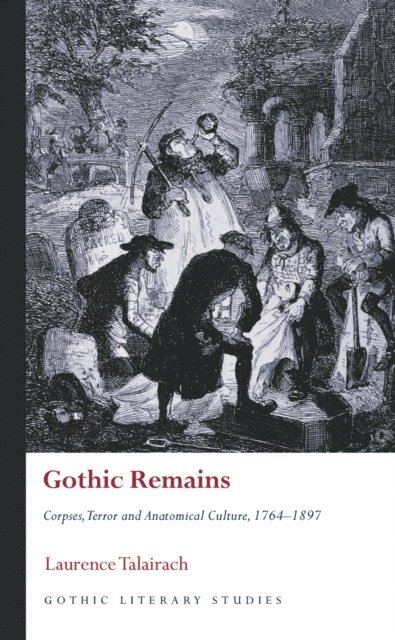
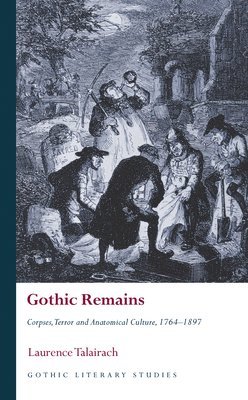
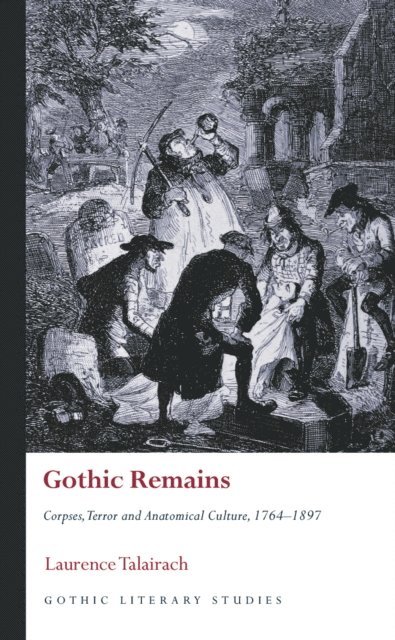
The Gothic has always been fascinated with objects carrying with them a sense of horror - the decomposing body, the rigid corpse, the bleeding statue, the spectral skeleton - capable of creating a sublime form of beauty. Gothic Remains: Corpses, Terror and Anatomical Culture, 1764-1897 offers an exploration of those Gothic tropes and conventions which were most thoroughly steeped in the anatomical culture of the period - from skeletons, used to understand human anatomy, to pathological human remains exhibited in medical museums; from bodysnatching aimed at providing dissection subjects to live-burials resulting from medical misdiagnosis and pointing to contemporary research into the signs of death. The historicist reading of canonical and less known Gothic texts which is proposed throughout Gothic Remains, explored through the prism of anatomy, seeks to offer new insights into the ways in which medical practice and the medical sciences informed the aesthetics of pain and death typically read therein, and the two-way traffic that emerged between medical literature and literary texts.
Animals, Museum Culture and Children’s Literature in Nineteenth-Century Britain
Curious Beasties
Inbunden, Engelska, 2021
1 537 kr
Skickas inom 10-15 vardagar
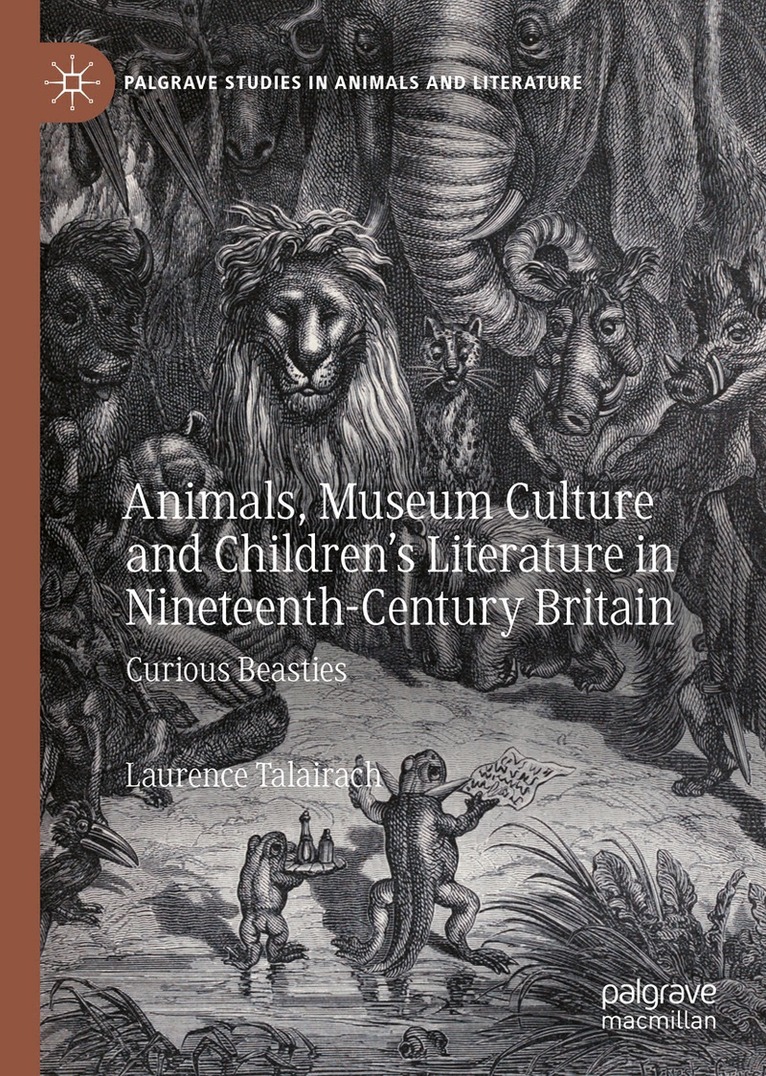
Animals, Museum Culture and Children’s Literature in Nineteenth-Century Britain: Curious Beasties explores the relationship between the zoological and palaeontological specimens brought back from around the world in the long nineteenth century—be they alive, stuffed or fossilised—and the development of children’s literature at this time. Children’s literature emerged as dizzying numbers of new species flooded into Britain with scientific expeditions, from giraffes and hippopotami to kangaroos, wombats, platypuses or sloths. As the book argues, late Georgian, Victorian and Edwardian children’s writers took part in the urge for mass education and presented the world and its curious creatures to children, often borrowing from their museum culture and its objects to map out that world. This original exploration illuminates how children’s literature dealt with the new ordering of the world, offering a unique viewpoint on the construction of science in the long nineteenth century.
Animals, Museum Culture and Children’s Literature in Nineteenth-Century Britain
Curious Beasties
Häftad, Engelska, 2022
1 420 kr
Skickas inom 10-15 vardagar
Animals, Museum Culture and Children’s Literature in Nineteenth-Century Britain: Curious Beasties explores the relationship between the zoological and palaeontological specimens brought back from around the world in the long nineteenth century—be they alive, stuffed or fossilised—and the development of children’s literature at this time. Children’s literature emerged as dizzying numbers of new species flooded into Britain with scientific expeditions, from giraffes and hippopotami to kangaroos, wombats, platypuses or sloths. As the book argues, late Georgian, Victorian and Edwardian children’s writers took part in the urge for mass education and presented the world and its curious creatures to children, often borrowing from their museum culture and its objects to map out that world. This original exploration illuminates how children’s literature dealt with the new ordering of the world, offering a unique viewpoint on the construction of science in the long nineteenth century.