Laurens ten Kate - Böcker
Visar alla böcker från författaren Laurens ten Kate. Handla med fri frakt och snabb leverans.
6 produkter
6 produkter
2 091 kr
Skickas inom 10-15 vardagar
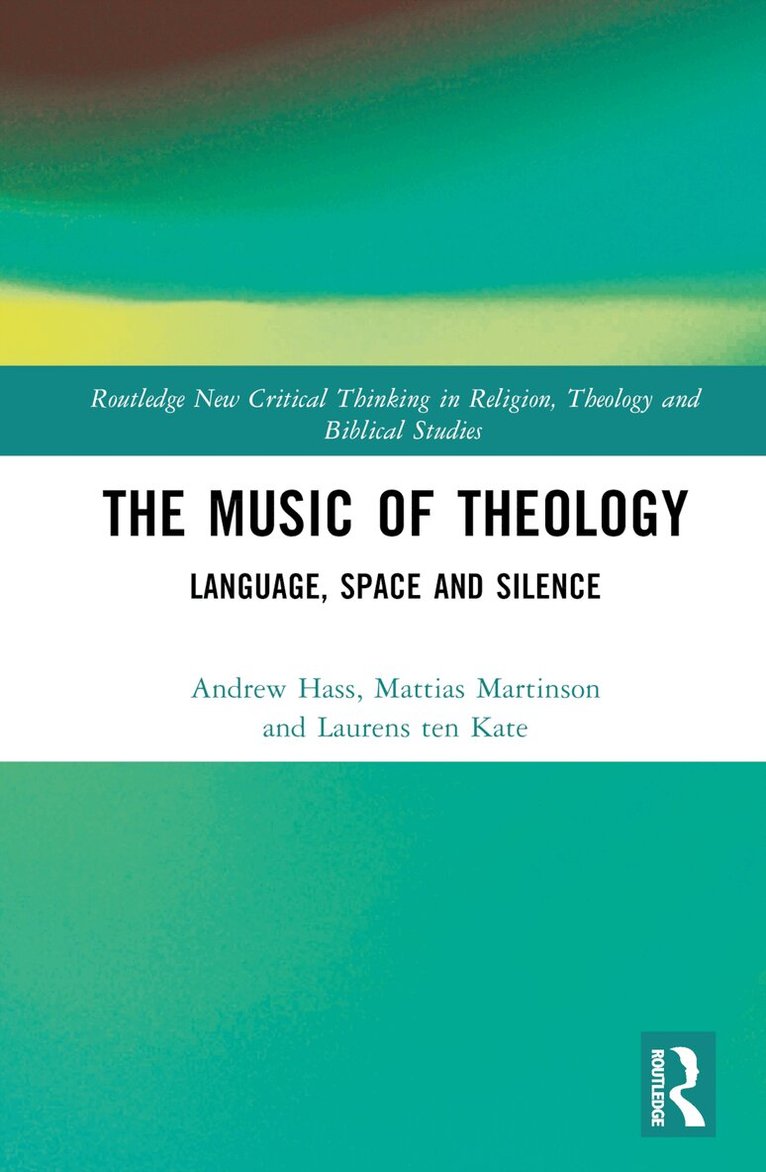
This book reconceives theology as a musical endeavour in critical tension with language, space and silence. An Overture first moves us from music to religion, and then from theology back to music – a circularity that, drawing upon history, sociology, phenomenology, and philosophy, disclaims any theology of music and instead pursues the music in theology. The chapters that follow explore the three central themes by way of theory, music and myth: Adorno, Benjamin and Deleuze (language), Derrida, Rosa and Nancy (space), Schelling/Hegel, Homer and Cage (silence). In overdubbing each other, these chapters work towards theology as a sonorous rhythm between loss and freedom. A Coda provides three brief musical examples – Thomas Tallis, György Ligeti, and Evan Parker – as manifestations of this rhythm, to show in summary how music becomes the very pulse of theology, and theology the very intuition of music. The authors offer an interdisciplinary engagement addressing fundamental questions of the self and the other, of humanity and the divine, in a deconstruction of modern culture and of its bias towards the eye over the ear. The book harmonizes three scholarly voices who attempt to find where the resonance of our Western conceptions and practice, musically and theologically, might resound anew as a more expansive music of theology.
1 022 kr
Skickas inom 10-15 vardagar
Contemporary continental philosophy approaches metaphysics with great reservation. A point of criticism concerns traditional philosophical speaking about God. Whereas Nietzsche, with his question "God is dead; who killed Him?" was, in his time, highly 'unzeitgemäß' and shocking, the twentieth century by contrast, saw Heidegger's concept of 'onto-theology' and its implied problematization of the God of the metaphysicians quickly become a famous term. In Heidegger's words, to a philosophical concept or 'being' we can neither pray, nor kneel. Heidegger did not, however, return to the God of Christian faith. He tried to initiate a new way of speaking about God—a way that reveals the limits of philosophical discourse. Derrida, Marion, Bataille, Adorno, Taubes and Bakhtin, each in their own way, continue this exploration begun by Nietzsche and Heidegger. This book takes a fresh look at these developments. The 'death of God' as the editors say in an introductory study, announces not so much the death of the 'old God'—the God of philosophers, theologians and believers—but rather the death of the god who put himself on His throne: autonomous human reason. In listening to the reactions to this dethronement of autonomous reason, the editors believe they hear the echoes of an experience of an embarrassment rooted partly in an old medieval tradition: negative theology. With the death of this 'new god', might a sensitivity reappear for transcendence? Here the editors want to offer a platform where contemporary philosophers of culture can again pose the question of speaking about God.
368 kr
Skickas inom 10-15 vardagar
Contemporary continental philosophy approaches metaphysics with great reservation. A point of criticism concerns traditional philosophical speaking about God. Whereas Nietzsche, with his question "God is dead; who killed Him?" was, in his time, highly 'unzeitgemäß' and shocking, the twentieth century by contrast, saw Heidegger's concept of 'onto-theology' and its implied problematization of the God of the metaphysicians quickly become a famous term. In Heidegger's words, to a philosophical concept or 'being' we can neither pray, nor kneel. Heidegger did not, however, return to the God of Christian faith. He tried to initiate a new way of speaking about God—a way that reveals the limits of philosophical discourse. Derrida, Marion, Bataille, Adorno, Taubes and Bakhtin, each in their own way, continue this exploration begun by Nietzsche and Heidegger. This book takes a fresh look at these developments. The 'death of God' as the editors say in an introductory study, announces not so much the death of the 'old God'—the God of philosophers, theologians and believers—but rather the death of the god who put himself on His throne: autonomous human reason. In listening to the reactions to this dethronement of autonomous reason, the editors believe they hear the echoes of an experience of an embarrassment rooted partly in an old medieval tradition: negative theology. With the death of this 'new god', might a sensitivity reappear for transcendence? Here the editors want to offer a platform where contemporary philosophers of culture can again pose the question of speaking about God.
1 450 kr
Skickas inom 10-15 vardagar
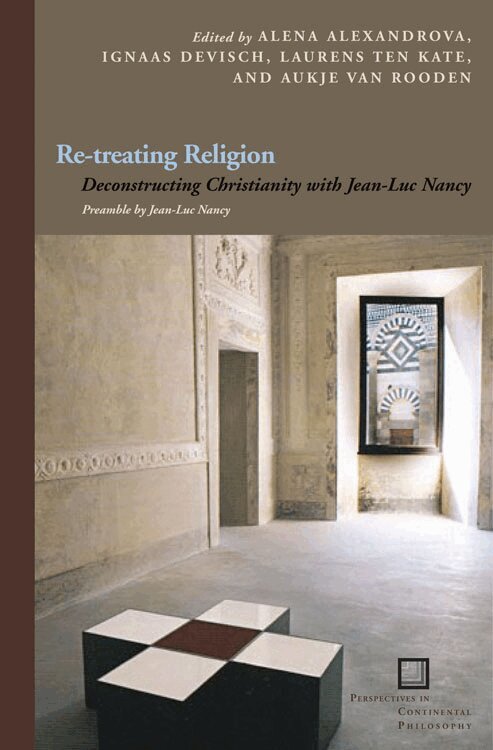
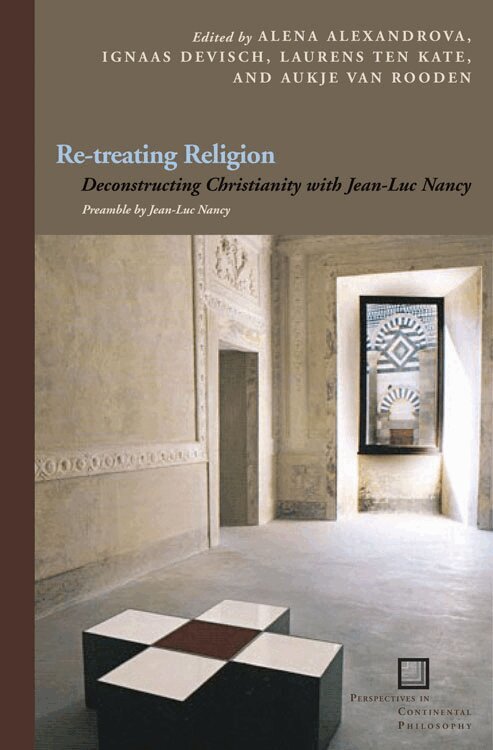
One of the most complicated and ambiguous tendencies in contemporary western societies is the phenomenon referred to as the "turn to religion." In philosophy, one of the most original thinkers critically questioning this "turn" is Jean-Luc Nancy. Re-treating Religion is the first volume to analyze his long-term project "The Deconstruction of Christianity," especially his major statement of it in Dis-Enclosure.Nancy conceives monotheistic religion and secularization not as opposite worldviews that succeed each other in time but rather as springing from the same history. This history consists in a paradoxical tendency to contest one's own foundations—whether God, truth, origin, humanity, or rationality—as well as to found itself on the void of this contestation. Nancy calls this unique combination of self-contestation and self-foundation the "self-deconstruction" of the Western world.The book includes discussion with Nancy himself, who contributes a substantial "Preamble" and a concluding dialogue with the volume editors. The contributions follow Nancy in tracing the complexities of Western culture back to the persistent legacy of monotheism, in order to illuminate the tensions and uncertainties we face in the twenty-first century.
461 kr
Skickas inom 10-15 vardagar
One of the most complicated and ambiguous tendencies in contemporary western societies is the phenomenon referred to as the "turn to religion." In philosophy, one of the most original thinkers critically questioning this "turn" is Jean-Luc Nancy. Re-treating Religion is the first volume to analyze his long-term project "The Deconstruction of Christianity," especially his major statement of it in Dis-Enclosure.Nancy conceives monotheistic religion and secularization not as opposite worldviews that succeed each other in time but rather as springing from the same history. This history consists in a paradoxical tendency to contest one's own foundations—whether God, truth, origin, humanity, or rationality—as well as to found itself on the void of this contestation. Nancy calls this unique combination of self-contestation and self-foundation the "self-deconstruction" of the Western world.The book includes discussion with Nancy himself, who contributes a substantial "Preamble" and a concluding dialogue with the volume editors. The contributions follow Nancy in tracing the complexities of Western culture back to the persistent legacy of monotheism, in order to illuminate the tensions and uncertainties we face in the twenty-first century.
635 kr
Skickas inom 10-15 vardagar
This book reconceives theology as a musical endeavour in critical tension with language, space and silence. An Overture first moves us from music to religion, and then from theology back to music – a circularity that, drawing upon history, sociology, phenomenology, and philosophy, disclaims any theology of music and instead pursues the music in theology. The chapters that follow explore the three central themes by way of theory, music and myth: Adorno, Benjamin and Deleuze (language), Derrida, Rosa and Nancy (space), Schelling/Hegel, Homer and Cage (silence). In overdubbing each other, these chapters work towards theology as a sonorous rhythm between loss and freedom. A Coda provides three brief musical examples – Thomas Tallis, György Ligeti, and Evan Parker – as manifestations of this rhythm, to show in summary how music becomes the very pulse of theology, and theology the very intuition of music. The authors offer an interdisciplinary engagement addressing fundamental questions of the self and the other, of humanity and the divine, in a deconstruction of modern culture and of its bias towards the eye over the ear. The book harmonizes three scholarly voices who attempt to find where the resonance of our Western conceptions and practice, musically and theologically, might resound anew as a more expansive music of theology.