Lawrence Krader - Böcker
Visar alla böcker från författaren Lawrence Krader. Handla med fri frakt och snabb leverans.
6 produkter
6 produkter
2 155 kr
Skickas inom 10-15 vardagar
First published in 1997. Routledge is an imprint of Taylor & Francis, an informa company.
2 289 kr
Skickas inom 10-15 vardagar
First published in 1997. Routledge is an imprint of Taylor & Francis, an informa company.
536 kr
Skickas inom 3-6 vardagar
384 kr
Skickas inom 3-6 vardagar
1 221 kr
Skickas inom 5-8 vardagar
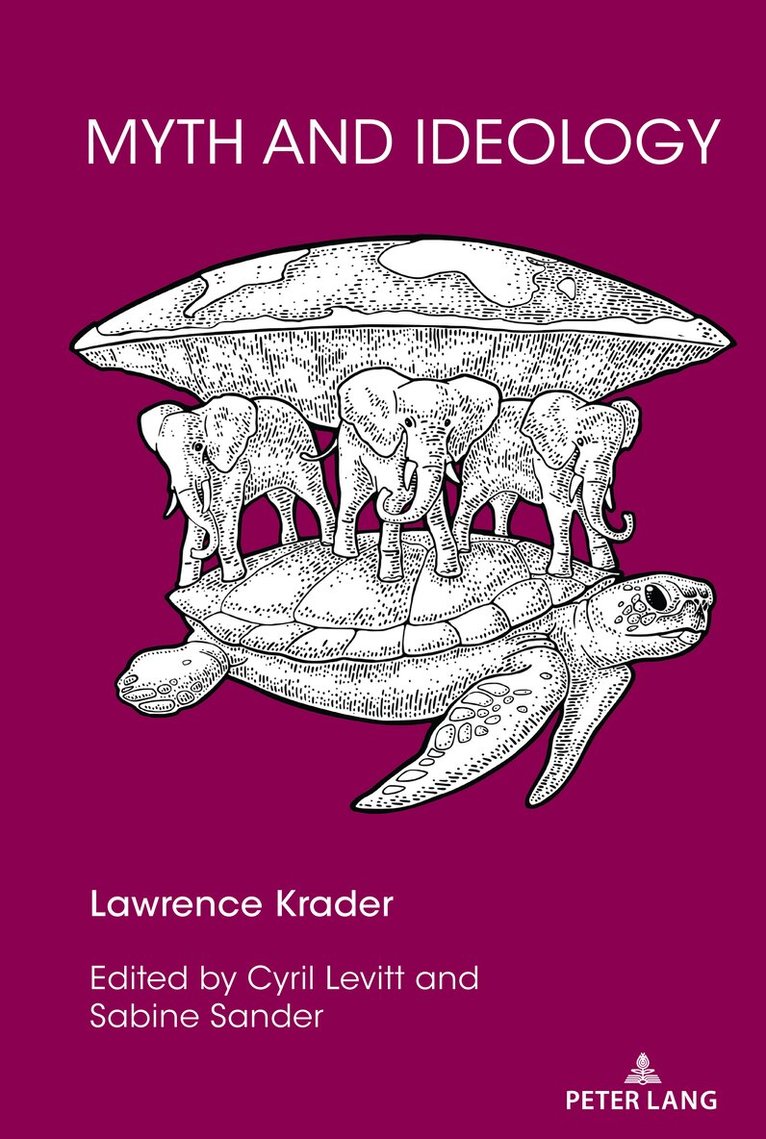
This posthumously published work by Lawrence Krader surveys the study of myths from ancient times (in classical Greece and Rome, Egypt, Babylon, Akkad, Sumer, China), in the Biblical traditions, of the indigenous peoples of the Americas and Australia, and from Northeastern and Central Asia. It also covers the various approaches to the study of myth in Europe in the Middle Ages, the Renaissance and Enlightenment, and the Romantic movement in the late eighteenth and early to mid-nineteenth century; it discusses evolutionist, structuralist, hermeneutic, and linguistic approaches. The book covers on the one hand the treatment of myth from the inside, that is from the experience of those committed to the myth, and on the other the perspective of those ethnologists, philosophers and other students of myth who are outsiders. Krader takes up the theme of esoteric and exoteric myths as he rejects some of the assumptions and approaches to the study of myth from the past while singling out others for approval and inclusion in his general theory of myth. The book includes a discussion of myth in science and in infinitesimal mathematics. It also considers the relationship between myth and ideology in the twentieth century in relation to politics and power. It both incorporates and broadens Krader’s theory of nature as a manifold consisting of different orders of space-time which he developed in his magnum opus Noetics: The Science of Thinking and Knowing.
1 221 kr
Skickas inom 5-8 vardagar
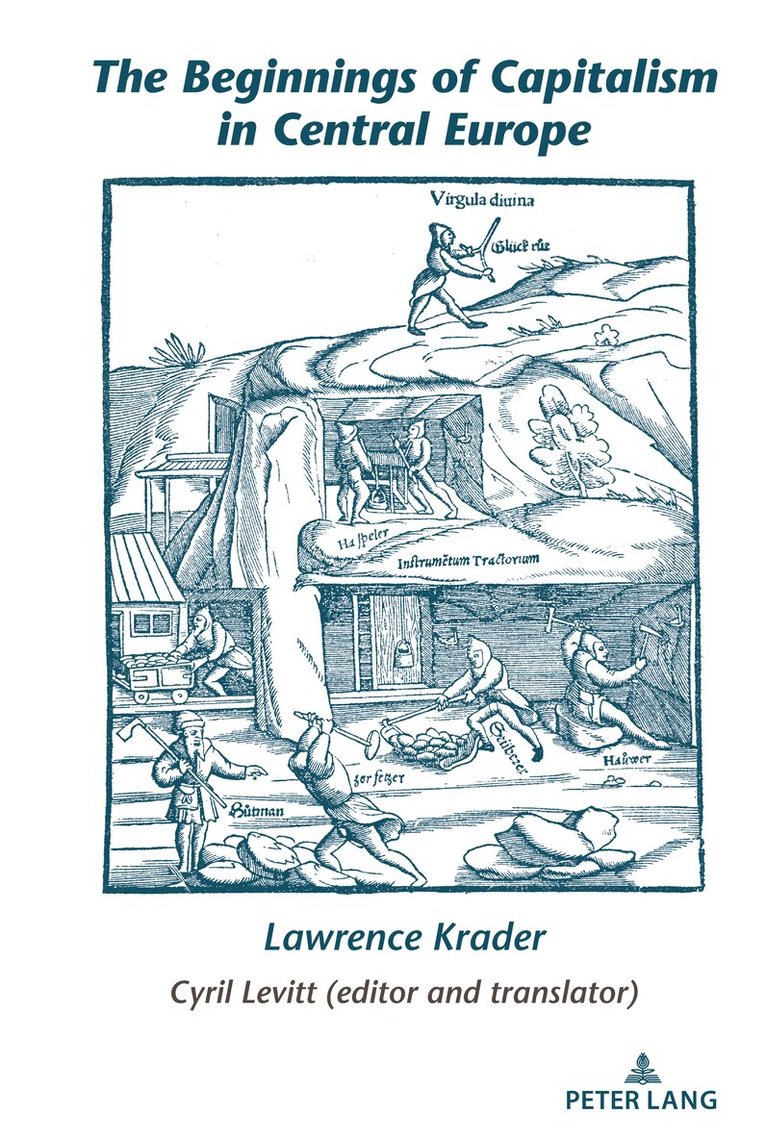
This book focuses on the beginnings of capitalism in Central Europe with emphasis on the German-speaking areas from the 14th to the 17th century. It also reviews and assesses the writings on the topic by the most important thinkers of the twentieth century. At the center of the presentation are the developments in mining, metallurgy, smelting, book publishing, clock making, ship building and advances in trade, commerce and finance. This book will be of interest to students of medieval and early modern European history, the so-called transition debate of feudalism to capitalism, social scientists and historians who are interested in the various transitions in human history, and philosophers who follow developments in the changing issues regarding freedom and bondage over the course of human development. Anthropologists who are familiar with Krader’s writings on the development of the Asiatic mode of production will be interested to see how Krader treats this transition from feudalism to capitalism by way of comparison and contrast.