Lawrence S Stepelevich – författare
Visar alla böcker från författaren Lawrence S Stepelevich. Handla med fri frakt och snabb leverans.
5 produkter
5 produkter
322 kr
Skickas inom 5-8 vardagar
504 kr
Skickas inom 5-8 vardagar
488 kr
Skickas inom 10-15 vardagar
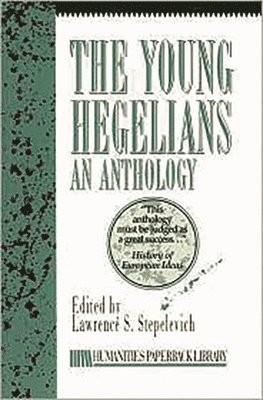
The course of Western philosophy has been profoundly altered by the philosophy of Hegel. The first of those who set about the transforming and revisioning of the world according to Hegel's dialectical theory were called "The Young Hegelians." Today, the most recognized names among them are Karl Marx and Friedrich Engels, but in their own age each of the Young Hegelians shared an equal notoriety. Each in turn, from Strauss with his reduction of the historical jesus into a Messianic myth, to Stirner with his uncompromising egoism, shocked every cultural convention of their age. The aftershocks of their unrestrained criticism have forever altered the topography of our own. The Young Hegelians retrieves some of the central writings of that troubling generation.
1 209 kr
Skickas inom 10-15 vardagar
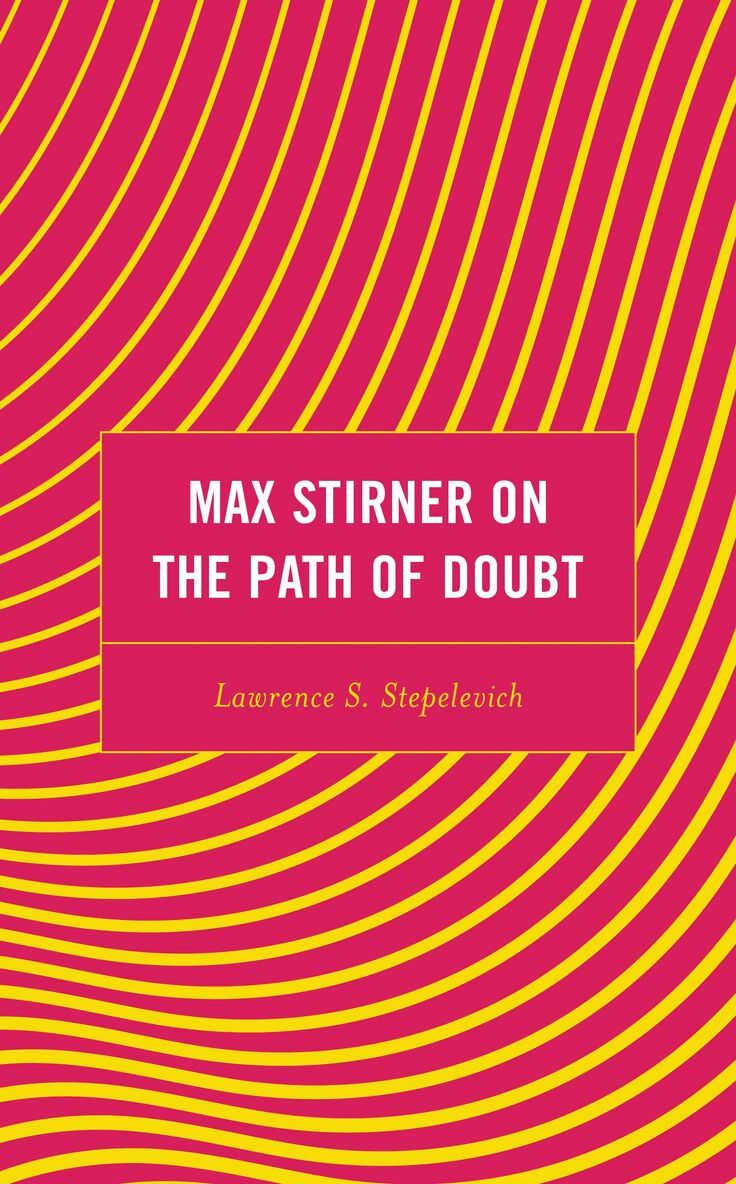
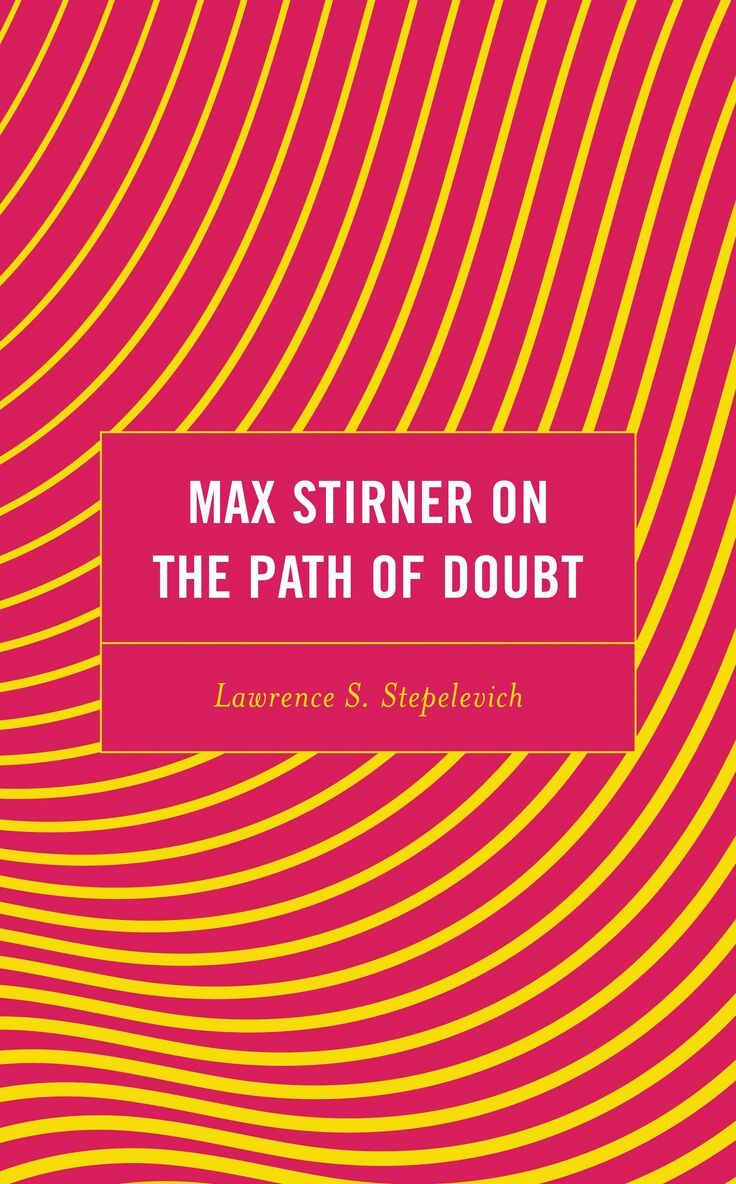
Max Stirner on the Path of Doubt examines Stirner's incisive criticism of his contemporaries during the period from the death of Hegel, in 1831, to the 1848 German Revolution. Stirner's work, mainly the Ego and His Own, considered each of the major figures within that German school known as “The Young Hegelians.” Lawrence S. Stepelevich argues that for Stirner, they were but “pious atheists,” and their common revolutionary ideology concealed an ancient religious ground – which Stirner set about to reveal. The central doctrine of this school, that Mankind was its own Savior, was initiated in 1835 by the theologian, David F. Strauss's in his Life of Jesus , and it progressed with August von Cieszkowski's mystical recasting of history, followed by Bruno Bauer's absolute atheism and Ludwig Feuerbach's statement that “Man is God.” This soon found reflection in the “Sacred History of Mankind” declared by Moses Hess. Within a decade, the result was the secular reformulation of this theological ideology into the “Scientific Socialism” of Karl Marx and Frederick Engels. Although linked to it, Max Stirner was the most relentless and feared critic of this school. His work, never out of print, but largely ignored by academics, has inspired countless “individualists” set upon rejecting any form of religious or political “causes,” and finding Stirner's assertion that he had “set his cause upon nothing” took this as their own cause.
488 kr
Skickas inom 10-15 vardagar
Max Stirner on the Path of Doubt examines Stirner's incisive criticism of his contemporaries during the period from the death of Hegel, in 1831, to the 1848 German Revolution. Stirner's work, mainly the Ego and His Own, considered each of the major figures within that German school known as “The Young Hegelians.” Lawrence S. Stepelevich argues that for Stirner, they were but “pious atheists,” and their common revolutionary ideology concealed an ancient religious ground – which Stirner set about to reveal. The central doctrine of this school, that Mankind was its own Savior, was initiated in 1835 by the theologian, David F. Strauss's in his Life of Jesus , and it progressed with August von Cieszkowski's mystical recasting of history, followed by Bruno Bauer's absolute atheism and Ludwig Feuerbach's statement that “Man is God.” This soon found reflection in the “Sacred History of Mankind” declared by Moses Hess. Within a decade, the result was the secular reformulation of this theological ideology into the “Scientific Socialism” of Karl Marx and Frederick Engels. Although linked to it, Max Stirner was the most relentless and feared critic of this school. His work, never out of print, but largely ignored by academics, has inspired countless “individualists” set upon rejecting any form of religious or political “causes,” and finding Stirner's assertion that he had “set his cause upon nothing” took this as their own cause.