Leah Whittington - Böcker
Visar alla böcker från författaren Leah Whittington. Handla med fri frakt och snabb leverans.
2 produkter
2 produkter
1 606 kr
Skickas inom 7-10 vardagar
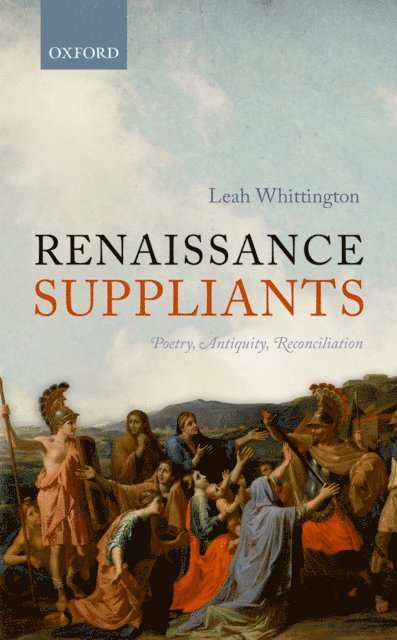
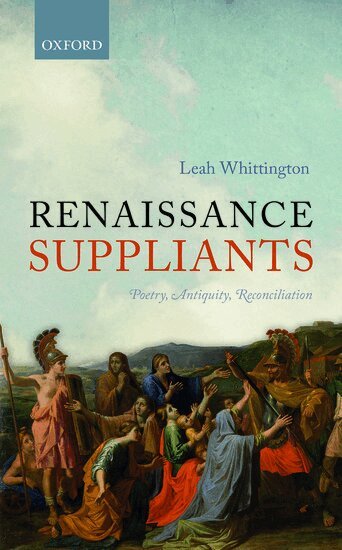
Renaissance Suppliants studies supplication as a social and literary event in the long European Renaissance. It argues that scenes of supplication are defining episodes in a literary tradition stretching back to Greco-Roman antiquity, taking us to the heart of fundamental questions of politics and religion, ethics and identity, sexuality and family. As a perennial mode of asymmetrical communication in moments of helplessness and extreme need, supplication speaks to ways that people live together despite grave inequalities. It is a strategy that societies use to regulate and perpetuate themselves, to negotiate conflict, and to manage situations in which relationships threaten to unravel. All the writers discussed here--Vergil, Petrarch, Shakespeare, and Milton--find supplication indispensable for thinking about problems of antagonism, difference, and hierarchy, bringing the aesthetic resources of supplicatory interactions to bear on their unique literary and cultural circumstances. The opening chapters establish a conceptual framework for thinking about supplication as facilitating transitions between states of feeling and positions of relative status, beginning with Homer and classical literature. Vergil's Aeneid is paradigmatic instance in which literary and social structures of the ancient past are transformed to suit the needs of the present, and supplication becomes a figure for the act of cultural translation. Subsequent chapters take up different aspects of Renaissance supplicatory discourse, showing how postures of humiliation and abjection are appropriated and transformed in erotic poetry, drama, and epic. The book ends with Milton who invests gestures of self-abasement with unexpected dignity.
850 kr
Kommande
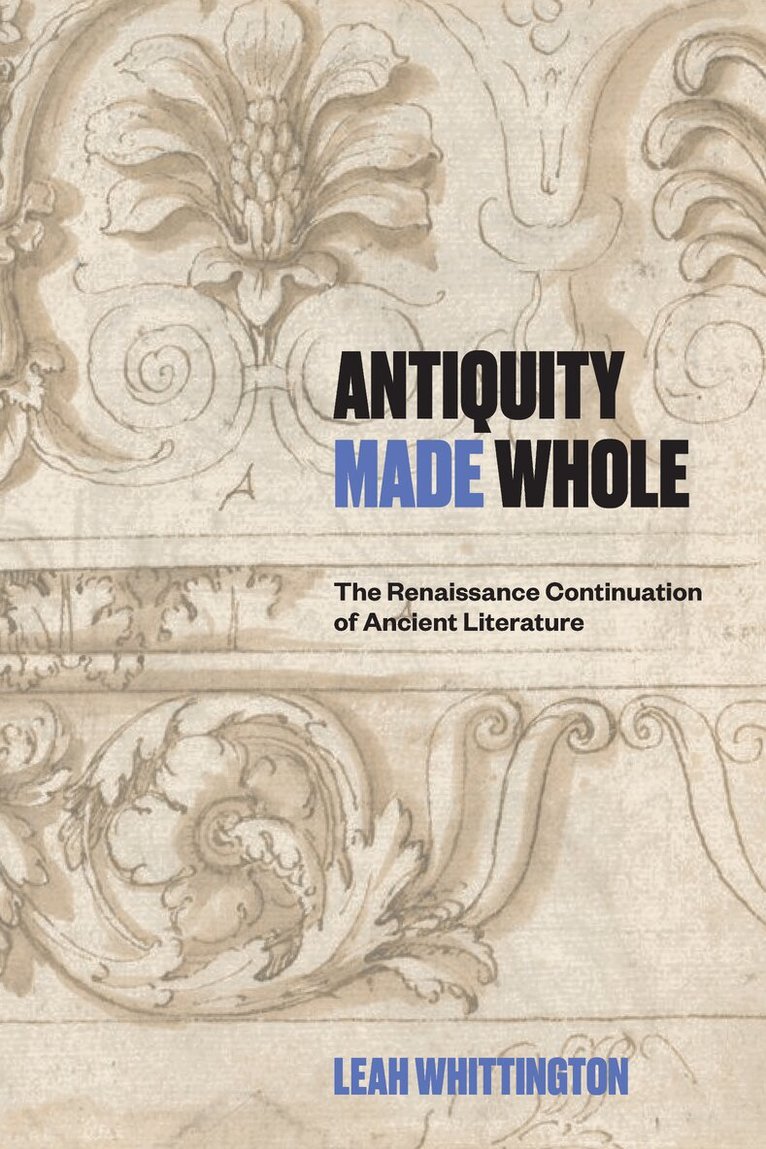
How Renaissance writers rebuilt ancient texts, one fragment at a time.Across the European Renaissance, ancient literature circulated in damaged, incomplete, and fragmentary forms. Missing lines, lost endings, and textual gaps were not obstacles to reading the classics; instead, they were invitations to fill in the blanks. In Antiquity Made Whole, Leah Whittington studies the practice of composing supplements, continuations, and completions composed for such works and places this practice at the center of Renaissance literary culture. Whittington uncovers a hidden literary archive in which authors set out to restore and revive antiquity through creative means. Though often overlooked in studies of classical transmission and reception, supplements appeared in manuscripts and printed books wherever classical literature was studied and published between 1400 and 1700. These texts were closely tied to the scholarly practices that defined early classical scholarship, sharing methods and materials with textual criticism, translation, and imitation. Studying ancient writers such as Vergil, Plautus, and Cicero alongside the early modern authors who wrote in the gaps, from Maffeo Vegio to Chaucer, Spenser, and Thomas May, Whittington shows how supplement writers worked across historical and fictional registers. Their work helps to refine modern distinctions between literary creativity and historical scholarship and reveals how Renaissance readers understood preservation as an active, generative process. By situating supplements within the history of philology, Antiquity Made Whole offers a new account of Renaissance classical culture and its afterlives, providing timely insight into contemporary debates about restoration, conservation, and the stewardship of the past.