Leanne Langley - Böcker
Visar alla böcker från författaren Leanne Langley. Handla med fri frakt och snabb leverans.
3 produkter
3 produkter
4 394 kr
Skickas inom 7-10 vardagar
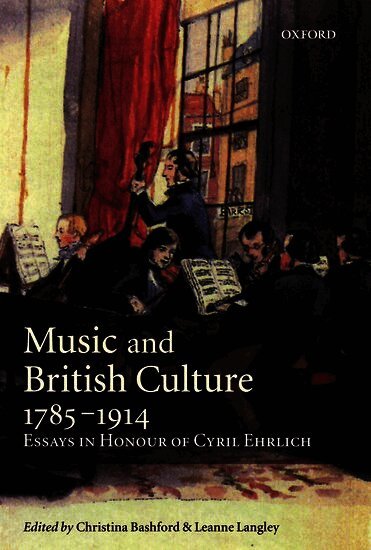
This book takes the themes and approaches of Professor Cyril Ehrlich's pathbreaking work on British social history in music as its inspiration. In sixteen substantial new essays, all specially commissioned from cultural and musical historians, it embraces the music marketplace, piano culture, musicians work patterns, music institutions and audiences, concert and repertoire history, issues in performance, criticism and reception, gender, and national and urban identities all with a clear focus on art music traditions (significantly under-treated by music scholars in this area). The cultural importance of serious music, from Belfast to Calcutta, has long been assumed for the period but rarely demonstrated. Here it is central, interwoven with the social and economic realities confronting music people in Britain across the 19th century.
Del 35 - Music in Britain, 1600-2000
Royal Musical Association
Creating Scholars, Advancing Research
Inbunden, Engelska, 2024
1 070 kr
Skickas inom 7-10 vardagar
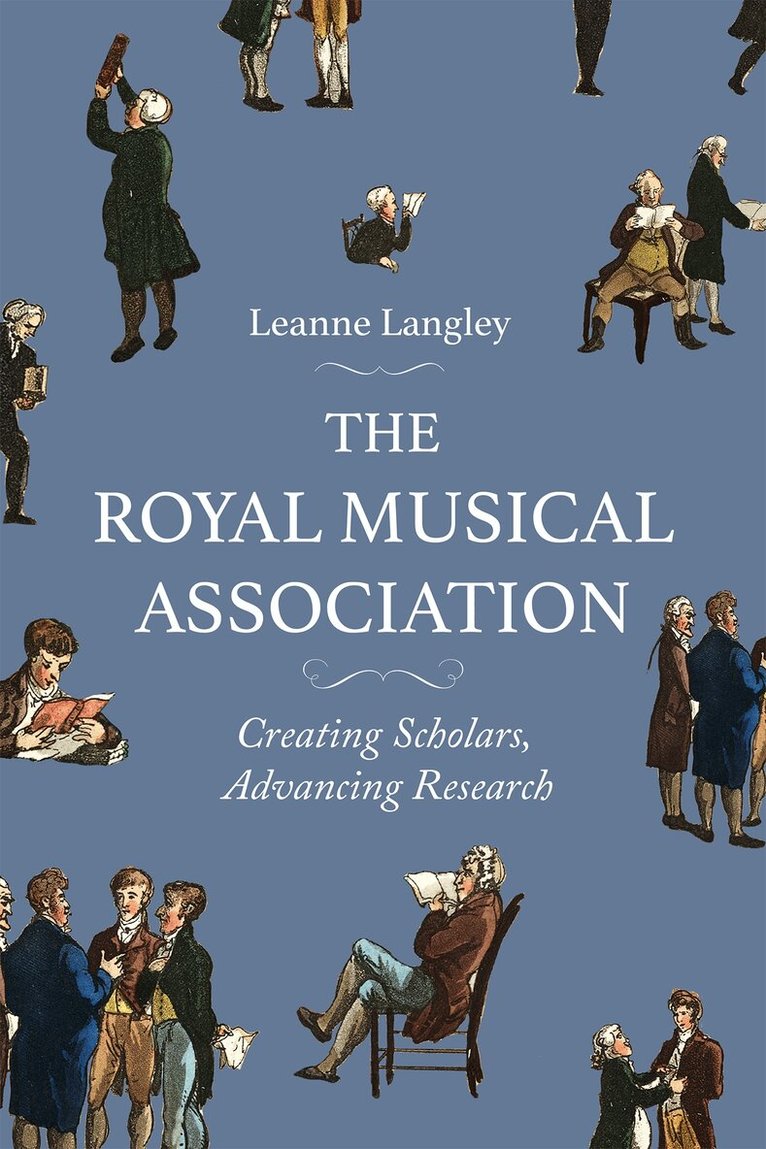
Charting the history of the Royal Musical Association over 150 years: from scientific roots and the long resistance of British universities to music study, to bringing UK musicology to worldwide recognition.This book is the first comprehensive history of the Royal Musical Association. Drawing on extensive archival material and exploring a host of colourful people, it paints an absorbing picture of scholarly achievement in Britain across 150 years.Founded in London in 1874 as a learned society for musical research, the Association emulated the venerable Royal Society in welcoming diverse backgrounds, but went further by including women. Charting its scientific roots and the long resistance of British universities to music study, the narrative shows how the Association published a strong body of research independently, blossoming from 170 members in the 1870s to more than 1400 today.Early joiners included the scientists William Pole and John Tyndall (a founder of climate science), the art historian Elizabeth Eastlake, and musicians from John Stainer to Agnes Zimmermann. Their goal was to 'investigate' and 'discuss' music rather than perform it or give concerts. Because no member was yet trained in what would later be called musicology, the papers covered an eclectic range of scientific, ethnographic and historical questions, broad in scope and responsive to heard music. Whether measuring acoustic phenomena, studying popular music or deciphering manuscripts of early polyphony, the Association promoted wide engagement as well as the establishment of academic musicology.Meanwhile, members including W.B. Squire, Edward J. Dent, Thurston Dart and Stanley Sadie transformed public understanding. Their work in music library development, opera, Musica Britannica, early music, criticism and music lexicography helped gain global recognition for British scholarship. With arts study under pressure in the current uncertain climate, the Association's recent concern for real-world issues in diversity, practice-based research and the vital role of music in schools remains true to its founding spirit.
Del 35 - Music in Britain, 1600-2000
Royal Musical Association
Creating Scholars, Advancing Research
Häftad, Engelska, 2024
345 kr
Skickas inom 7-10 vardagar
Charting the history of the Royal Musical Association over 150 years: from scientific roots and the long resistance of British universities to music study, to bringing UK musicology to worldwide recognition.This book is the first comprehensive history of the Royal Musical Association. Drawing on extensive archival material and exploring a host of colourful people, it paints an absorbing picture of scholarly achievement in Britain across 150 years.Founded in London in 1874 as a learned society for musical research, the Association emulated the venerable Royal Society in welcoming diverse backgrounds, but went further by including women. Charting its scientific roots and the long resistance of British universities to music study, the narrative shows how the Association published a strong body of research independently, blossoming from 170 members in the 1870s to more than 1400 today.Early joiners included the scientists William Pole and John Tyndall (a founder of climate science), the art historian Elizabeth Eastlake, and musicians from John Stainer to Agnes Zimmermann. Their goal was to 'investigate' and 'discuss' music rather than perform it or give concerts. Because no member was yet trained in what would later be called musicology, the papers covered an eclectic range of scientific, ethnographic and historical questions, broad in scope and responsive to heard music. Whether measuring acoustic phenomena, studying popular music or deciphering manuscripts of early polyphony, the Association promoted wide engagement as well as the establishment of academic musicology.Meanwhile, members including W.B. Squire, Edward J. Dent, Thurston Dart and Stanley Sadie transformed public understanding. Their work in music library development, opera, Musica Britannica, early music, criticism and music lexicography helped gain global recognition for British scholarship. With arts study under pressure in the current uncertain climate, the Association's recent concern for real-world issues in diversity, practice-based research and the vital role of music in schools remains true to its founding spirit.