Leo Kenis - Böcker
Visar alla böcker från författaren Leo Kenis. Handla med fri frakt och snabb leverans.
3 produkter
3 produkter
Theological Libraries and Library Associations in Europe
A Festschrift on the Occasion of the 50th Anniversary of BETH
Inbunden, Engelska, 2022
2 103 kr
Skickas inom 5-8 vardagar
During the past 50 years, theological libraries have confronted secularisation and religious pluralism, along with revolutionary technological developments that brought not only significant challenges but also unexpected opportunities to adopt new instruments for the transfer of knowledge through the automation and computerisation of libraries. This book shows how European theological libraries tackled these challenges; how they survived by redefining their task, by participating in the renewal of scholarly librarianship, and by networking internationally. Since 1972, BETH, the Association of European Theological Libraries, has stimulated this process by enabling contacts among a growing number of national library associations all over Europe.
436 kr
Tillfälligt slut
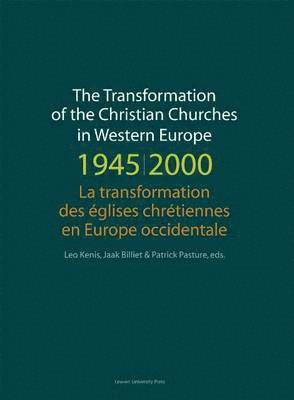
Research continues to show that the Christian religion is gradually disappearing from the public, cultural and social spheres in Western Europe. Even on the individual level, institutionalised religion is becoming increasingly marginalised. Some scholars, however, speak of a repositioning of the Christian churches in post-modern Europe, citing new forms of religious life and community. This book focuses on the complex mutations the Christian churches in Western Europe have experienced since World War II. The authors offer a comparative exploration of the situations in several countries and describe the evolution (including the specific growth and decline) of the various Christian denominations.
Del 25 - KADOC-Studies on Religion, Culture and Society
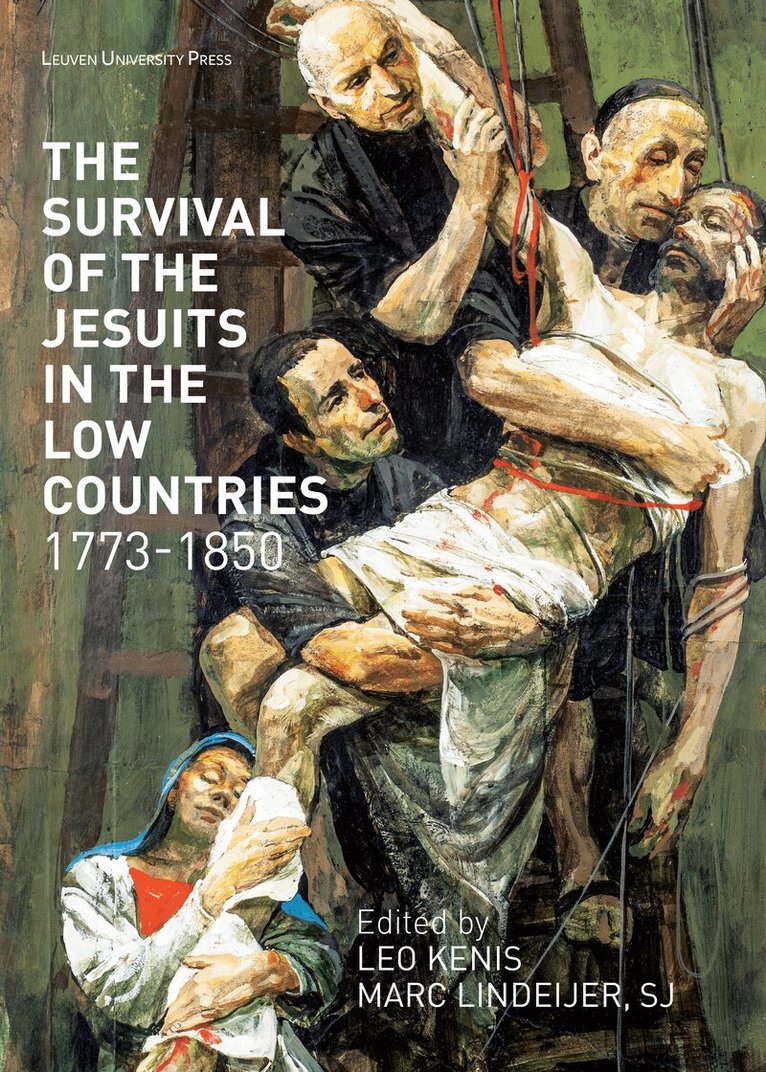
Survival of the Jesuits in the Low Countries, 1773-1850
Häftad, Engelska, 2019
719 kr
Skickas
How the Jesuits re-emerged after forty years of suppressionIn 1773, Pope Clement XIV suppressed the Society of Jesus. For the 823 Jesuits living in the Low Countries, it meant the end of their institutional religious life. In the Austrian Netherlands, the Jesuits were put under strict surveillance, but in the Dutch Republic they were able to continue their missionary work. It is this regional contrast and the opportunities it offered for the Order to survive that make the Low Countries an exceptional and interesting case in Jesuit history.Just as in White Russia, former Jesuits and new Jesuits in the Low Countries prepared for the restoration of the Order, with the help of other religious, priests, and lay benefactors. In 1814, eight days before the restoration of the Society by Pope Pius VII, the novitiate near Ghent opened with eleven candidates from all over the United Netherlands. Barely twenty years later, the Order in the Low Countries – by then counting one hundred members – formed an independent Belgian Province. A separate Dutch Province followed in 1850. Obviously, the reestablishment, with new churches and new colleges, carried a heavy survival burden: in the face of their old enemies and the black legends they revived, the Jesuits had to retrieve their true identity, which had been suppressed for forty years.Contributors: Peter van Dael, SJ (Vrije Universiteit Amsterdam & Pontifical Gregorian University Rome), Pierre Antoine Fabre (École des hautes études en sciences sociales Paris), Joep van Gennip (Tilburg School of Catholic Theology), Michel Hermans, SJ (University of Namur), Marek Inglot, SJ (Pontifical Gregorian University Rome), Frank Judo (lawyer Brussels), Leo Kenis (KU Leuven) Marc Lindeijer, SJ (Bollandist Society Brussels), Jo Luyten (KADOC-KU Leuven), Kristien Suenens (KADOC-KU Leuven), Vincent Verbrugge (historian)This publication is GPRC-labeled (Guaranteed Peer-Reviewed Content).