Leonard R Heinz - Böcker
Visar alla böcker från författaren Leonard R Heinz. Handla med fri frakt och snabb leverans.
4 produkter
4 produkter
266 kr
Skickas
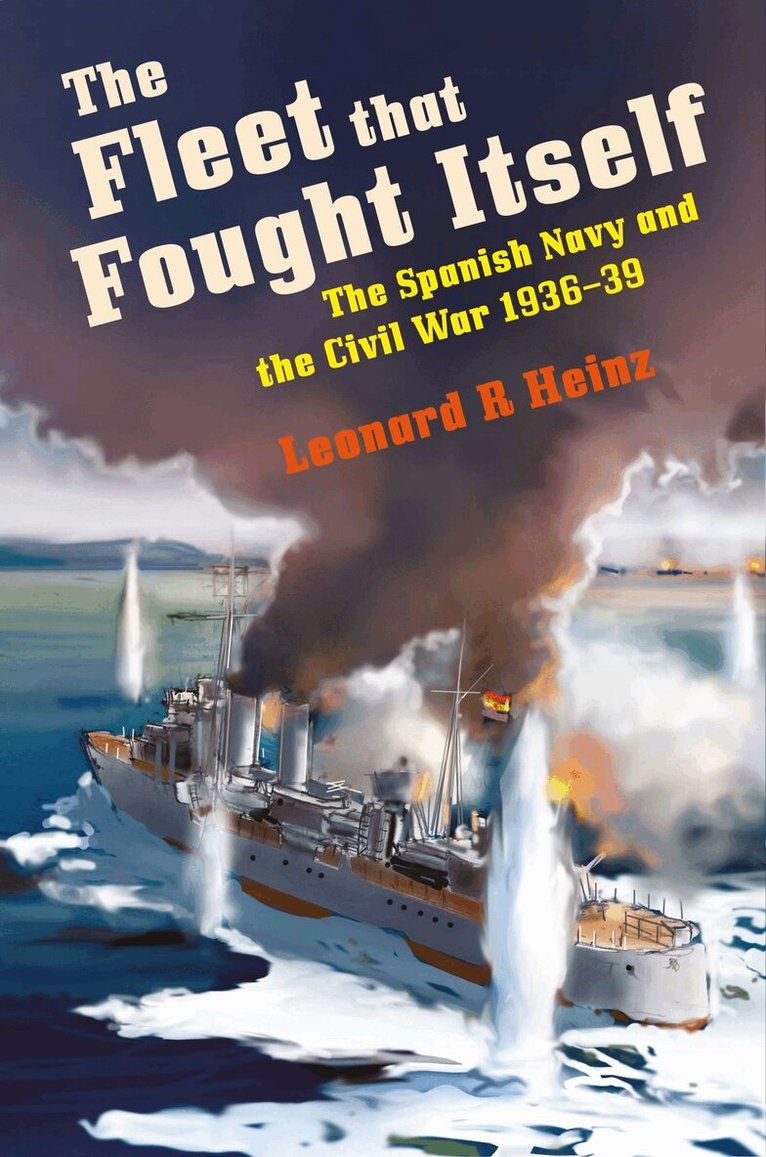
In July 1936 a military revolt brought civil war to Spain; it erupted into a bitter political contest and a brutal land war which have been well covered by historians – a less appreciated dimension of the conflict was the crucial role played by the navies of both sides. This new book describes and explores the naval operations that played out over thirty-eight months and spread well beyond the seas of Spain. Spanish guns thundered off the English coast and as far south as the Bay of Guinea. Submarines lurked in the Aegean, waiting to torpedo ships bringing supplies from the Black Sea. To the west, operations extended into the Atlantic as warships searched for blockade runners and moved between the Bay of Biscay and the Mediterranean.The book begins by describing of the Spanish navy pre-war, then covers the generals’ revolt of July 1936 and its effect in the fleet. Subsequent chapters deal with the naval war as it unfolded. It describes Franco’s attempts to move the battle-hardened Spanish troops in Africa to the Spanish mainland, then shifts focus to the northern Spanish coast, where an isolated Republican enclave depended on the sea to receive weapons, food, and fuel. The author then pursues a split narrative, interweaving developments in the north and the Mediterranean and following the war to its conclusion. Significant actions fought between the two navies are all covered in detail. In addition, the book describes the crucial roles played by the British, French, German, and Italian navies in the Spanish struggle. Throughout, the author challenges the common view that the Republican navy was incompetent and inert.Based on primary as well as secondary sources, in both the English and Spanish languages, this book sheds genuinely new light on the Spanish navies of this civil war era and brings into focus their significance in the broader struggle.
372 kr
Tillfälligt slut
Clash of Fleets is an operational history that records every naval engagement fought between major surface warships during World War I. Much more than a catalog of combat facts, Clash of Fleets explores why battles occurred; how the different navies fought; and how combat advanced doctrine and affected the development and application of technology. The result is a holistic overview of the war at sea as it affected all nations and all theaters of war. A work of this scope is unprecedented.Organized into seven chapters, the authors first introduce the technology, weapons, ships, and the doctrine that governed naval warfare in 1914. The next five chapters explore each year of the war and are subdivided into sections corresponding to major geographic areas. This arrangement allows the massive sweep of action to be presented in a structured and easy to follow format that includes engagements fought by the Austro-Hungarian, British, French, German, Ottoman, and Russian Navies in the Adriatic, Aegean, Baltic, Black, Mediterranean, and North Seas as well as the Atlantic, India, and Pacific Oceans. The role of surface combat in the Great War is analyzed and these actions are compared to major naval wars before and after. In addition to providing detailed descriptions of actions in their historical perspectives, O’Hara and Heinz advance several themes, including the notion that World War I was a war of navies as much as a war of armies. They explain that surface combat had a major impact on all aspects of the naval war and on the course of the war in general. Finally, Clash of Fleets illustrates that systems developed in peace do not always work as expected in war, that some are not used as anticipated, and that others became unexpectedly important. There is much for today’s naval professional to consider in the naval conflict that occurred a century ago.
265 kr
Skickas inom 5-8 vardagar
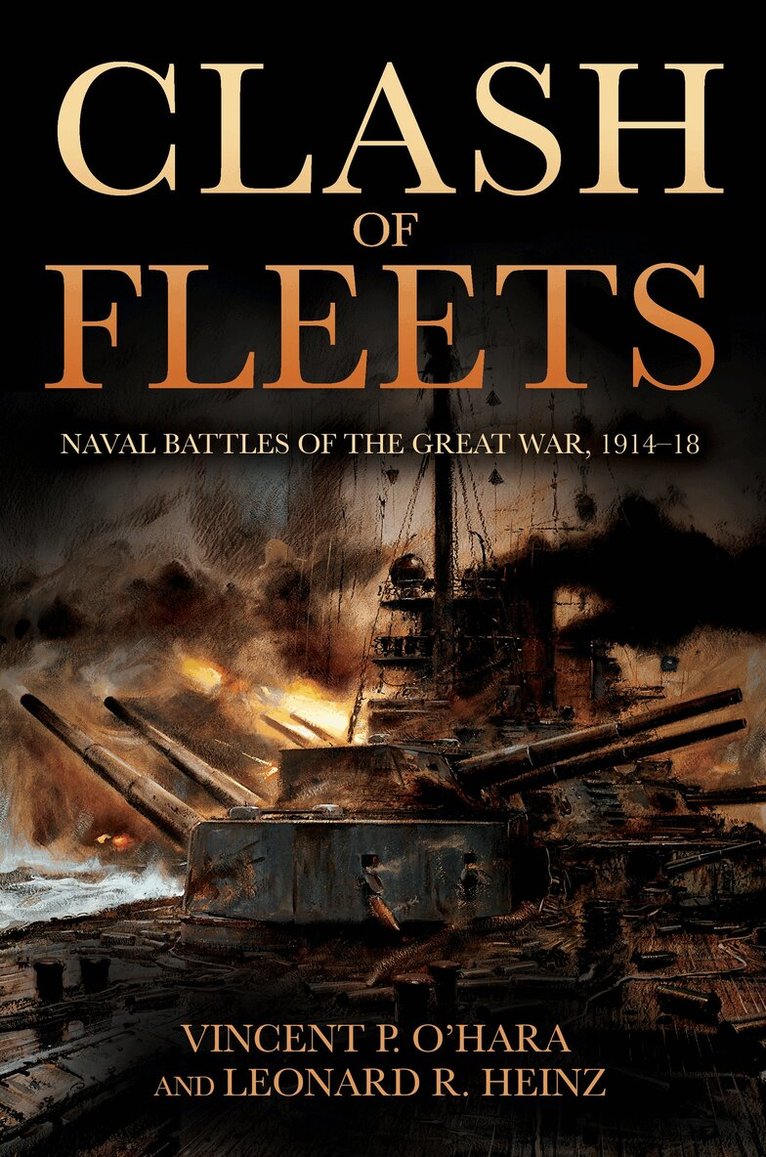
Clash of Fleets is an operational history that records every naval engagement fought between major surface warships during World War I. Much more than a catalog of combat facts, Clash of Fleets explores why battles occurred; how the different navies fought; and how combat advanced doctrine and affected the development and application of technology. The result is a holistic overview of the war at sea as it affected all nations and all theaters of war. A work of this scope is unprecedented.Organized into seven chapters, the authors first introduce the technology, weapons, ships, and the doctrine that governed naval warfare in 1914. The next five chapters explore each year of the war and are subdivided into sections corresponding to major geographic areas. This arrangement allows the massive sweep of action to be presented in a structured and easy to follow format that includes engagements fought by the Austro-Hungarian, British, French, German, Ottoman, and Russian Navies in the Adriatic, Aegean, Baltic, Black, Mediterranean, and North Seas as well as the Atlantic, India, and Pacific Oceans. The role of surface combat in the Great War is analyzed and these actions are compared to major naval wars before and after. In addition to providing detailed descriptions of actions in their historical perspectives, O'Hara and Heinz advance several themes, including the notion that World War I was a war of navies as much as a war of armies. They explain that surface combat had a major impact on all aspects of the naval war and on the course of the war in general. Finally, Clash of Fleets illustrates that systems developed in peace do not always work as expected in war, that some are not used as anticipated, and that others became unexpectedly important. There is much for today's naval professional to consider in the naval conflict that occurred a century ago.
359 kr
Tillfälligt slut
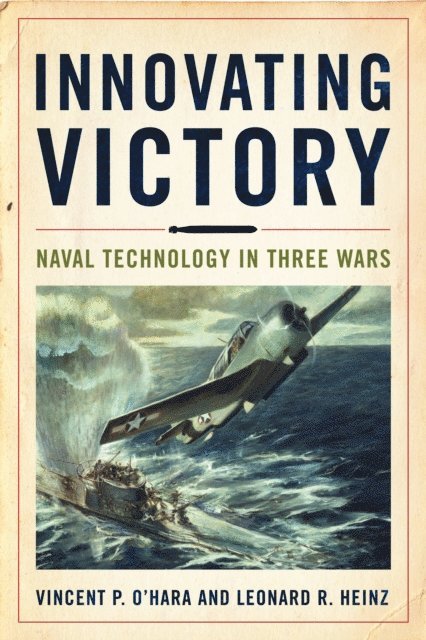
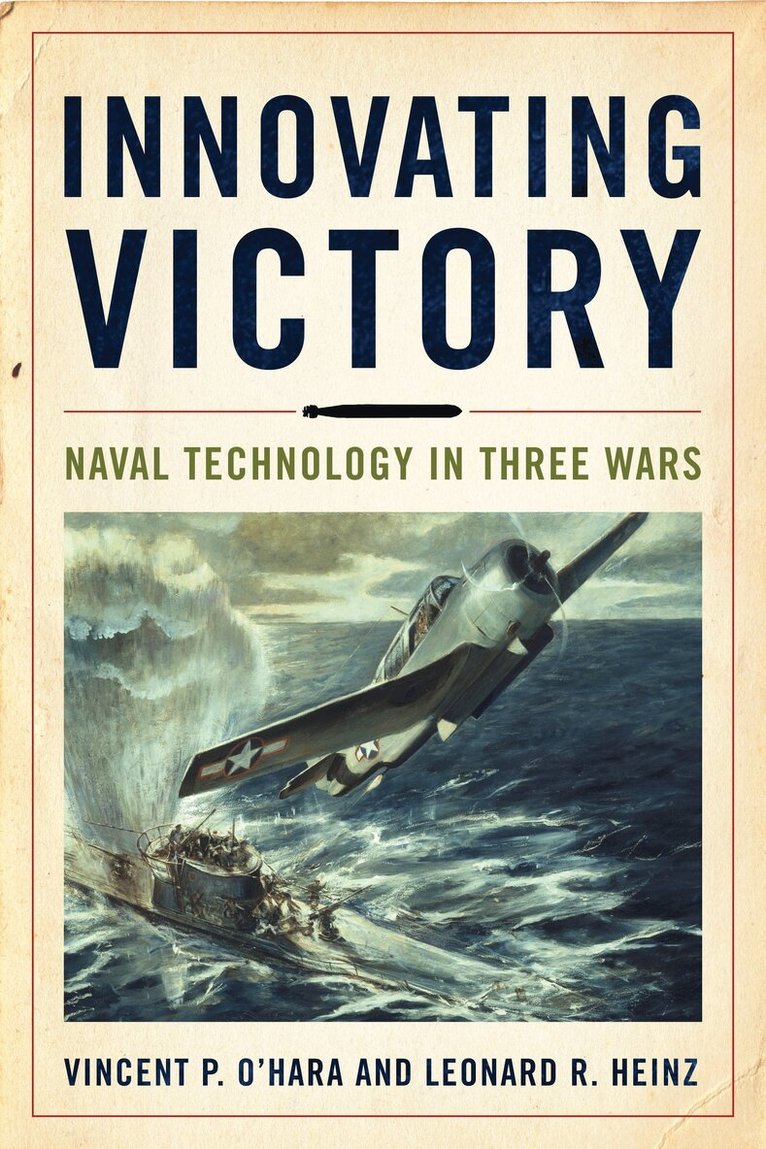
Innovating Victory: Naval Technology in Three Wars, studies how the world's navies incorporated new technologies into their ships, their practices, and their doctrine. It does this by examining six core technologies fundamental to twentieth-century naval warfare including new platforms (submarines and aircraft), new weapons (torpedoes and mines), and new tools (radar and radio). Each chapter considers the state of a subject technology when it was first used in war and what navies expected of it. It then looks at the way navies discovered and developed the technology's best use, in many cases overcoming disappointed expectations. It considers how a new technology threatened its opponents, not to mention its users, and how those threats were managed.Innovating Victory shows that the use of technology is more than introducing and mastering a new weapon or system. Differences in national resources, force mixtures, priorities, perceptions, and missions forced nations to approach the problems presented by new technologies in different ways. Navies that specialized in specific technologies often held advantages over enemies in some areas but found themselves disadvantaged in others. Vincent P. O'Hara and Leonard Heinz present new perspectives and explore the process of technological introduction and innovation in a way that is relevant to today's navies, which face challenges and questions even greater than those of 1904, 1914, and 1939.