Leonid Kuligin – författare
Visar alla böcker från författaren Leonid Kuligin. Handla med fri frakt och snabb leverans.
2 produkter
2 produkter
Häftad, Engelska, 2026
613 kr
Skickas inom 5-8 vardagar
Take generative AI from prototype to production with confidence, master core LLM architectures, rigorous evaluation (offline and A/B testing), LLMOps and deployment pipelines, and the reliability practices that keep systems stable, secure, and scalable in the real world.Key FeaturesTurn generative AI prototypes into production-ready applicationsMaster LLM evaluation, observability, and reliability engineeringDeploy and scale AI systems using LLMOps and modern DevOps toolsBook DescriptionVibe-coding tools & coding assistants make it easy to spin up generative AI prototypes. Getting those prototypes into production is where most teams stall. This book is a practical guide to building production-ready generative AI applications that are reliable, scalable, and secure, and to understanding where traditional software best practices can clash with the realities of operating LLM-based systems.Written by a Staff AI Engineer at Google, it takes you through the full AI product lifecycle: scoping and building effective prototypes, aligning them with business goals, and scaling enterprise-wide generative AI adoption. You will learn how to evaluate LLMs with offline metrics, human-in-the-loop methods, and statistical testing. Next, you will design core architectures such as RAG, vector databases, agents, and memory systems. Next, operationalize these systems with production-grade code, robust testing, DevOps, MLOps, and LLMOps workflows, including deployment and scaling on modern LLMOps platforms. The book also covers security, Responsible AI, and modern observability and reliability for generative AI systems. By the end you’ll learn how to run post-launch A/B tests, maintain systems over time, and measure business impact. The focus is on durable engineering principles, so your products succeed beyond the prototype stage.What you will learnDesign offline and online evaluation strategies (including statistical A/B testing) and collect the right dataConvert AI prototypes into production-ready applications that are stable, scalable, & secureReduce maintenance effort with best practices in testing, configuration, and code readabilityImplement DevOps, MLOps, and LLMOps—what's common and what differs across these approaches for AI systemsBuild platform teams to scale enterprise-wide generative AI adoptionDefine reliability targets using SRE principles and statistical A/B testingWho this book is forThis book is for technical leaders, AI engineers, data scientists, software engineers, and architects building generative AI applications. It is also ideal for engineering managers, product leaders, and technical decision-makers who need to understand how to deploy, scale, and maintain production-grade AI systems.
Häftad, Engelska, 2025
729 kr
Skickas inom 5-8 vardagar
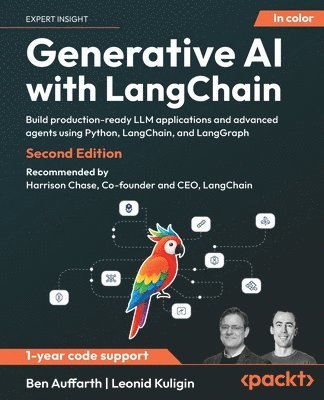
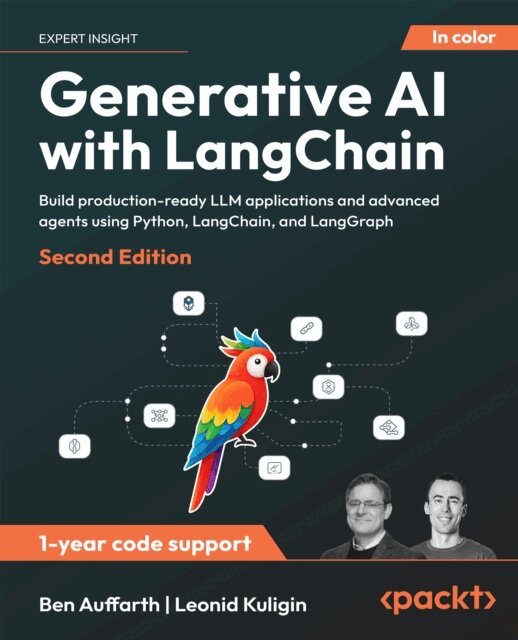
Go beyond foundational LangChain documentation with detailed coverage of LangGraph interfaces, design patterns for building AI agents, and scalable architectures used in production—ideal for Python developers building GenAI applicationsKey FeaturesBridge the gap between prototype and production with robust LangGraph agent architecturesApply enterprise-grade practices for testing, observability, and monitoringBuild specialized agents for software development and data analysisPurchase of the print or Kindle book includes a free PDF eBookBook DescriptionThis second edition tackles the biggest challenge facing companies in AI today: moving from prototypes to production. Fully updated to reflect the latest developments in the LangChain ecosystem, it captures how modern AI systems are developed, deployed, and scaled in enterprise environments. This edition places a strong focus on multi-agent architectures, robust LangGraph workflows, and advanced retrieval-augmented generation (RAG) pipelines.You'll explore design patterns for building agentic systems, with practical implementations of multi-agent setups for complex tasks. The book guides you through reasoning techniques such as Tree-of -Thoughts, structured generation, and agent handoffs—complete with error handling examples. Expanded chapters on testing, evaluation, and deployment address the demands of modern LLM applications, showing you how to design secure, compliant AI systems with built-in safeguards and responsible development principles. This edition also expands RAG coverage with guidance on hybrid search, re-ranking, and fact-checking pipelines to enhance output accuracy.Whether you're extending existing workflows or architecting multi-agent systems from scratch, this book provides the technical depth and practical instruction needed to design LLM applications ready for success in production environments.What you will learnDesign and implement multi-agent systems using LangGraphImplement testing strategies that identify issues before deploymentDeploy observability and monitoring solutions for production environmentsBuild agentic RAG systems with re-ranking capabilitiesArchitect scalable, production-ready AI agents using LangGraph and MCPWork with the latest LLMs and providers like Google Gemini, Anthropic, Mistral, DeepSeek, and OpenAI's o3-miniDesign secure, compliant AI systems aligned with modern ethical practicesWho this book is forThis book is for developers, researchers, and anyone looking to learn more about LangChain and LangGraph. With a strong emphasis on enterprise deployment patterns, it’s especially valuable for teams implementing LLM solutions at scale. While the first edition focused on individual developers, this updated edition expands its reach to support engineering teams and decision-makers working on enterprise-scale LLM strategies. A basic understanding of Python is required, and familiarity with machine learning will help you get the most out of this book.