Lesley A. Gregoricka - Böcker
Visar alla böcker från författaren Lesley A. Gregoricka. Handla med fri frakt och snabb leverans.
3 produkter
3 produkter
1 102 kr
Skickas inom 10-15 vardagar
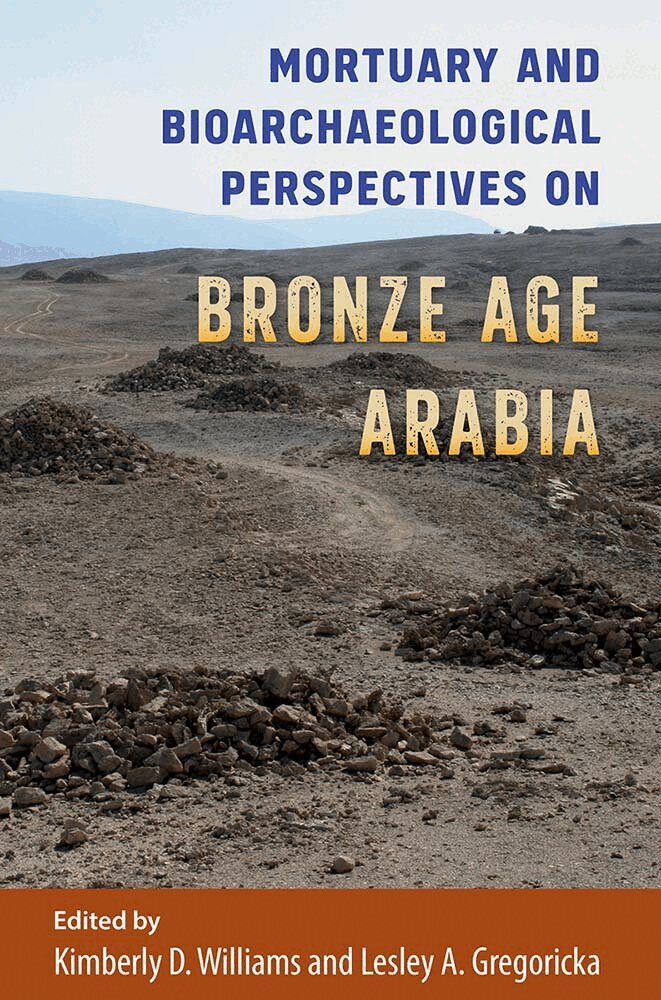
This volume brings together experts in archaeology and bioarchaeology to examine continuity and change in ancient Arabian mortuary practices. While most previous investigations have been limited geographically to Egypt and the Levant, this volume focuses on the lesser-studied southeastern Arabian Peninsula, showing what death and burial can reveal about the lifestyles of the region’s prehistoric communities.In case studies from Oman, the United Arab Emirates, Qatar, and Bahrain, contributors explore the transition from the earliest to the most complex mortuary monuments in the Bronze Age. They also look at broader changes in mortuary rituals from the Neolithic period through the late Pre-Islamic period, and they discuss sites that illustrate more nuanced shifts in burial practices between the Hafit and Umm an-Nar cultures. Specific topics include animal offerings, communal tombs, and ancient mobility and subsistence strategies. By using skeletal remains as a rich source of scientific data that complements studies of burial context, this volume represents an important turning point for mortuary research in the region. Its novel interdisciplinary and international perspective provides a synthesis of new ideas and interpretations that will guide future archaeological research in Arabia and beyond.
1 310 kr
Skickas inom 10-15 vardagar
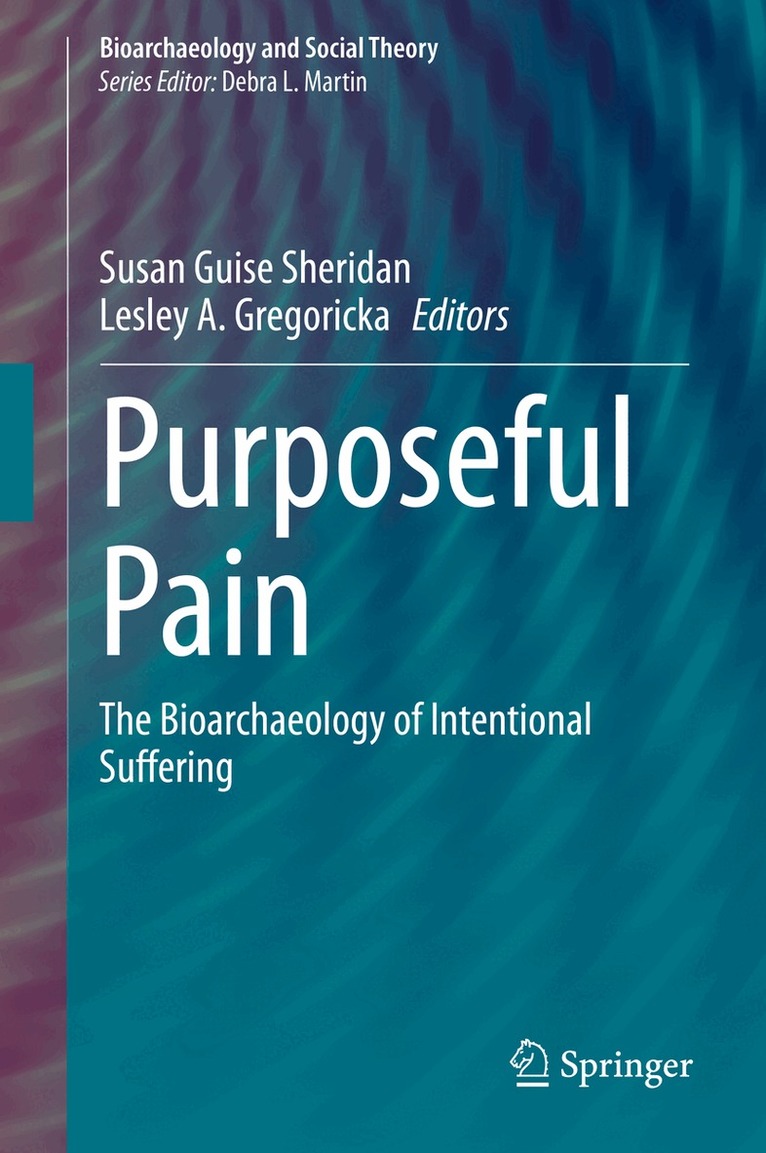
Pain is an evolutionary and adaptive mechanism to prevent harm to an individual. Beyond this, how it is defined, expressed, and borne is dictated culturally. Thus, the study of pain requires a holistic approach crossing cultures, disciplines, and time. This volume explores how and why pain-inducing behaviors are selected, including their potential to demonstrate individuality, navigate social hierarchies, and express commitment to an ideal. It also explores how power dynamics affect individual choice, at times requiring self-induced suffering.Taking bioanthropological and bioarchaeological approaches, this volume focuses on those who purposefully seek pain to show that, while often viewed as “exotic,” the pervasiveness of pain-inducing practices is more normative than expected. Theory and practice are employed to re-conceptualize pain as a strategic path towards achieving broader individual and societal goals. Past and present motivations for self-inflicted pain, its socio-political repercussions, and the physical manifestations of repetitive or long-term pain inducing behaviors are examined. Chapters span geographic and temporal boundaries and a wide variety of activities to illustrate how purposeful pain is used by individuals for personal expression and manipulated by political powers to maintain the status quo.This volume reveals how bioarchaeology illuminates paleopathology, how social theory enhances bioarchaeology, and how ethnography benefits from a longer temporal perspective.
1 310 kr
Skickas inom 10-15 vardagar
Pain is an evolutionary and adaptive mechanism to prevent harm to an individual. Beyond this, how it is defined, expressed, and borne is dictated culturally. Thus, the study of pain requires a holistic approach crossing cultures, disciplines, and time. This volume explores how and why pain-inducing behaviors are selected, including their potential to demonstrate individuality, navigate social hierarchies, and express commitment to an ideal. It also explores how power dynamics affect individual choice, at times requiring self-induced suffering.Taking bioanthropological and bioarchaeological approaches, this volume focuses on those who purposefully seek pain to show that, while often viewed as “exotic,” the pervasiveness of pain-inducing practices is more normative than expected. Theory and practice are employed to re-conceptualize pain as a strategic path towards achieving broader individual and societal goals. Past and present motivations for self-inflicted pain, its socio-political repercussions, and the physical manifestations of repetitive or long-term pain inducing behaviors are examined. Chapters span geographic and temporal boundaries and a wide variety of activities to illustrate how purposeful pain is used by individuals for personal expression and manipulated by political powers to maintain the status quo.This volume reveals how bioarchaeology illuminates paleopathology, how social theory enhances bioarchaeology, and how ethnography benefits from a longer temporal perspective.