Leslie C. Brook - Böcker
Visar alla böcker från författaren Leslie C. Brook. Handla med fri frakt och snabb leverans.
7 produkter
7 produkter
Two Late Medieval Love Treatises
Heloise's "Art d'Amour" and a Collection of "Demandes d'Amour"
Inbunden, Franska, 1993
373 kr
Skickas inom 5-8 vardagar
334 kr
Skickas inom 5-8 vardagar
494 kr
Skickas inom 5-8 vardagar
2 129 kr
Skickas inom 7-10 vardagar
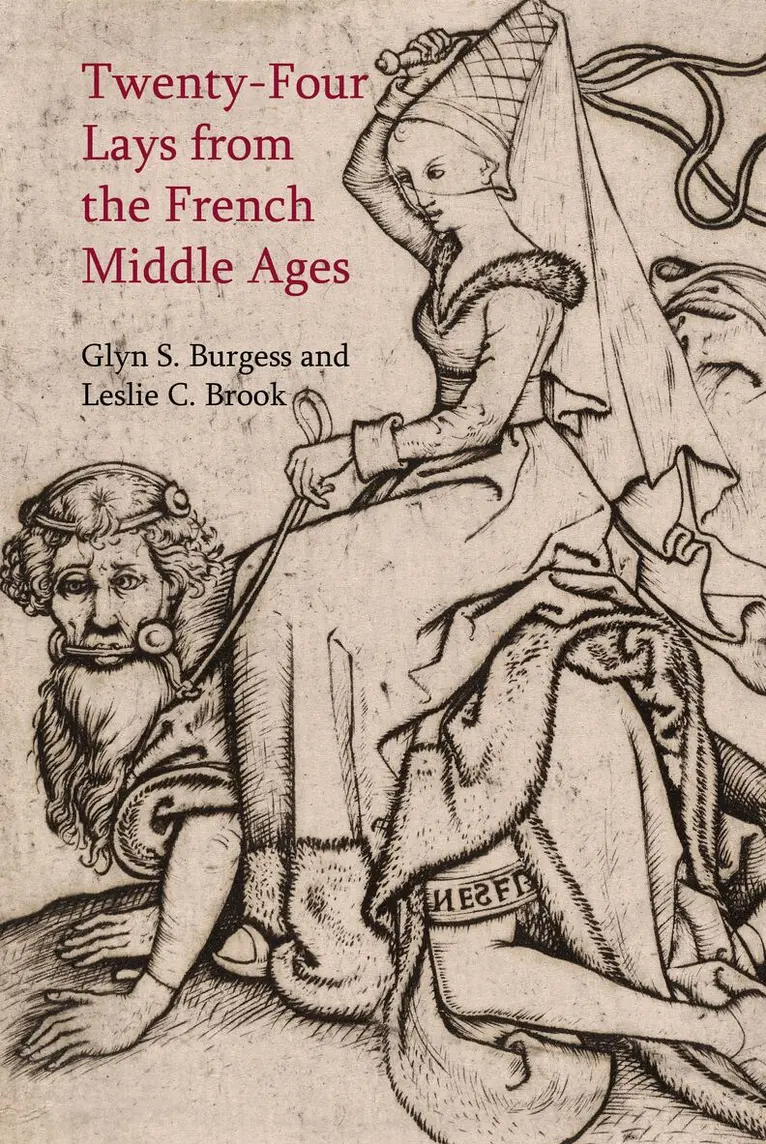
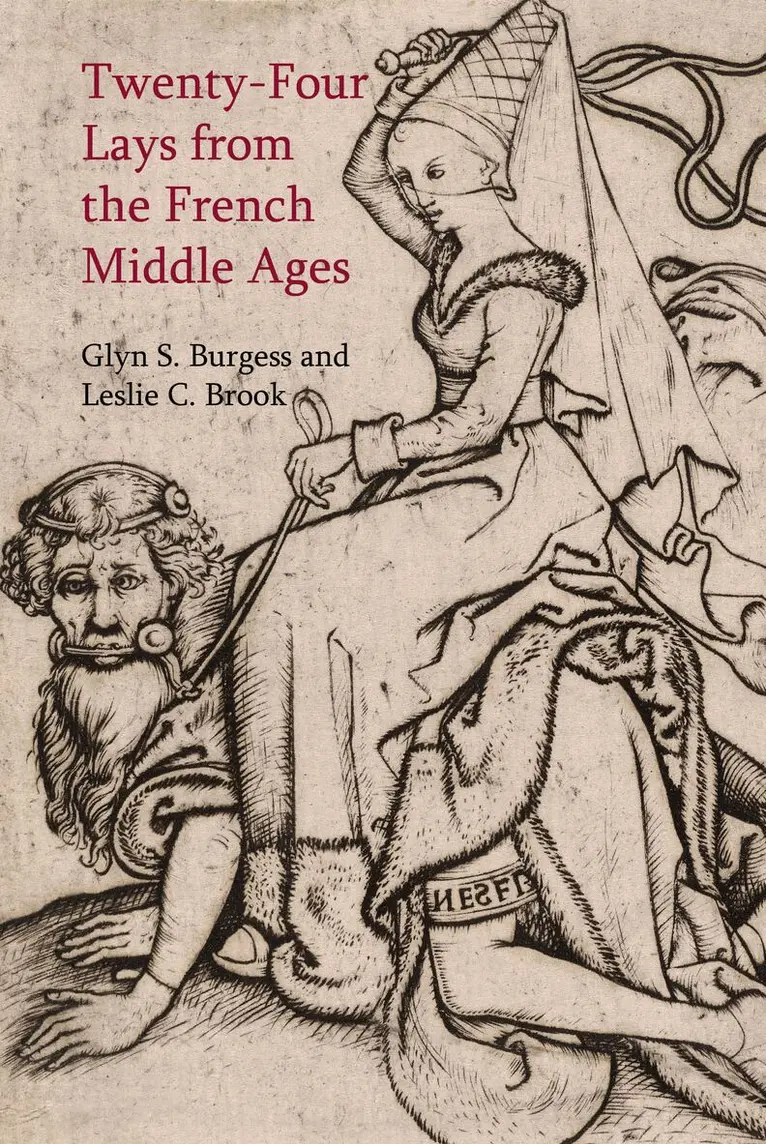
This prose translation of twenty-four lays from the French Middle Ages brings to the general reader as well as to scholars a complement to the twelve well-known lays by Marie de France, the possible creator of the genre. These lays are mostly anonymous, and the majority, but by no means all of them, are, like Marie’s lays, centred on a love interest of some kind in a variety of settings. But, unlike Marie’s lays, their treatment varies from the courtly and sophisticated to the comic or the tragic, thereby illustrating the range of poems covered by the term lai in twelfth- and thirteenth-century France. A significant number of these lays, based in the courtly world, contain supernatural elements or magic objects that are fundamental to the story as it is related, and sometimes the heroes leave the real world to dwell forever in an otherworldly domain. Other lays have a more mundane feel to them and seem closer to the fabliau in tone. In one instance, the lay of Haveloc, the tale owes more to legendary history than to pure fantasy. Overall, this collection stakes a claim to make an important contribution to the Medieval French lay within the wider European tradition of the short story and the literature of love.
581 kr
Skickas inom 7-10 vardagar
This prose translation of twenty-four lays from the French Middle Ages brings to the general reader as well as to scholars a complement to the twelve well-known lays by Marie de France, the possible creator of the genre. These lays are mostly anonymous, and the majority, but by no means all of them, are, like Marie’s lays, centred on a love interest of some kind in a variety of settings. But, unlike Marie’s lays, their treatment varies from the courtly and sophisticated to the comic or the tragic, thereby illustrating the range of poems covered by the term lai in twelfth- and thirteenth-century France. A significant number of these lays, based in the courtly world, contain supernatural elements or magic objects that are fundamental to the story as it is related, and sometimes the heroes leave the real world to dwell forever in an otherworldly domain. Other lays have a more mundane feel to them and seem closer to the fabliau in tone. In one instance, the lay of Haveloc, the tale owes more to legendary history than to pure fantasy. Overall, this collection stakes a claim to make an important contribution to the Medieval French lay within the wider European tradition of the short story and the literature of love.
757 kr
Tillfälligt slut
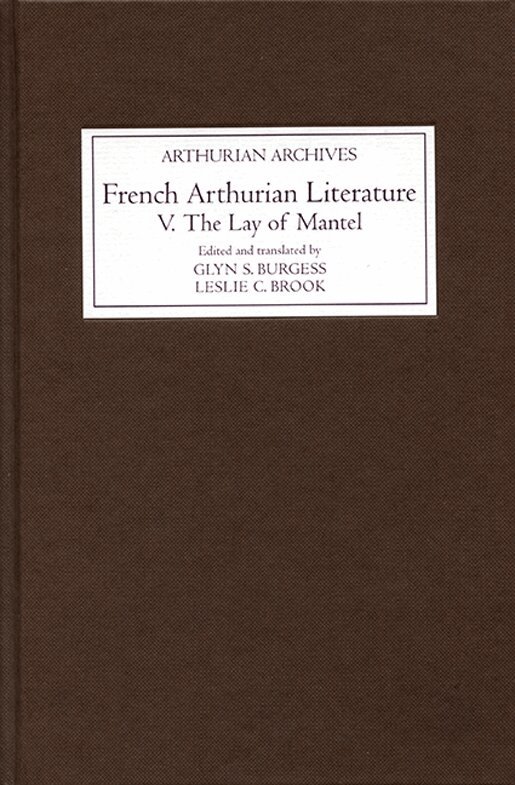
Text with facing translation of an undeservedly neglected, humorous French lay, in which the women of Arthur's court have their virtue challenged by a magic mantle.The Old French lay of Mantel belongs to the group of anonymous lays that were composed in the late twelfth or thirteenth century. These short narratives vary in tone and usually deal with some aspect of love, usually in anaristocratic, courtly setting. Here, this is Arthur's court, with its well-known characters involved, and the tone is satiric and comic; the story is a chastity test, which the ladies of the court undergo in public by donning themantle - if it does not fit, their behaviour is betrayed. The poem plays on the insecurities of the knights, who are at first confident of their loves' fidelity, but in the end are all too anxious to ignore their transgressions.The popularity of the lay is attested by its survival in five manuscripts, an unusually high number. It is edited here from MS Paris, Bibliothèque Nationale de France, nouv. acq. fr. 1104, a manuscript containing twenty-four lays, including nine by Marie de France whose work has to some extent defined the genre. The text is accompanied by a facing translation, and presented with introduction, elucidatory notes, bibliography, and indices.Glyn S. Burgess is Emeritus Professor of French, University of Liverpool; Leslie C. Brook is Honorary Senior Research Fellow in French, University of Birmingham.
1 217 kr
Skickas inom 10-15 vardagar
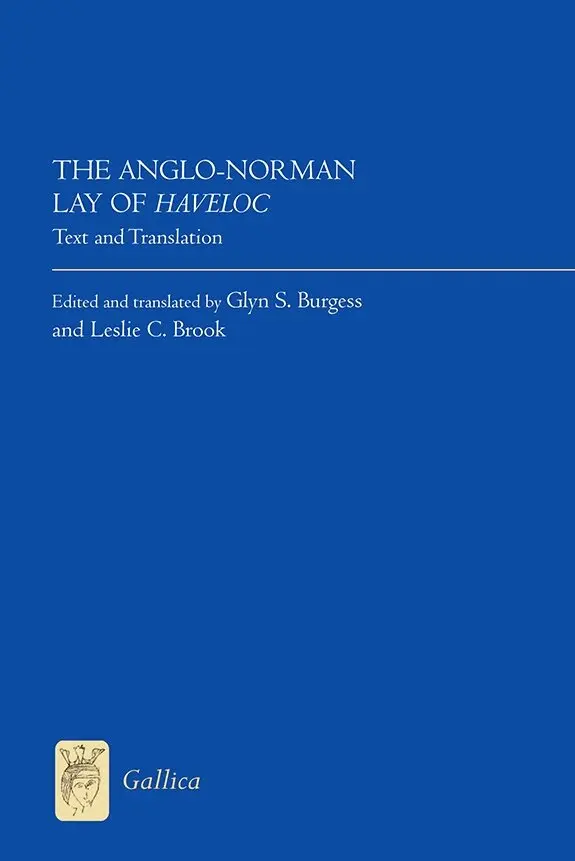
New edition and modern English translation of the Anglo-Norman version of the story of Haveloc - one of the most popular of the Middle Ages.The story of Haveloc first appears in the oldest chronicle of the kings of England Britain, Geffrei Gaimar's Estoire des Engleis, and it is found in a substantial number of later accounts of English history. It is unusual in that it seemingly deals with "real" persons and events; but although names for the prototypes of Haveloc and other personages have been put forward, any search for historical evidence has been largely fruitless. The Haveloc story remains a legend, indeed one of the most compelling legends of the Middle Ages.The Anglo-Norman lay of Haveloc survives in only two manuscripts, one (H) unedited since the nineteenth century and the other (P) since1925. This volume provides new editions of both versions and an English facing-page translation of the version in H. Also included is a translation of the Haveloc episode in Gaimar's chronicle and an edition and translation of thevarious shorter chronicle accounts, in French, English and Latin, which continued into the seventeenth century and survive in a modern English folk-tale. Glyn S. Burgess is Emeritus Professor and Honorary Senior Fellow at the University of Liverpool; Leslie C. Brook is an Honorary Senior Research Fellow at the University of Birmingham.