Leslie Page Moch - Böcker
Visar alla böcker från författaren Leslie Page Moch. Handla med fri frakt och snabb leverans.
6 produkter
6 produkter
281 kr
Skickas inom 10-15 vardagar
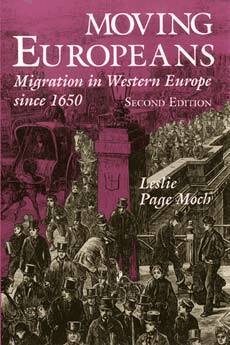
Praise for the first edition:"By far the best general book on its subject. . . . Moving Europeans will remain a standard reference for some time to come." –Charles Tilly "Moch has reconceived the social history of Europe." —David LevineMoving Europeans tells the story of the vast movements of people throughout Europe and examines the links between human mobility and the fundamental changes that transformed European life. This update of a classic text describes the Western European migration from the pre-industrial era to the year 2000. For this new edition, Leslie Page Moch reconsiders the 20th century in light of fundamental changes in labor, years of conflict, and the new migrations following the end of colonial empires, the fall of communism, and globalization. This new edition also features a greatly expanded and up-to-date bibliography.
Broad Is My Native Land
Repertoires and Regimes of Migration in Russia's Twentieth Century
Inbunden, Engelska, 2014
980 kr
Skickas inom 10-15 vardagar
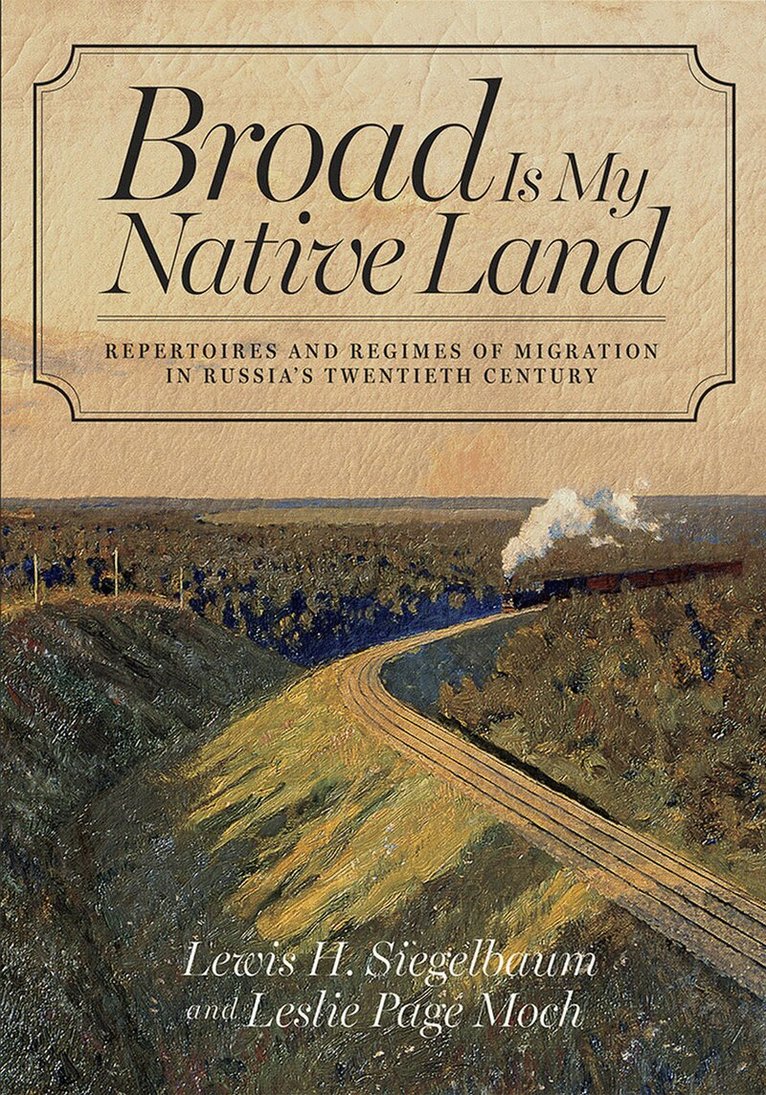
Whether voluntary or coerced, hopeful or desperate, people moved in unprecedented numbers across Russia's vast territory during the twentieth century. Broad Is My Native Land is the first history of late imperial, Soviet, and post-Soviet Russia through the lens of migration. Lewis H. Siegelbaum and Leslie Page Moch tell the stories of Russians on the move, capturing the rich variety of their experiences by distinguishing among categories of migrants—settlers, seasonal workers, migrants to the city, career and military migrants, evacuees and refugees, deportees, and itinerants. So vast and diverse was Russian political space that in their journeys, migrants often crossed multiple cultural, linguistic, and administrative borders. By comparing the institutions and experiences of migration across the century and placing Russia in an international context, Siegelbaum and Moch have made a magisterial contribution to both the history of Russia and the study of global migration. The authors draw on three kinds of sources: letters to authorities (typically appeals for assistance); the myriad forms employed in communication about the provision of transportation, food, accommodation, and employment for migrants; and interviews with and memoirs by people who moved or were moved, often under the most harrowing of circumstances. Taken together, these sources reveal the complex relationship between the regimes of state control that sought to regulate internal movement and the tactical repertoires employed by the migrants themselves in their often successful attempts to manipulate, resist, and survive these official directives.
Broad Is My Native Land
Repertoires and Regimes of Migration in Russia's Twentieth Century
Häftad, Engelska, 2014
467 kr
Skickas inom 7-10 vardagar
Whether voluntary or coerced, hopeful or desperate, people moved in unprecedented numbers across Russia's vast territory during the twentieth century. Broad Is My Native Land is the first history of late imperial, Soviet, and post-Soviet Russia through the lens of migration. Lewis H. Siegelbaum and Leslie Page Moch tell the stories of Russians on the move, capturing the rich variety of their experiences by distinguishing among categories of migrants—settlers, seasonal workers, migrants to the city, career and military migrants, evacuees and refugees, deportees, and itinerants. So vast and diverse was Russian political space that in their journeys, migrants often crossed multiple cultural, linguistic, and administrative borders. By comparing the institutions and experiences of migration across the century and placing Russia in an international context, Siegelbaum and Moch have made a magisterial contribution to both the history of Russia and the study of global migration. The authors draw on three kinds of sources: letters to authorities (typically appeals for assistance); the myriad forms employed in communication about the provision of transportation, food, accommodation, and employment for migrants; and interviews with and memoirs by people who moved or were moved, often under the most harrowing of circumstances. Taken together, these sources reveal the complex relationship between the regimes of state control that sought to regulate internal movement and the tactical repertoires employed by the migrants themselves in their often successful attempts to manipulate, resist, and survive these official directives.
1 223 kr
Skickas inom 7-10 vardagar
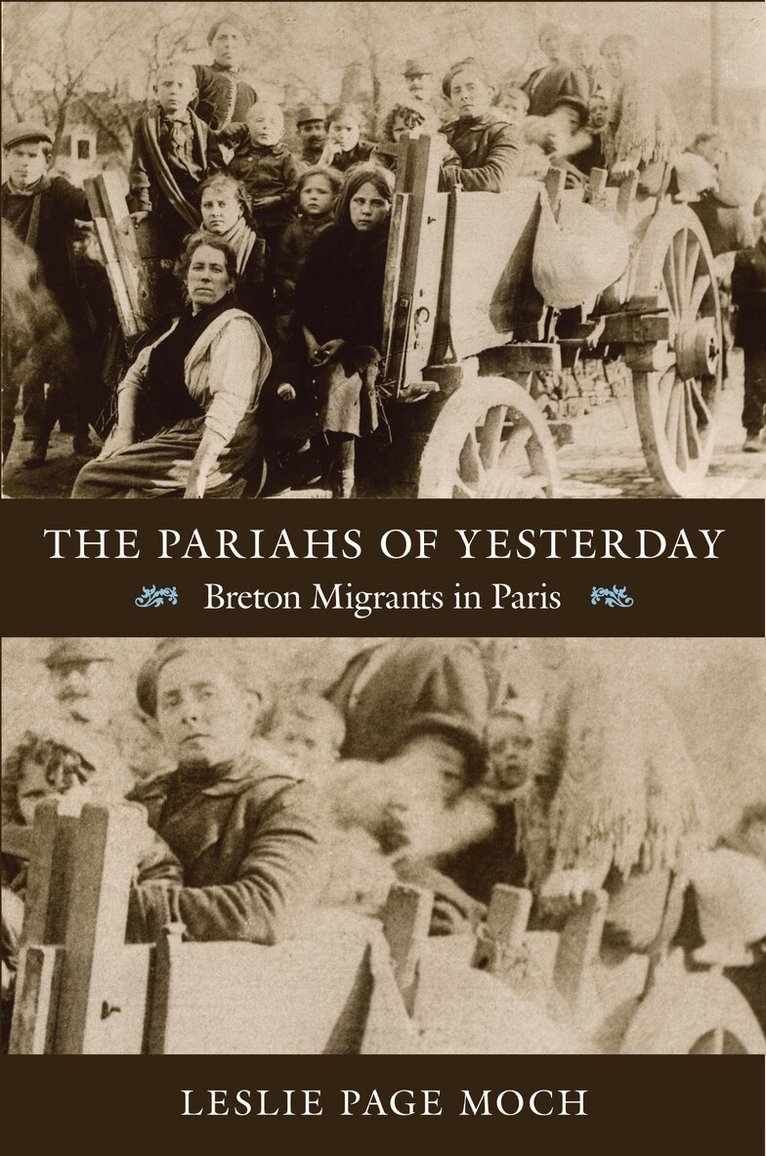
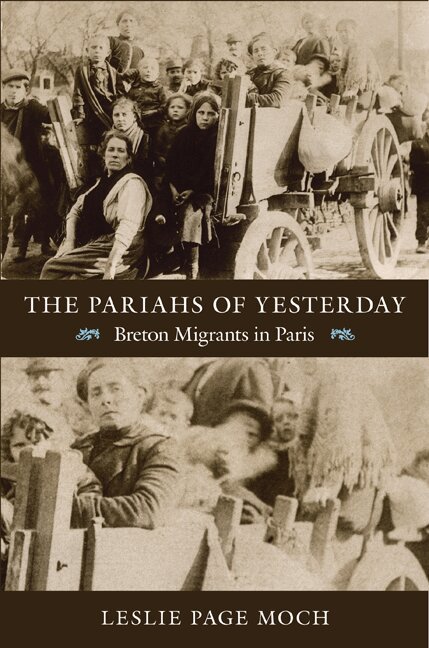
Beginning in the 1870s, a great many Bretons-men and women from Brittany, a region in western France-began arriving in Paris. Every age has its pariahs, and in 1900, the “pariahs of Paris” were the Bretons, the last distinct group of provincials to come en masse to the capital city. The pariah designation took hold in Paris, in Brittany, and among historians. Yet the derision of recent migrants can be temporary. Tracing the changing status of Bretons in Paris since 1870, Leslie Page Moch demonstrates that state policy, economic trends, and the attitudes of established Parisians and Breton newcomers evolved as the fortunes of Bretons in the capital improved. The pariah stereotype became outdated. Drawing on demographic records and the writings of physicians, journalists, novelists, lawyers, and social scientists, Moch connects internal migration with national integration. She interprets marriage records, official reports on employment, legal and medical theses, memoirs, and writings from secular and religious organizations in the Breton community. As the pariahs of yesterday, Bretons are an example of successful integration into Parisian life. At the same time, their experiences show integration to be a complicated and lengthy process.
372 kr
Skickas inom 7-10 vardagar
Beginning in the 1870s, a great many Bretons-men and women from Brittany, a region in western France-began arriving in Paris. Every age has its pariahs, and in 1900, the “pariahs of Paris” were the Bretons, the last distinct group of provincials to come en masse to the capital city. The pariah designation took hold in Paris, in Brittany, and among historians. Yet the derision of recent migrants can be temporary. Tracing the changing status of Bretons in Paris since 1870, Leslie Page Moch demonstrates that state policy, economic trends, and the attitudes of established Parisians and Breton newcomers evolved as the fortunes of Bretons in the capital improved. The pariah stereotype became outdated. Drawing on demographic records and the writings of physicians, journalists, novelists, lawyers, and social scientists, Moch connects internal migration with national integration. She interprets marriage records, official reports on employment, legal and medical theses, memoirs, and writings from secular and religious organizations in the Breton community. As the pariahs of yesterday, Bretons are an example of successful integration into Parisian life. At the same time, their experiences show integration to be a complicated and lengthy process.
241 kr
Skickas inom 7-10 vardagar
This Element explains the historical conditions for the seemingly anomalous presence of people outside of 'their own' Soviet republic and the sometimes-fraught consequences for them and their post-Soviet host countries. The authors begin their inquiry with an analysis of the most massive displacements of the Stalin era - nationality-based deportations, concluding with examples of the life trajectories of deportees' children as they moved transnationally within the Soviet Union and in its successor states. The second section treats disparate parts of the country as magnets attracting Soviet citizens from far afield. Most were cities undergoing vast industrial expansion; others involved incentive programs to develop agriculture and rural-based industries. The final section is devoted to the history of immigration and emigration during the Soviet period as well as since 1991 when millions left one former Soviet republic for another or for lands farther afield.