Leslie Paik - Böcker
Visar alla böcker från författaren Leslie Paik. Handla med fri frakt och snabb leverans.
4 produkter
4 produkter
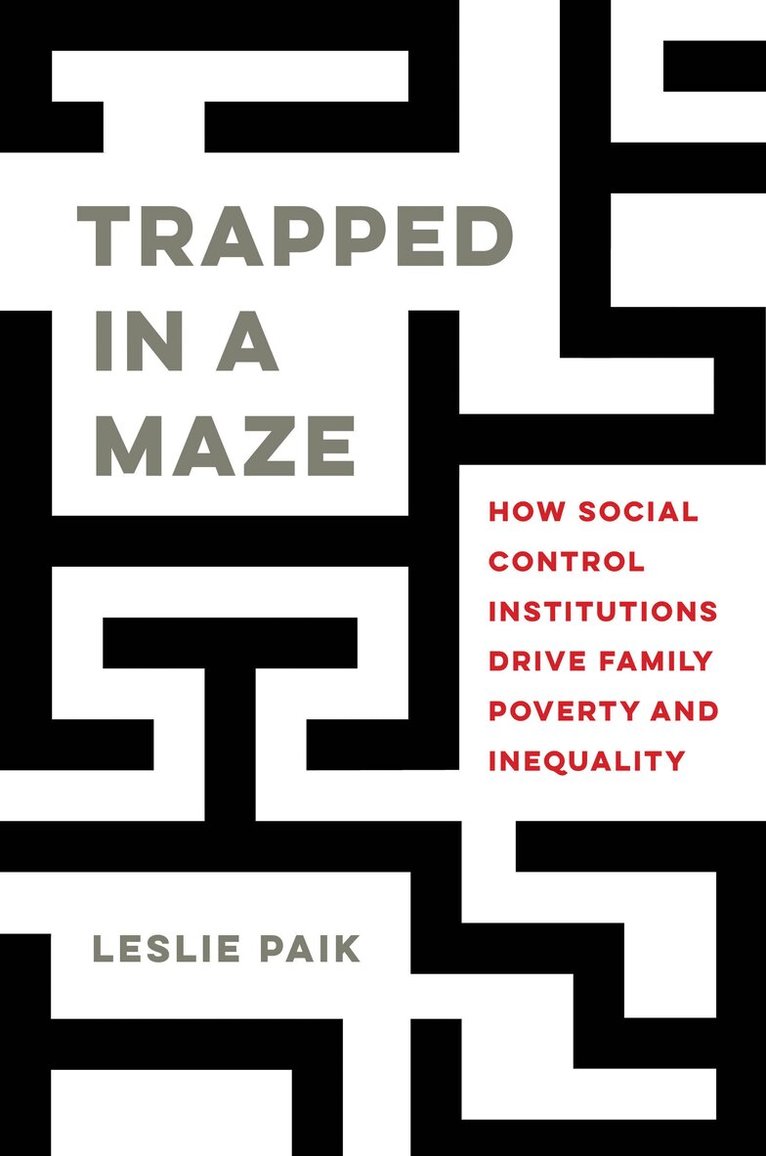
Trapped in a Maze
How Social Control Institutions Drive Family Poverty and Inequality
Inbunden, Engelska, 2021
758 kr
Skickas inom 7-10 vardagar
Trapped in a Maze provides a window into families' lived experiences in poverty by looking at their complex interactions with institutions such as welfare, hospitals, courts, housing, and schools. Families are more intertwined with institutions than ever as they struggle to maintain their eligibility for services and face the possibility that involvement with one institution could trigger other types of institutional oversight. Many poor families find themselves trapped in a multi-institutional maze, stuck in between several systems with no clear path to resolution. Tracing the complex and often unpredictable journeys of families in this maze, this book reveals how the formal rationality by which these institutions ostensibly operate undercuts what they can actually achieve. And worse, it demonstrates how involvement with multiple institutions can perpetuate the conditions of poverty that these families are fighting to escape.
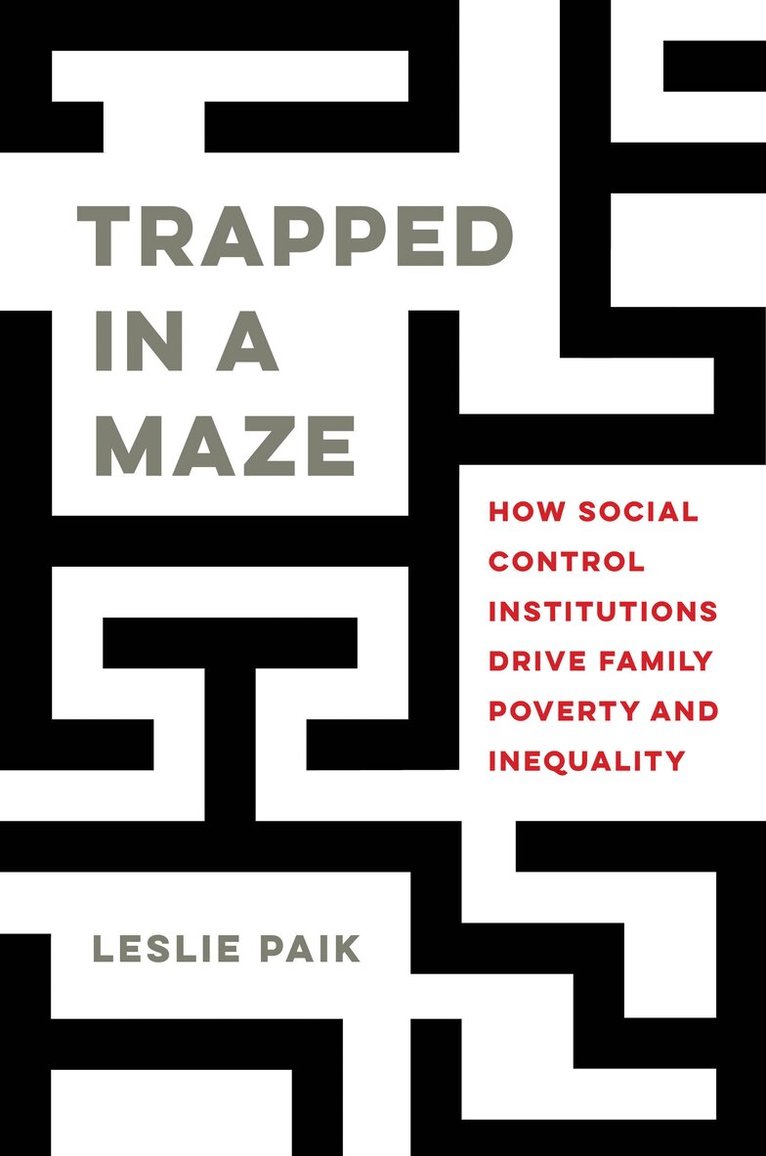
Trapped in a Maze
How Social Control Institutions Drive Family Poverty and Inequality
Häftad, Engelska, 2021
244 kr
Skickas inom 7-10 vardagar
Trapped in a Maze provides a window into families' lived experiences in poverty by looking at their complex interactions with institutions such as welfare, hospitals, courts, housing, and schools. Families are more intertwined with institutions than ever as they struggle to maintain their eligibility for services and face the possibility that involvement with one institution could trigger other types of institutional oversight. Many poor families find themselves trapped in a multi-institutional maze, stuck in between several systems with no clear path to resolution. Tracing the complex and often unpredictable journeys of families in this maze, this book reveals how the formal rationality by which these institutions ostensibly operate undercuts what they can actually achieve. And worse, it demonstrates how involvement with multiple institutions can perpetuate the conditions of poverty that these families are fighting to escape.
1 391 kr
Skickas inom 5-8 vardagar
Juvenile drug courts are on the rise in the United States, as a result of a favorable political climate and justice officials' endorsement of the therapeutic jurisprudence movement--the concept of combining therapeutic care with correctional discipline. The goal is to divert nonviolent youth drug offenders into addiction treatment instead of long-term incarceration. Discretionary Justice overviews the system, taking readers behind the scenes of the juvenile drug court. Based on fifteen months of ethnographic fieldwork and interviews at a California court, Leslie Paik explores the staff's decision-making practices in assessing the youths' cases, concentrating on the way accountability and noncompliance are assessed. Using the concept of "workability," Paik demonstrates how compliance, and what is seen by staff as "noncompliance," are the constructed results of staff decisions, fluctuating budgets, and sometimes questionable drug test results.While these courts largely focus on holding youths responsible for their actions, this book underscores the social factors that shape how staff members view progress in the court. Paik also emphasizes the perspectives of children and parents. Given the growing emphasis on individual responsibility in other settings, such as schools and public welfare agencies, Paik's findings are relevant outside the juvenile justice system.
386 kr
Skickas inom 5-8 vardagar
Juvenile drug courts are on the rise in the United States, as a result of a favorable political climate and justice officials' endorsement of the therapeutic jurisprudence movement--the concept of combining therapeutic care with correctional discipline. The goal is to divert nonviolent youth drug offenders into addiction treatment instead of long-term incarceration. Discretionary Justice overviews the system, taking readers behind the scenes of the juvenile drug court. Based on fifteen months of ethnographic fieldwork and interviews at a California court, Leslie Paik explores the staff's decision-making practices in assessing the youths' cases, concentrating on the way accountability and noncompliance are assessed. Using the concept of "workability," Paik demonstrates how compliance, and what is seen by staff as "noncompliance," are the constructed results of staff decisions, fluctuating budgets, and sometimes questionable drug test results.While these courts largely focus on holding youths responsible for their actions, this book underscores the social factors that shape how staff members view progress in the court. Paik also emphasizes the perspectives of children and parents. Given the growing emphasis on individual responsibility in other settings, such as schools and public welfare agencies, Paik's findings are relevant outside the juvenile justice system.