Leszek Kolakowski – författare
Visar alla böcker från författaren Leszek Kolakowski. Handla med fri frakt och snabb leverans.
27 produkter
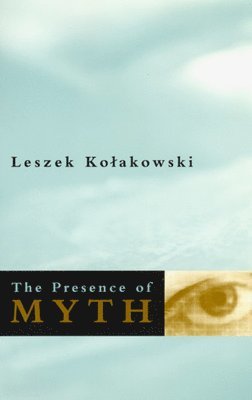
Presence of Myth
Häftad, 2001
298 kr
Lägg i varukorg
"[An] important essay by a philosopher who more convincingly than any other I can think of demonstrates the continuing significance of his vocation in the life of our culture."—Karsten Harries, The New York Times Book ReviewWith The Presence of Myth, Kolakowski demonstrates that no matter how hard …
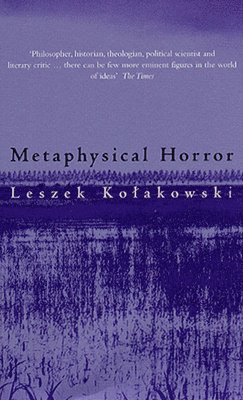
Metaphysical Horror
Häftad, 2001
3,0 utav 5 stjärnor. Totalt antal röster: (1)
229 kr
Lägg i varukorg
For over a century, philosophers have argued that philosophy is impossible or useless, or both. Although the basic notion dates back to the days of Socrates, there is still heated disagreement about the nature of truth, reality, knowledge, the good, and God. This leaves us with a feeling of radical …
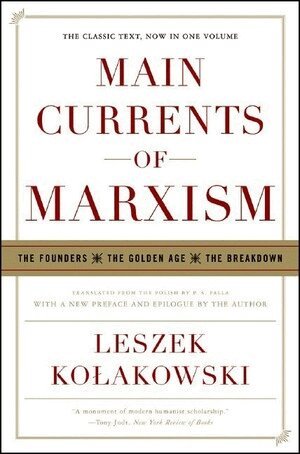
Main Currents of Marxism
The Founders - The Golden Age - The Breakdown
Häftad, 2008
5,0 utav 5 stjärnor. Totalt antal röster: (1)
455 kr
Lägg i varukorg
Renowned philosopher Leszek Kolakowski was one of the first scholars to reveal both the shortcomings and the dangers posed by communist regimes. He now presents, for the first time in one paperback volume, his definitive Main Currents of Marxism: “A prophetic work,” according to the Library of …
Why is There Something Rather Than Nothing?
Questions from Great Philosophers
Häftad, 2008
155 kr
Lägg i varukorg
Can nature make us happy? How can we know anything? What is justice? Why is there evil in the world? What is the source of truth? Is it possible for God not to exist? Can we really believe what we see? There are questions that have intrigued the world's great thinkers over the ages, which still …
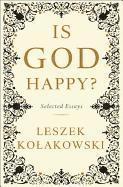
Is God Happy?
Selected Essays
Häftad, 2012
4,0 utav 5 stjärnor. Totalt antal röster: (1)
130 kr
Lägg i varukorg
'The most esteemed philosopher to have produced a general introduction to his discipline since Bertrand Russell' Independent In these essays, one of the most important thinkers of the twentieth century writes about communism and socialism, the problem of evil, Erasmus and the reform of the Church, …
Is God Happy?
Selected Essays
E-bok, 2012
108 kr
Lägg i varukorg
'The most esteemed philosopher to have produced a general introduction to his discipline since Bertrand Russell' Independent In these essays, one of the most important thinkers of the twentieth century writes about communism and socialism, the problem of evil, Erasmus and the reform of the Church, …
Why is There Something Rather Than Nothing?
Questions from Great Philosophers
E-bok, 2017
108 kr
Lägg i varukorg
Can nature make us happy? How can we know anything? What is justice? Why is there evil in the world? What is the source of truth? Is it possible for God not to exist? Can we really believe what we see? There are questions that have intrigued the world’s great thinkers over the ages, which still …
God Owes Us Nothing
A Brief Remark on Pascal''s Religion and on the Spirit of Jansenism
E-bok, 2012
491 kr
Lägg i varukorg
God Owes Us Nothing reflects on the centuries-long debate in Christianity: how do we reconcile the existence of evil in the world with the goodness of an omnipotent God, and how does God''s omnipotence relate to people''s responsibility for their own salvation or damnation. Leszek Kolakowski …
Modernity on Endless Trial
E-bok, 1997
739 kr
Lägg i varukorg
Leszek Kolakowski delves into some of the most intellectually vigorous questions of our time in this remarkable collection of essays garnished with his characteristic wit. Ten of the essays have never appeared before in English. "Exemplary. . . . It should be celebrated." —Arthur C. Danto, New York …
Presence of Myth
E-bok, 2010
569 kr
Lägg i varukorg
"[An] important essay by a philosopher who more convincingly than any other I can think of demonstrates the continuing significance of his vocation in the life of our culture."—Karsten Harries, The New York Times Book Review With The Presence of Myth , Kolakowski demonstrates that no matter how …
Modernity on Endless Trial
Häftad, 1997
341 kr
Lägg i varukorg
Leszek Kolakowski delves into some of the most intellectually vigorous questions of our time in this remarkable collection of essays garnished with his characteristic wit. Ten of the essays have never appeared before in English. "Exemplary. . . . It should be celebrated." —Arthur C. Danto, New York …
God Owes Us Nothing – A Brief Remark on Pascal`s Religion and on the Spirit of Jansenism
Häftad, 1998
374 kr
Lägg i varukorg
God Owes Us Nothing reflects on the centuries-long debate in Christianity: how do we reconcile the existence of evil in the world with the goodness of an omnipotent God, and how does God's omnipotence relate to people's responsibility for their own salvation or damnation. Leszek Kolakowski …
Freedom, Fame, Lying And Betrayal
Essays On Everyday Life
Inbunden, 2018
2504 kr
Lägg i varukorg
Polish philosopher Leszek Kolakowski is renowned worldwide for wrestling with serious philosophical conundrums with dazzling elegance. In this new book, he turns his characteristic wit to important themes of ordinary life, from the need for freedom to the wheel of fortune, from the nature of God to …
Freedom, Fame, Lying And Betrayal
Essays On Everyday Life
Häftad, 2020
689 kr
Lägg i varukorg
Polish philosopher Leszek Kolakowski is renowned worldwide for wrestling with serious philosophical conundrums with dazzling elegance. In this new book, he turns his characteristic wit to important themes of ordinary life, from the need for freedom to the wheel of fortune, from the nature of God to …
Freedom, Fame, Lying And Betrayal
Essays On Everyday Life
E-bok, 2019
814 kr
Lägg i varukorg
Polish philosopher Leszek Kolakowski is renowned worldwide for wrestling with serious philosophical conundrums with dazzling elegance. In this new book, he turns his characteristic wit to important themes of ordinary life, from the need for freedom to the wheel of fortune, from the nature of God to …
Freedom, Fame, Lying And Betrayal
Essays On Everyday Life
E-bok, 2019
814 kr
Lägg i varukorg
Polish philosopher Leszek Kolakowski is renowned worldwide for wrestling with serious philosophical conundrums with dazzling elegance. In this new book, he turns his characteristic wit to important themes of ordinary life, from the need for freedom to the wheel of fortune, from the nature of God to …
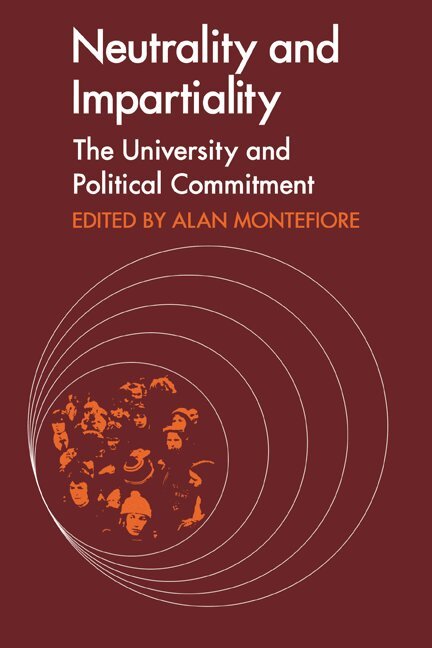
Neutrality and Impartiality
The University and Political Commitment
Av Andrew Graham, Leszek Kolakowski m. fl.
Häftad, 1973
569 kr
Lägg i varukorg
First published in 1975, this is a book of general intellectual interest about the role of the university in contemporary society and that of university teachers in relation to their subjects, their students, and their wider political commitments. Alan Montefiore offers preliminary analyses of the …
Why Is There Something Rather Than Nothing?: A History of Philosophy in 23 Questions
Häftad, 2026
240 kr
Kommande
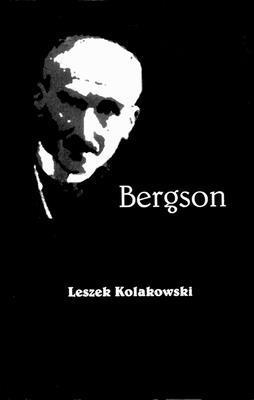
Bergson
Häftad, 2001
110 kr
Lägg i varukorg
Leszek Kolakowski shows how Henri Bergson sought to reconcile Darwin's theory with his own beliefs about the nature of the universe. Bergson believed that time could be thought of in two different ways: as an abstract measuring device used for practical purposes, or as 'duree', the "real" time we …
Husserl Search For Certitude
Häftad, 2001
97 kr
Lägg i varukorg
[Husserl] better than anybody, compelled us to realize the painful dilemma of knowledge: either consistent empiricism, with its relativistic, skeptical results (a standpoint which many regard discouraging, inadmissible, and in fact ruinous for culture) or transcendental dogmatism, which cannot …
Histoire du marxisme: Les fondateurs: Marx, Engels et leurs prédécesseurs
Häftad, 2022
918 kr
Lägg i varukorg
God Owes Us Nothing
A Brief Remark on Pascal's Religion and on the Spirit of Jansenism
Inbunden, 1995
437 kr
Tillfälligt slut
This volume presents a new interpretation of a centuries-long debate in Christianity: how to reconcile the existence of evil in the world with the goodness of an omnipotent God. In Augustinian doctrine, evil is the absence of good, God is omnipotent, and individuals are predestined to salvation or …
Religion
If There Is No God God, The Devil & Sin
Häftad, 2001
5,0 utav 5 stjärnor. Totalt antal röster: (1)
161 kr
Tillfälligt slut
Leszek Kolakowski discusses, in a highly original way, the arguments for and against the existence of God as they have been conducted through the ages. He examines the critiques of religious belief, from the Epicureans through Nietzsche to contemporary anthropological inquiry, the assumptions that …