Lev Dynkin - Böcker
Visar alla böcker från författaren Lev Dynkin. Handla med fri frakt och snabb leverans.
5 produkter
5 produkter
1 545 kr
Skickas inom 7-10 vardagar
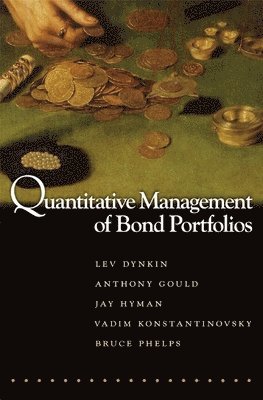
The practice of institutional bond portfolio management has changed markedly since the late 1980s in response to new financial instruments, investment methodologies, and improved analytics. Investors are looking for a more disciplined, quantitative approach to asset management. Here, five top authorities from a leading Wall Street firm provide practical solutions and feasible methodologies based on investor inquiries. While taking a quantitative approach, they avoid complex mathematical derivations, making the book accessible to a wide audience, including portfolio managers, plan sponsors, research analysts, risk managers, academics, students, and anyone interested in bond portfolio management. The book covers a range of subjects of concern to fixed-income portfolio managers--investment style, benchmark replication and customization, managing credit and mortgage portfolios, managing central bank reserves, risk optimization, and performance attribution. The first part contains empirical studies of security selection versus asset allocation, index replication with derivatives and bonds, optimal portfolio diversification, and long-horizon performance of assets.The second part covers portfolio management tools for risk budgeting, bottom-up risk modeling, performance attribution, innovative measures of risk sensitivities, and hedging risk exposures. A first-of-its-kind publication from a team of practitioners at the front lines of financial thinking, this book presents a winning combination of mathematical models, intuitive examples, and clear language.
1 245 kr
Skickas inom 7-10 vardagar
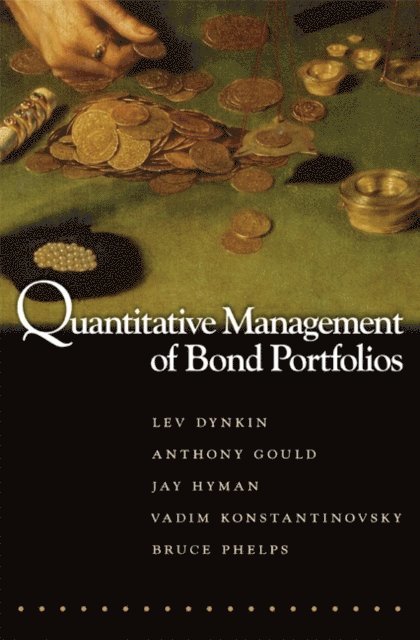
The practice of institutional bond portfolio management has changed markedly since the late 1980s in response to new financial instruments, investment methodologies, and improved analytics. Investors are looking for a more disciplined, quantitative approach to asset management. Here, five top authorities from a leading Wall Street firm provide practical solutions and feasible methodologies based on investor inquiries. While taking a quantitative approach, they avoid complex mathematical derivations, making the book accessible to a wide audience, including portfolio managers, plan sponsors, research analysts, risk managers, academics, students, and anyone interested in bond portfolio management.The book covers a range of subjects of concern to fixed-income portfolio managers--investment style, benchmark replication and customization, managing credit and mortgage portfolios, managing central bank reserves, risk optimization, and performance attribution. The first part contains empirical studies of security selection versus asset allocation, index replication with derivatives and bonds, optimal portfolio diversification, and long-horizon performance of assets. The second part covers portfolio management tools for risk budgeting, bottom-up risk modeling, performance attribution, innovative measures of risk sensitivities, and hedging risk exposures.A first-of-its-kind publication from a team of practitioners at the front lines of financial thinking, this book presents a winning combination of mathematical models, intuitive examples, and clear language.
Del 202 - Frank J. Fabozzi Series
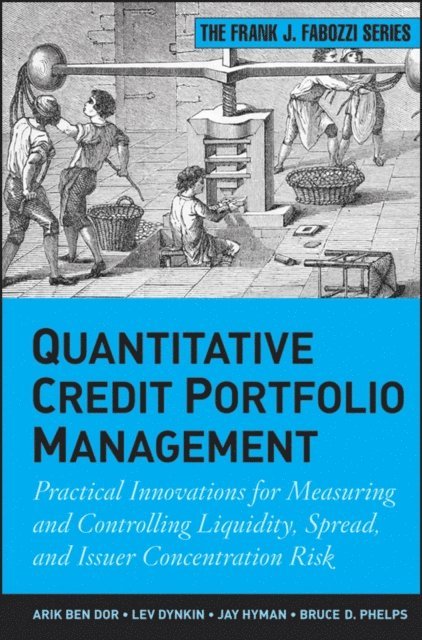
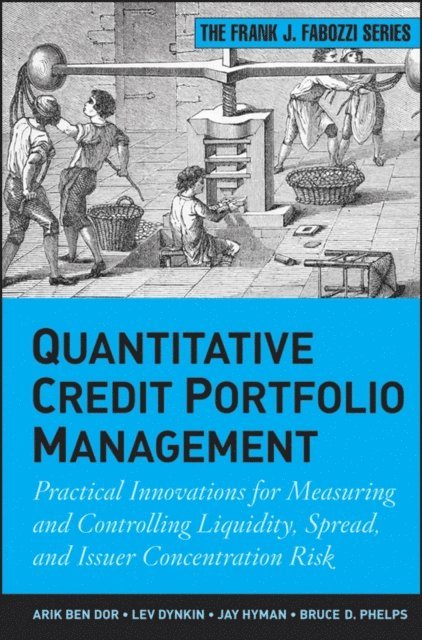
Quantitative Credit Portfolio Management
Practical Innovations for Measuring and Controlling Liquidity, Spread, and Issuer Concentration Risk
Inbunden, Engelska, 2012
805 kr
Skickas inom 7-10 vardagar
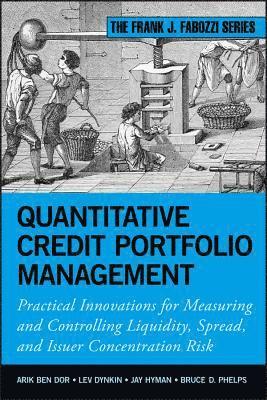
An innovative approach to post-crash credit portfolio management Credit portfolio managers traditionally rely on fundamental research for decisions on issuer selection and sector rotation. Quantitative researchers tend to use more mathematical techniques for pricing models and to quantify credit risk and relative value. The information found here bridges these two approaches. In an intuitive and readable style, this book illustrates how quantitative techniques can help address specific questions facing today's credit managers and risk analysts.A targeted volume in the area of credit, this reliable resource contains some of the most recent and original research in this field, which addresses among other things important questions raised by the credit crisis of 2008-2009. Divided into two comprehensive parts, Quantitative Credit Portfolio Management offers essential insights into understanding the risks of corporate bonds—spread, liquidity, and Treasury yield curve risk—as well as managing corporate bond portfolios. Presents comprehensive coverage of everything from duration time spread and liquidity cost scores to capturing the credit spread premiumWritten by the number one ranked quantitative research group for four consecutive years by Institutional InvestorProvides practical answers to difficult question, including: What diversification guidelines should you adopt to protect portfolios from issuer-specific risk? Are you well-advised to sell securities downgraded below investment grade?Credit portfolio management continues to evolve, but with this book as your guide, you can gain a solid understanding of how to manage complex portfolios under dynamic events.
701 kr
Skickas inom 7-10 vardagar
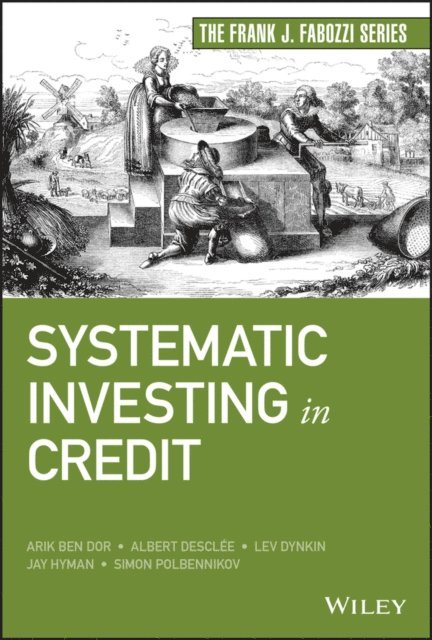
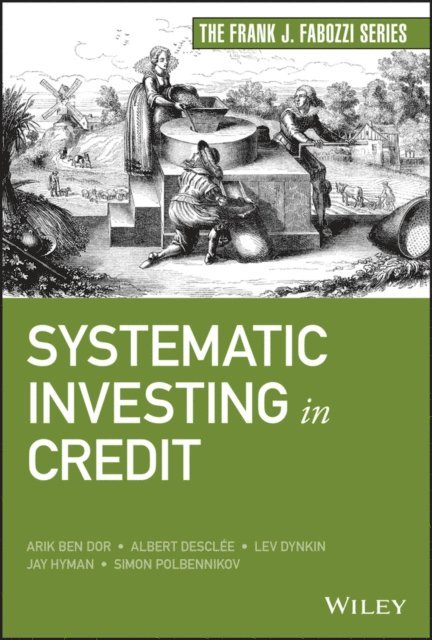
Praise for SYSTEMATIC INVESTING in CREDIT"Lev and QPS continue to shed light on the most important questions facing credit investors. This book focuses on their latest cutting-edge research into the appropriate role of credit as an asset class, the dynamics of credit benchmarks, and potential ways to benefit from equity information to construct effective credit portfolios. It is must-read material for all serious credit investors."—Richard Donick, President and Chief Risk Officer, DCI, LLC, USA"Lev Dynkin and his team continue to spoil us; this book is yet another example of intuitive, insightful, and pertinent research, which builds on the team's previous research. As such, the relationship with this team is one of the best lifetime learning experiences I have had."—Eduard van Gelderen, Chief Investment Officer, Public Sector Pension Investment Board, Canada"The rise of a systematic approach in credit is a logical extension of the market's evolution and long overdue. Barclays QPS team does a great job of presenting its latest research in a practical manner."—David Horowitz, Chief Executive Officer and Chief Investment Officer, Agilon Capital, USA"Systematization reduces human biases and wasteful reinventing of past solutions. It improves the chances of investing success. This book, by a team of experts, shows you the way. You will gain insights into the advanced methodologies of combining fundamental and market data. I recommend this book for all credit investors."—Lim Chow Kiat, Chief Executive Officer, GIC Asset Management, Singapore"For nearly two decades, QPS conducted extensive and sound research to help investors meet industry challenges. The proprietary research in this volume gives a global overview of cutting-edge developments in alpha generation for credit investors, from signal extraction and ESG considerations to portfolio implementation. The book blazes a trail for enhanced risk adjusted returns by exploring the cross-asset relation between stocks and bonds and adding relevant information for credit portfolio construction. Our core belief at Ostrum AM, is that a robust quantamental approach, yields superior investment outcomes. Indeed, this book is a valuable read for the savvy investor."—Ibrahima Kobar, CFA, Global Chief Investment Officer, Ostrum AM, France"This book offers a highly engaging account of the current work by the Barclays QPS Group. It is a fascinating mix of original ideas, rigorous analytical techniques, and fundamental insights informed by a long history of frontline work in this area. This is a must-read from the long-time leaders in the field."—Professor Leonid Kogan, Nippon Telephone and Telegraph Professor of Management and Finance, MIT"This book provides corporate bond portfolio managers with an abundance of relevant, comprehensive, data-driven research for the implementation of superior investment performance strategies."—Professor Stanley J. Kon, Editor, Journal of Fixed income"This book is a treasure trove for both pension investors and trustees seeking to improve performance through credit. It provides a wealth of empirical evidence to guide long-term allocation to credit, optimize portfolio construction and harvest returns from systematic credit factors. By extending their research to ESG ratings, the authors also provide timely insights in the expanding field of sustainable finance."—Eloy Lindeijer, former Chief of Investment Management, PGGM, Netherlands"Over more than a decade, Lev Dynkin and his QPS team has provided me and APG with numerous innovative insights in credit markets. Their work gave us valuable quantitative substantiation of some of our investment beliefs. This book covers new and under-researched areas of our markets, like ESG and factor investing, next to the rigorous and practical work akin to the earlier work of the group. I'd say read this book—and learn from one of the best."—Herman Slooijer, Managing Director, Head of Fixed Income, APG Asset Management, Netherlands
959 kr
Skickas inom 7-10 vardagar
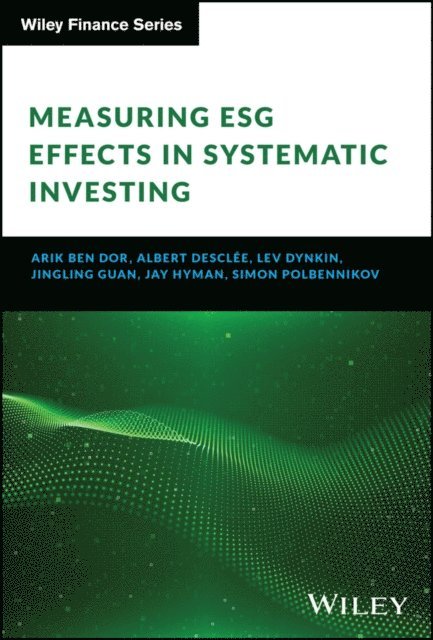
A unique perspective on the implications of incorporating ESG considerations in systematic investing In Measuring ESG in Systematic Investing, a team of authors from Barclays’ top-ranked Quantitative Portfolio Strategy group (ranked #1 by Institutional Investor in its 2022 Global Fixed Income Research Survey in both the US and Europe) delivers an insightful and practical discussion of how to reflect ESG considerations in systematic investing. The authors offer a cross-asset class perspective—incorporating both credit and equity markets in the United States, Europe, and China—a unique coverage scope amongst books on this subject. They discuss the interaction between ESG ratings and various other security characteristics, suggest a methodology for isolating the ESG-specific risk premia, analyse the impact of an ESG tilt on systematic strategies and risk factors, and identify several ESG-based signals that are predictive of future performance.You’ll also discover: Analysis of companies in the process of improving their ESG ranking (“ESG improvers”) vs. firms with best-in-class ESG ratingsA study using natural language processing (NLP) to predict changes in corporate ESG rankings from company job postings for sustainability-related positionsIn-depth explorations of ESG equity fund performance and flows and the information content of ESG ratings dispersion across several providersPerfect for portfolio managers including non-quantitative, fundamental investors, risk managers, and research analysts at financial institutions such as asset managers, pension funds, banks, sovereign wealth funds, hedge funds, and insurance companies, Measuring ESG in Systematic Investing is also a must-read resource for academics with a research interest in the performance and risk implications of ESG investing.