LEVERING EMERY - Böcker
Visar alla böcker från författaren LEVERING EMERY. Handla med fri frakt och snabb leverans.
2 produkter
2 produkter
2 062 kr
Skickas inom 5-8 vardagar
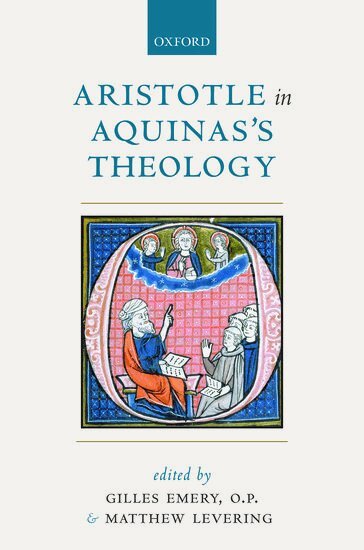
Aristotle in Aquinas's Theology explores the role of Aristotelian concepts, principles, and themes in Thomas Aquinas's theology. Each chapter investigates the significance of Aquinas's theological reception of Aristotle in a central theological domain: the Trinity, the angels, soul and body, the Mosaic law, grace, charity, justice, contemplation and action, Christ, and the sacraments. In general, the essays focus on the Summa theologiae, but some range more widely in Aquinas's corpus. For some time, it has above all been the influence of Aristotle on Aquinas's philosophy that has been the centre of attention. Perhaps in reaction to philosophical neo-Thomism, or perhaps because this Aristotelian influence appears no longer necessary to demonstrate, the role of Aristotle in Aquinas's theology presently receives less theological attention than does Aquinas's use of other authorities (whether Scripture or particular Fathers), especially in domains outside of theological ethics. Indeed, in some theological circles the influence of Aristotle upon Aquinas's theology is no longer well understood. Readers will encounter here the great Aristotelian themes, such as act and potency, God as pure act, substance and accidents, power and generation, change and motion, fourfold causality, form and matter, hylomorphic anthropology, the structure of intellection, the relationship between knowledge and will, happiness and friendship, habits and virtues, contemplation and action, politics and justice, the best form of government, and private property and the common good. The ten essays in this book engage Aquinas's reception of Aristotle in his theology from a variety of points of view: historical, philosophical, and constructively theological.
1 932 kr
Skickas inom 5-8 vardagar
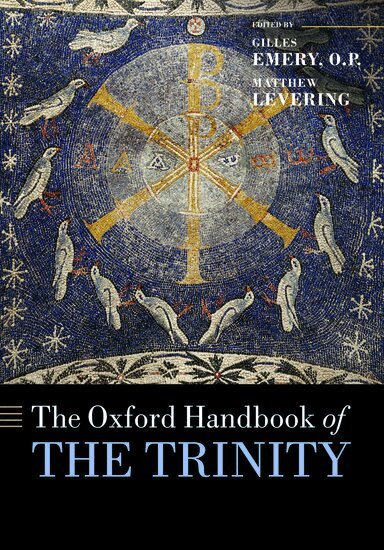
This handbook examines the history of Trinitarian theology and reveals the Nicene unity still at work among Christians today despite ecumenical differences and the variety of theological perspectives. The forty-three chapters are organized into the following seven parts: the Trinity in Scripture, Patristic witnesses to the Trinitarian faith, Medieval appropriations of the Trinitarian faith, the Reformation through to the 20th Century, Trinitarian Dogmatics, the Trinity and Christian life, and Dialogues (addressing ecumenical, interreligious, and cultural interactions). The phrase 'Trinitarian faith' can hardly be understood outside of reference to the Councils of Nicaea and Constantinople and to their reception: the doctrine of the Trinity is indissociably connected to the reading of Scripture through the ecclesial and theological traditions. The modern period is characterized especially by the arrival of history, under two principal aspects: 'historical theology' and 'philosophies of history'. In contemporary theology, the principal 'theological loci' are Trinity and creation, Trinity and grace, Trinity and monotheism, Trinity and human life (ethics, society, politics and culture), and more broadly Trinity and history. In all these areas, this handbook offers essays that do justice to the diversity of view points, while also providing, insofar as possible, a coherent ensemble.