Gilles Emery, O.P. - Böcker
Visar alla böcker från författaren Gilles Emery, O.P.. Handla med fri frakt och snabb leverans.
4 produkter
4 produkter
2 062 kr
Skickas inom 5-8 vardagar
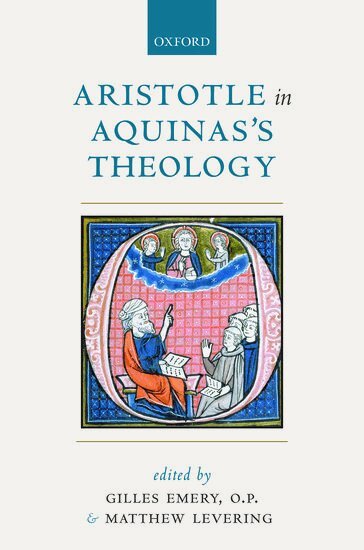
Aristotle in Aquinas's Theology explores the role of Aristotelian concepts, principles, and themes in Thomas Aquinas's theology. Each chapter investigates the significance of Aquinas's theological reception of Aristotle in a central theological domain: the Trinity, the angels, soul and body, the Mosaic law, grace, charity, justice, contemplation and action, Christ, and the sacraments. In general, the essays focus on the Summa theologiae, but some range more widely in Aquinas's corpus. For some time, it has above all been the influence of Aristotle on Aquinas's philosophy that has been the centre of attention. Perhaps in reaction to philosophical neo-Thomism, or perhaps because this Aristotelian influence appears no longer necessary to demonstrate, the role of Aristotle in Aquinas's theology presently receives less theological attention than does Aquinas's use of other authorities (whether Scripture or particular Fathers), especially in domains outside of theological ethics. Indeed, in some theological circles the influence of Aristotle upon Aquinas's theology is no longer well understood. Readers will encounter here the great Aristotelian themes, such as act and potency, God as pure act, substance and accidents, power and generation, change and motion, fourfold causality, form and matter, hylomorphic anthropology, the structure of intellection, the relationship between knowledge and will, happiness and friendship, habits and virtues, contemplation and action, politics and justice, the best form of government, and private property and the common good. The ten essays in this book engage Aquinas's reception of Aristotle in his theology from a variety of points of view: historical, philosophical, and constructively theological.
481 kr
Skickas inom 7-10 vardagar
Aristotle in Aquinas's Theology explores the role of Aristotelian concepts, principles, and themes in Thomas Aquinas's theology. Each chapter investigates the significance of Aquinas's theological reception of Aristotle in a central theological domain: the Trinity, the angels, soul and body, the Mosaic law, grace, charity, justice, contemplation and action, Christ, and the sacraments. In general, the essays focus on the Summa theologiae, but some range more widely in Aquinas's corpus. For some time, it has above all been the influence of Aristotle on Aquinas's philosophy that has been the centre of attention. Perhaps in reaction to philosophical neo-Thomism, or perhaps because this Aristotelian influence appears no longer necessary to demonstrate, the role of Aristotle in Aquinas's theology presently receives less theological attention than does Aquinas's use of other authorities (whether Scripture or particular Fathers), especially in domains outside of theological ethics. Indeed, in some theological circles the influence of Aristotle upon Aquinas's theology is no longer well understood. Readers will encounter here the great Aristotelian themes, such as act and potency, God as pure act, substance and accidents, power and generation, change and motion, fourfold causality, form and matter, hylomorphic anthropology, the structure of intellection, the relationship between knowledge and will, happiness and friendship, habits and virtues, contemplation and action, politics and justice, the best form of government, and private property and the common good. The ten essays in this book engage Aquinas's reception of Aristotle in his theology from a variety of points of view: historical, philosophical, and constructively theological.
2 541 kr
Skickas inom 5-8 vardagar
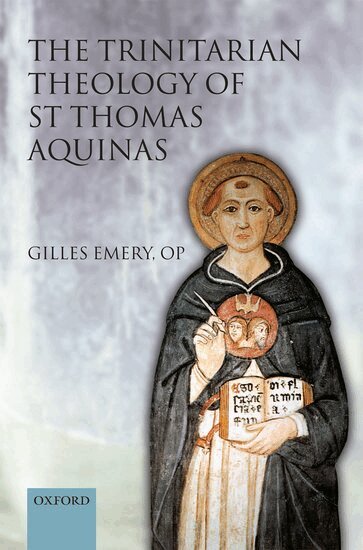
A historical and systematic introduction to what the medieval philospher and theologian Thomas Aquinas (1225-74) said about faith in the Trinity. Gilles Emery OP provides an explanation of the main questions in Thomas's treatise on the Trinity in his major work, the Summa Theologiae. His presentation clarifies the key ideas through which Thomas accounts for the nature of Trinitarian monotheism. Emery focuses on the personal relations of the Father, Son, and Holy Spirit, both in their eternal communion and in their creative and saving action. By highlighting the thought of one of the greatest defenders of the doctrine of the Trinity, he enables people to grasp the classical Christian understanding of God.
523 kr
Skickas inom 7-10 vardagar
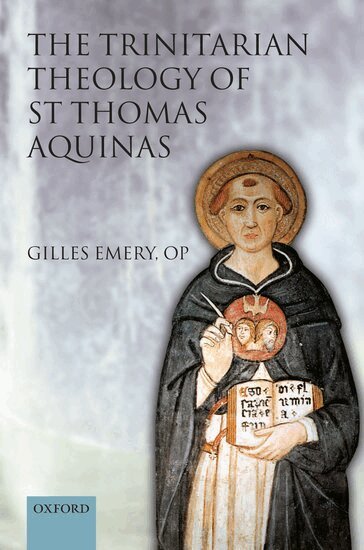
A historical and systematic introduction to what the medieval philospher and theologian Thomas Aquinas (1225-74) said about faith in the Trinity. Gilles Emery OP provides an explanation of the main questions in Thomas's treatise on the Trinity in his major work, the Summa Theologiae. His presentation clarifies the key ideas through which Thomas accounts for the nature of Trinitarian monotheism. Emery focuses on the personal relations of the Father, Son, and Holy Spirit, both in their eternal communion and in their creative and saving action. By highlighting the thought of one of the greatest defenders of the doctrine of the Trinity, he enables people to grasp the classical Christian understanding of God.