Lily Geismer - Böcker
Visar alla böcker från författaren Lily Geismer. Handla med fri frakt och snabb leverans.
6 produkter
6 produkter
1 503 kr
Skickas inom 11-20 vardagar
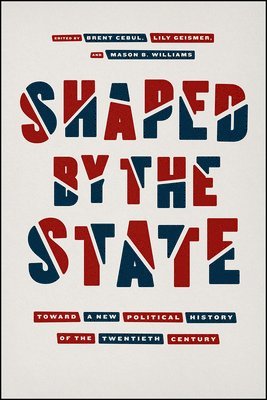
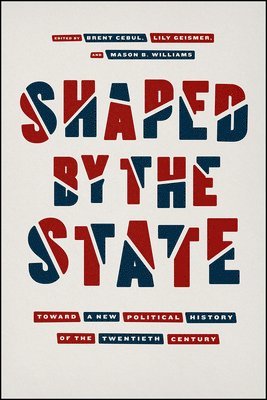
American political history has been built around narratives of crisis, in which what “counts” are the moments when seemingly stable political orders collapse and new ones rise from the ashes. No doubt the history of American politics is filled with such moments—the Great Depression and the New Deal; the rise of modern conservatism in the 1960s and ’70s; and, most recently, the 2016 election of Donald Trump. But while crisis-centered frameworks can make sense of certain dimensions of political culture, partisan change, and governance, they also often steal attention from the production of categories like race, gender, and citizenship status that transcend the usual breakpoints in American history.Brent Cebul, Lily Geismer, and Mason B. Williams have brought together first-rate scholars from a wide range of subfields who are making structures of state power—not moments of crisis or partisan realignment—integral to their analyses. All of the contributors see political history as defined less by elite subjects than by tensions between state and economy, state and society, and state and subject—tensions that reveal continuities as much as disjunctures. This broader definition incorporates analyses of the crosscurrents of power, race, and identity; the recent turns toward the history of capitalism and transnational history; and an evolving understanding of American political development that cuts across eras of seeming liberal, conservative, or neoliberal ascendance. The result is a rich revelation of what political history is today.
315 kr
Skickas inom 7-10 vardagar
American political history has been built around narratives of crisis, in which what “counts” are the moments when seemingly stable political orders collapse and new ones rise from the ashes. No doubt the history of American politics is filled with such moments—the Great Depression and the New Deal; the rise of modern conservatism in the 1960s and ’70s; and, most recently, the 2016 election of Donald Trump. But while crisis-centered frameworks can make sense of certain dimensions of political culture, partisan change, and governance, they also often steal attention from the production of categories like race, gender, and citizenship status that transcend the usual breakpoints in American history.Brent Cebul, Lily Geismer, and Mason B. Williams have brought together first-rate scholars from a wide range of subfields who are making structures of state power—not moments of crisis or partisan realignment—integral to their analyses. All of the contributors see political history as defined less by elite subjects than by tensions between state and economy, state and society, and state and subject—tensions that reveal continuities as much as disjunctures. This broader definition incorporates analyses of the crosscurrents of power, race, and identity; the recent turns toward the history of capitalism and transnational history; and an evolving understanding of American political development that cuts across eras of seeming liberal, conservative, or neoliberal ascendance. The result is a rich revelation of what political history is today.
938 kr
Skickas inom 7-10 vardagar
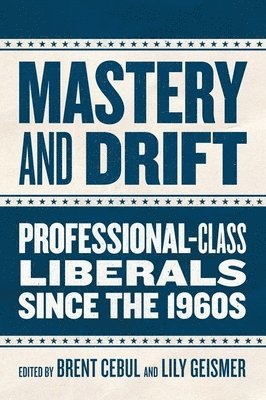
A revelatory look at modern liberalism’s historical evolution and enduring impact on contemporary politics and society. Since the 1960s, American liberalism and the Democratic Party have been remade along professional class lines, widening liberalism’s impact but narrowing its social and political vision. In Mastery and Drift, historians Brent Cebul and Lily Geismer have assembled a group of scholars to address the formation of “professional-class liberalism” and its central role in remaking electoral politics and the practice of governance. Across subjects as varied as philanthropy, consulting, health care, welfare, race, immigration, economics, and foreign conflicts, the authors examine not only the gaps between liberals’ egalitarian aspirations and their approaches to policymaking but also how the intricacies of contemporary governance have tended to bolster professional-class liberals’ power.The contributors to Mastery and Drift all came of age amid the development of professional-class liberalism, giving them distinctive and important perspectives in understanding its internal limitations and its relationship to neoliberalism and the Right. With never-ending disputes over the meaning of liberalism, the content of its governance, and its relationship to a resurgent Left, now is the time to consider modern liberalism’s place in contemporary American life.
290 kr
Skickas inom 7-10 vardagar
A revelatory look at modern liberalism’s historical evolution and enduring impact on contemporary politics and society. Since the 1960s, American liberalism and the Democratic Party have been remade along professional class lines, widening liberalism’s impact but narrowing its social and political vision. In Mastery and Drift, historians Brent Cebul and Lily Geismer have assembled a group of scholars to address the formation of “professional-class liberalism” and its central role in remaking electoral politics and the practice of governance. Across subjects as varied as philanthropy, consulting, health care, welfare, race, immigration, economics, and foreign conflicts, the authors examine not only the gaps between liberals’ egalitarian aspirations and their approaches to policymaking but also how the intricacies of contemporary governance have tended to bolster professional-class liberals’ power.The contributors to Mastery and Drift all came of age amid the development of professional-class liberalism, giving them distinctive and important perspectives in understanding its internal limitations and its relationship to neoliberalism and the Right. With never-ending disputes over the meaning of liberalism, the content of its governance, and its relationship to a resurgent Left, now is the time to consider modern liberalism’s place in contemporary American life.
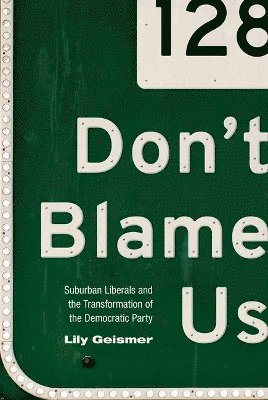
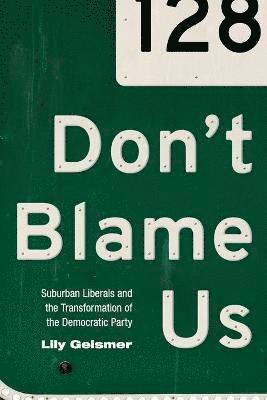
Don't Blame Us
Suburban Liberals and the Transformation of the Democratic Party
Inbunden, Engelska, 2014
362 kr
Tillfälligt slut
Don't Blame Us traces the reorientation of modern liberalism and the Democratic Party away from their roots in labor union halls of northern cities to white-collar professionals in postindustrial high-tech suburbs, and casts new light on the importance of suburban liberalism in modern American political culture. Focusing on the suburbs along the high-tech corridor of Route 128 around Boston, Lily Geismer challenges conventional scholarly assessments of Massachusetts exceptionalism, the decline of liberalism, and suburban politics in the wake of the rise of the New Right and the Reagan Revolution in the 1970s and 1980s. Although only a small portion of the population, knowledge professionals in Massachusetts and elsewhere have come to wield tremendous political leverage and power. By probing the possibilities and limitations of these suburban liberals, this rich and nuanced account shows that--far from being an exception to national trends--the suburbs of Massachusetts offer a model for understanding national political realignment and suburban politics in the second half of the twentieth century.
Don't Blame Us
Suburban Liberals and the Transformation of the Democratic Party
Häftad, Engelska, 2017
274 kr
Skickas inom 7-10 vardagar
Don't Blame Us traces the reorientation of modern liberalism and the Democratic Party away from their roots in labor union halls of northern cities to white-collar professionals in postindustrial high-tech suburbs, and casts new light on the importance of suburban liberalism in modern American political culture. Focusing on the suburbs along the high-tech corridor of Route 128 around Boston, Lily Geismer challenges conventional scholarly assessments of Massachusetts exceptionalism, the decline of liberalism, and suburban politics in the wake of the rise of the New Right and the Reagan Revolution in the 1970s and 1980s. Although only a small portion of the population, knowledge professionals in Massachusetts and elsewhere have come to wield tremendous political leverage and power. By probing the possibilities and limitations of these suburban liberals, this rich and nuanced account shows that--far from being an exception to national trends--the suburbs of Massachusetts offer a model for understanding national political realignment and suburban politics in the second half of the twentieth century.