Lincoln A. Mitchell - Böcker
Visar alla böcker från författaren Lincoln A. Mitchell. Handla med fri frakt och snabb leverans.
8 produkter
8 produkter
646 kr
Skickas inom 10-15 vardagar
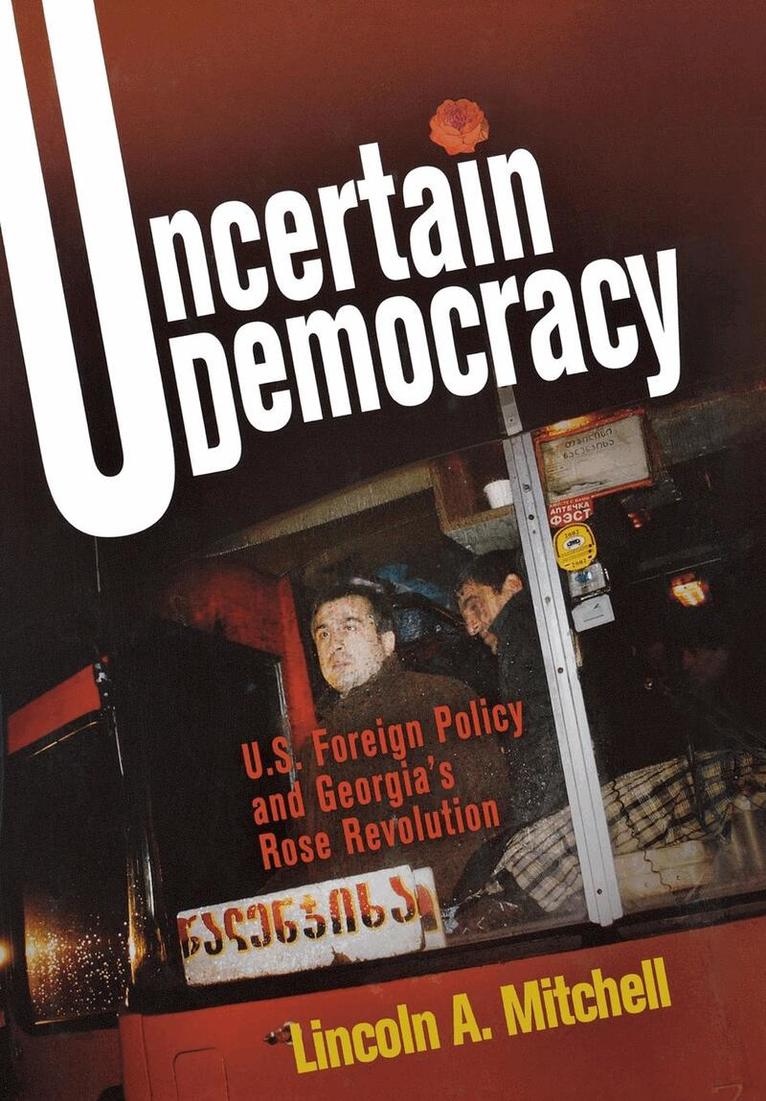
In November of 2003, a stolen election in the former Soviet republic of Georgia led to protests and the eventual resignation of President Eduard Shevardnadze. Shevardnadze was replaced by a democratically elected government led by President Mikheil Saakashvili, who pledged to rebuild Georgia, orient it toward the West, and develop a European-style democracy. Known as the Rose Revolution, this early twenty-first-century democratic movement was only one of the so-called color revolutions (Orange in Ukraine, Tulip in Kyrgyzstan, and Cedar in Lebanon). What made democratic revolution in Georgia thrive when so many similar movements in the early part of the decade dissolved?Lincoln A. Mitchell witnessed the Rose Revolution firsthand, even playing a role in its manifestation by working closely with key Georgian actors who brought about change. In Uncertain Democracy, Mitchell recounts the events that led to the overthrow of Shevardnadze and analyzes the factors that contributed to the staying power of the new regime. The book also explores the modest but indispensable role of the United States in contributing to the Rose Revolution and Georgia's failure to live up to its democratic promise.Uncertain Democracy is the first scholarly examination of Georgia's recent political past. Drawing upon primary sources, secondary documents, and his own NGO experience, Mitchell presents a compelling case study of the effect of U.S. policy of promoting democracy abroad.
885 kr
Skickas inom 10-15 vardagar
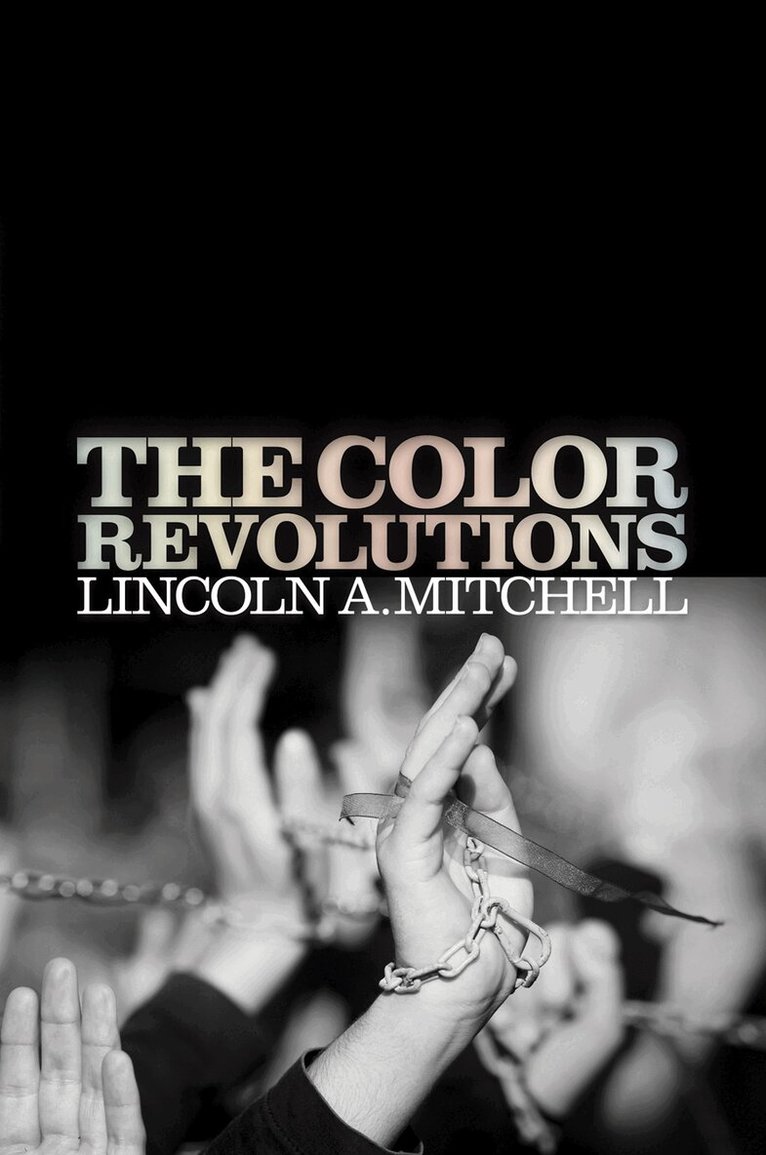
From late 2003 through mid-2005, a series of peaceful street protests toppled corrupt and undemocratic regimes in Georgia, Ukraine, and Kyrgyzstan and ushered in the election of new presidents in all three nations. These movements-collectively known as the Color Revolutions-were greeted in the West as democratic breakthroughs that might thoroughly reshape the political terrain of the former Soviet Union.But as Lincoln A. Mitchell explains in The Color Revolutions, it has since become clear that these protests were as much reflections of continuity as they were moments of radical change. Not only did these movements do little to spur democratic change in other post-Soviet states, but their impact on Georgia, Ukraine, and Kyrgyzstan themselves was quite different from what was initially expected. In fact, Mitchell suggests, the Color Revolutions are best understood as phases in each nation's long post-Communist transition: significant events, to be sure, but far short of true revolutions.The Color Revolutions explores the causes and consequences of all three Color Revolutions-the Rose Revolution in Georgia, the Orange Revolution in Ukraine, and the Tulip Revolution in Kyrgyzstan-identifying both common themes and national variations. Mitchell's analysis also addresses the role of American democracy promotion programs, the responses of nondemocratic regimes to the Color Revolutions, the impact of these events on U.S.-Russian relations, and the failed "revolutions" in Azerbaijan and Belarus in 2005 and 2006.At a time when the Arab Spring has raised hopes for democratic development in the Middle East, Mitchell's account of the Color Revolutions serves as a valuable reminder of the dangers of confusing dramatic moments with lasting democratic breakthroughs.
354 kr
Skickas inom 10-15 vardagar
Explore the numerous paradoxes at the heart of the theory and practice of democracy promotion.The Democracy Promotion Paradox raises difficult but critically important issues by probing the numerous inconsistencies and paradoxes that lie at the heart of the theory and practice of democracy promotion. For example, the United States frequently crafts policies to encourage democracy that rely on cooperation with undemocratic governments; democracy promoters view their work as minor yet also of critical importance to the United States and the countries where they work; and many who work in the field of democracy promotion have an incomplete understanding of democracy. Similarly, in the domestic political context, both left and right critiques of democracy promotion are internally inconsistent.Lincoln A. Mitchell provides an overview of the origins of U.S. democracy promotion, analyzes its development and evolution over the last decades, and discusses how it came to be an unquestioned assumption at the core of U.S. foreign policy. His discussion of the bureaucratic logic that underlies democracy promotion offers important insights into how it can be adapted to remain effective. Mitchell also examines the future of democracy promotion in the context of evolving U.S. domestic policy and politics and in a changed global environment in which the United States is no longer the hegemon.
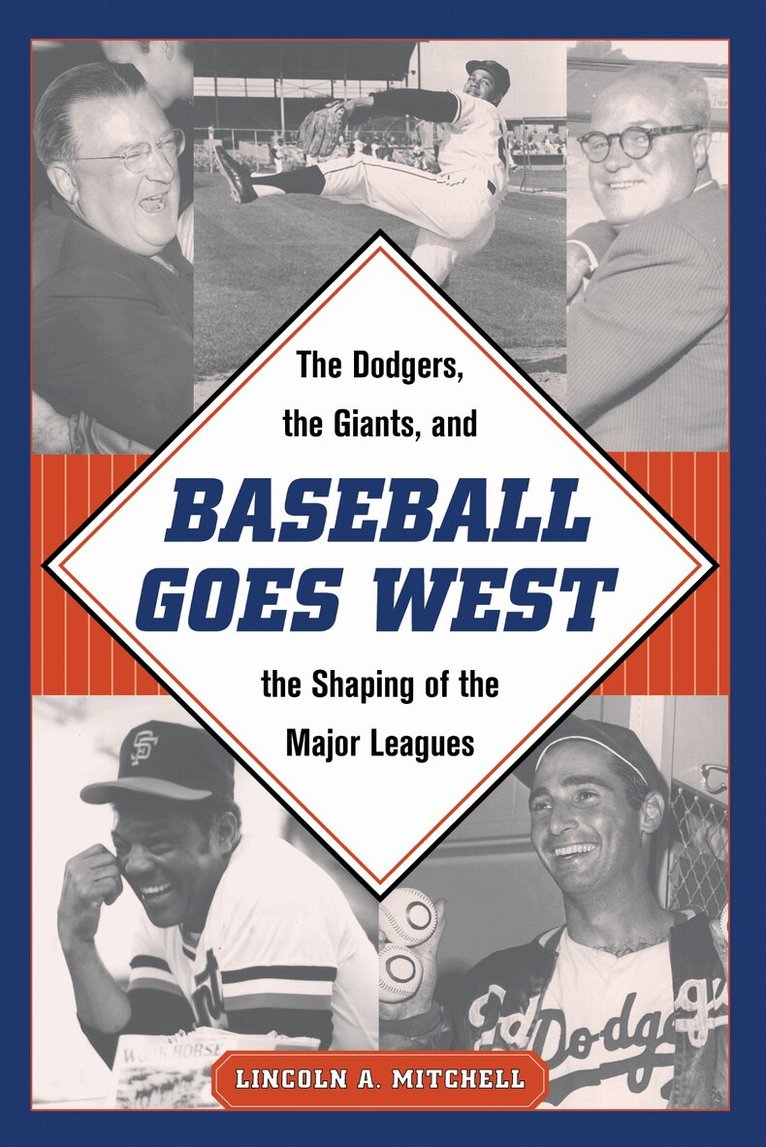
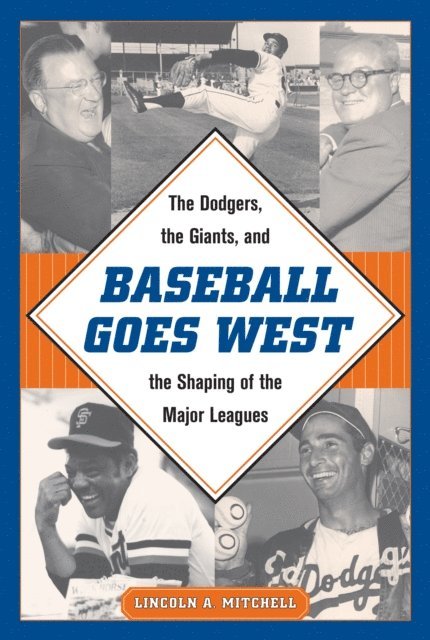
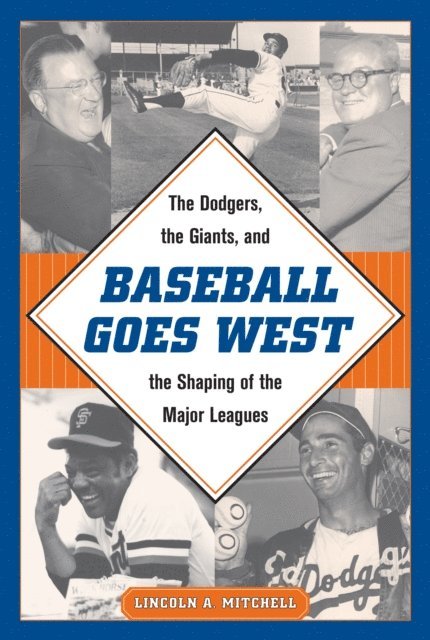
Baseball Goes West
The Dodgers, the Giants, and the Shaping of the Major Leagues
Inbunden, Engelska, 2018
453 kr
Skickas inom 7-10 vardagar
Following the 1957 season, two of baseball’s most famous teams, the Brooklyn Dodgers and the New York Giants, left the city they had called home since the 19th century and headed west. The Dodgers went to Los Angeles and the Giants to San Francisco. Those events have entered baseball lore, and indeed the larger culture, as acts of betrayal committed by greedy owners Walter O’Malley of the Dodgers and Horace Stoneham of the Giants. The departure of these two teams, but especially the Dodgers, has not been forgotten by those communities. Even six decades later, it is not hard to find older Brooklynites who are still angry about losing the Dodgers. This is one side of the story. Baseball Goes West seeks to tell another side. Lincoln A. Mitchell argues that the moves to California, second only to Jackie Robinson’s debut in 1947, forged Major League Baseball (MLB) as we know it today. By moving two famous teams with national reputations and many well-known players, MLB benefited tremendously, increasing its national profile and broadening its fan base. This was particularly important following a decade that, despite often being described as baseball’s golden age, was plagued with moribund franchises, low wages for many players, and a difficult dismantling of the apartheid system that had been part of big league baseball since its inception.In the years immediately following the moves, the two most iconic players of the 1960s, Sandy Koufax and Willie Mays, had their best years, bringing even greater status and fame to their respective ball clubs. The Giants played an instrumental role in the first phase of baseball’s globalization by leading the effort to bring players from Latin America to the big leagues, while the Dodgers set attendance records and pioneered new ways to market the game. Sports historians, baseball fans, and historians of American culture on a broader scale will appreciate Mitchell’s reframing of baseball’s move west and his insights into the impacts felt throughout baseball and beyond.
332 kr
Skickas inom 10-15 vardagar
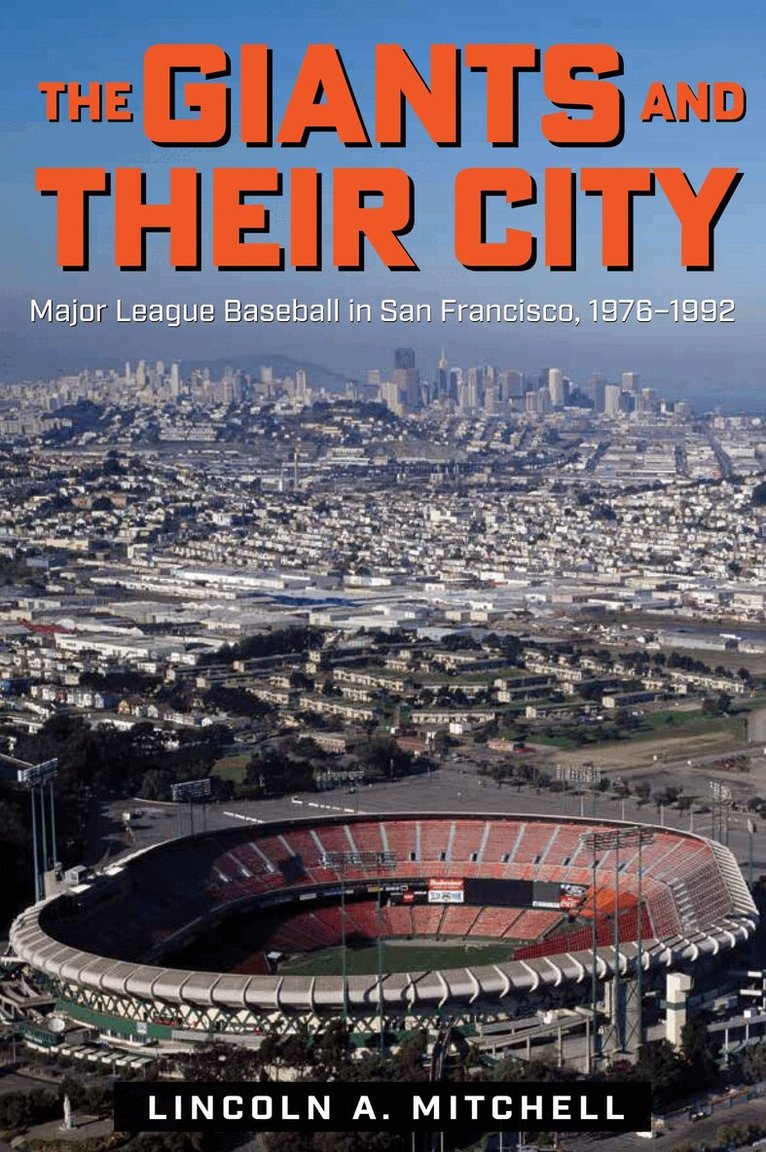
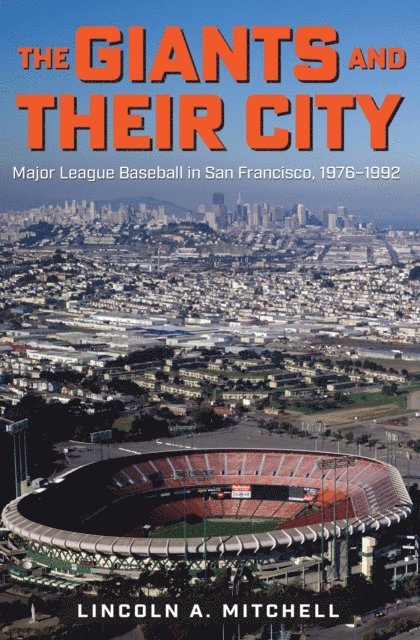
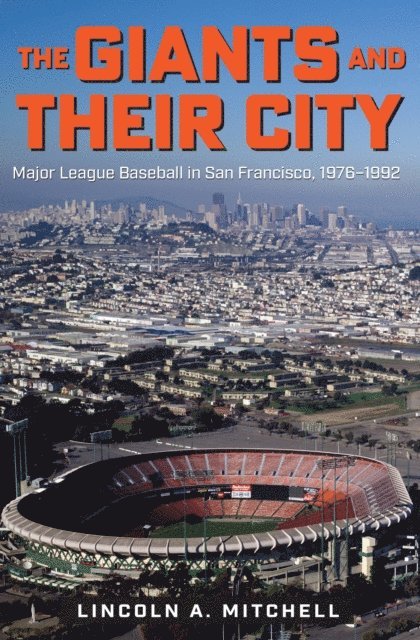
Searching for a home and a homerun-an overlooked era of Giants and San Francisco historyThe San Francisco Giants have been one of the most successful franchises in baseball in the twenty-first century as evidenced by the three World Series Championship flags flying in the breeze over Oracle Park, one of the most beautiful baseball venues in the world. However, the team was not always so successful on or off the field. The Giants and Their City tells the story of a Giants franchise that had no recognizable stars, was last in the league in attendance, and had more than one foot out the door on the way to Toronto when a local businessman and a brand new mayor found a way to keep the team in San Francisco. Over the next 17 years, the team had some very good years, but more than few terrible ones, while trying to find a home in a city with a unique and confounding political culture.The Giants and Their City relates how the team struggles to win ballgames, find its way back to the playoffs, but also to stay in San Francisco when, at times, it wasn't clear the city wanted them. This book is a baseball story about beloved Giants players like Vida Blue, Willie McCovey, Kevin Mitchell, and Robby Thompson, and includes interviews with Art Agnos, Frank Jordan, Dianne Feinstein, John Montefusco, Will Clark, Kevin Mitchell, Mike Krukow, Dave Dravecky and Bob Lurie among others. The book features descriptions of important events in Giants history like the Mike Ivie grand slam, the Joe Morgan home run, the 1987 playoffs, the 1989 team, the Dave Dravecky game and the earthquake World Series. It's also a uniquely San Francisco story that shows how sports teams and cities often have very complex relationships.
676 kr
Skickas inom 7-10 vardagar
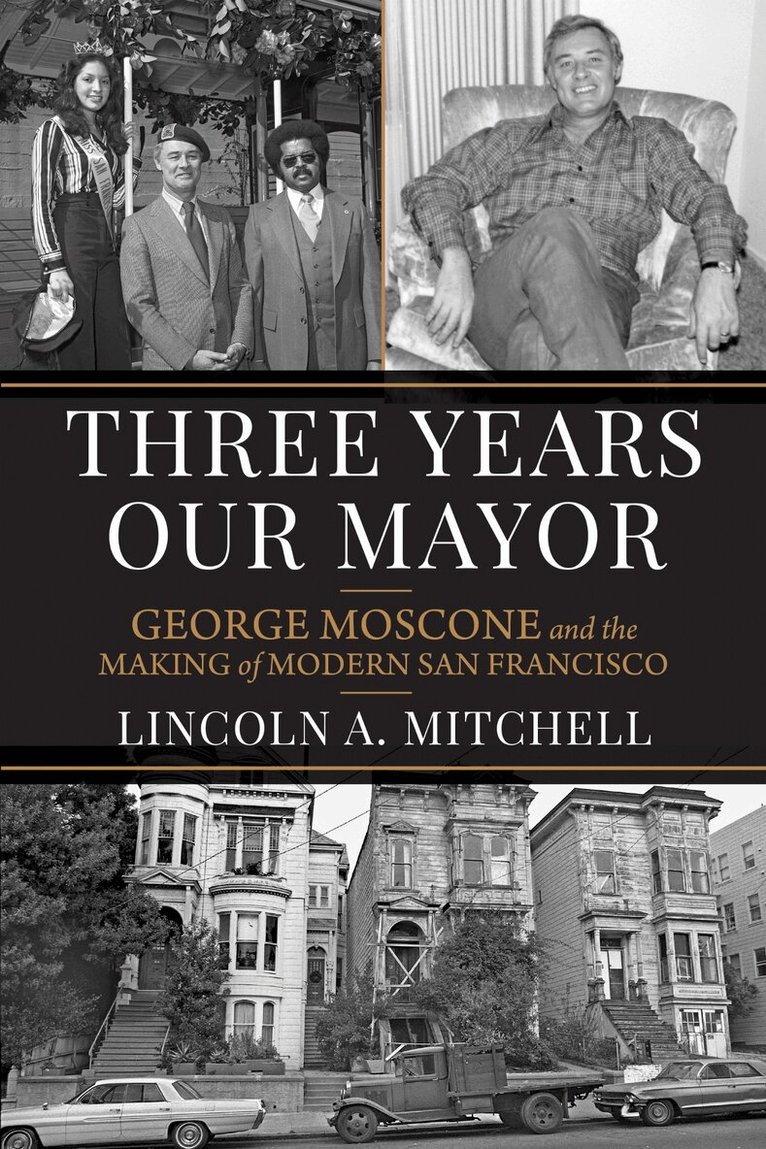
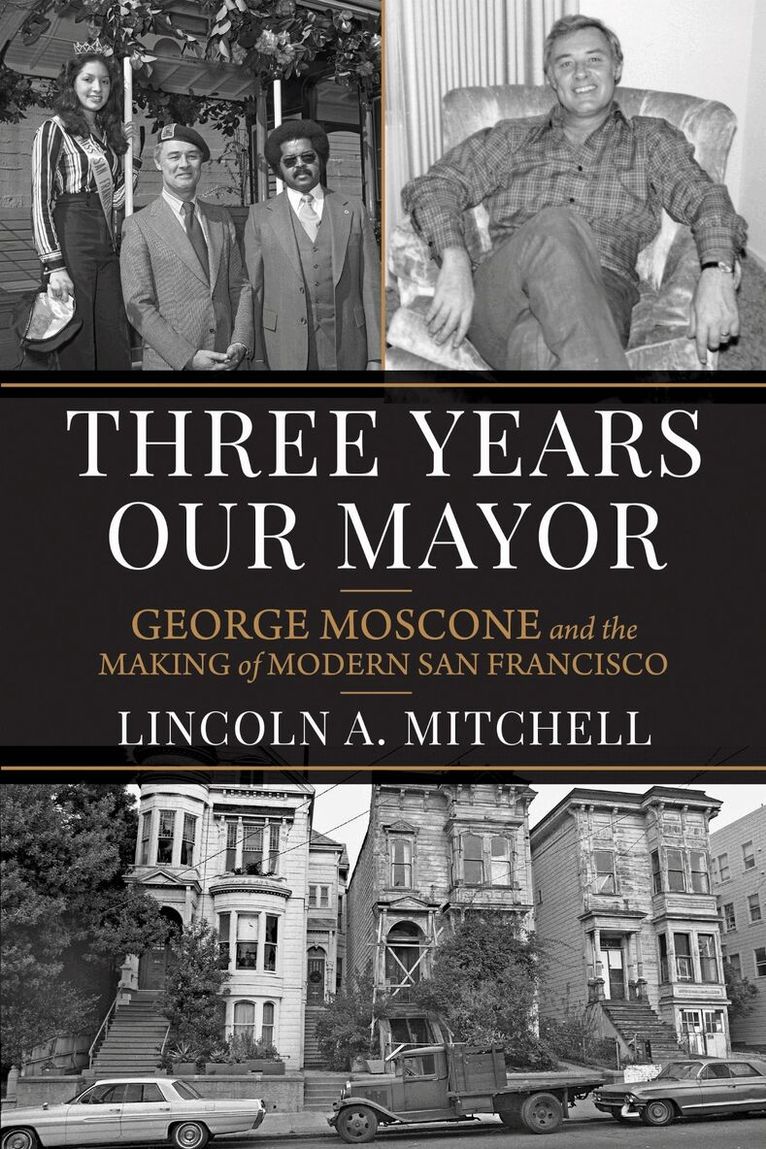
Those who recognize Mayor George Moscone’s name may think of him as the career politician who was assassinated along with Harvey Milk, but there was much more to this influential and fascinating man’s story. He was a trailblazing progressive and powerful state legislator who was instrumental in passing legislation on issues ranging from LGBT rights to funding for school lunches. Moscone’s 1975 campaign for mayor was historically significant because it was the first time a major race was won by a candidate who campaigned aggressively for expanding civil rights for both African Americans and LGBT people. He won his campaign for mayor chiefly because of huge support from those two constituencies. Moscone was also a very colorful character who, in addition to being a successful politician, was a charming and charismatic bon vivant who was deeply embedded in the fabric and culture of San Francisco. He grew up the only son of a single mother in Cow Hollow when it was a working class, largely Italian American neighborhood, and he became the kind of politician who knew bartenders, playground attendants, small business owners, and neighborhood activists in every corner of the city. Moscone’s life and the history of San Francisco during the middle half of the twentieth century are deeply intertwined.Through illustrating the life of Moscone, author Lincoln A. Mitchell explores how today’s San Francisco came into being. Moscone—through his work in the State Senate, victory in the very divisive 1975 mayor’s race, and brief tenure as mayor—was a key figure in the city’s evolution. The politics surrounding Moscone’s election as mayor, governance of the city, and tragic death are still relevant issues. Moscone was a groundbreaking politician whose life was cut short, but his influence on San Francisco can still be felt today.
593 kr
Skickas inom 7-10 vardagar
Those who recognize Mayor George Moscone's name may think of him as the career politician who was assassinated along with Harvey Milk, but there was much more to this influential and fascinating man's story. He was a trailblazing progressive and powerful state legislator who was instrumental in passing legislation on issues ranging from LGBT rights to funding for school lunches. Moscone's 1975 campaign for mayor was historically significant because it was the first time a major race was won by a candidate who campaigned aggressively for expanding civil rights for both African Americans and LGBT people. He won his campaign for mayor chiefly because of huge support from those two constituencies. Moscone was also a very colorful character who, in addition to being a successful politician, was a charming and charismatic bon vivant who was deeply embedded in the fabric and culture of San Francisco. He grew up the only son of a single mother in Cow Hollow when it was a working class, largely Italian American neighborhood, and he became the kind of politician who knew bartenders, playground attendants, small business owners, and neighborhood activists in every corner of the city. Moscone's life and the history of San Francisco during the middle half of the twentieth century are deeply intertwined. Through illustrating the life of Moscone, author Lincoln A. Mitchell explores how today's San Francisco came into being. Moscone—through his work in the State Senate, victory in the very divisive 1975 mayor's race, and brief tenure as mayor—was a key figure in the city's evolution. The politics surrounding Moscone's election as mayor, governance of the city, and tragic death are still relevant issues. Moscone was a groundbreaking politician whose life was cut short, but his influence on San Francisco can still be felt today.
San Francisco Year Zero
Political Upheaval, Punk Rock and a Third-Place Baseball Team
Inbunden, Engelska, 2019
467 kr
Skickas inom 7-10 vardagar
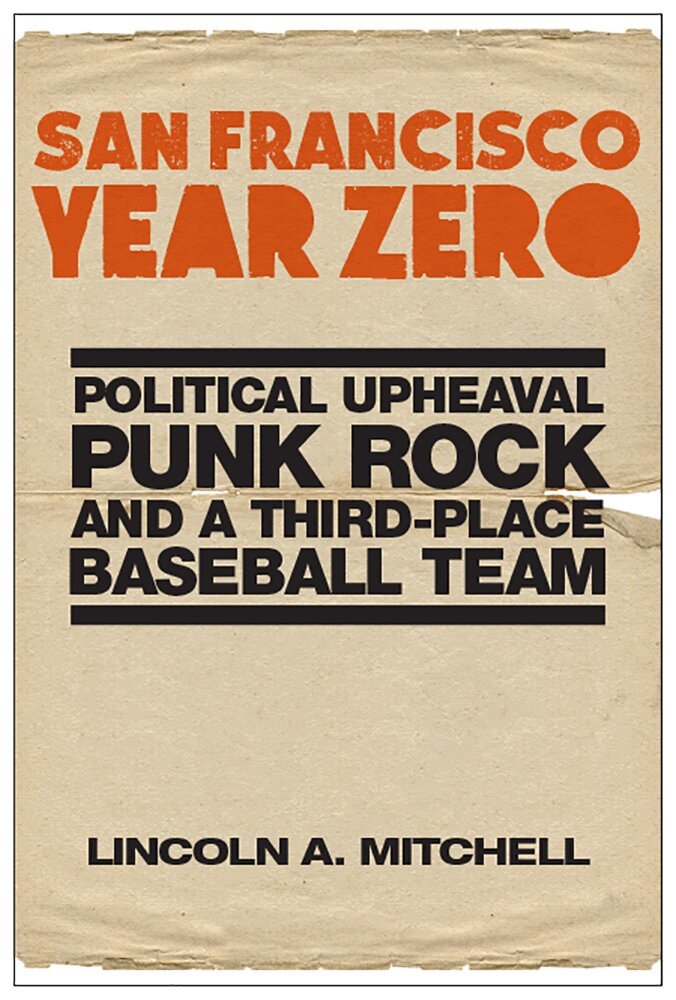
San Francisco is a city of contradictions. It is one of the most socially liberal cities in America, but it also has some of the nation's worst income inequality. It is a playground for tech millionaires, with an outrageously high cost of living, yet it also supports vibrant alternative and avant-garde scenes. So how did the city get this way? In San Francisco Year Zero, San Francisco native Lincoln Mitchell traces the roots of the current situation back to 1978, when three key events occurred: the assassination of George Moscone and Harvey Milk occurring fewer than two weeks after the massacre of Peoples Temple members in Jonestown, Guyana, the explosion of the city's punk rock scene, and a breakthrough season for the San Francisco Giants. Through these three strands, Mitchell explores the rifts between the city's pro-business and progressive-left politicians, the emergence of Dianne Feinstein as a political powerhouse, the increasing prominence of the city's LGBT community, punk's reinvigoration of the Bay Area's radical cultural politics, and the ways that the Giants helped unify one of the most ethnically and culturally diverse cities in the nation. Written from a unique insider's perspective, San Francisco Year Zero deftly weaves together the personal and the political, putting a human face on the social upheavals that transformed a city.