Linda English - Böcker
Visar alla böcker från författaren Linda English. Handla med fri frakt och snabb leverans.
3 produkter
3 produkter
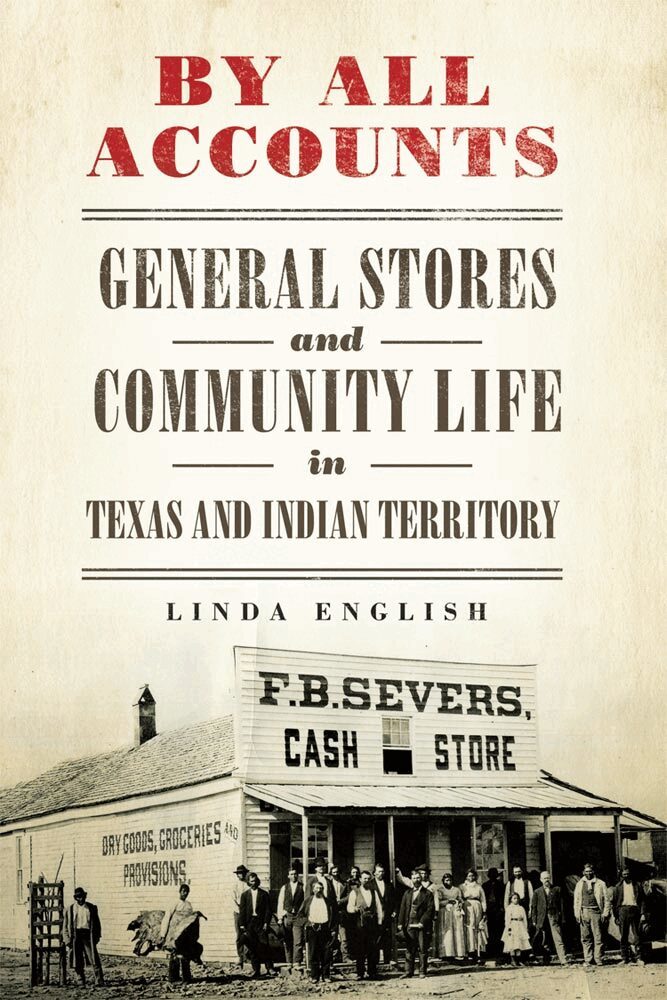
By All Accounts
General Stores and Community Life in Texas and Indian Territory
Inbunden, Engelska, 2013
363 kr
Skickas inom 10-15 vardagar
The general store in late-nineteenth-century America was often the economic heart of a small town. Merchants sold goods necessary for residents' daily survival and extended credit to many of their customers; cash-poor farmers relied on merchants for their economic well-being just as the retailers needed customers to purchase their wares. But there was more to this mutual dependence than economics. Store owners often helped found churches and other institutions, and they and their customers worshiped together, sent their children to the same schools, and in times of crisis, came to one another's assistance.For this social and cultural history, Linda English combed store account ledgers from the 1870s and 1880s and found in them the experiences of thousands of people in Texas and Indian Territory. Particularly revealing are her insights into the everyday lives of women, immigrants, and ethnic and racial minorities, especially African Americans and American Indians.A store's ledger entries yield a wealth of detail about its proprietor, customers, and merchandise. As a local gathering place, the general store witnessed many aspects of residents' daily lives - many of them recorded, if hastily, in account books. In a small community with only one store, the clientele would include white, black, and Indian shoppers and, in some locales, Mexican American and other immigrants. Flour, coffee, salt, potatoes, tobacco, domestic fabrics, and other staples typified most purchases, but occasional luxury items reflected the buyer's desire for refinement and upward mobility. Recognizing that townspeople often accessed the wider world through the general store, English also traces the impact of national concerns on remote rural areas - including Reconstruction, race relations, women's rights, and temperance campaigns.In describing the social status of store owners and their economic and political roles in both small agricultural communities and larger towns, English fleshes out the fascinating history of daily life in Indian Territory and Texas in a time of transition.
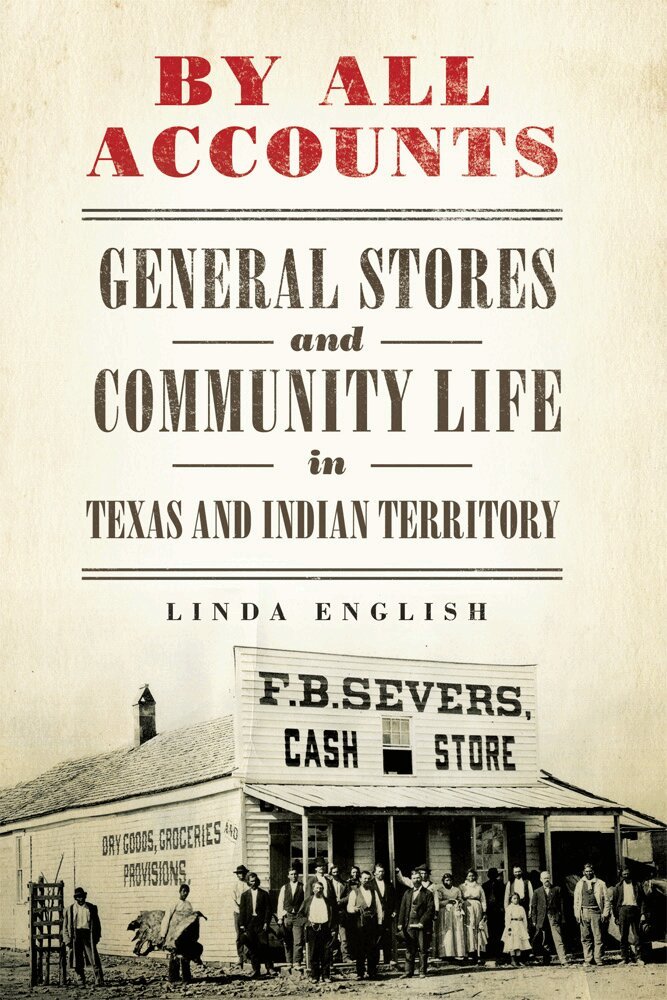
By All Accounts
General Stores and Community Life in Texas and Indian Territory
Häftad, Engelska, 2021
195 kr
Skickas
The general store in late-nineteenth-century America was often the economic heart of a small town. Merchants sold goods necessary for residents' daily survival and extended credit to many of their customers; cash-poor farmers relied on merchants for their economic well-being just as the retailers needed customers to purchase their wares. But there was more to this mutual dependence than economics. Store owners often helped found churches and other institutions, and they and their customers worshiped together, sent their children to the same schools, and in times of crisis, came to one another's assistance.For this social and cultural history, Linda English combed store account ledgers from the 1870s and 1880s and found in them the experiences of thousands of people in Texas and Indian Territory. Particularly revealing are her insights into the everyday lives of women, immigrants, and ethnic and racial minorities, especially African Americans and American Indians.A store's ledger entries yield a wealth of detail about its proprietor, customers, and merchandise. As a local gathering place, the general store witnessed many aspects of residents' daily lives - many of them recorded, if hastily, in account books. In a small community with only one store, the clientele would include white, black, and Indian shoppers and, in some locales, Mexican American and other immigrants. Flour, coffee, salt, potatoes, tobacco, domestic fabrics, and other staples typified most purchases, but occasional luxury items reflected the buyer's desire for refinement and upward mobility. Recognizing that townspeople often accessed the wider world through the general store, English also traces the impact of national concerns on remote rural areas - including Reconstruction, race relations, women's rights, and temperance campaigns.In describing the social status of store owners and their economic and political roles in both small agricultural communities and larger towns, English fleshes out the fascinating history of daily life in Indian Territory and Texas in a time of transition.
440 kr
Skickas inom 7-10 vardagar
The “Runaway Scrape” is, among Texas historians, at once recognizable but often less understood. While shelves of books examine the fall of the Alamo and the revolutionary victory at San Jacinto, surprisingly little sustained attention has been given to the chaotic period from the early to late spring of 1836 when many settlers fled their homes in the face of Santa Anna’s advancing forces. In the final months of the rebellion-turned-revolution, fear of defeat prompted larger questions of what it meant to be a man or woman in an environment of wartime retreat. In Run for Your Lives! historian Linda English opens a new window into the Runaway Scrape, exploring the events and rhetoric through the lens of gender. English identifies the central question looming over men and women alike: Were you doing enough to support the rebellion? Texas men faced the pressure to be “manly”—not to turn away or retreat, but to meet the enemy on the battlefield. As demoralizing losses stacked up, the rhetorical appeals of Anglo Texan authorities employed even more fervent language, casting the enemy as depraved and a threat to the innocent women and children of the state. Appeals to masculinity also intensified with fear-mongering references to potential Indian attacks. At the same time, while many women ceded leadership decisions to their male counterparts, an increasing number competed for power and more decisive leadership within refugee groups. Accusations of “authoritative” or “brazen” women acting like men and “weak” or “unmanly” men acting like women abounded in an apparent scrambling of gender expectations. But as English argues, “a closer examination of the heated gendered rhetoric . . . indicates that it was delivered with a goal in mind”—recruiting converts and enlistments to the cause. Nevertheless, shifting of attitudes or expectations also proved short-lived. Postwar peace realigned the gender landscape, underscoring the temporary nature of revolutionary gender roles.