Linda J Cook - Böcker
Visar alla böcker från författaren Linda J Cook. Handla med fri frakt och snabb leverans.
11 produkter
11 produkter
2 096 kr
Skickas inom 10-15 vardagar
This book attempts to explain why, and to evaluate what the return of the left has meant for the social policy of the states they have helped govern. It focuses on the East-Central European countries of Poland, Hungary, and the Czech Republic, significantly Russia.
613 kr
Skickas inom 10-15 vardagar
This book attempts to explain why, and to evaluate what the return of the left has meant for the social policy of the states they have helped govern. It focuses on the East-Central European countries of Poland, Hungary, and the Czech Republic, significantly Russia.
Del 86 - Russian Research Center Studies
Soviet Social Contract and Why It Failed
Welfare Policy and Workers’ Politics from Brezhnev to Yeltsin
Inbunden, Engelska, 1993
937 kr
Skickas inom 10-15 vardagar
As their woefully backward economy continues to crumble, much of the Soviet population remains indifferent, if not downright hostile, to the idea of reform. This phenomenon, so different from the Solidarity movement in Poland or the velvet revolution in Czechoslovakia, has been explained in terms of a “social contract”—a tacit agreement between the post-Stalin regime and the working class whereby the state provided economic and social security in return for the workers' political compliance. This book is the first critical assessment of the likelihood and implications of such a contract.Linda Cook pursues the idea from Brezhnev's day to our own, and considers the constraining effect it may have had on Gorbachev's attempts to liberalize the Soviet economy. In case studies on job security, retail price stability, and social service subsidies, Cook identifies points at which leaders had to make critical decisions—to commit more resources or to abandon other policies at significant cost—in order to maintain the contract. The pattern that emerges attests to the validity of the social contract thesis for the Brezhnev period. At the same time, Cook's analysis points to several important factors, such as the uneven distribution of benefits, that help explain why labor unrest and activism have varied dramatically from sector to sector in recent years.Ultimately, these case studies reveal, particularly for the Gorbachev period, deep conflicts between the old contract and the requisites of economic reform. Cook extends her analysis into the Yeltsin period to show how the democratizing state dealt weakly with labor's demands, seeking to stabilize labor relations with an inappropriate corporate structure. In the end, mobilized labor contributed greatly to the pressures that undermined Gorbachev's regime, and remained an obstacle to economic reform through the early months of Yeltsin's Russia.
617 kr
Skickas inom 10-15 vardagar
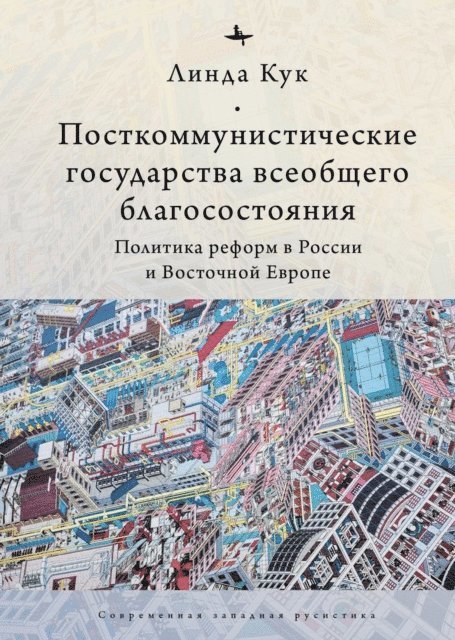
In the early 1990s, the countries of the former Soviet Bloc faced an urgent need to reform the systems by which they delivered broad, basic social welfare to their citizens. Inherited systems were inefficient and financially unsustainable. Linda J. Cook here explores the politics and policy of social welfare from 1990 to 2004 in the Russian Federation, Poland, Hungary, Belarus, and Kazakhstan. Most of these countries, she shows, tried to institute reforms based on a liberal paradigm of reduced entitlements and subsidies, means-testing, and privatization. But these proposals provoked opposition from pro-welfare interests, and the politics of negotiating change varied substantially from one political arena to another. In Russia, for example, liberalizing reform was blocked for a decade. Only as Vladimir Putin rose to power did the country change its inherited welfare system.Cook finds that the impact of economic pressures on welfare was strongly mediated by domestic political factors, including the level of democratization and balance of pro- and anti-reform political forces. Postcommunist welfare politics throughout Russia and Eastern Europe, she shows, are marked by the large role played by bureaucratic welfare stakeholders who were left over from the communist period and, in weak states, by the development of informal processes in social sectors.
339 kr
Skickas inom 10-15 vardagar
In the early 1990s, the countries of the former Soviet Bloc faced an urgent need to reform the systems by which they delivered broad, basic social welfare to their citizens. Inherited systems were inefficient and financially unsustainable. Linda J. Cook here explores the politics and policy of social welfare from 1990 to 2004 in the Russian Federation, Poland, Hungary, Belarus, and Kazakhstan. Most of these countries, she shows, tried to institute reforms based on a liberal paradigm of reduced entitlements and subsidies, means-testing, and privatization. But these proposals provoked opposition from pro-welfare interests, and the politics of negotiating change varied substantially from one political arena to another. In Russia, for example, liberalizing reform was blocked for a decade. Only as Vladimir Putin rose to power did the country change its inherited welfare system.Cook finds that the impact of economic pressures on welfare was strongly mediated by domestic political factors, including the level of democratization and balance of pro- and anti-reform political forces. Postcommunist welfare politics throughout Russia and Eastern Europe, she shows, are marked by the large role played by bureaucratic welfare stakeholders who were left over from the communist period and, in weak states, by the development of informal processes in social sectors.
Welfare Nationalism in Europe and Russia
The Politics of 21st Century Exclusionary and Inclusionary Migrations
Häftad, Engelska, 2024
402 kr
Skickas inom 7-10 vardagar
What is the relationship between the expansion of international labour migration, informal and precarious employment, and growing nationalism? Welfare Nationalism compares 21st century MENA migrations to Europe and Russia, the Ukrainian refugee migration to Europe in 2022, and labor migrations from Central Asia to Russia and from Central and Eastern Europe to Britain. Linda Cook contends that exclusionary and inclusionary migration cycles exist in both regions, driven by the 'deservingness' of migrants and mobilized by anti-immigrant politicians. Arguing that the long-term deterioration of labor markets and welfare provision for nationals in Europe and Russia drives welfare nationalism, she shows how populist parties in Europe and sub-national elites in Russia thrive on scapegoating migrants. Featuring a unique comparative analysis, this book examines the increasing harshness of contemporary migration policies and explores how we have arrived at the daily stand-offs of desperate international migrants against Europe's powers of surveillance and enforcement.
Welfare Nationalism in Europe and Russia
The Politics of 21st Century Exclusionary and Inclusionary Migrations
Inbunden, Engelska, 2024
1 060 kr
Skickas inom 7-10 vardagar
What is the relationship between the expansion of international labour migration, informal and precarious employment, and growing nationalism? Welfare Nationalism compares 21st century MENA migrations to Europe and Russia, the Ukrainian refugee migration to Europe in 2022, and labor migrations from Central Asia to Russia and from Central and Eastern Europe to Britain. Linda Cook contends that exclusionary and inclusionary migration cycles exist in both regions, driven by the 'deservingness' of migrants and mobilized by anti-immigrant politicians. Arguing that the long-term deterioration of labor markets and welfare provision for nationals in Europe and Russia drives welfare nationalism, she shows how populist parties in Europe and sub-national elites in Russia thrive on scapegoating migrants. Featuring a unique comparative analysis, this book examines the increasing harshness of contemporary migration policies and explores how we have arrived at the daily stand-offs of desperate international migrants against Europe's powers of surveillance and enforcement.
510 kr
Skickas inom 5-8 vardagar
In the early 1990s, the countries of the former Soviet Bloc faced an urgent need to reform the systems by which they delivered broad, basic social welfare to their citizens. Inherited systems were inefficient and financially unsustainable. Linda J. Cook here explores the politics and policy of social welfare from 1990 to 2004 in the Russian Federation, Poland, Hungary, Belarus, and Kazakhstan. Most of these countries, she shows, tried to institute reforms based on a liberal paradigm of reduced entitlements and subsidies, means-testing, and privatization. But these proposals provoked opposition from pro-welfare interests, and the politics of negotiating change varied substantially from one political arena to another. In Russia, for example, liberalizing reform was blocked for a decade. Only as Vladimir Putin rose to power did the country change its inherited welfare system.Cook finds that the impact of economic pressures on welfare was strongly mediated by domestic political factors, including the level of democratization and balance of pro- and anti-reform political forces. Postcommunist welfare politics throughout Russia and Eastern Europe, she shows, are marked by the large role played by bureaucratic welfare stakeholders who were left over from the communist period and, in weak states, by the development of informal processes in social sectors.In the early 1990s, the countries of the former Soviet Bloc faced an urgent need to reform the systems by which they delivered broad, basic social welfare to their citizens. Inherited systems were inefficient and financially unsustainable. Linda J. Cook here explores the politics and policy of social welfare from 1990 to 2004 in the Russian Federation, Poland, Hungary, Belarus, and Kazakhstan.Most of these countries, she shows, tried to institute reforms based on a liberal paradigm of reduced entitlements and subsidies, means-testing, and privatization. But these proposals provoked opposition from pro-welfare interests, and the politics of negotiating change varied substantially from one political arena to another. In Russia, for example, liberalizing reform was blocked for a decade. Only as Vladimir Putin rose to power did the country change its inherited welfare system.Cook finds that the impact of economic pressures on welfare was strongly mediated by domestic political factors, including the level of democratization and balance of pro- and anti-reform political forces. Postcommunist welfare politics throughout Russia and Eastern Europe, she shows, are marked by the large role played by bureaucratic welfare stakeholders who were left over from the communist period and, in weak states, by the development of informal processes in social sectors.
Post-Communist World in the Twenty-First Century
How the Past Informs the Present
Inbunden, Engelska, 2022
1 343 kr
Skickas inom 10-15 vardagar
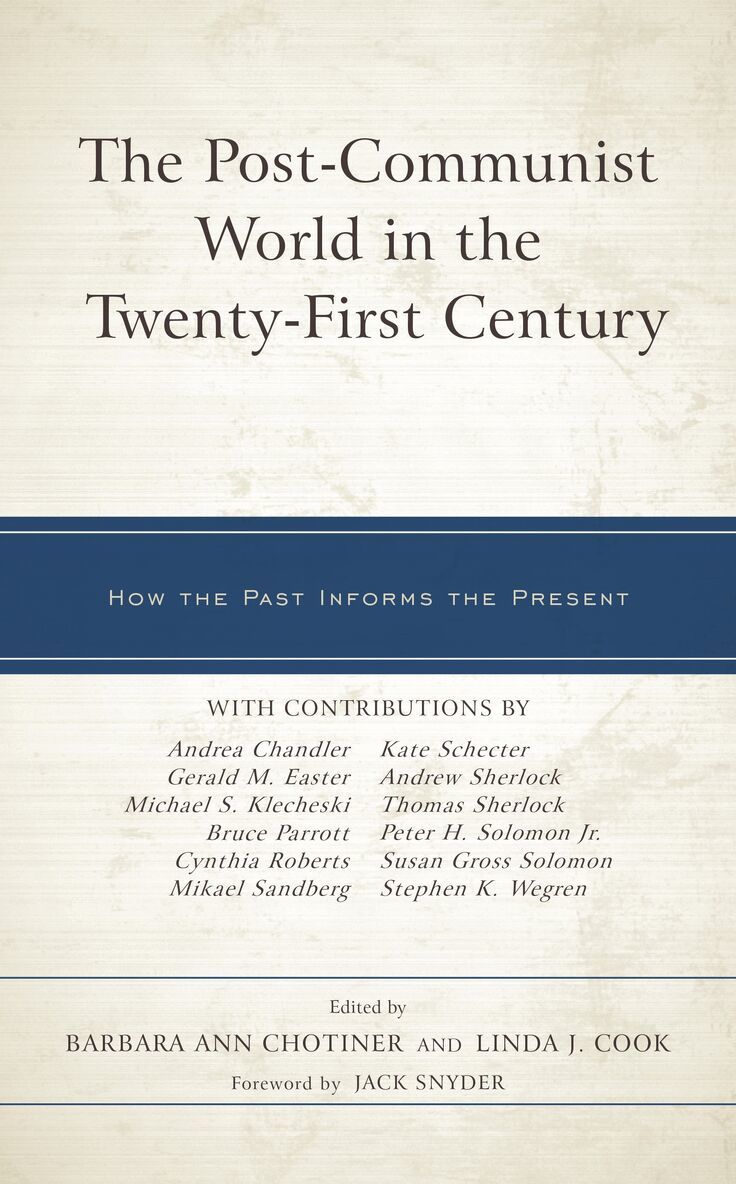
The Post-Communist World in the Twenty-First Century presents studies by senior scholars and practitioners that are highly relevant to contemporary political challenges. The democratic vision that accompanied the collapse of communist regimes in the Soviet Union and East Central Europe has been replaced by a range of authoritarian, semi-authoritarian and democratic regimes, and growing division between Western and Russian influence. Russia’s invasion of Ukraine has led to renewed tensions and international crisis. China, which presents major challenges to the US, Europe, and the global order, has emerged as a critical actor in the international conflict. The need to understand the internal dynamics and international behavior of communist and authoritarian regimes is more urgent at this time. The expertise provided by the volume’s contributors is especially timely, offering new insights into the past and contemporary politics of these states, the agendas driving their behavior, regimes’ domestic strengths and weaknesses, and the role of leaders’ differing perceptions in exacerbating international conflict. Practitioners demonstrate how such knowledge can inform effective policy and ameliorative efforts.
1 930 kr
Skickas inom 7-10 vardagar
During the last decade, privatization, understood here as the transfer of state-owned enterprises to the private sector, has become a widespread phenomenon among formerly socialist and mixed economies. It has been touted as a quick route to growth and prosperity in countries suffering from bloated, inefficient, and debt ridden public sectors. The contributors to this book, drawn from a number of social science disciplines, explore the various ways in which privatization programs affect workers in the reforming countries. The book includes an examination of how privatization impacts on labor economically, by changing the level and conditions of employment, as well as its influence on wages, benefits, and social services. A second section looks at the political effects of privatization on workers, focusing on the strength and militancy of trade unions and their relationship to political parties.The essays, written by scholars as well as policy practitioners, cover both post-socialist countries, including Russia, China, and Eastern Europe, and the developing regions - the Middle East, sub-Saharan Africa, and Latin America. Scholars and students in economics and political science as well as policymakers will find this collection a welcome addition to the literature on privatization.
335 kr
Skickas inom 3-6 vardagar
In the early 1990s, the countries of the former Soviet Bloc faced an urgent need to reform the systems by which they delivered broad, basic social welfare to their citizens. Inherited systems were inefficient and financially unsustainable. Linda J. Cook here explores the politics and policy of social welfare from 1990 to 2004 in the Russian Federation, Poland, Hungary, Belarus, and Kazakhstan. Most of these countries, she shows, tried to institute reforms based on a liberal paradigm of reduced entitlements and subsidies, means-testing, and privatization. But these proposals provoked opposition from pro-welfare interests, and the politics of negotiating change varied substantially from one political arena to another. In Russia, for example, liberalizing reform was blocked for a decade. Only as Vladimir Putin rose to power did the country change its inherited welfare system.Cook finds that the impact of economic pressures on welfare was strongly mediated by domestic political factors, including the level of democratization and balance of pro- and anti-reform political forces. Postcommunist welfare politics throughout Russia and Eastern Europe, she shows, are marked by the large role played by bureaucratic welfare stakeholders who were left over from the communist period and, in weak states, by the development of informal processes in social sectors.In the early 1990s, the countries of the former Soviet Bloc faced an urgent need to reform the systems by which they delivered broad, basic social welfare to their citizens. Inherited systems were inefficient and financially unsustainable. Linda J. Cook here explores the politics and policy of social welfare from 1990 to 2004 in the Russian Federation, Poland, Hungary, Belarus, and Kazakhstan.Most of these countries, she shows, tried to institute reforms based on a liberal paradigm of reduced entitlements and subsidies, means-testing, and privatization. But these proposals provoked opposition from pro-welfare interests, and the politics of negotiating change varied substantially from one political arena to another. In Russia, for example, liberalizing reform was blocked for a decade. Only as Vladimir Putin rose to power did the country change its inherited welfare system.Cook finds that the impact of economic pressures on welfare was strongly mediated by domestic political factors, including the level of democratization and balance of pro- and anti-reform political forces. Postcommunist welfare politics throughout Russia and Eastern Europe, she shows, are marked by the large role played by bureaucratic welfare stakeholders who were left over from the communist period and, in weak states, by the development of informal processes in social sectors.