Linda Joelsson - Böcker
Visar alla böcker från författaren Linda Joelsson. Handla med fri frakt och snabb leverans.
4 produkter
4 produkter
632 kr
Skickas inom 10-15 vardagar
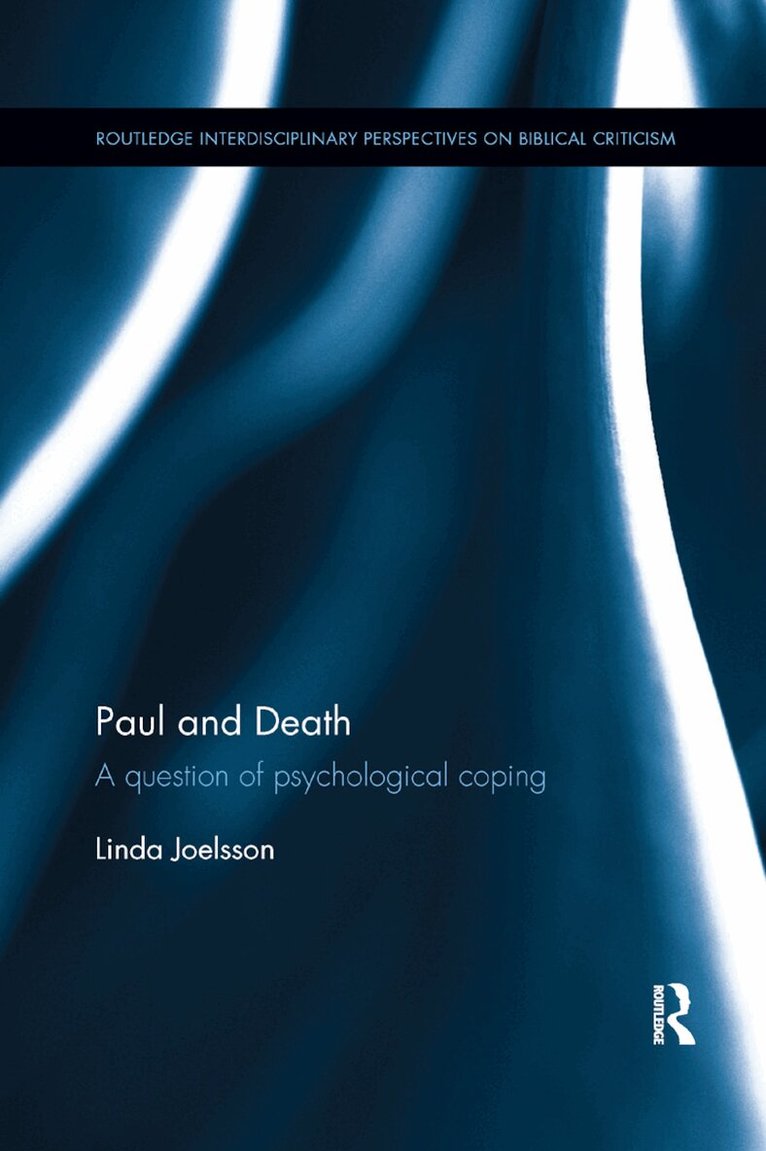
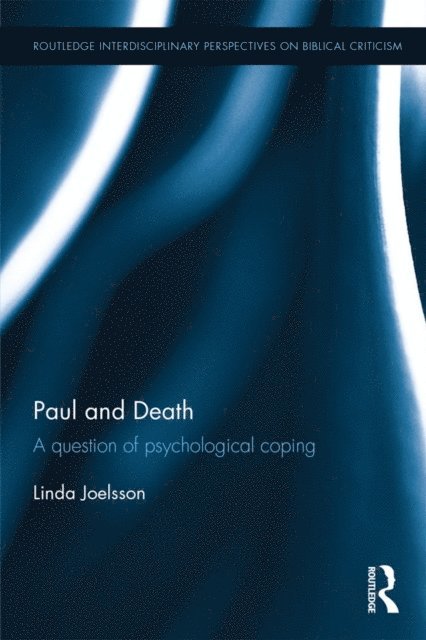
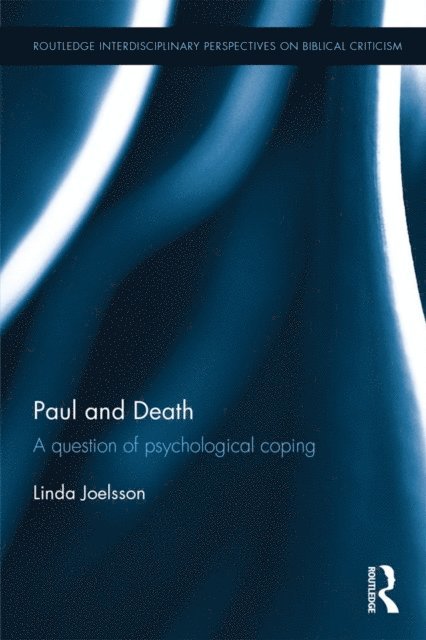
The concept of death, particularly violent death, is prevalent throughout the writings of Paul the Apostle. His letters in the New Testament address this topic from a variety of perspectives, some of which can appear to be almost contradictory. However, this need not be problematic. Paul and Death uses the method of psychological exegesis to show that the different attitudes toward death in Paul’s letters make for a much more coherent discourse if they are seen as an aid to individual and collective psychological coping.Taking the differences between each of Paul’s letters as its starting point, this study suggests that a variety of coping strategies in relation to death may be beneficial depending on the situation, the person, and the stage of the coping process. Drawing on psychologically-oriented hermeneutic theory, and theories about psychological coping in particular, the author argues that each case of psychological coping must be understood in its historical situation, and as strategies emanating from a specific person’s subjective appraisal.Combining theology and biblical studies with modern psychology, this book will be of particular interest to academics and students that are studying the relationship between Religion and notions of Death.
2 113 kr
Skickas inom 10-15 vardagar
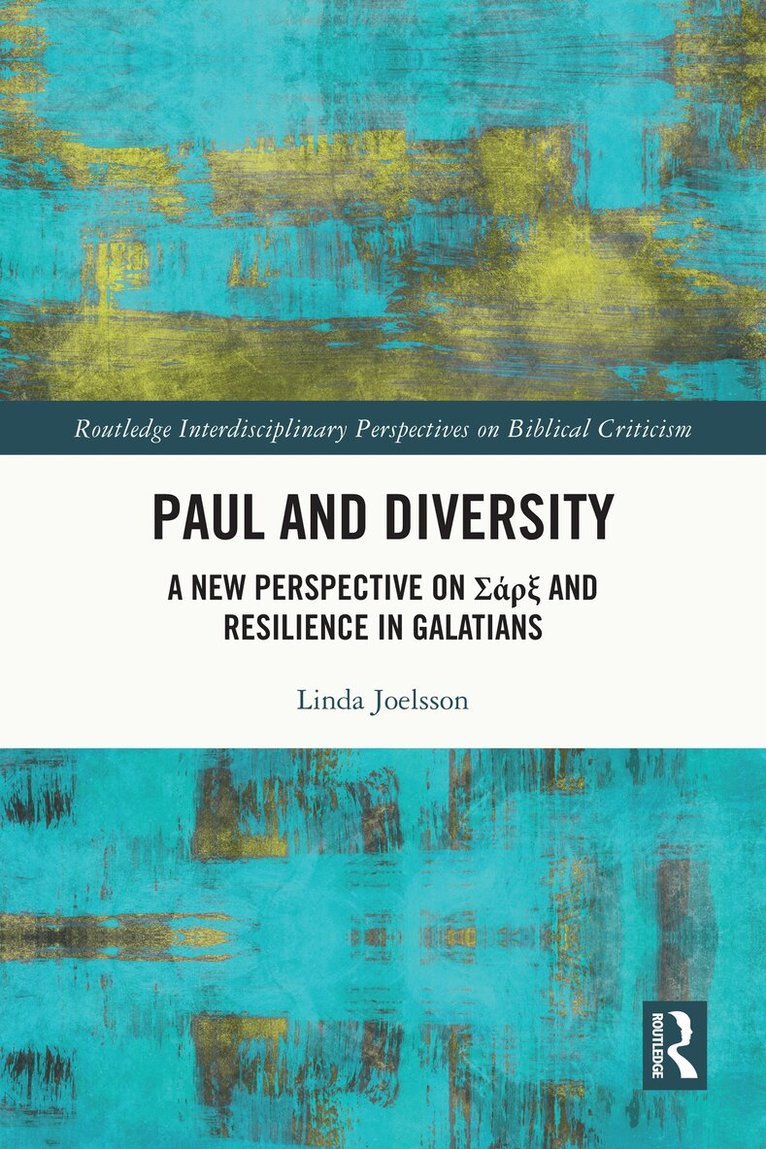
This book investigates attitudes toward diversity as expressed in Paul’s letter to the Galatians and proposes a renewed understanding of the term σάρξ as used in this letter. Σάρξ (sarx) is usually translated as "flesh" and has often been perceived in theological studies as a complicated and highly polysemous term. It is also a word whose interpretations have had far-reaching social, political, and religious consequences throughout history. The author argues in this volume that for Paul the term σάρξ is commonly adopted with reference to the collective group, and in light of a sense of collective identity in particular. A key assertion is that Paul was and remained a Jew and also continued to be deeply concerned with the prospects for the peaceful co-existence of Jews and Gentiles in the assemblies of God. The chapters draw on perspectives from classical rhetoric, modern linguistics, and social systems theory in order to describe the communicative structure of the letter, the construct of collective identity as described within this setting, and the potential for resilience in this construct. Offering a more coherent reading of Galatians, the book contributes positively to current discussions in Pauline studies and will be of interest to scholars of biblical studies and theology.The Open Access version of this book, available at www.taylorfrancis.com, has been made available under a Creative Commons Attribution-Non Commercial-No Derivatives (CC-BY-NC-ND) 4.0 license. Funded by European Union’s Horizon 2020 under Marie Skłodowska- Curie grant agreement 897430.
578 kr
Skickas inom 10-15 vardagar
This book investigates attitudes toward diversity as expressed in Paul’s letter to the Galatians and proposes a renewed understanding of the term σάρξ as used in this letter. Σάρξ (sarx) is usually translated as "flesh" and has often been perceived in theological studies as a complicated and highly polysemous term. It is also a word whose interpretations have had far-reaching social, political, and religious consequences throughout history. The author argues in this volume that for Paul the term σάρξ is commonly adopted with reference to the collective group, and in light of a sense of collective identity in particular. A key assertion is that Paul was and remained a Jew and also continued to be deeply concerned with the prospects for the peaceful co-existence of Jews and Gentiles in the assemblies of God. The chapters draw on perspectives from classical rhetoric, modern linguistics, and social systems theory in order to describe the communicative structure of the letter, the construct of collective identity as described within this setting, and the potential for resilience in this construct. Offering a more coherent reading of Galatians, the book contributes positively to current discussions in Pauline studies and will be of interest to scholars of biblical studies and theology.The Open Access version of this book, available at www.taylorfrancis.com, has been made available under a Creative Commons Attribution-Non Commercial-No Derivatives (CC-BY-NC-ND) 4.0 license. Funded by European Union’s Horizon 2020 under Marie Skłodowska- Curie grant agreement 897430.
2 249 kr
Skickas inom 10-15 vardagar
The concept of death, particularly violent death, is prevalent throughout the writings of Paul the Apostle. His letters in the New Testament address this topic from a variety of perspectives, some of which can appear to be almost contradictory. However, this need not be problematic. Paul and Death uses the method of psychological exegesis to show that the different attitudes toward death in Paul’s letters make for a much more coherent discourse if they are seen as an aid to individual and collective psychological coping.Taking the differences between each of Paul’s letters as its starting point, this study suggests that a variety of coping strategies in relation to death may be beneficial depending on the situation, the person, and the stage of the coping process. Drawing on psychologically-oriented hermeneutic theory, and theories about psychological coping in particular, the author argues that each case of psychological coping must be understood in its historical situation, and as strategies emanating from a specific person’s subjective appraisal.Combining theology and biblical studies with modern psychology, this book will be of particular interest to academics and students that are studying the relationship between Religion and notions of Death.