Linden Lyons - Böcker
Visar alla böcker från författaren Linden Lyons. Handla med fri frakt och snabb leverans.
5 produkter
5 produkter
370 kr
Skickas
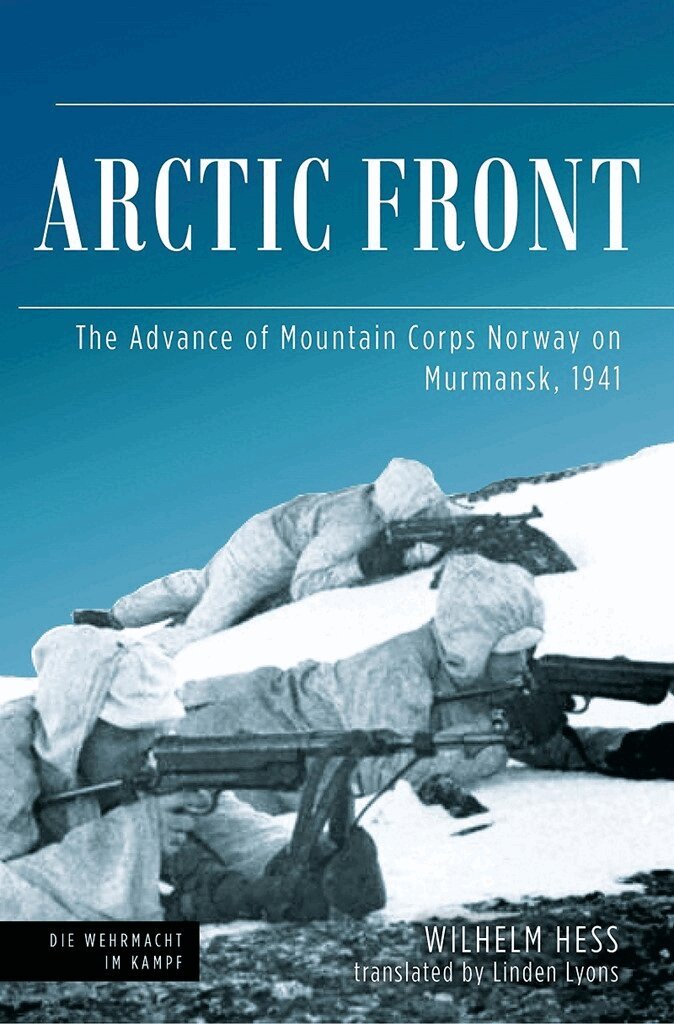
In 1941, military operations were conducted by large formations along the northern coast of Scandinavia – for the first time in history of warfare. A modern army suddenly swept into that isolated and inhospitable region that was yet to possess the level of importance it would later assume in Cold War polar strategy. The Arctic Front was the northernmost theatre in the war waged by Germany against Russia. For a period of four years, German troops from all branches of the Wehrmacht fought side by side with Finnish border guard units. The high point of the war on the Arctic Front was the assembly and advance of Germany’s Mountain Corps Norway in the summer and autumn of 1941. Commanded by general of the mountain troops, Eduard Dietl, and composed of the 2nd and 3rd Mountain Divisions, the Mountain Corps advanced out of occupied North Norway, assembled in the Petsamo Corridor in North Finland, and struck into Russian territory in an attempt to seize Murmansk. It did not reach its objective. This account of the operation was written by Wilhelm Hess, quartermaster of the Mountain Corps Norway. He draws upon his personal experience of the conditions and actions on the Arctic Front in order to describe and analyse the environment, the sequence of events, and the reasons behind certain decisions. In addition to describing how operations conducted by the Mountain Corps unfolded, Hess provides insight as to how the terrain, the flow of supplies, and the war at sea impacted those operations.
370 kr
Skickas
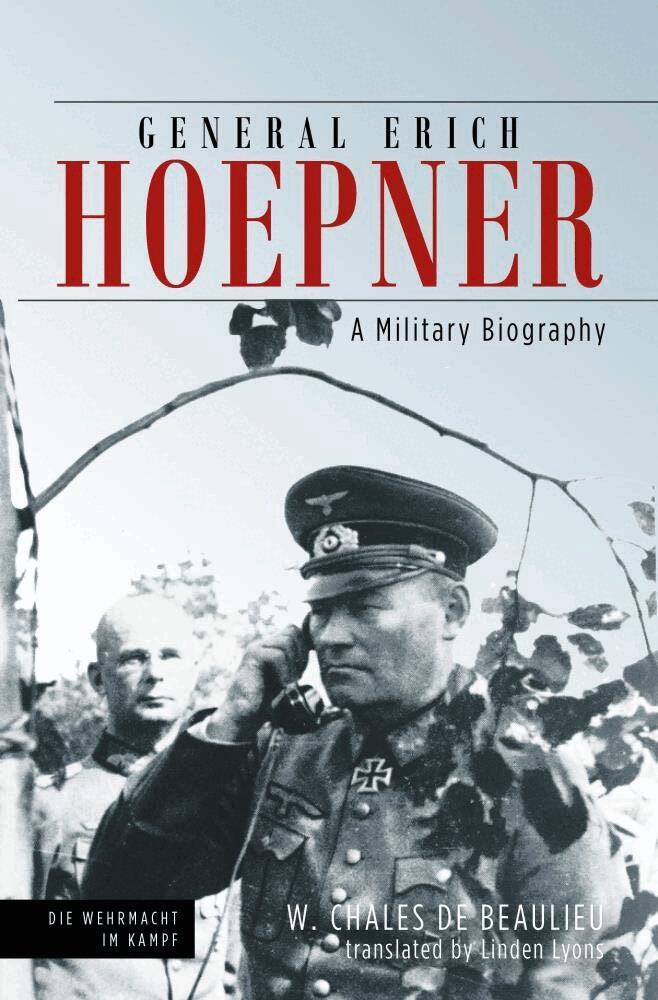
This volume in the Die Wehrmacht im Kampf series examines Erich Hoepner's leadership of panzer formations in Poland in 1939, France in 1940, and Russia in 1941. It is written by Walter Chales de Beaulieu, a general staff officer who fought alongside Hoepner. Erich Hoepner was one of the most competent tank commanders of World War II, playing a significant role in Germany’s early successes. As the commander of the XVI Panzer Corps at the outbreak of war in 1939, Hoepner carried out the main thrust towards Warsaw. The panzer corps covered 250 kilometres and reached the outskirts of the city in only eight days. In 1940, commanding the same formation, Hoepner fought the French Cavalry Corps in Belgium, partook in the encirclement of Allied forces near Dunkirk, and advanced southwards over the Weygand Line deep into French territory. In 1941, Hoepner became the commander of Panzer Group 4, which was the main attack formation for the advance on Leningrad. It made rapid progress to begin with, but an increasingly wide and exposed front meant that the attack gradually ground to a halt. After one final attempt to capture the city in the middle of September failed, the panzer group was redeployed to the central sector of the Eastern Front. It was there that the panzer group was to help with the push towards Moscow. In conjunction with Panzer Group 3, Hoepner’s Panzer Group 4 completed and eliminated the Vyazma pocket. Hoepner frequently felt that he was not allowed to advance on Moscow quickly enough by his superiors, yet his decision to conduct a withdrawal in January 1942 led to his dismissal. In this book, Walter Chales de Beaulieu provides insight into Erich Hoepner’s ability as a panzer commander, painting a picture of a man who was committed to the military profession, who possessed a strong sense of responsibility, and who was confident enough to exercise his own will.
370 kr
Skickas
This book discusses a number of raids undertaken by XXXXVIII Panzer Corps near the Black Sea in 1941/2 to explore the tactics used and why they were successful, based upon the detailed combat reports prepared by the corps staff immediately after each battle. "Die Wehrmacht im Kampf" Battles and Problems of the Second World War is a series published in Germany in the 1950s and 1960s. Written by ex-members of the German army in WWII, it provides important information not available elsewhere on the German army's perspective of many crucial campaigns and battles. None of the volumes have previously been available in English. Each volume has a modern introduction by Professor Matthias Strohn, expert on the German army.
Counter-strike Operations
Combat Examples and Leadership Principles of Mobile Defense
Inbunden, Engelska, 2022
370 kr
Skickas
"Die Wehrmacht im Kampf" Battles and Problems of the Second World War is a series originally edited by Hermann Teske and published in German in the 1950s and 1960s. Written by former members of the German Army in World War II, it provides valuable and historically significant information on the perspective of the German Army of many crucial campaigns and battles. Now being published in English for the first time, each volume has a modern introduction by Matthias Strohn, a lecturer at Sandhurst and The University of Buckingham and an expert on the German Army. This volume in the Die Wehrmacht im Kampf series examines the principles of mobile defensive operations by analysing examples of defensive combat that took place on the Eastern Front during the Second World War. It is written by Ferdinand Maria von Senger und Etterlin, a German officer in the panzer troops who fought in several defensive battles against the Russians.
370 kr
Skickas
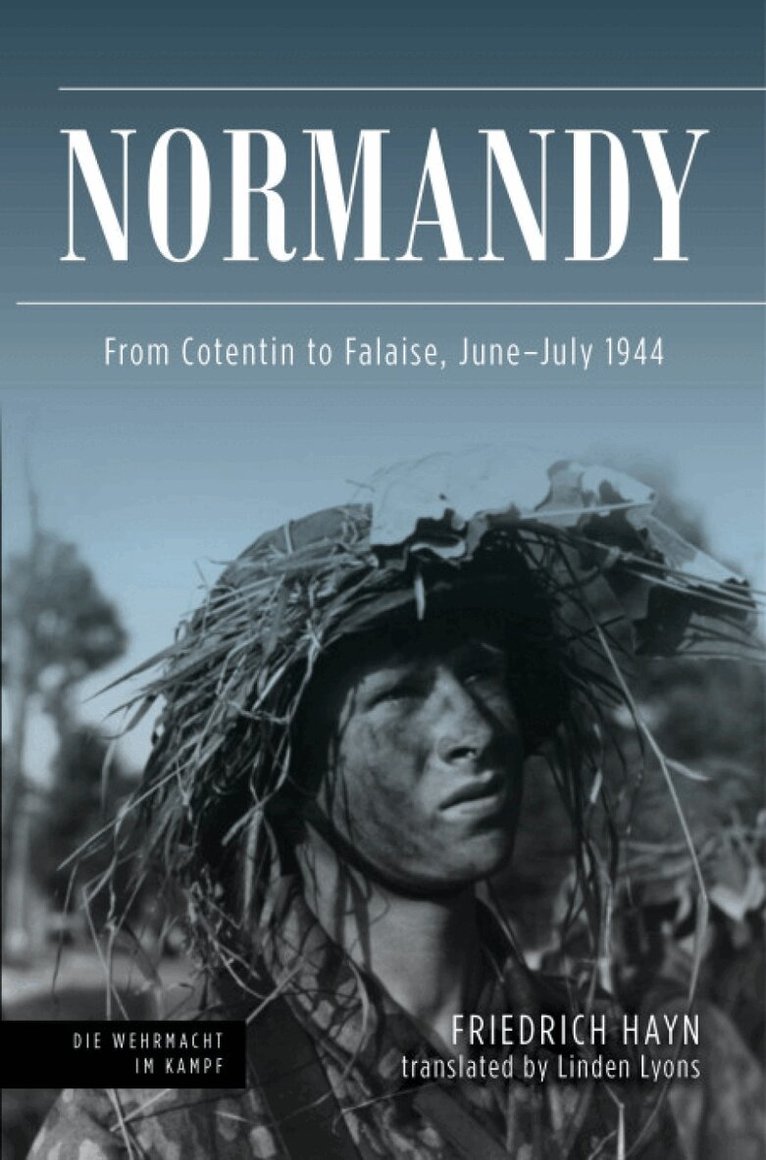
This book offers a unique perspective on the decisive early weeks of the invasion in 1944, written by a German Army Corps Intelligence officer stationed in Normandy at the time of the Allied invasion, who during the invasion was the department head for enemy messages processing (Ic) in the staff of the LXXXIV AK. It discusses in detail the events leading up to the creation of Falaise Pocket, described by the author as "tragic turning point of an entire front." It also offers illuminating insights to the conditions in the American landing section and explains how the German troops based there came to be defeated. Normandy: From Cotentin to Falaise, June-July 1944 is the first full length English translation of the original edition published in German in 1954, ten years after D-Day.