Liora Kolska Horwitz – författare
Visar alla böcker från författaren Liora Kolska Horwitz. Handla med fri frakt och snabb leverans.
6 produkter
6 produkter
Del 50 - American School of Prehistoric Research Bulletins
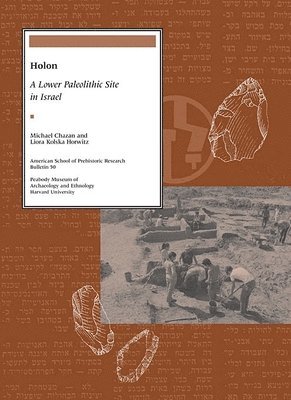
Holon
A Lower Paleolithic Site in Israel
Häftad, Engelska, 2006
762 kr
Skickas inom 11-20 vardagar
Häftad, Engelska, 2007
990 kr
Skickas inom 5-8 vardagar
Inbunden, Engelska, 2024
1 430 kr
Skickas inom 5-8 vardagar
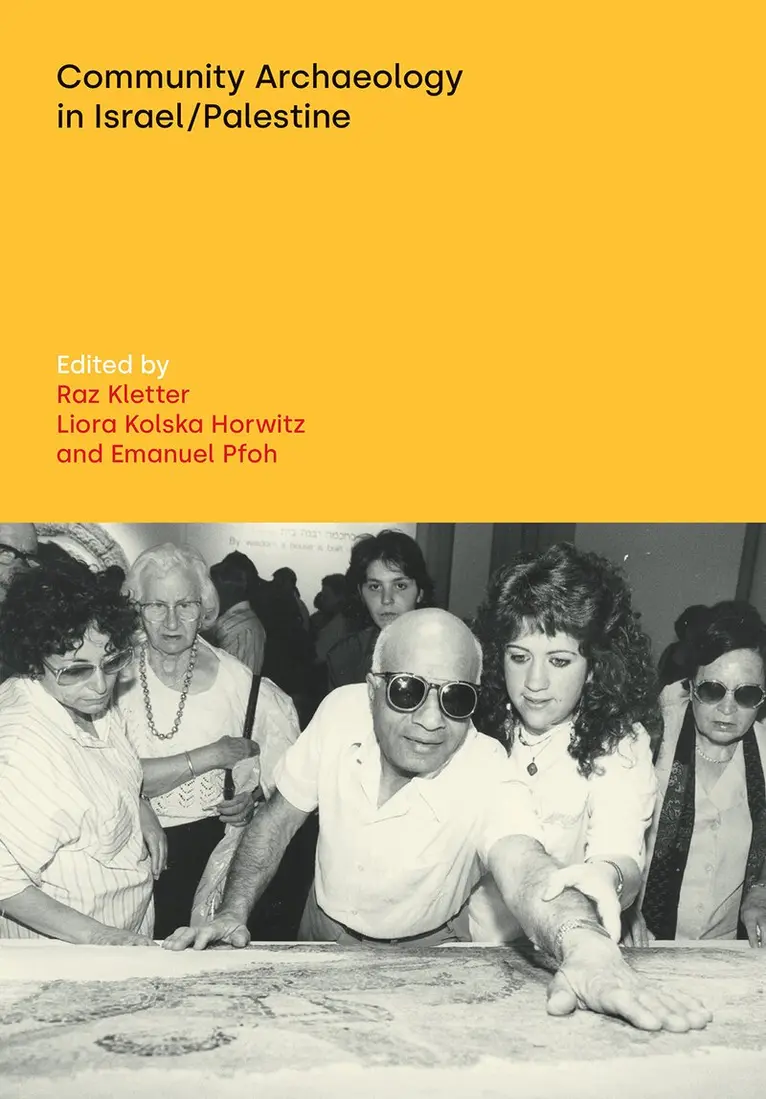
Although Community (or Public) Archaeology originated in western countries, it has now spread all over the world. It integrates the archaeological past with living peoples in new and unique ways. It is however, a rather loosely-defined field; to some it means an attitude and a theoretical concept, which is, or should be, valid for archaeology as a whole and for every archaeologist. For others it is a certain practice or sub-field of archaeology, which by now has its own experts - that is, community archaeologists. It is perhaps not surprising that in Israel/Palestine Community Archaeology touches heavily upon the present, perhaps more than upon the past. No archaeology in this region is 'neutral' and the living communities are part of the heated, on-going political, social and religious conflicts that have shaped the past, and are shaping this land for over more than a hundred years. The question is whether archaeology, including Community Archaeology, strive to neutrality? Can Community Archaeology free us from the hegemonic position of the archaeologies of nations and states? This is the first volume dedicated to Community Archaeology in Israel/Palestine. Chapters in the book challenge (in several ways, though not always explicitly) the traditional "Biblical Archaeology" approach to the archaeology of Israel/Palestine. They present their individual concepts and ideas about Community Archaeology in Israel/Palestine, bringing different questions and treating different case studies, and also reaching different though not unrelated conclusions. The volume gives a first, refreshing look of a new archaeology in an old land.
Häftad, Engelska, 2024
632 kr
Skickas
Although Community (or Public) Archaeology originated in western countries, it has now spread all over the world. It integrates the archaeological past with living peoples in new and unique ways. It is however, a rather loosely-defined field; to some it means an attitude and a theoretical concept, which is, or should be, valid for archaeology as a whole and for every archaeologist. For others it is a certain practice or sub-field of archaeology, which by now has its own experts - that is, community archaeologists. It is perhaps not surprising that in Israel/Palestine Community Archaeology touches heavily upon the present, perhaps more than upon the past. No archaeology in this region is 'neutral' and the living communities are part of the heated, on-going political, social and religious conflicts that have shaped the past, and are shaping this land for over more than a hundred years. The question is whether archaeology, including Community Archaeology, strive to neutrality? Can Community Archaeology free us from the hegemonic position of the archaeologies of nations and states? This is the first volume dedicated to Community Archaeology in Israel/Palestine. Chapters in the book challenge (in several ways, though not always explicitly) the traditional "Biblical Archaeology" approach to the archaeology of Israel/Palestine. They present their individual concepts and ideas about Community Archaeology in Israel/Palestine, bringing different questions and treating different case studies, and also reaching different though not unrelated conclusions. The volume gives a first, refreshing look of a new archaeology in an old land.
Inbunden, Engelska, 2026
1 446 kr
Skickas inom 10-15 vardagar
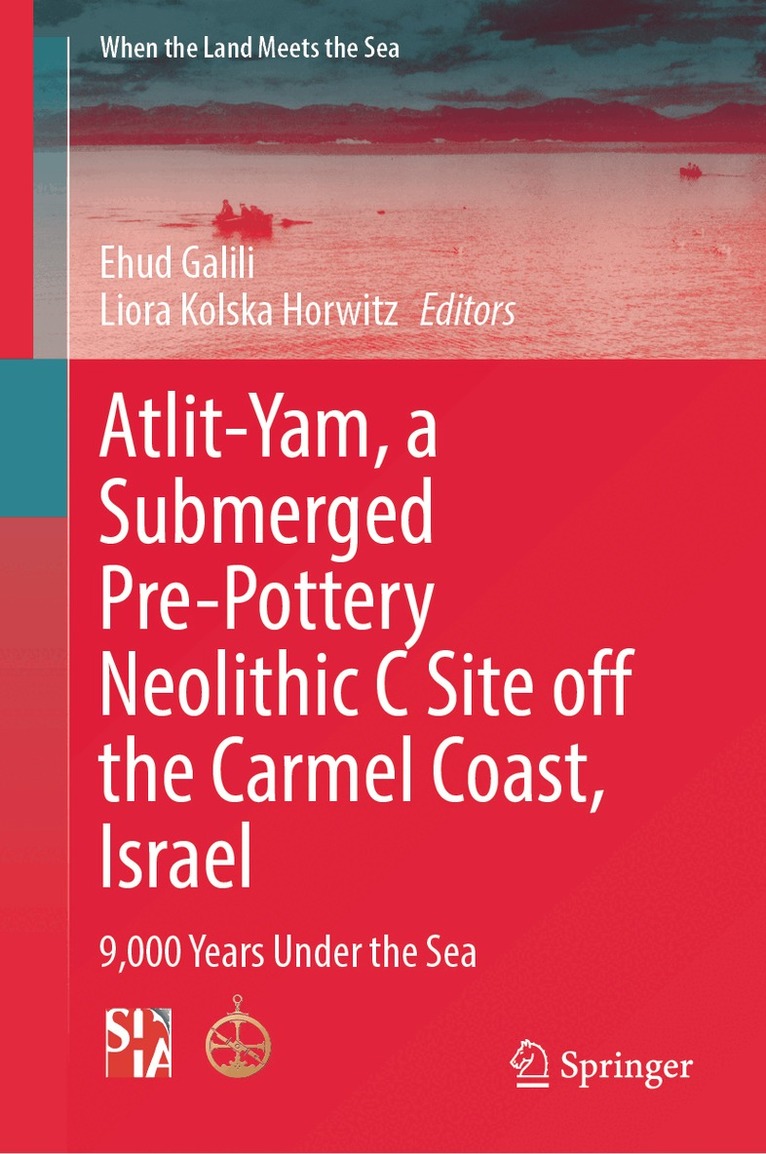
This book focuses on the submerged Pre-Pottery Neolithic C settlement of Atlit-Yam (dated to the end of the tenth millennium to end of the ninth millennium BP). Located off the Carmel coast of Israel, it is the earliest and best preserved of 23 submerged prehistoric in situ sites known off the Israeli Mediterranean Sea coast. The site is a unique underwater archaeological locality due to the extensive investigations that have been undertaken and which have exposed a large area comprising a range of architectural features, as well as the broad spectrum, richness and excellent preservation of the finds. The site offers insights into the processes of settlement inundation, which is relevant to sea-level rise nowadays, as well as the circumstances of survival and discovery of submerged sites worldwide. The chapters in this volume, the first of two, presents aspects of the Atlit-Yam site, including the site’s archaeological and physical setting and aspects its material culture (architecture, burials, groundstone and lithic artefacts). These data sets are used to reconstruct aspects of the technology and lifestyle of the community that inhabited it and highlights similarities to contemporaneous sites in the hinterland. The second volume, will deal with the economy, diet and health status of the inhabitants, the site’s chronology, and reconstructed paleoenvironment including the geological and geomorphological setting of the site assessed in relation to sea-level rise. This book fills gaps in our knowledge of the coastal Neolithic of the Southern Levant, by providing an in-depth review of the archaeological remains discovered at this unique, submerged site.
E-bok
Engelska, 20261 722 kr
Läs direkt efter köp
This book focuses on the submerged Pre-Pottery Neolithic C settlement of Atlit-Yam (dated to the end of the tenth millennium to end of the ninth millennium BP). Located off the Carmel coast of Israel, it is the earliest and best preserved of 23 submerged prehistoric in situ sites known off the Israeli Mediterranean Sea coast. The site is a unique underwater archaeological locality due to the extensive investigations that have been undertaken and which have exposed a large area comprising a range of architectural features, as well as the broad spectrum, richness and excellent preservation of the finds. The site offers insights into the processes of settlement inundation, which is relevant to sea-level rise nowadays, as well as the circumstances of survival and discovery of submerged sites worldwide. The chapters in this volume, the first of two, presents aspects of the Atlit-Yam site, including the site’s archaeological and physical setting and aspects its material culture (architecture, burials, groundstone and lithic artefacts). These data sets are used to reconstruct aspects of the technology and lifestyle of the community that inhabited it and highlights similarities to contemporaneous sites in the hinterland. The second volume, will deal with the economy, diet and health status of the inhabitants, the site’s chronology, and reconstructed paleoenvironment including the geological and geomorphological setting of the site assessed in relation to sea-level rise. This book fills gaps in our knowledge of the coastal Neolithic of the Southern Levant, by providing an in-depth review of the archaeological remains discovered at this unique, submerged site.