Raz Kletter - Böcker
Visar alla böcker från författaren Raz Kletter. Handla med fri frakt och snabb leverans.
8 produkter
8 produkter
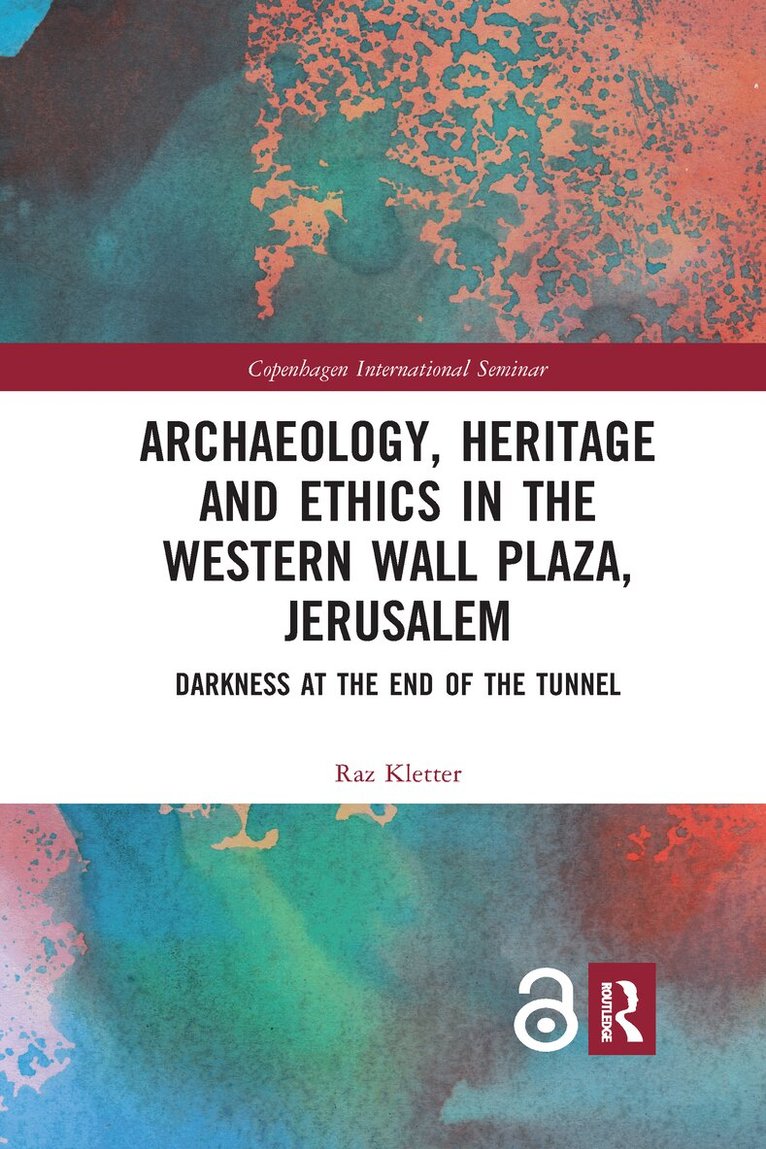
Archaeology, Heritage and Ethics in the Western Wall Plaza, Jerusalem
Darkness at the End of the Tunnel
Inbunden, Engelska, 2019
2 150 kr
Skickas inom 10-15 vardagar
This volume is a critical study of recent archaeology in the Western Wall Plaza area, Jerusalem. Considered one of the holiest places on Earth for Jews and Muslims, it is also a place of controversy, where the State marks ‘our’ remains for preservation and adoration and ‘theirs’ for silencing.Based on thousands of documents from the Israel Antiquities Authority and other sources, such as protocols of planning committees, readers can explore for the first time this archaeological ‘heart of darkness’ in East Jerusalem. The book follows a series of unique discoveries, reviewing the approval and execution of development plans and excavations, and the use of the areas once excavation has finished. Who decides what and how to excavate, what to preserve – or ‘remove’? Who pays for the archaeology, for what aims? The professional, scientific archaeology of the past happens now: it modifies the present and is modified by it. This book ‘excavates’ the archaeology of East Jerusalem to reveal its social and political contexts, power structures and ethics. Readers interested in the history, archaeology and politics of the Israeli-Palestinian conflict will find this book useful, as well as scholars and students of the history and ethics of Archaeology, Jerusalem, conservation, nationalism, and heritage.
649 kr
Skickas inom 10-15 vardagar
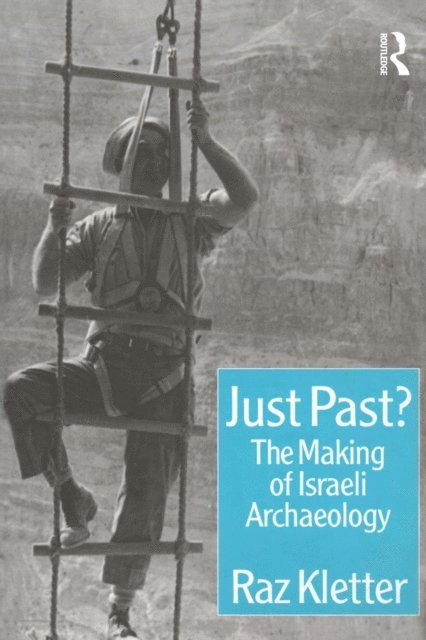
The land of Israel is rich in history and material culture and has long been the location of extensive archaeological excavation. 'Just Past?' examines the origins of Israeli archaeology in the 1950s and 1960s. Drawing on previously unpublished documentary material, the study offers a history of intriguing finds, failures and dreams. 'Just Past?' covers a range of topics, from the 1948 war to the Israel Department of Antiquities and Museums, issues of foreign aid, and the political circumstances behind the decision to start excavations at Masada. Highlighting the centrality of politics to archaeology in Israel/Palestine, 'Just Past?' presents an assessment of the origins of Israeli archaeology which will be invaluable to students and scholars of history and archaeology.
Del 636 - BAR International
Judaean Pillar-Figurines and the Archaeology of Asherah
Häftad, Engelska, 1996
1 068 kr
Skickas inom 5-8 vardagar
Archaeology, Heritage and Ethics in the Western Wall Plaza, Jerusalem
Darkness at the End of the Tunnel
Häftad, Engelska, 2021
649 kr
Skickas inom 10-15 vardagar
This volume is a critical study of recent archaeology in the Western Wall Plaza area, Jerusalem. Considered one of the holiest places on Earth for Jews and Muslims, it is also a place of controversy, where the State marks ‘our’ remains for preservation and adoration and ‘theirs’ for silencing.Based on thousands of documents from the Israel Antiquities Authority and other sources, such as protocols of planning committees, readers can explore for the first time this archaeological ‘heart of darkness’ in East Jerusalem. The book follows a series of unique discoveries, reviewing the approval and execution of development plans and excavations, and the use of the areas once excavation has finished. Who decides what and how to excavate, what to preserve – or ‘remove’? Who pays for the archaeology, for what aims? The professional, scientific archaeology of the past happens now: it modifies the present and is modified by it. This book ‘excavates’ the archaeology of East Jerusalem to reveal its social and political contexts, power structures and ethics. Readers interested in the history, archaeology and politics of the Israeli-Palestinian conflict will find this book useful, as well as scholars and students of the history and ethics of Archaeology, Jerusalem, conservation, nationalism, and heritage.
1 451 kr
Skickas inom 5-8 vardagar
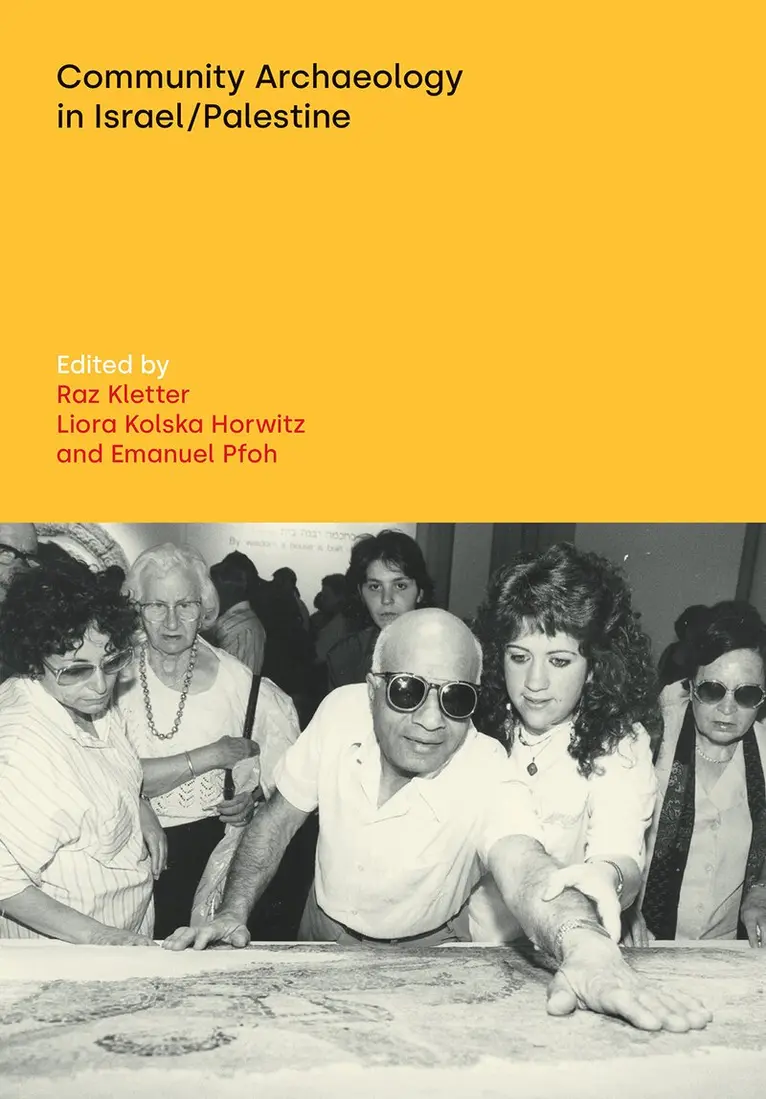
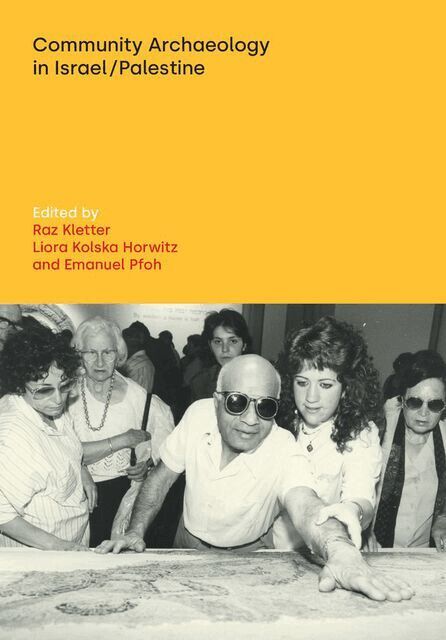
Although Community (or Public) Archaeology originated in western countries, it has now spread all over the world. It integrates the archaeological past with living peoples in new and unique ways. It is however, a rather loosely-defined field; to some it means an attitude and a theoretical concept, which is, or should be, valid for archaeology as a whole and for every archaeologist. For others it is a certain practice or sub-field of archaeology, which by now has its own experts - that is, community archaeologists. It is perhaps not surprising that in Israel/Palestine Community Archaeology touches heavily upon the present, perhaps more than upon the past. No archaeology in this region is 'neutral' and the living communities are part of the heated, on-going political, social and religious conflicts that have shaped the past, and are shaping this land for over more than a hundred years. The question is whether archaeology, including Community Archaeology, strive to neutrality? Can Community Archaeology free us from the hegemonic position of the archaeologies of nations and states? This is the first volume dedicated to Community Archaeology in Israel/Palestine. Chapters in the book challenge (in several ways, though not always explicitly) the traditional "Biblical Archaeology" approach to the archaeology of Israel/Palestine. They present their individual concepts and ideas about Community Archaeology in Israel/Palestine, bringing different questions and treating different case studies, and also reaching different though not unrelated conclusions. The volume gives a first, refreshing look of a new archaeology in an old land.
635 kr
Skickas
Although Community (or Public) Archaeology originated in western countries, it has now spread all over the world. It integrates the archaeological past with living peoples in new and unique ways. It is however, a rather loosely-defined field; to some it means an attitude and a theoretical concept, which is, or should be, valid for archaeology as a whole and for every archaeologist. For others it is a certain practice or sub-field of archaeology, which by now has its own experts - that is, community archaeologists. It is perhaps not surprising that in Israel/Palestine Community Archaeology touches heavily upon the present, perhaps more than upon the past. No archaeology in this region is 'neutral' and the living communities are part of the heated, on-going political, social and religious conflicts that have shaped the past, and are shaping this land for over more than a hundred years. The question is whether archaeology, including Community Archaeology, strive to neutrality? Can Community Archaeology free us from the hegemonic position of the archaeologies of nations and states? This is the first volume dedicated to Community Archaeology in Israel/Palestine. Chapters in the book challenge (in several ways, though not always explicitly) the traditional "Biblical Archaeology" approach to the archaeology of Israel/Palestine. They present their individual concepts and ideas about Community Archaeology in Israel/Palestine, bringing different questions and treating different case studies, and also reaching different though not unrelated conclusions. The volume gives a first, refreshing look of a new archaeology in an old land.
2 150 kr
Skickas inom 7-10 vardagar
The land of Israel is rich in history and material culture and has long been the location of extensive archaeological excavation. 'Just Past?' examines the origins of Israeli archaeology in the 1950s and 1960s. Drawing on previously unpublished documentary material, the study offers a history of intriguing finds, failures and dreams. 'Just Past?' covers a range of topics, from the 1948 war to the Israel Department of Antiquities and Museums, issues of foreign aid, and the political circumstances behind the decision to start excavations at Masada. Highlighting the centrality of politics to archaeology in Israel/Palestine, 'Just Past?' presents an assessment of the origins of Israeli archaeology which will be invaluable to students and scholars of history and archaeology.
2 627 kr
Skickas inom 10-15 vardagar
This book presents a full picture of the weight system of Iron Age Judah, based on archaeological finds, historical sources and biblical texts. This book offers a complete picture of the weight system of Iron Age Judah, involving a careful study of the typology, date, context, weight standards, inscription and function of hundreds of weights (with a full catalogue). As against the common view, the author suggests that all the weights belong to one system based on one basic sheqel standard. The weights are mostly not 'royal weights' and have nothing to do with Josiah's reform. The 'sheqel of the sanctuary' was never used in practice in First-Temple Judah. The study leads to new insights about the relation of the Judaean system to other weight systems, as well as about international trade and the economy of the Kingdom of Judah.