Lisa deMena Travis - Böcker
Visar alla böcker från författaren Lisa deMena Travis. Handla med fri frakt och snabb leverans.
5 produkter
5 produkter
2 400 kr
Skickas inom 5-8 vardagar
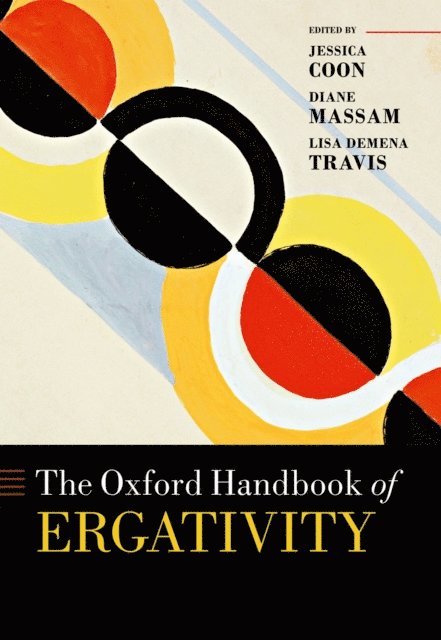
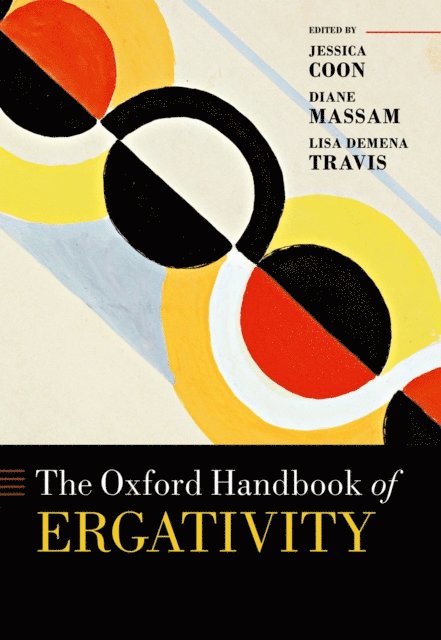
This volume offers theoretical and descriptive perspectives on the issues pertaining to ergativity, a grammatical patterning whereby direct objects are in some way treated like intransitive subjects, to the exclusion of transitive subjects. This pattern differs markedly from nominative/accusative marking whereby transitive and intransitive subjects are treated as one grammatical class, to the exclusion of direct objects. While ergativity is sometimes referred to as a typological characteristic of languages, research on the phenomenon has shown that languages do not fall clearly into one category or the other and that ergative characteristics are not consistent across languages. Chapters in this volume look at approaches to ergativity within generative, typological, and functional paradigms, as well as approaches to the core morphosyntactic building blocks of an ergative construction; related constructions such as the anti-passive; related properties such as split ergativity and word order; and extensions and permutations of ergativity, including nominalizations and voice systems. The volume also includes results from experimental investigations of ergativity, a relatively new area of research. A wide variety of languages are represented, both in the theoretical chapters and in the 16 case studies that are more descriptive in nature, attesting to both the pervasiveness and diversity of ergative patterns.
Del 68 - Oxford Studies in Theoretical Linguistics
The Structure of Words at the Interfaces
Inbunden, Engelska, 2017
1 682 kr
Skickas inom 7-10 vardagar
This volume takes a variety of approaches to the question 'what is a word?', with particular emphasis on where in the grammar wordhood is determined. Chapters in the book all start from the assumption that structures at, above, and below the 'word' are built in the same derivational system: there is no lexicalist grammatical subsystem dedicated to word-building. This type of framework foregrounds the difficulty in defining wordhood. Questions such as whether there are restrictions on the size of structures that distinguish words from phrases, or whether there are combinatory operations that are specific to one or the other, are central to the debate. In this respect, chapters in the volume do not all agree. Some propose wordhood to be limited to entities defined by syntactic heads, while others propose that phrasal structure can be found within words. Some propose that head-movement and adjunction (and Morphological Merger, as its mirror image) are the manner in which words are built, while others propose that phrasal movements are crucial to determining the order of morphemes word-internally. All chapters point to the conclusion that the phonological domains that we call words are read off of the morphosyntactic structure in particular ways. It is the study of this interface, between the syntactic and phonological modules of Universal Grammar, that underpins the discussion in this volume.
Del 68 - Oxford Studies in Theoretical Linguistics
The Structure of Words at the Interfaces
Häftad, Engelska, 2017
748 kr
Skickas inom 7-10 vardagar
This volume takes a variety of approaches to the question 'what is a word?', with particular emphasis on where in the grammar wordhood is determined. Chapters in the book all start from the assumption that structures at, above, and below the 'word' are built in the same derivational system: there is no lexicalist grammatical subsystem dedicated to word-building. This type of framework foregrounds the difficulty in defining wordhood. Questions such as whether there are restrictions on the size of structures that distinguish words from phrases, or whether there are combinatory operations that are specific to one or the other, are central to the debate. In this respect, chapters in the volume do not all agree. Some propose wordhood to be limited to entities defined by syntactic heads, while others propose that phrasal structure can be found within words. Some propose that head-movement and adjunction (and Morphological Merger, as its mirror image) are the manner in which words are built, while others propose that phrasal movements are crucial to determining the order of morphemes word-internally. All chapters point to the conclusion that the phonological domains that we call words are read off of the morphosyntactic structure in particular ways. It is the study of this interface, between the syntactic and phonological modules of Universal Grammar, that underpins the discussion in this volume.
1 963 kr
Skickas inom 10-15 vardagar
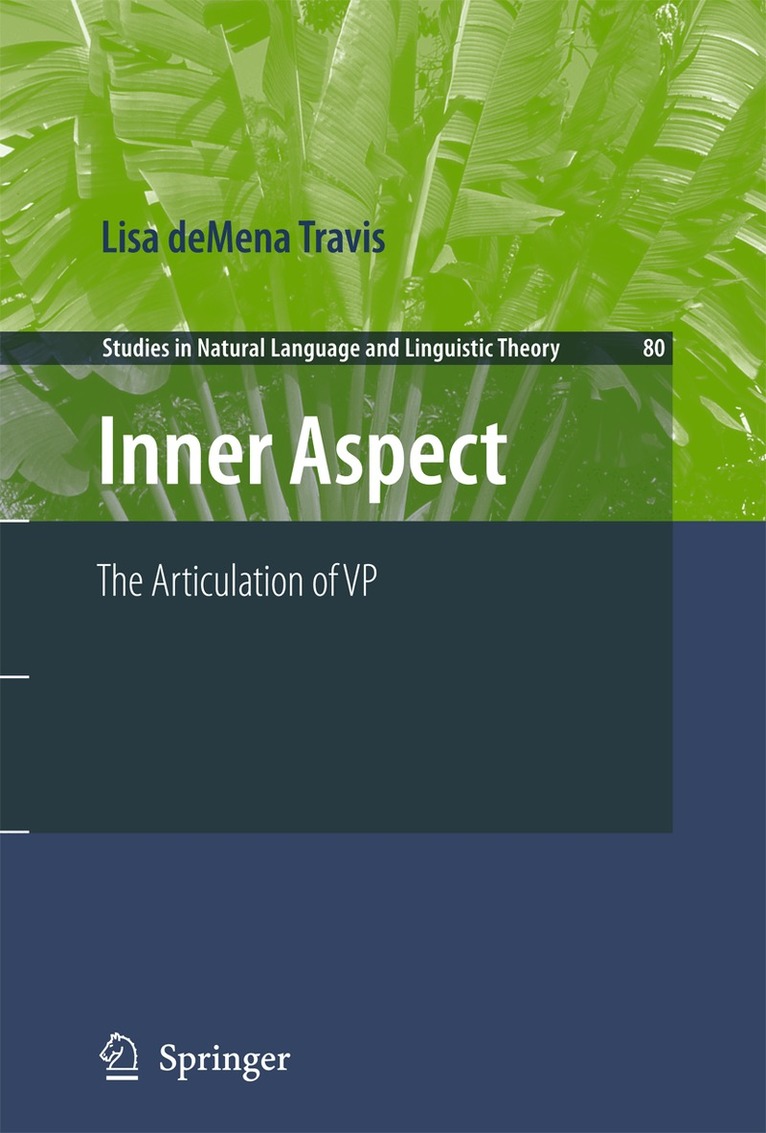
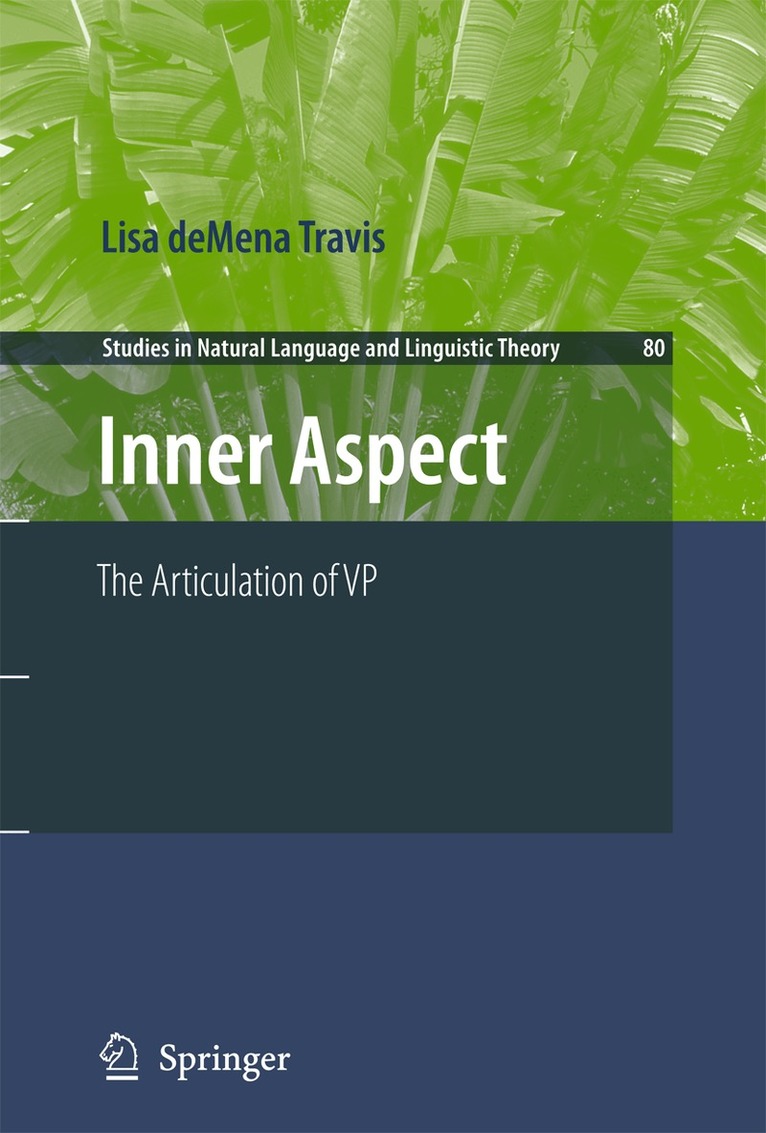
The only way that I have found it possible to let this book go to press is to reread the Preface to Events in the Semantics of English by Terence Parsons where he writes, ‘‘The goal of this book is neither completeness nor complete accuracy;
1 419 kr
Skickas inom 10-15 vardagar
Finishing this book was one of the most difficult things I have ever done. It took far too long from original idea to page proofs and suffered from being relegated to small corners of my life. It was very rarely on the front burner. Since I started working on this topic in 1991, there has been a lot of interesting work done on the areas of the articulation of VP, phrase structure mirroring event structure, the use of functional categories to represent Aktionsart, and many other areas that the research presented here touches on. The hardest thing about doing a project of this size is to accept that not everyone’s ideas can be addressed and not all new research can be incorporated. The only way that I have found it possible to let this book go to press is to reread the Preface to Events in the Semantics of English by Terence Parsons where he writes, ‘‘The goal of this book is neither completeness nor complete accuracy; it is to get some interesting proposals into the public arena for others to criticize, develop, and build on. ’’ My aim in this book is to make connections between various accounts of various constructions in various languages at the risk of treating each of these too lightly. I am grateful to too many people to thank them individually.