Lisa E. Farrington - Böcker
Visar alla böcker från författaren Lisa E. Farrington. Handla med fri frakt och snabb leverans.
4 produkter
4 produkter
1 892 kr
Skickas inom 7-10 vardagar
Creating Her Own Image argues that, for centuries, African American women artists have, through their artistic production, created an alternate vision of how women of color should be preceived in American culture. This synthesis, organised chronologically, covers major themes in African major artistic movements, such as abstract art, vernacular art and postmodernism in painting, sculpture, and other forms.
605 kr
Skickas inom 5-8 vardagar
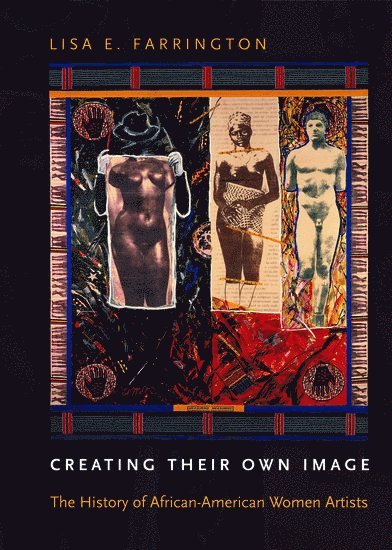
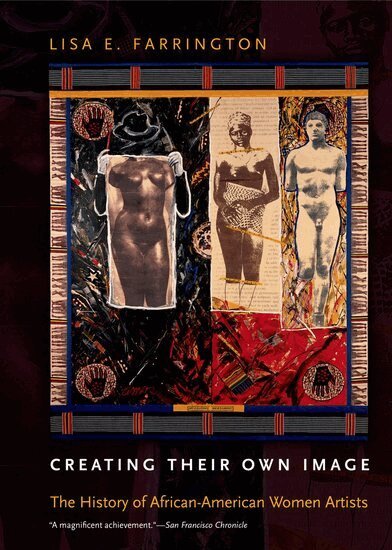
Hailed as "a captivating and thorough study of a long-ignored aspect of America's art history" (CHOICE), Creating Their Own Image offers the first comprehensive history of African-American women artists, spanning from slavery to the Harlem Renaissance and the tumultuous civil rights era, right up to the present day. Lavishly illustrated throughout with color illustrations, this magnificent volume richly details hundreds of important works--including some images never before published--to present a portrait of artistic creativity unprecedented in its scope and ambition. Weaving together an expansive collection of artists, styles, and periods, Lisa Farrington argues that for centuries African-American women artists have created an alternative vision of how women of color can, are, and might be represented in American culture. From utilitarian objects such as quilts and baskets to a wide array of fine arts, Creating Their Own Image serves up compelling evidence of the fundamental human need to convey one's life, emotions, and experiences on a canvas of one's own making.
1 130 kr
Kommande
"A keen and insightful window into a rich artistic legacy."—Publishers Weekly The first book to center Black artists' voices on Black aesthetics, revealing a century of evolving relationships to race, identity, and art. What is Black art? No one has thought harder about that question than Black artists, yet their perspectives have been largely ignored. Instead, their stories have been told by intellectuals like W. E. B. Du Bois and Alain Locke, who defined "a school" of Black art in the early twentieth century. For the first time, Black Artists in Their Own Words offers an insightful corrective. Esteemed art historian Lisa Farrington gathers writing spanning a century across the United States, the Caribbean, and the African continent—including from renowned artists Henry Tanner, Nancy Elizabeth Prophet, Romare Bearden, Wifredo Lam, Renee Cox, and many more—that reveals both evolutions and equivocations. Many artists, especially during the civil rights era, have embraced Black aesthetics as a source of empowerment. Others prefer to be artists first and Black second, while some have rejected racial identification entirely. Here, Black artists reclaim their work from reductive critical narratives, sharing the motivations underlying their struggles to create in a white-dominated art world.
326 kr
Skickas inom 7-10 vardagar
"A keen and insightful window into a rich artistic legacy."—Publishers Weekly The first book to center Black artists' voices on Black aesthetics, revealing a century of evolving relationships to race, identity, and art. What is Black art? No one has thought harder about that question than Black artists, yet their perspectives have been largely ignored. Instead, their stories have been told by intellectuals like W. E. B. Du Bois and Alain Locke, who defined "a school" of Black art in the early twentieth century. For the first time, Black Artists in Their Own Words offers an insightful corrective. Esteemed art historian Lisa Farrington gathers writing spanning a century across the United States, the Caribbean, and the African continent—including from renowned artists Henry Tanner, Nancy Elizabeth Prophet, Romare Bearden, Wifredo Lam, Renee Cox, and many more—that reveals both evolutions and equivocations. Many artists, especially during the civil rights era, have embraced Black aesthetics as a source of empowerment. Others prefer to be artists first and Black second, while some have rejected racial identification entirely. Here, Black artists reclaim their work from reductive critical narratives, sharing the motivations underlying their struggles to create in a white-dominated art world.