Lisa J. Lucero - Böcker
Visar alla böcker från författaren Lisa J. Lucero. Handla med fri frakt och snabb leverans.
3 produkter
3 produkter
245 kr
Skickas inom 5-8 vardagar
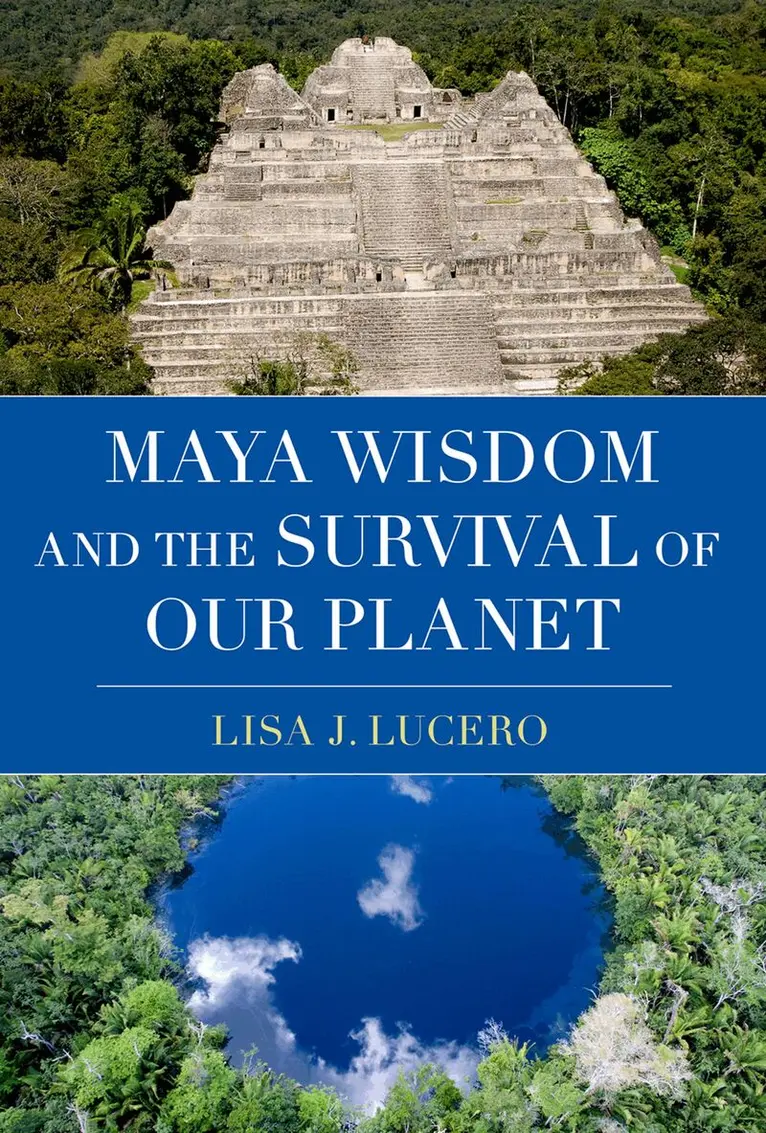
We now live in the Anthropocene, the first epoch of our own making. We have altered the Earth's atmosphere, landscapes, and bodies of water. The burning of fossil fuels has warmed the planet enough to change weather patterns, melt glaciers, and raise sea levels, a situation made worse by rampant deforestation and resource depletion. Many look to governments to confront these existential challenges. In Maya Wisdom and the Survival of Our Planet, Lisa Lucero looks to the Maya, past and present. Through the lens of the traditional Maya inclusive worldview--one in which humans are part of the world, not separate from it, and where everything is connected--Lucero provides a practical roadmap on how to sustainably address climate change and environmental degradation. She shows how the Maya collaborate with rather than try to subjugate forests, animals, soils, water, and other nonhuman entities. The Maya sustainably farmed for millennia and provided goods, labor, and services to their kings in cities. In return, kings performed vital ceremonies to the Rain God Chahk, other gods, and ancestors to replenish urban reservoirs that lasted throughout the long dry season--a balancing act that worked for over 1,000 years. Lucero shows how approaches to tackle climate change from the bottom-up, beginning with the family or household, are just as important as top-down governmental mitigation, and how learning from traditional knowledge is vital for the survival of us all. She brings to life the tropical jungles of Central America and reveals the valuable solutions its ancient and contemporary inhabitants offer us to save our planet.
257 kr
Skickas inom 7-10 vardagar
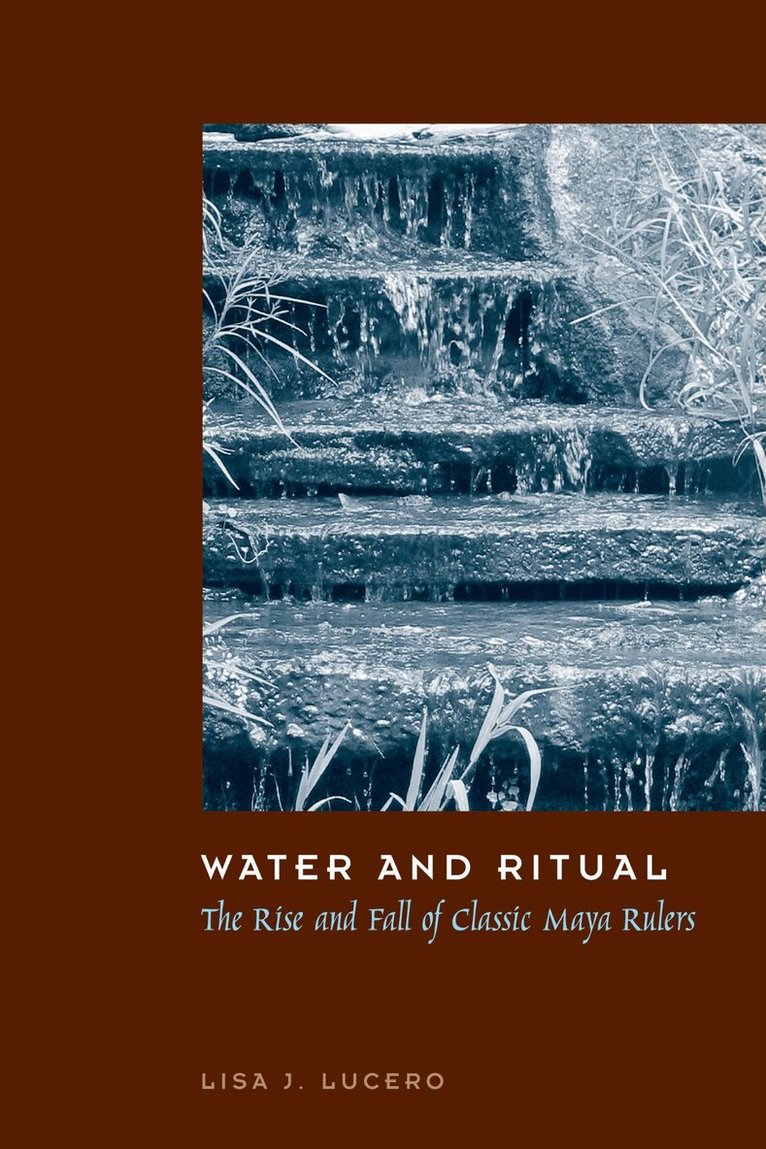
In the southern Maya lowlands, rainfall provided the primary and, in some areas, the only source of water for people and crops. Classic Maya kings sponsored elaborate public rituals that affirmed their close ties to the supernatural world and their ability to intercede with deities and ancestors to ensure an adequate amount of rain, which was then stored to provide water during the four-to-five-month dry season. As long as the rains came, Maya kings supplied their subjects with water and exacted tribute in labor and goods in return. But when the rains failed at the end of the Classic period (AD 850-950), the Maya rulers lost both their claim to supernatural power and their temporal authority. Maya commoners continued to supplicate gods and ancestors for rain in household rituals, but they stopped paying tribute to rulers whom the gods had forsaken.In this paradigm-shifting book, Lisa Lucero investigates the central role of water and ritual in the rise, dominance, and fall of Classic Maya rulers. She documents commoner, elite, and royal ritual histories in the southern Maya lowlands from the Late Preclassic through the Terminal Classic periods to show how elites and rulers gained political power through the public replication and elaboration of household-level rituals. At the same time, Lucero demonstrates that political power rested equally on material conditions that the Maya rulers could only partially control. Offering a new, more nuanced understanding of these dual bases of power, Lucero makes a compelling case for spiritual and material factors intermingling in the development and demise of Maya political complexity.
772 kr
Tillfälligt slut
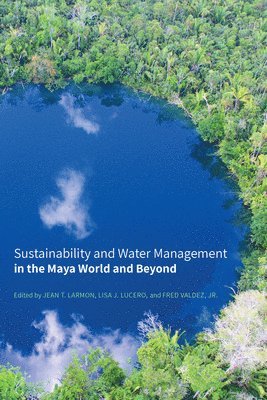
Sustainability and Water Management in the Maya World and Beyond investigates climate change and sustainability through time, exploring how political control of water sources, maintenance of sustainable systems, ideological relationships with water, and fluctuations in water availability have affected and been affected by social change. Contributors focus on and build upon earlier investigations of the global diversity of water management systems and the successes and failures of their employment, while applying a multitude of perspectives on sustainability. The volume focuses primarily on the Precolumbian Maya but offers several analogous case studies outside the ancient Maya world that illustrate the pervasiveness of water’s role in sustainability, including an ethnographic study of the sustainability of small-scale, farmer-managed irrigation systems in contemporary New Mexico and the environmental consequences of Angkor’s growth into the world’s most extensive preindustrial settlement. The archaeological record offers rich data on past politics of climate change, while epigraphic and ethnographic data show how integrated the ideological, political, and environmental worlds of the Maya were. While Sustainability and Water Management in the Maya World and Beyond stresses how lessons from the past offer invaluable insight into current approaches of adaptation, it also advances our understanding of those adaptations by making the inevitable discrepancies between past and present climate change less daunting and emphasizing the sustainable negotiations between humans and their surroundings that have been mediated by the changing climate for millennia. It will appeal to students and scholars interested in climate change, sustainability, and water management in the archaeological record. Contributors: Mary Jane Acuña, Wendy Ashmore, Timothy Beach, Jeffrey Brewer, Christopher Carr, Adrian S. Z. Chase, Arlen F. Chase, Diane Z. Chase, Carlos R. Chiriboga, Jennifer Chmilar, Nicholas Dunning, Maurits W. Ertsen, Roland Fletcher, David Friedel, Robert Griffin, Joel D. Gunn, Armando Anaya Hernández, Christian Isendahl, David Lentz, Sheryl Luzzadder-Beach, Dan Penny, Kathryn Reese-Taylor, Michelle Rich, Cynthia Robin, Sylvia Rodríguez, William Saturno, Vernon Scarborough, Payson Sheets, Liwy Grazioso Sierra, Michael Smyth, Sander van der Leeuw, Andrew Wyatt