Lisa Landoe Hedrick - Böcker
Visar alla böcker från författaren Lisa Landoe Hedrick. Handla med fri frakt och snabb leverans.
4 produkter
4 produkter
576 kr
Skickas inom 10-15 vardagar
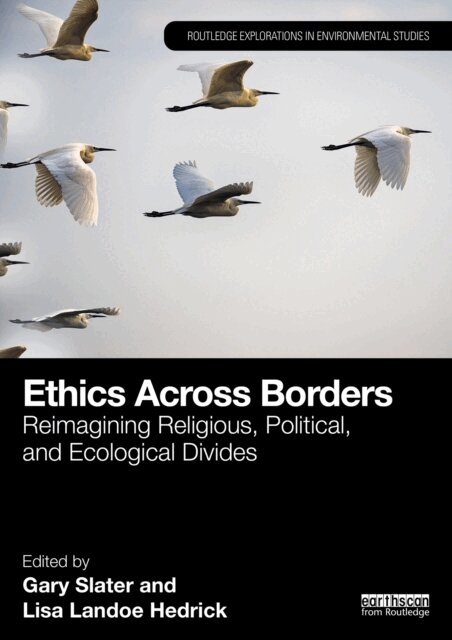
Ethics Across Borders assembles perspectives from geographers, historians, theologians, philosophers, and scientists to explore ethically relevant connections across multiple types of borders.The contemporary global order is fluid, increasingly unstable, and riven with borders at countless and complex points. Religious, political, and ecological borders hold particular significance, where interactions carry compounding social and environmental consequences. As the first collected volume to look at these three types of borders, both from an interdisciplinary perspective and as distinct forms, it demonstrates the value of thinking across borders as an ethical project. Taking Simone Weil’s perspective that every separation is a link, it posits that separations within sovereignty, species, and religion become links between political, ecological, and theological perspectives, and that boundaries within human life have taken on ecological significance in the age of the Anthropocene. In this framing, religion interacts with the political and the ecological in three ways: as foundational to sovereignty, as an influence on perspectives on contemporary boundaries, and as morally and philosophically implicated in the human/nonhuman interactions that ground environmental ethics.Ethics Across Borders offers lessons on how to reimagine borders and how to engage more justly with ecological systems and human communities. It will appeal to readers in environmental and religious ethics, philosophy, and border studies.
Ethics Across Borders
Reimagining Religious, Political, and Ecological Divides
Inbunden, Engelska, 2025
2 088 kr
Skickas inom 10-15 vardagar
Ethics Across Borders assembles perspectives from geographers, historians, theologians, philosophers, and scientists to explore ethically relevant connections across multiple types of borders.The contemporary global order is fluid, increasingly unstable, and riven with borders at countless and complex points. Religious, political, and ecological borders hold particular significance, where interactions carry compounding social and environmental consequences. As the first collected volume to look at these three types of borders, both from an interdisciplinary perspective and as distinct forms, it demonstrates the value of thinking across borders as an ethical project. Taking Simone Weil’s perspective that every separation is a link, it posits that separations within sovereignty, species, and religion become links between political, ecological, and theological perspectives, and that boundaries within human life have taken on ecological significance in the age of the Anthropocene. In this framing, religion interacts with the political and the ecological in three ways: as foundational to sovereignty, as an influence on perspectives on contemporary boundaries, and as morally and philosophically implicated in the human/nonhuman interactions that ground environmental ethics.Ethics Across Borders offers lessons on how to reimagine borders and how to engage more justly with ecological systems and human communities. It will appeal to readers in environmental and religious ethics, philosophy, and border studies.
1 142 kr
Skickas inom 10-15 vardagar
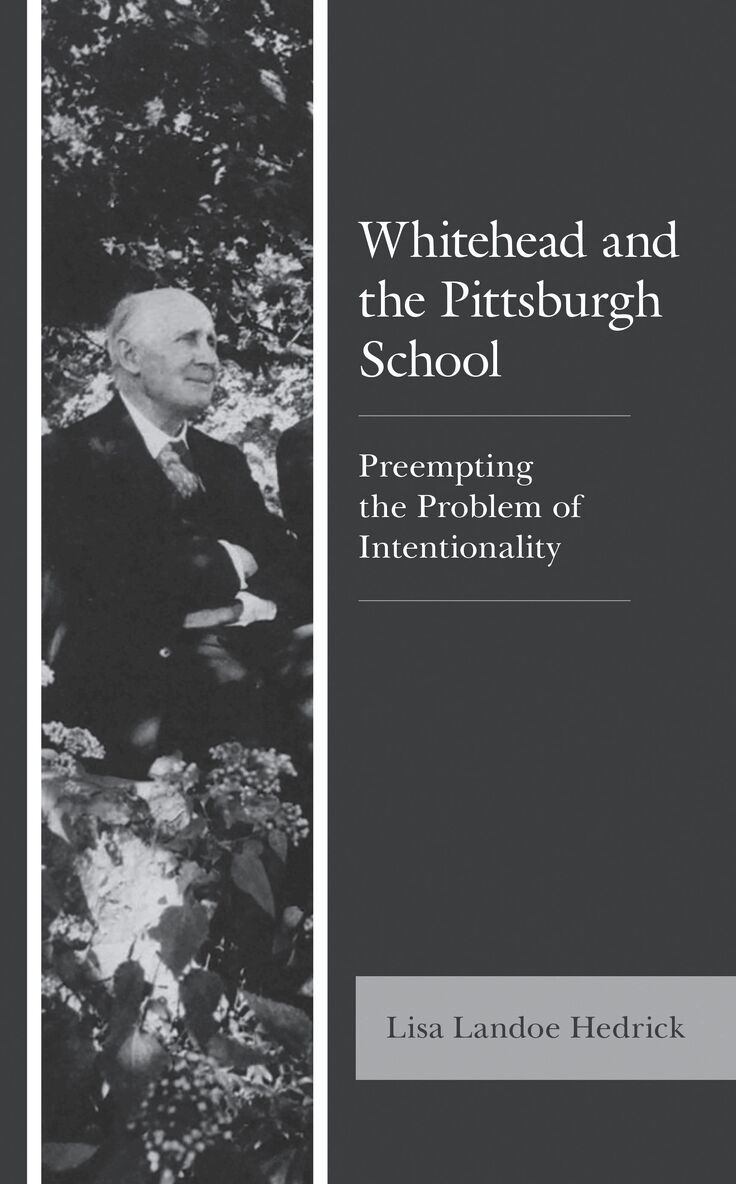
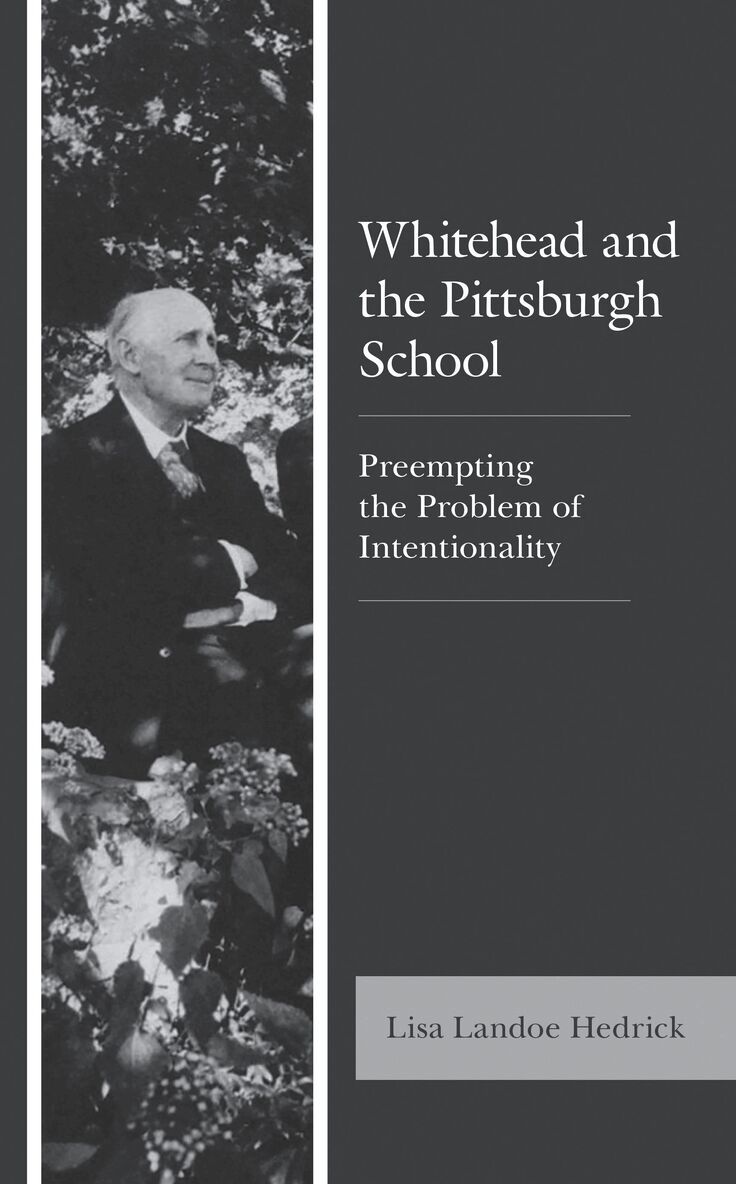
Whitehead and the Pittsburgh School: Preempting the Problem of Intentionality proposes a revisionary history of the relationship between Alfred North Whitehead and analytic philosophy, as well as a constructive proposal for how thinking with Whitehead can help disabuse analytic philosophy of the problem of intentionality. Lisa Landoe Hedrick defines “analytic” philosophy as primarily the intellectual tradition that runs from Gottlob Frege to Bertrand Russell to Wilfrid Sellars, or, geographically speaking, from Vienna to Cambridge to Pittsburgh between the twentieth and twenty-first centuries. As key members of the Pittsburgh School of philosophy, Robert Brandom and John McDowell pick up the Sellarsian project of reconciling nature and normativity in different ways, yet each of them presupposes a problematic relationship between language and the world precisely bequeathed to them by an implicit metaphysics of subjecthood that characterized analytic thinkers of the early twentieth century. Hedrick both investigates Whitehead’s published and archived critiques of early analytic thought—as an extension of a wider critique of modern philosophy—and employs Whitehead to reimagine nature and normativity after the problem of intentionality by way of his aesthetics of symbolism. This book thereby builds upon a burgeoning effort among philosophers to interface process and analytic thought, but it is the first to focus on contemporary analytic thinkers.
434 kr
Skickas inom 10-15 vardagar
Whitehead and the Pittsburgh School: Preempting the Problem of Intentionality proposes a revisionary history of the relationship between Alfred North Whitehead and analytic philosophy, as well as a constructive proposal for how thinking with Whitehead can help disabuse analytic philosophy of the problem of intentionality. Lisa Landoe Hedrick defines “analytic” philosophy as primarily the intellectual tradition that runs from Gottlob Frege to Bertrand Russell to Wilfrid Sellars, or, geographically speaking, from Vienna to Cambridge to Pittsburgh between the twentieth and twenty-first centuries. As key members of the Pittsburgh School of philosophy, Robert Brandom and John McDowell pick up the Sellarsian project of reconciling nature and normativity in different ways, yet each of them presupposes a problematic relationship between language and the world precisely bequeathed to them by an implicit metaphysics of subjecthood that characterized analytic thinkers of the early twentieth century. Hedrick both investigates Whitehead’s published and archived critiques of early analytic thought—as an extension of a wider critique of modern philosophy—and employs Whitehead to reimagine nature and normativity after the problem of intentionality by way of his aesthetics of symbolism. This book thereby builds upon a burgeoning effort among philosophers to interface process and analytic thought, but it is the first to focus on contemporary analytic thinkers.