• Fri frakt över 249 kr
  • •
  • Snabba leveranser
  • •
  • Billiga böcker
Kundservice

Du är på sajten för privatpersoner.

Företag, bibliotek eller offentlig verksamhet?

Du handlar på classic.bokus.com, där alla dina funktioner finns intakta.
Till classic.bokus.com
Bokus logotyp. Gå till startsidan.
  • Erbjudanden
  • Nyheter
  • Student
  • Topplistor
  • Barn & ungdom
  • Bokus Play
  • E-böcker
  • Pocketböcker
  • Spel & pussel

10% rabatt på allt med kod NYSTART10 →

Sidfot

Mina sidor

    Hjälp

    • Kundservice
    • Vanliga frågor och svar
    • Frakt och leverans
    • Retur vid ångerrätt
    • Reklamera vara
    • Betalning
    • Köpvillkor
    • Allmänna villkor
    • Information om webbplatsens tillgänglighet

    Om Bokus

    • Om oss
    • Pressrum
    • För studenter
    • För företag
    • För bibliotek och offentlig verksamhet
    • För leverantörer
    • Hållbarhet

    Populärt

    • Aktuella erbjudanden
    • Presentkort
    • Studentlitteratur
    • Nya böcker
    • Topplistor
    • Signerade böcker
    • Engelska böcker

    Inspiration

    • Boktips
    • BookTok
    • Populära bokserier
    • Barnbokskaraktärer
    • Populära författare
    Logotyp för Bokus
    Följ oss på Facebook (extern länk)Följ oss på Instagram (extern länk)Följ oss på YouTube (extern länk)Följ oss på TikTok (extern länk)
    bokus @ CookiesAnpassa cookiesIntegritetspolicyKöpvillkor
    Till Citymail hemsida (extern länk)Till Budbee hemsida (extern länk)Till Postnord hemsida (extern länk)Till Schenker hemsida (extern länk)Till Early Bird hemsida (extern länk)Till Walleys hemsida (extern länk)
    1. Samhälle och politik
    2. Samhälle och kultur
    3. Sociala och etiska frågor
    4. Migration

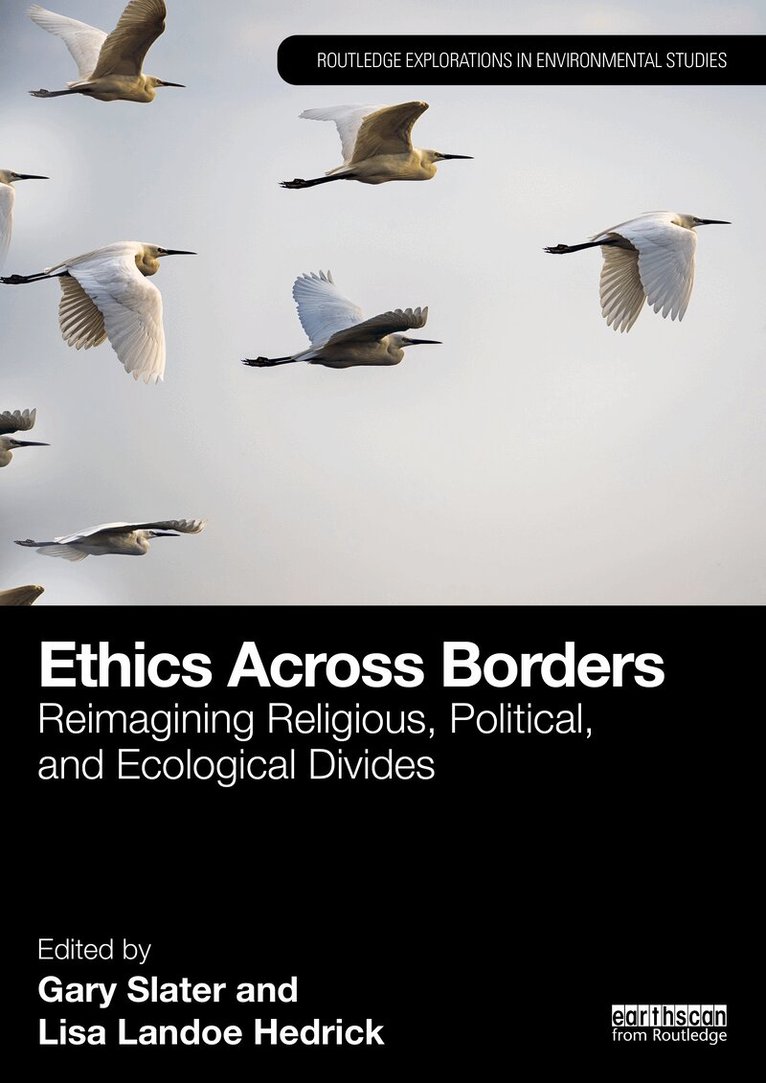
    Ethics Across Borders

    Reimagining Religious, Political, and Ecological Divides

    AvGary Slater,Lisa Landoe Hedrick

    Häftad, Engelska, 2025

    Del i serien Routledge Explorations in Environmental Studies

    625 kr

    Beställningsvara. Skickas inom 10-15 vardagar. Fri frakt över 249 kr.

    Beskrivning

    Ethics Across Borders assembles perspectives from geographers, historians, theologians, philosophers, and scientists to explore ethically relevant connections across multiple types of borders.The contemporary global order is fluid, increasingly unstable, and riven with borders at countless and complex points. Religious, political, and ecological borders hold particular significance, where interactions carry compounding social and environmental consequences. As the first collected volume to look at these three types of borders, both from an interdisciplinary perspective and as distinct forms, it demonstrates the value of thinking across borders as an ethical project. Taking Simone Weil’s perspective that every separation is a link, it posits that separations within sovereignty, species, and religion become links between political, ecological, and theological perspectives, and that boundaries within human life have taken on ecological significance in the age of the Anthropocene. In this framing, religion interacts with the political and the ecological in three ways: as foundational to sovereignty, as an influence on perspectives on contemporary boundaries, and as morally and philosophically implicated in the human/nonhuman interactions that ground environmental ethics.Ethics Across Borders offers lessons on how to reimagine borders and how to engage more justly with ecological systems and human communities. It will appeal to readers in environmental and religious ethics, philosophy, and border studies.

    Produktinformation

    • Utgivningsdatum:2025-12-19
    • Mått:174 x 246 x 16 mm
    • Vikt:520 g
    • Format:Häftad
    • Språk:Engelska
    • Serie:Routledge Explorations in Environmental Studies
    • Antal sidor:290
    • Förlag:Taylor & Francis Ltd
    • ISBN:9781032894577

    Utforska kategorier

    • Migration inom Samhälle och politik
    • Filosofiska discipliner inom Filosofi och religion
    • Religion: allmänt inom Filosofi och religion

    Mer om författaren

    Gary Slater is Postdoctoral Researcher at the Institute for Christian Social Sciences, University of Münster, and Editor of the American Journal of Theology and Philosophy. His research is funded by the German Research Council (DFG), and it focuses on borders, migration, environmental ethics, interreligious theology, and philosophical pragmatism.Lisa Landoe Hedrick is Assistant Instructional Professor in the Social Sciences Collegiate Division, University of Chicago. She is the author of Whitehead and the Pittsburgh School: Preempting the Problem of Intentionality (2021) and contributor to Diversifying the Philosophy of Religion: Critiques, Methods, and Case Studies (2023).

    Innehållsförteckning

    • 1. Introduction: Ethics across religious, political, and ecological borders SECTION I Political 2. Rebordering nature: From geopolitics to geo-politics and a philosophy of geopower 3. In-between spaces in border regions: Examples in the Middle East 4. The leaky boundaries of man-made states: On the ethical ambivalence of borders 5. Political border crossings: Some normative considerations 6. Politics and its limits: From analytical to ecological borders SECTION II Ecological 7. Planetary boundaries 8. Boundaries to the more-than-human as creative zones: Resources for a renewal of theological anthropology 9. Migrations of the sacred: Crossing the human border 10. Natural borders: Emergence and values realism 11. Reflections on the modern boundary of value and the possibility of reenchanted science SECTION III Religious 12. Do good fences make good neighbors? Religious borders, porosity, and the question of appropriation 13. Identity and cultural trespassing: Rabbinic interpretations of cross-border interactions 14. The confessional divide in the post-Westphalian order: Making religious borders flexible 15. The invisible border: The vanishing line of separation between church and state 16. From foundational relationality to populist borders: How did we get here? Overviews 17. Walls, weather, and the spirit in-between: Exercises in border thinking 18. Conclusion