Lisa Maya Knauer - Böcker
Visar alla böcker från författaren Lisa Maya Knauer. Handla med fri frakt och snabb leverans.
3 produkter
3 produkter
557 kr
Skickas inom 3-6 vardagar
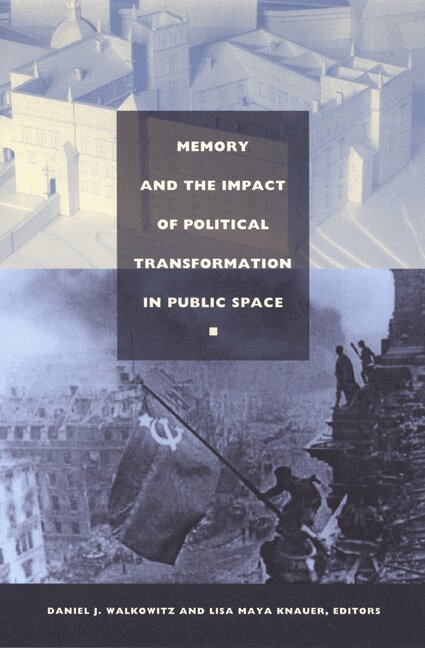
Memory and the Impact of Political Transformation in Public Space explores the effects of major upheavals-wars, decolonization, and other social and economic changes-on the ways in which public histories are presented around the world. Examining issues related to public memory in twelve countries, the histories collected here cut across political, cultural, and geographic divisions. At the same time, by revealing recurring themes and concerns, they show how basic issues of history and memory transcend specific sites and moments in time. A number of the essays look at contests over public memory following two major political transformations: the wave of liberation from colonial rule in much of Africa, Asia, and Central and South America during the second half of the twentieth century and the reorganization of Eastern Europe and the former Soviet bloc beginning in the late 1980s. This collection expands the scope of what is considered public history by pointing to silences and absences that are as telling as museums and memorials. Contributors remind us that for every monument that is erected, others-including one celebrating Sri Lanka’s independence and another honoring the Unknown Russian Soldier of World War II-remain on the drawing board. While some sites seem woefully underserved by a lack of public memorials-as do post–Pinochet Chile and post–civil war El Salvador-others run the risk of diluting meaning through overexposure, as may be happening with Israel’s Masada. Essayists examine public history as it is conveyed not only in marble and stone but also through cityscapes and performances such as popular songs and parades.ContributorsJames CarterJohn CzaplickaKanishka GoonewardenaLisa Maya KnauerAnna KrylovaTeresa MeadeBill NassonMary NolanCynthia PacesAndrew RossDaniel Seltz T. M. ScruggsIrina Carlota SilberDaniel J. WalkowitzYael Zerubavel
1 289 kr
Skickas inom 7-10 vardagar
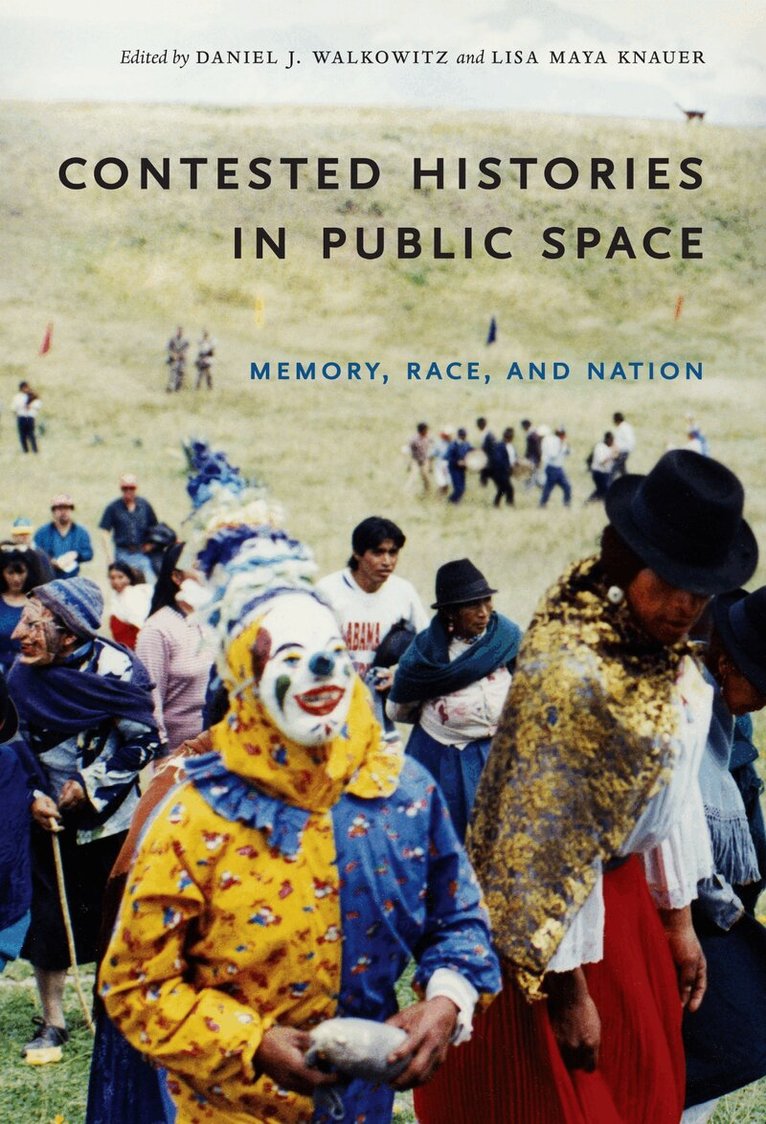
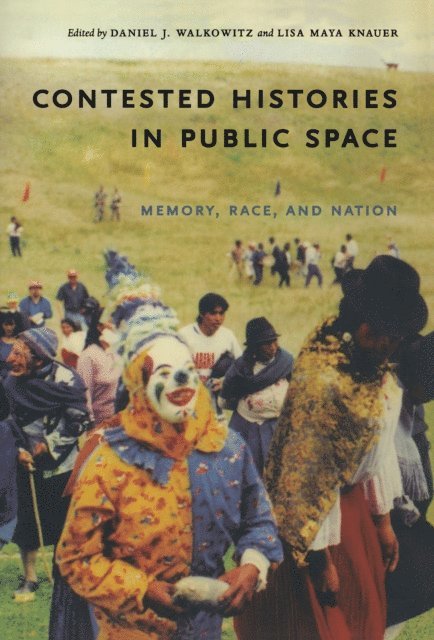
Contested Histories in Public Space brings multiple perspectives to bear on historical narratives presented to the public in museums, monuments, texts, and festivals around the world, from Paris to Kathmandu, from the Mexican state of Oaxaca to the waterfront of Wellington, New Zealand. Paying particular attention to how race and empire are implicated in the creation and display of national narratives, the contributing historians, anthropologists, and other scholars delve into representations of contested histories at such “sites” as a British Library exhibition on the East India Company, a Rio de Janeiro shantytown known as “the cradle of samba,” the Ellis Island immigration museum, and high-school history textbooks in Ecuador.Several contributors examine how the experiences of indigenous groups and the imperial past are incorporated into public histories in British Commonwealth nations: in Te Papa, New Zealand’s national museum; in the First Peoples’ Hall at the Canadian Museum of Civilization; and, more broadly, in late-twentieth-century Australian culture. Still others focus on the role of governments in mediating contested racialized histories: for example, the post-apartheid history of South Africa’s Voortrekker Monument, originally designed as a tribute to the Voortrekkers who colonized the country’s interior. Among several essays describing how national narratives have been challenged are pieces on a dispute over how to represent Nepali history and identity, on representations of Afrocuban religions in contemporary Cuba, and on the installation in the French Pantheon in Paris of a plaque honoring Louis DelgrÈs, a leader of Guadeloupean resistance to French colonialism.Contributors. Paul Amar, Paul Ashton, O. Hugo Benavides, Laurent Dubois, Richard Flores, Durba Ghosh, Albert Grundlingh, Paula Hamilton, Lisa Maya Knauer, Charlotte Macdonald, Mark Salber Phillips, Ruth B. Phillips, Deborah Poole, Anne M. Rademacher, Daniel J. Walkowitz
624 kr
Skickas inom 3-6 vardagar
Contested Histories in Public Space brings multiple perspectives to bear on historical narratives presented to the public in museums, monuments, texts, and festivals around the world, from Paris to Kathmandu, from the Mexican state of Oaxaca to the waterfront of Wellington, New Zealand. Paying particular attention to how race and empire are implicated in the creation and display of national narratives, the contributing historians, anthropologists, and other scholars delve into representations of contested histories at such “sites” as a British Library exhibition on the East India Company, a Rio de Janeiro shantytown known as “the cradle of samba,” the Ellis Island immigration museum, and high-school history textbooks in Ecuador.Several contributors examine how the experiences of indigenous groups and the imperial past are incorporated into public histories in British Commonwealth nations: in Te Papa, New Zealand’s national museum; in the First Peoples’ Hall at the Canadian Museum of Civilization; and, more broadly, in late-twentieth-century Australian culture. Still others focus on the role of governments in mediating contested racialized histories: for example, the post-apartheid history of South Africa’s Voortrekker Monument, originally designed as a tribute to the Voortrekkers who colonized the country’s interior. Among several essays describing how national narratives have been challenged are pieces on a dispute over how to represent Nepali history and identity, on representations of Afrocuban religions in contemporary Cuba, and on the installation in the French Pantheon in Paris of a plaque honoring Louis DelgrÈs, a leader of Guadeloupean resistance to French colonialism.Contributors. Paul Amar, Paul Ashton, O. Hugo Benavides, Laurent Dubois, Richard Flores, Durba Ghosh, Albert Grundlingh, Paula Hamilton, Lisa Maya Knauer, Charlotte Macdonald, Mark Salber Phillips, Ruth B. Phillips, Deborah Poole, Anne M. Rademacher, Daniel J. Walkowitz