Liz Hanson - Böcker
Visar alla böcker från författaren Liz Hanson. Handla med fri frakt och snabb leverans.
8 produkter
8 produkter
168 kr
Skickas
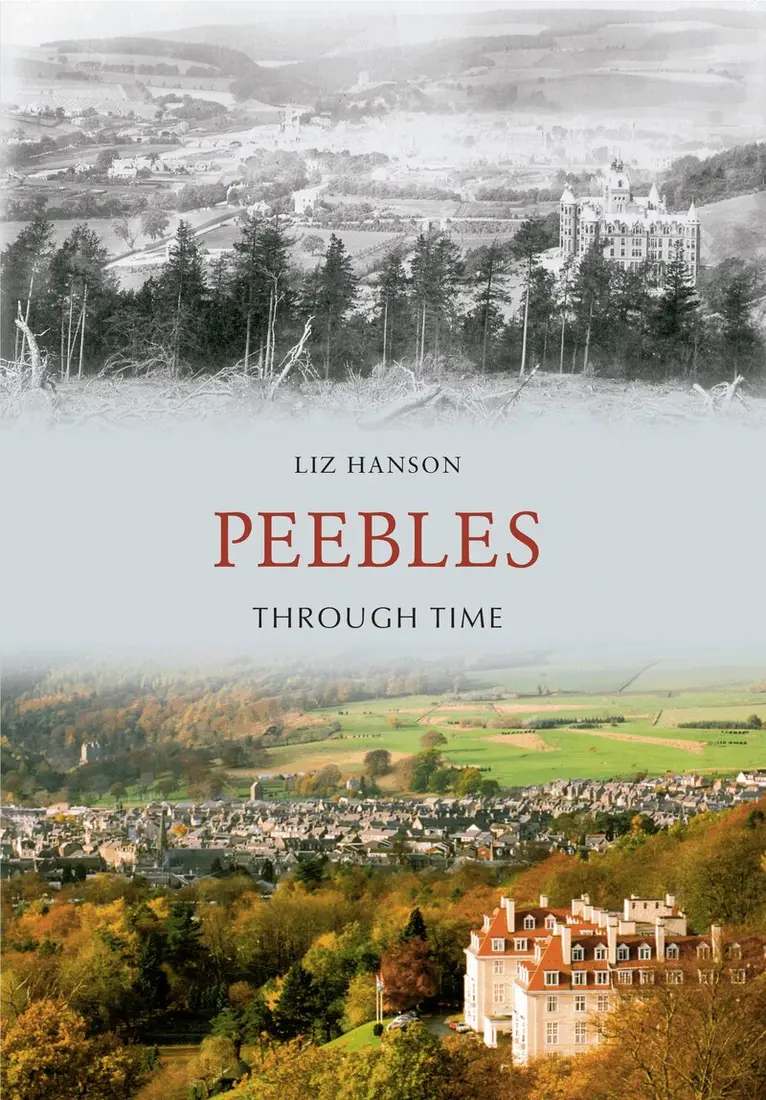
Peeblesshire and its attractive county town are situated in Upper Tweeddale, an area of great beauty and tranquillity. Tucked into the Borders Hills, with the River Tweed at its heart, Peebles has much to offer both tourists and residents, including walking, fishing and cycling or simply strolling along the river banks or exploring the charming high street. The city of Edinburgh is a mere 22 miles north but Peebles retains its market town identity and is very much part of The Borders. Peebles was created a Royal Burgh in 1367 by David II. Some remnants of its past are easily seen such as the thirteenth century Neidpath Castle, dramatically towering above a meander in the gorge; others remain only as traces, like the east port of the sixteenth-century town wall. This collection of photographs portrays some of the changes that have taken place to Peebles and its environs as the town has developed and grown.
178 kr
Skickas
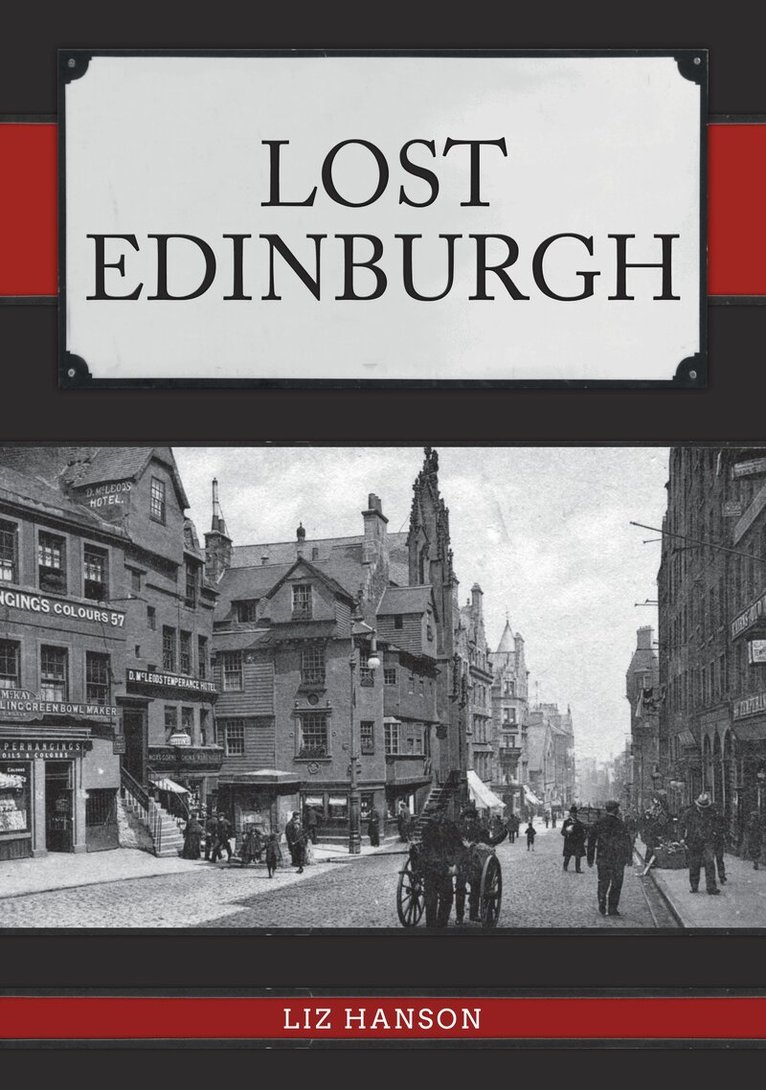
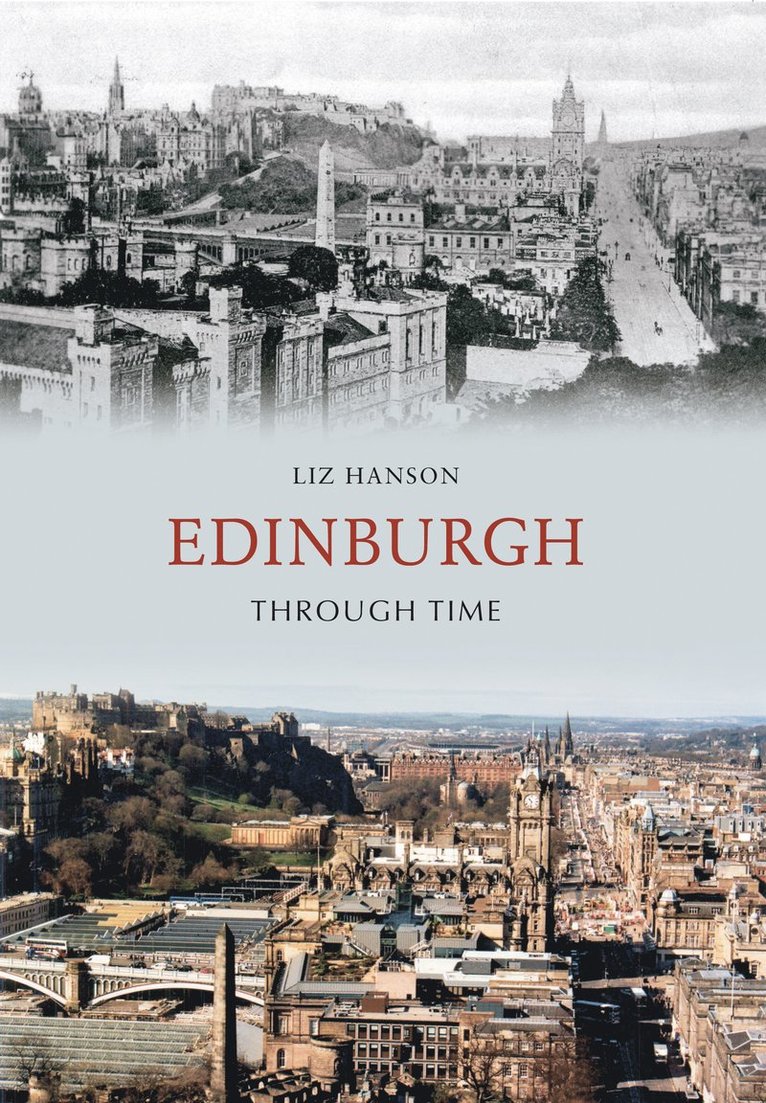
The unique profile of Edinburgh was born of a marriage between nature's sculpture and man's architecture. The epicentre is Castle Rock - a volcanic plug - which constantly draws the eye from all parts of the city. Sloping down from it is a jagged outline of impossibly high medieval tenements lining the Royal Mile which is punctuated at the foot of the tail of glacial debris by Holyrood Palace. That Edinburgh is beautiful is not in doubt.It is a city blended in to the countryside, with the Firth of Forth as the northern backdrop, a necklace of hills in all other directions. The history, however, has been less harmonious, largely due to warring with the English, but also because of religious turmoil and social unrest. The vibrant capital today draws thousands of visitors, not only for the historical sights, but also for the annual International Festivals of the arts, music and literature.
178 kr
Skickas
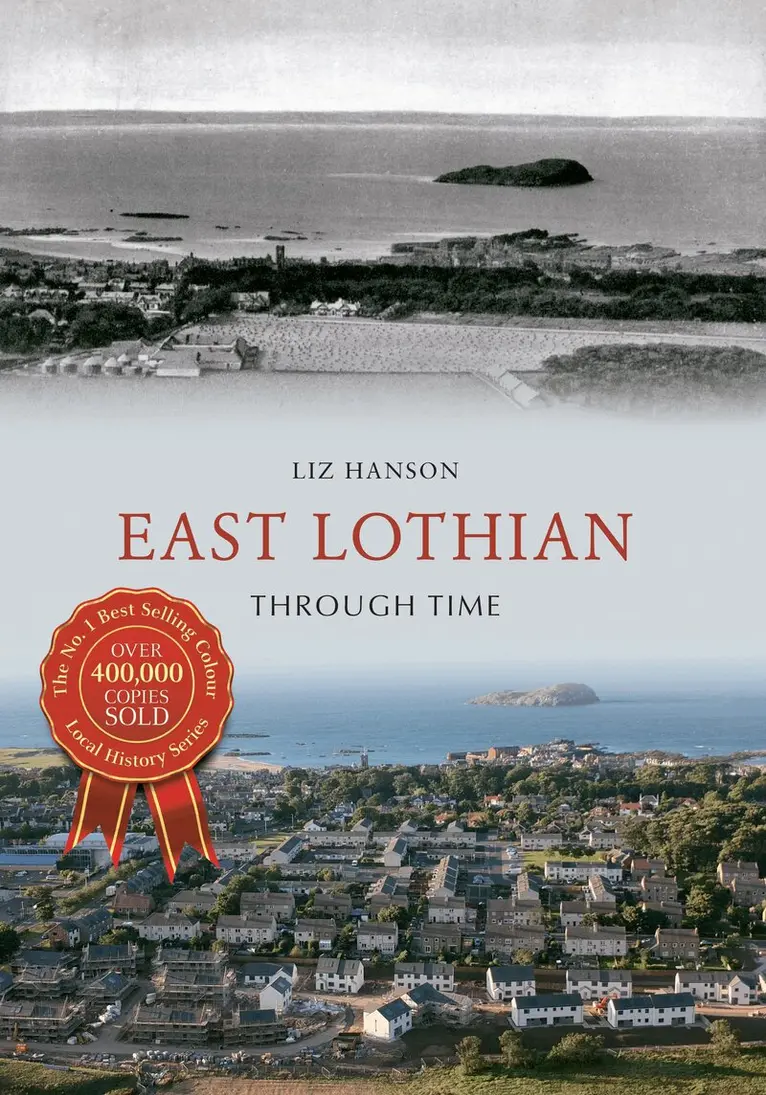
East Lothian, previously known as Haddingtonshire, has both benefitted and suffered from its strategic location between Scotland's capital city and England's northernmost county. Prior to 1707, the region bore the brunt of battles between the two countries, not only on land but along 32 miles of coastline. The rich, fertile soils, on the other hand, have produced wealth through agriculture and the patchwork of large, neat fields are synonymous with the landscape of East Lothian today. The proximity to Edinburgh makes it a prime location from which to commute. Attractive pantiled properties abound throughout the villages and countryside, all within short distances of the clean beaches or links golf courses, while tranquillity can also be found in the woodlands or gentle moorland slopes of the Lammermuir Hills. The reminders of troubled times can be viewed today by a stroll around a castle, but twenty-first-century East Lothian is thriving.
178 kr
Skickas inom 11-20 vardagar
The Midlothian region, once called Edinburghshire, is now administratively separate from the city of Edinburgh. They have always been interdependent, whether to supply the Old Town with crops, paper and coal or for wealthy city dwellers to locate their country estates and villas in the hinterland. The pastoral lifestyle of earlier centuries inspired writers and poets such as Robert Louis Stevenson whilst the wooded gorges of the River Esk were considered ‘romantic’ by Walter Scott. Smaller industries: weaving, coal mining, lime and iron-milling grew during the eighteenth century.The area is rich in country estates, many of which allow public access to their woodlands and grounds and the Pentland Hills are popular for hill-walking, as are the lower-level paths through the glens and gorges of the North and South Esk. These natural amenities, together with the proximity to Edinburgh make Midlothian a very desirable place to live. Midlothian Through Time shows how much the area has changed over time, with many places unrecognisable in the twenty-first century.
178 kr
Tillfälligt slut
This fascinating compilation of early Edinburgh photographs takes us on a tour of Scotland’s historic capital city, but rather than picturing the historic scenes dating back to the 1850s in the traditional sepia and black and white monochrome, new realism is given here by reproducing the images in full colour.We can therefore explore not only some of Edinburgh’s famous landmarks, such as the tourist hub of the Royal Mile, but also less frequently pictured aspects of the city, including its street characters, local markets, shops and theatres. A city blended into the countryside, with Castle Rock at its epicentre, the marriage between nature’s sculpture and man’s architecture in Edinburgh is captured beautifully in this unique collection.Principally sourced from ancient albums and private collections, Lost Edinburgh in Colour unites a wealth of rare and unpublished images to reveal that the Edinburgh of a century and more ago was as colourful and vibrant a city as it is in the present day.
111 kr
Skickas inom 11-20 vardagar
The profile of Edinburgh was born of a marriage between nature’s sculpture and man’s architecture. The epicentre is Castle Rock – a volcanic plug – which constantly draws the eye from all parts of the city. Sloping down from it is a jagged outline of impossibly high medieval tenements lining the Royal Mile, which is punctuated at the foot of the tail of glacial debris by Holyrood Palace. That Edinburgh is beautiful is not in doubt. It is a city blended into the countryside, with the Firth of Forth as the northern backdrop, a necklace of hills in all other directions. The history, however, has been less harmonious, largely due to warring with the English, but also because of religious turmoil and social unrest. The vibrant capital today draws thousands of visitors, not only for the historical sights, but also for the annual international festivals of the arts, music and literature.Edinburgh History Tour is a fascinating insight into the illustrious history of Scotland’s capital, its well-known streets and famous faces, and explains what they meant to local people throughout the nineteenth and into the twentieth century. Readers are invited to follow a timeline of events and watch the changing face of Edinburgh as author Liz Hanson guides us through its streets.
178 kr
Skickas
The history of Peebles spans nine centuries, so it is inevitable that there is a wealth of history in which to delve for nuggets of interest. David I of Scotland used to visit Peebles Castle in the late 1100s to hunt, the parish church of St Andrew was founded in 1195, and the town was made into a royal burgh by David II in 1367. The River Tweed did not have a bridge at Peebles until 1467, just a few years after burgh records were started during the reign of James II. In the sixteenth century, the town was surrounded by a wall with defensive bastel houses, remains of which can still be seen.The social history changed dramatically with the arrival of the railways in the nineteenth century as woollen mills took advantage of both the fast flow of the river and easy transportation of goods; the trains also brought flocks of tourists to the picturesque setting, establishing Peebles as a holiday location. Traces of the town’s fascinating history are visible to the enquiring eye and local author Liz Hanson endeavours to uncover some of the secrets of Peebles.
109 kr
Skickas
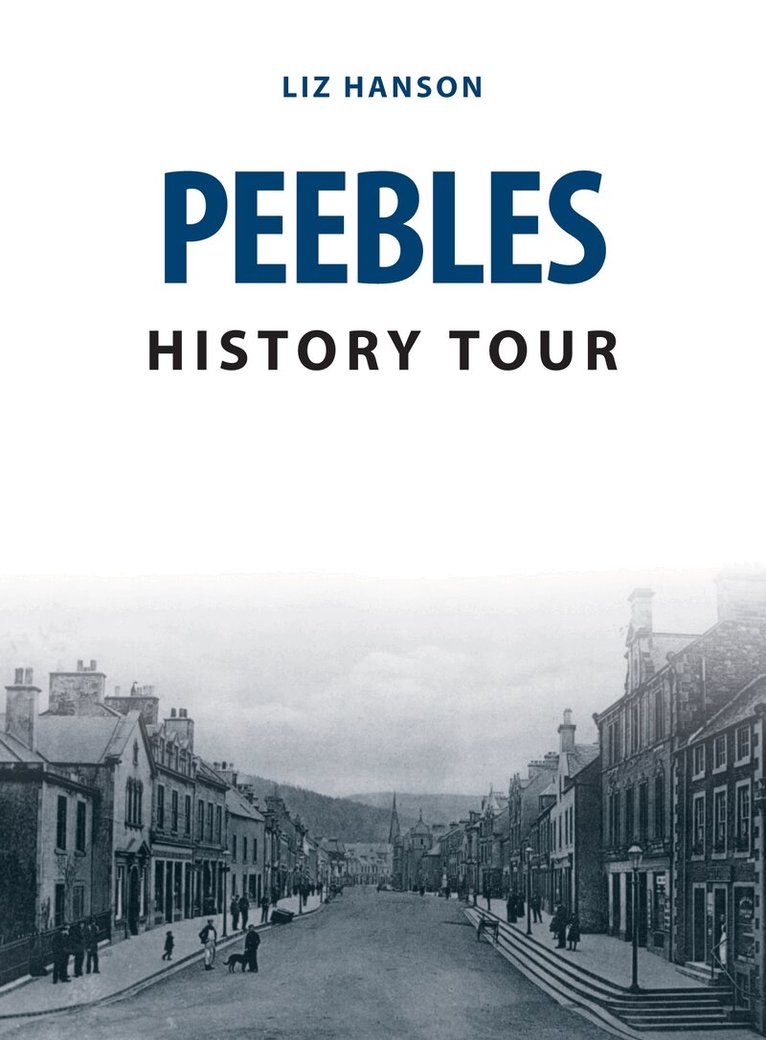
Peebles History Touris a unique insight into the illustrious history of this ancient Borders town and shows how much it has changed during the course of the nineteenth and twentieth centuries. Readers are invited to follow local author Liz Hanson as she guides them through its streets and alleyways, pointing out the well-known and lesser-known landmarks along the way.