Lloyd Bradley - Böcker
Visar alla böcker från författaren Lloyd Bradley. Handla med fri frakt och snabb leverans.
4 produkter
4 produkter
183 kr
Skickas
The first major account of the history of reggae, black music journalist Lloyd Bradley describes its origins and development in Jamaica, from ska to rock-steady to dub and then to reggae itself, a local music which conquered the world. There are many extraordinary stories about characters like Prince Buster, King Tubby and Bob Marley. But this is more than a book of music history: it relates the story of reggae to the whole history of Jamaica, from colonial island to troubled independence, and Jamaicans, from Kingston to London.
342 kr
Kommande
From 1968 to 1978; from 'Say It Loud - I'm Black and I'm Proud' to Off The Wall; from the Third Harlem Cultural Festival to the P-Funk Earth Tour: Funk Is Its Own Reward plots the journey of an African American cultural movement that was always about far more than simply music.With roots in the poetry, art, theatre, intellectualism and jazz of the celebrated 1960s Black Arts Movement, and made possible by the shifts in thinking brought about by the Black Panthers, the rise of HBSUs and black political involvement, funk was the Second Great Black Renaissance. Funk Is Its Own Reward makes the connections between the literature, films, television, black arts collectives, theatre groups and media and analyses how they fed into a cultural wave that made a music confident enough to embrace the likes of Barry White, Bill Withers, 24 Carat Black, Bootsy, Mandrill, the O'Jays, the Fatback Band, Miles Davis, and the Brides of Funkenstein not just possible but inevitable. It looks at how, once African American popular music reconnected with and fully expressed the culture that created it, it had to freedom to express itself in any way it saw fit and still be funky. The music gave itself to the scope to be acoustic, to be vocal harmony, to be brassy, to make social comment, to be orchestral, to be headed for the bedroom, to be all about the rhythm, to be electronic . . . and still be funky. It was never about where a piece of music hoped to end up, but where, to coin a phrase, it be coming from.By putting the music firmly in the context of the movement, Funk Is Its Own Reward drags a vibrant art from out from under the notion it only existed to help white people dance, and shines a light on the skill, experimentation, sense of community, humour, formal training, black pride, self-celebration and intellectual and musical freedoms that went into it.In doing so, it uncovers the importance of black radio, how the wah-wah pedal was a happy accident, Motown's corporate role in the Dawn of Funk, why jazz not R&B is funk's nearest living relative, how life in a hippie commune changed George Clinton, why Sesame Street was the funkiest programme on television, what blaxploitation actually meant to its intended audience, why Kool & the Gang stand apart from the pack, the immediate connection of James brown's record to his audience, what was in Barry White's mother's record collection, how the self-contained band changed everything and where Maurice White first brushed up against the cosmic pyramid.Joining author Lloyd Bradley on Funk Is Its Own Reward's epic journey are a host of I-was-there contributors including Fatback Band's Bill Curtis, Bootsy Collins, Maurice White, Lynn Mabry of the Brides of Funkenstein, Larry Mizell, Isaac Hayes, Larry Graham, Melvin Van Peebles, Overton Loyd, the Last Poets, War's Harold Brown, George Clinton, Fred Wesley, Steve Arrington, Carrie Lucas and Dexter Wansell.
197 kr
Kommande
From 1968 to 1978; from 'Say It Loud - I'm Black and I'm Proud' to Off The Wall; from the Third Harlem Cultural Festival to the P-Funk Earth Tour: Funk Is Its Own Reward plots the journey of an African American cultural movement that was always about far more than simply music.With roots in the poetry, art, theatre, intellectualism and jazz of the celebrated 1960s Black Arts Movement, and made possible by the shifts in thinking brought about by the Black Panthers, the rise of HBSUs and black political involvement, funk was the Second Great Black Renaissance. Funk Is Its Own Reward makes the connections between the literature, films, television, black arts collectives, theatre groups and media and analyses how they fed into a cultural wave that made a music confident enough to embrace the likes of Barry White, Bill Withers, 24 Carat Black, Bootsy, Mandrill, the O'Jays, the Fatback Band, Miles Davis, and the Brides of Funkenstein not just possible but inevitable. It looks at how, once African American popular music reconnected with and fully expressed the culture that created it, it had to freedom to express itself in any way it saw fit and still be funky. The music gave itself to the scope to be acoustic, to be vocal harmony, to be brassy, to make social comment, to be orchestral, to be headed for the bedroom, to be all about the rhythm, to be electronic . . . and still be funky. It was never about where a piece of music hoped to end up, but where, to coin a phrase, it be coming from.By putting the music firmly in the context of the movement, Funk Is Its Own Reward drags a vibrant art from out from under the notion it only existed to help white people dance, and shines a light on the skill, experimentation, sense of community, humour, formal training, black pride, self-celebration and intellectual and musical freedoms that went into it.In doing so, it uncovers the importance of black radio, how the wah-wah pedal was a happy accident, Motown's corporate role in the Dawn of Funk, why jazz not R&B is funk's nearest living relative, how life in a hippie commune changed George Clinton, why Sesame Street was the funkiest programme on television, what blaxploitation actually meant to its intended audience, why Kool & the Gang stand apart from the pack, the immediate connection of James brown's record to his audience, what was in Barry White's mother's record collection, how the self-contained band changed everything and where Maurice White first brushed up against the cosmic pyramid.Joining author Lloyd Bradley on Funk Is Its Own Reward's epic journey are a host of I-was-there contributors including Fatback Band's Bill Curtis, Bootsy Collins, Maurice White, Lynn Mabry of the Brides of Funkenstein, Larry Mizell, Isaac Hayes, Larry Graham, Melvin Van Peebles, Overton Loyd, the Last Poets, War's Harold Brown, George Clinton, Fred Wesley, Steve Arrington, Carrie Lucas and Dexter Wansell.
163 kr
Skickas
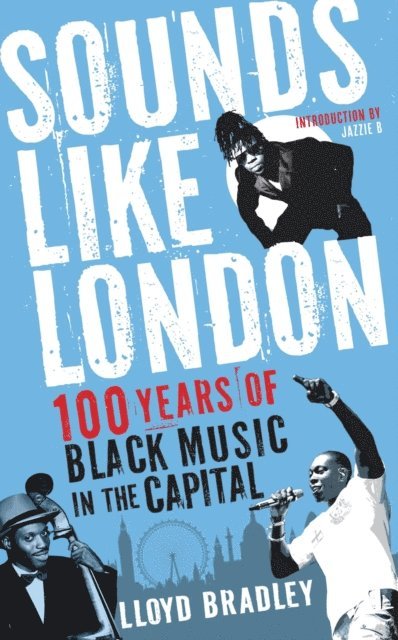
For as long as people have been migrating to London, so has their music. An essential link to home, music also has the power to shape communities in surprising ways.Black music has been part of London's landscape since the First World War, when the Southern Syncopated Orchestra brought jazz to the capital. Following the wave of Commonwealth immigration, its sounds and styles took up residence to become the foundation of the city's youth culture. Sounds Like London tells the story of the music and the larger-than-life characters making it, journeying from Soho jazz clubs to Brixton blues parties to King's Cross warehouse raves to the streets of Notting Hill - and onto sound systems everywhere. As well as a journey through the musical history of London, Sounds Like London is about the shaping of a city, and in turn the whole nation, through music.Contributors include Eddy Grant, Osibisa, Russell Henderson, Dizzee Rascal and Trevor Nelson, with an introduction by Soul2Soul's Jazzie B.