Lloyd de Beer - Böcker
Visar alla böcker från författaren Lloyd de Beer. Handla med fri frakt och snabb leverans.
5 produkter
5 produkter
473 kr
Kommande
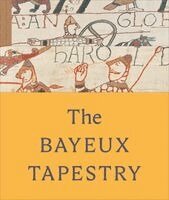
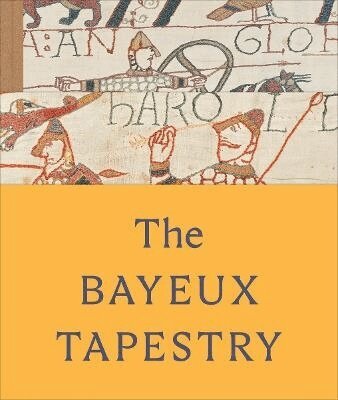
The Bayeux Tapestry is a unique historical artwork almost 70 metres long, which tells the story of the events leading to the Norman Conquest of England in 1066 by William, Duke of Normandy. Its account of the eleventh century in England and France is like no other, revealing details from civil and military architecture to armour, seafaring and everyday life. Featuring a full-colour reproduction of the Tapestry, this beautiful new book allows the reader to follow the narrative visually, while texts from international experts unpick the importance of the work in understanding this pivotal point in European history. The latest research into the Tapestry is presented across five chapters that explore its patronage, design and production, its status as an iconic work of art, and its depictions of daily life. Focused profiles woven throughout introduce key figures from the world of the Tapestry, offering moments of personal connection within the sweeping story. This publication marks the historic moment of the loan of the Tapestry to the British Museum, the first time it has been displayed outside of France in almost 1,000 years.
334 kr
Skickas inom 7-10 vardagar
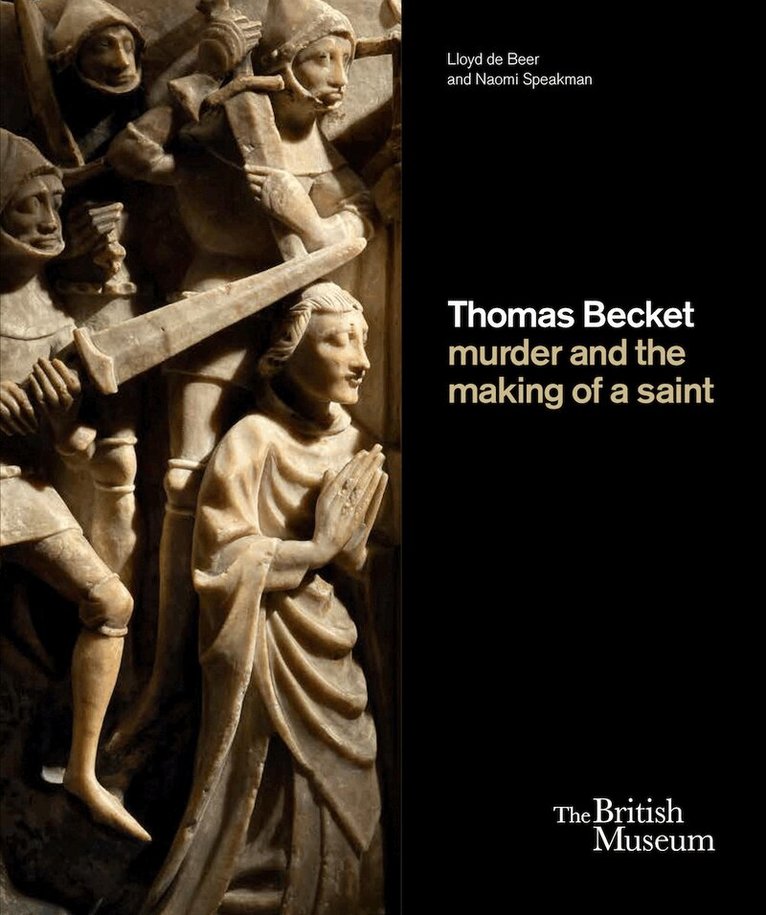
Praise for the exhibition***** The Times***** The Telegraph ***** The Guardian ***** Evening Standard Praise for the book'If you cannot make it to the show itself, then I implore you to buy the catalogue, which is one of the best I've ever read – scholarly and entertaining, a good history book in its own right.' – Tim Stanley, The Telegraph ‘A marvellous and consistently enthralling account’ – Christopher de Hamel, bestselling author of The Book in the Cathedral“[The book] provides an up-to-date, highly readable and lavishly illustrated text that will finally supplant Borenius’s book as the definitive account of the art of Thomas Becket” - Dr Tom Nickson, Arts Journal The murder of Thomas Becket in Canterbury Cathedral on 29 December 1170 sent shockwaves across medieval Europe. He rose from ordinary beginnings in London to become chancellor to King Henry II and then Archbishop of Canterbury, making him one of the most powerful men in England. Becket’s fortunes changed when a bitter dispute with Henry forced him into a six-year exile. Less than a month after his return to England, he was killed by four knights with close ties to the king. In the wake of Becket’s death, hundreds of miracles were attributed to him and, just over two years later, he was canonised. All across Europe he was celebrated as a defender of the Church against royal tyranny.Lloyd de Beer and Naomi Speakman tell the story of Becket’s dramatic life, death and legacy through a stunning array of objects, including medieval stained glass, manuscripts, jewellery and sacred reliquaries. They reveal Canterbury Cathedral’s transformation into one of Europe’s most popular pilgrimage destinations. Over the centuries pilgrims visited Becket’s shrine in their thousands, a journey famously reimagined by Geoffrey Chaucer in The Canterbury Tales. A dedicated section by Rachel Koopmans, which features groundbreaking new research, delves deeper into Becket’s miracle stories through the lens of one of the stained-glass miracle windows from the cathedral. The cult of Thomas Becket endured in spite of the English Reformation, during which his shrine at Canterbury was dramatically destroyed and his image and name outlawed. From twelfth-century London to the Tudor court, this magnificent book takes you through the twists and turns of one of the most remarkable stories of the Middle Ages.
63 kr
Skickas inom 7-10 vardagar
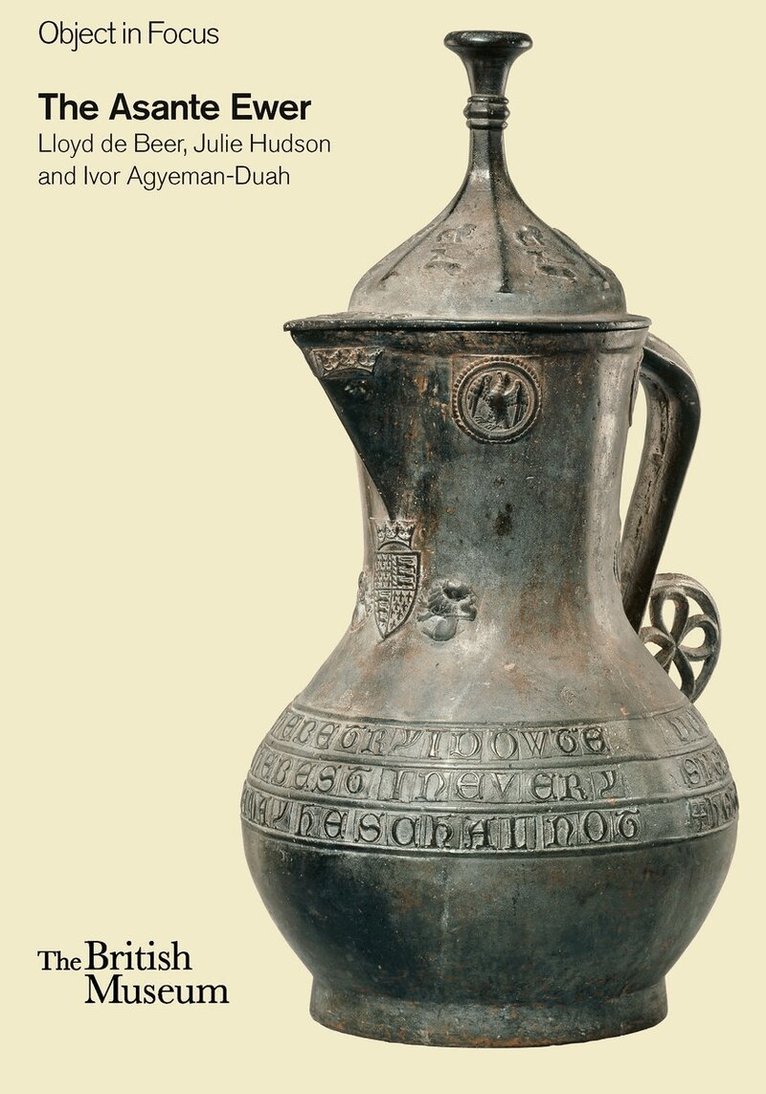
A new title in the British Museum's Object in Focus series that unpacks the history of a fascinating vessel and its journey from medieval England to West Africa and back. The fourteenth-century metal jug today popularly known as the Asante Ewer has a remarkable story. It was made in medieval England but transported to West Africa, possibly at some point between the fifteenth and seventeenth centuries. By the nineteenth century it was located in a courtyard associated with the royal palace of the Asantehene, the king of the Asante people in Kumasi, present-day Ghana. During widespread looting by British forces in the aftermath of the so-called Fourth Anglo-Asante War of 1896, the ewer was removed from the royal building and subsequently purchased by the British Museum. This book includes a detailed close reading of the object itself, which is one of the finest examples of late medieval English bronze casting. It also explores the significance of the vessel in both European and African contexts - from the intricate medieval symbolism, linked to English royalty, that forms its decoration, to its potential connections with the trade in ivory and gold across the Sahara and the West African coast. Finally, this publication addresses collecting practices of the nineteenth century and their inextricable links with colonialism, as well as discussing how the ewer has historically been presented in a European context and is now being re-evaluated to include its African history.
54 kr
Skickas inom 7-10 vardagar
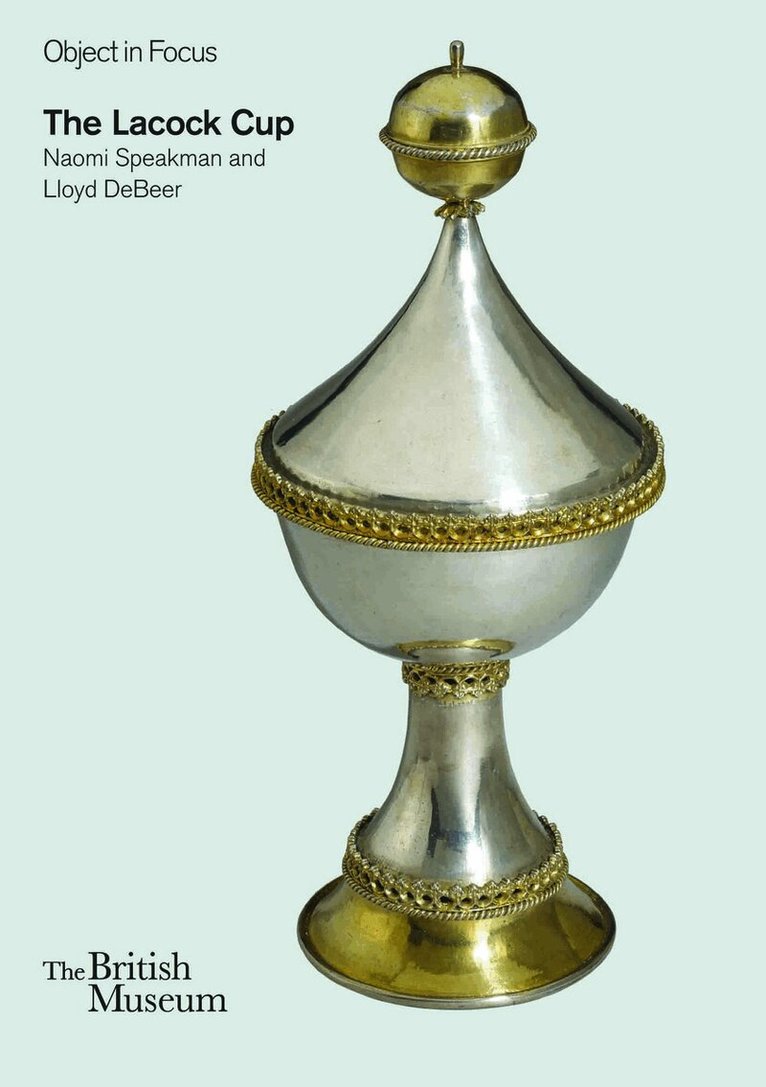
The Lacock Cup is a rare object with a unique English history. Made in the 1430s, it is one of a handful of pieces of secular silver from the Middle Ages, which both survived the changing culture of Tudor fashion and the turmoil of the Reformation. Originally created as a drinking cup for feasting in the fifteenth century, the Cup later became a sacred chalice for the community of Lacock in Wiltshire at the parish church of Saint Cyriac. With an unbroken local heritage of over 400 years, this piece was a central feature of religious ceremony until the late twentieth century. The remarkable story of this special cup is brought to life in this short and accessible book. Its history, from drinking vessel to holy chalice, opens a window into the culture of late medieval England and having survived the centuries in near perfect condition, it acts as a witness to these times of great change. Charting the journey of the Cup, from fifteenth century medieval society, through the Reformation and later Civil War to the present day, this book will also explore the Cup’s role as a communion vessel in its local setting of Lacock, and its treatment at the British Museum where it has been on loan since 1962. The Cup remained in irregular use by the parish until the 1980s, and this story of over 500 years of outstanding care and use provides a fitting conclusion to one of England’s most important silver objects.
Tributes to T.A. Heslop
From Miniature to Monumental: Studies in Medieval Art and Architecture
Inbunden, Engelska, 2025
2 056 kr
Skickas inom 5-8 vardagar