Lloyd E. Eastman - Böcker
Visar alla böcker från författaren Lloyd E. Eastman. Handla med fri frakt och snabb leverans.
3 produkter
3 produkter
645 kr
Skickas inom 7-10 vardagar
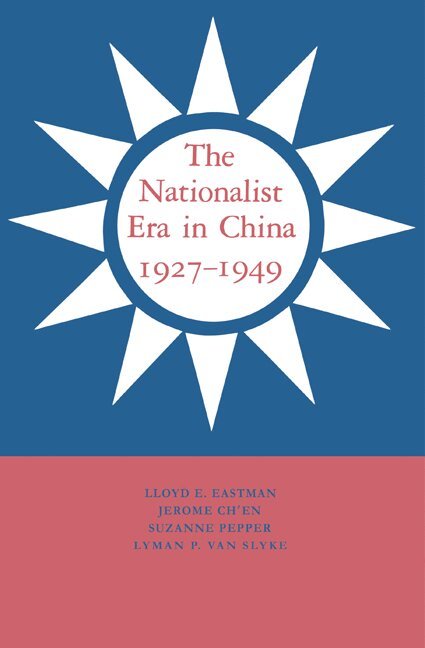
In recent years historians of China have focused increased attention on the critical decades of National rule on the mainland. This recent scholarship has substantially modified our understanding of the political events of this momentous period, shedding light on the character of Nationalist rule and on the sources of the Communist victory in 1949. Yet no existing textbook on modern China presents the events of the period according to these new findings. The five essays in this volume were written by leading authorities on the period, and they synthesize the new research. Drawn from Volume 13 of The Cambridge History of China, they represent the most complete and stimulating political history of the period available in the literature. The essays selected deal with Nationalist rule during the Nanking decade, the Communist movement from 1927 to 1937, Nationalist rule during the Sino-Japanese War, the Communist movement during the Sino-Japanese war, and the Kuomintang-Communist struggle from 1945 to 1949.
Del 79 - Harvard Historical Studies
Throne and Mandarins
China’s Search for a Policy during the Sino-French Controversy, 1880–1885
Inbunden, Engelska, 1967
369 kr
Skickas inom 7-10 vardagar
This study of the policy-making process in China during the Sino–French controversy of 1880–1885 adds a new dimension to our understanding of China’s response to the West in the nineteenth century. The implicit threat presented by French efforts to extend her control into northern Vietnam was the catalyst in Chinese policy decisions, and Lloyd Eastman traces the dramatic process by which the problem was eventually resolved. Analyzing the complicated balance of internal political forces in the Ch’ing dynasty in the late nineteenth century, he makes the first thorough study of the factors which shaped Chinese foreign policy in this period.Three major power groups affected the decision-making process: the throne, high administrative officials, and lesser officials whose role was largely ideological. Eastman shows the considerable extent to which the throne’s power was limited by the interests of the officials (or mandarins); discusses the role of ch’ing-i, or literati opinion; and emphasizes the importance of the conservative, low-ranking officials who stood overwhelmingly in opposition to the few proponents of reform and modernization and strongly influenced the course of Chinese policy. Discussing the diplomatic objectives involved—preservation of hegemony in Vietnam, reluctance to fight a war that might expose its military weakness, desire to save face—as manifestations of underlying cultural assumptions and values, Eastman offers a fresh perspective on the formulation of policy during the Ch’ing government’s confrontation with the Western powers.
323 kr
Skickas inom 10-15 vardagar
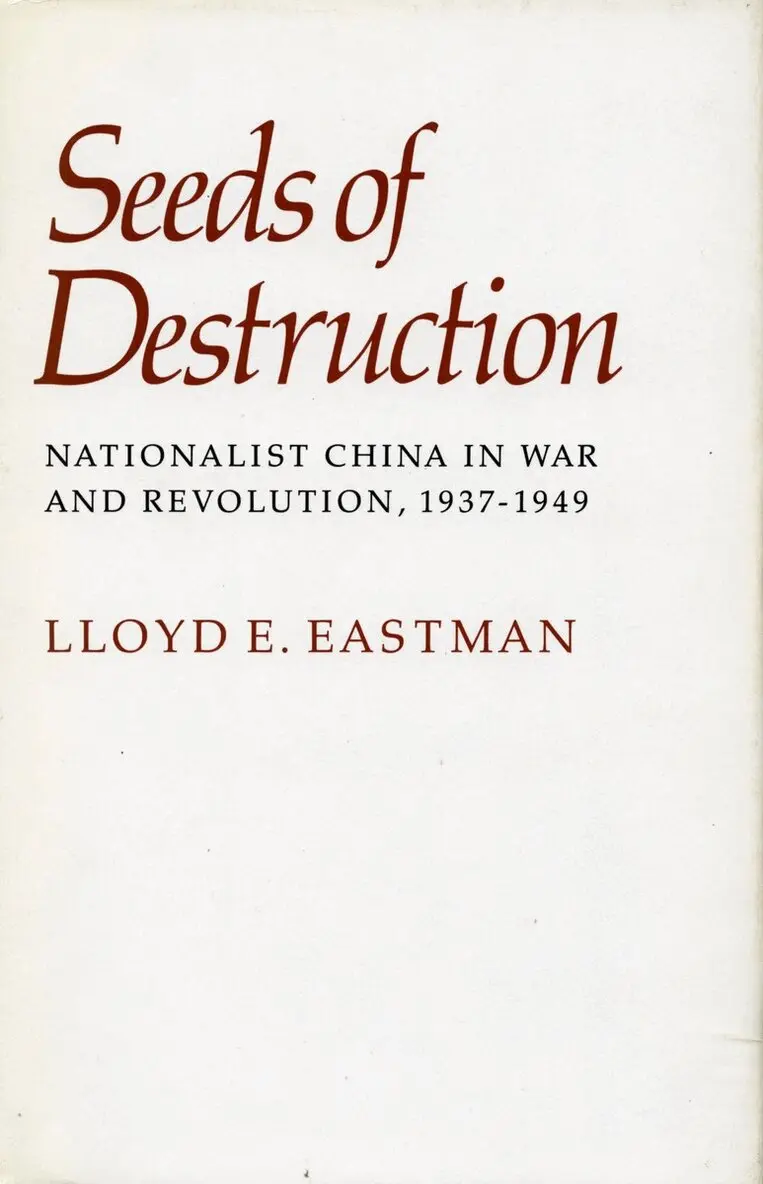
The question "Who lost China?" has provoked political vituperation and academic controversy ever since the Chinese Communists drove the Nationalist regime of Chiang Kai-shek off the mainland in 1949. In this study based on a wide array of hitherto unused documentary sources, the author delves deeply into the inner workings of the Nationalist regime and concludes that the Nationalists collapsed largely as a result of their own failings. Most strikingly, he uses the records and memoirs of the Nationalists themselves to document the weaknesses of the Nationalist rule. For even Chiang Kai-shek said of the Kuomintang on the eve of its final defeat in 1949, "This kind of party should long ago have been destroyed and swept away!"To illuminate the factors that contributed to its ultimate defeat, the author examines the Nationalist government during the period 1937-1949 from several different perspectives. He carefully scrutinizes the relationship between the central and provincial governments, the plight of the tax-burdened peasantry in the Nationalist-held areas, the intraparty politics of the regime as expressed in the Youth Corps and the reformist Ko-hsin Movement, the deficiencies of the army during the wars against Japan and the Communists, the failure of the Gold Yüan currency reform of late 1948, and finally, Chiang Kai-shek's own assessment of his army and the civilian branches of his regime during the final phases of the war.