Lloyd Michaels - Böcker
Visar alla böcker från författaren Lloyd Michaels. Handla med fri frakt och snabb leverans.
5 produkter
5 produkter
889 kr
Skickas inom 7-10 vardagar
Over a career that has spanned more than six decades, Woody Allen has explored the emotion of regret as a response to the existentialist dilemma of not being someone else. Tracing this recurrent theme from his stand-up comedy routines and apprentice work through classics like Annie Hall, Manhattan, The Purple Rose of Cairo, Hannah and Her Sisters, and Bullets Over Broadway as well as less esteemed accomplishments (Another Woman, Sweet and Lowdown, Cassandra's Dream), this volume argues that it is ultimately the shallowness of his protagonists' regret-their lack of deeply felt, sustained remorse-that defines Allen's pervasive view of human experience. Drawing on insights from philosophy, theology, psychology, and literature, the book discusses nearly every Woody Allen film, with extended analyses of the relationship films (including Alice and Husbands and Wives), the murder tetralogy (including Match Point and Irrational Man), the self-reflexive films (including Stardust Memories and Deconstructing Harry), and the movies about nostalgia (including Radio Days and Midnight in Paris).The book concludes by considering Allen's most affirmative resolution of regret (Broadway Danny Rose) and speculating about the relevance of this through-line for understanding Allen's personal life and prospects as an octogenarian auteur.
259 kr
Skickas inom 7-10 vardagar
Over a career that has spanned more than six decades, Woody Allen has explored the emotion of regret as a response to the existentialist dilemma of not being someone else. Tracing this recurrent theme from his stand-up comedy routines and apprentice work through classics like Annie Hall, Manhattan, The Purple Rose of Cairo, Hannah and Her Sisters, and Bullets Over Broadway as well as less esteemed accomplishments (Another Woman, Sweet and Lowdown, Cassandra's Dream), this volume argues that it is ultimately the shallowness of his protagonists' regret-their lack of deeply felt, sustained remorse-that defines Allen's pervasive view of human experience. Drawing on insights from philosophy, theology, psychology, and literature, the book discusses nearly every Woody Allen film, with extended analyses of the relationship films (including Alice and Husbands and Wives), the murder tetralogy (including Match Point and Irrational Man), the self-reflexive films (including Stardust Memories and Deconstructing Harry), and the movies about nostalgia (including Radio Days and Midnight in Paris).The book concludes by considering Allen's most affirmative resolution of regret (Broadway Danny Rose) and speculating about the relevance of this through-line for understanding Allen's personal life and prospects as an octogenarian auteur.
245 kr
Skickas inom 7-10 vardagar
For a director who has made a limited number of feature films over four-plus decades, Terrence Malick sustains an extraordinary reputation as one of America’s most original and independent directors. Lloyd Michaels analyzes Malick’s first four features in depth, emphasizing both repetitive formal techniques such as voiceover and long lens cinematography as well as recurrent themes drawn from the director’s academic training in modern philosophy. Like Heidegger, Malick seems to regard the human experience of nature as a mystery revealed primarily through moods rather than cognition. Like Wittgenstein, he is less concerned with apprehending the world than with simply acknowledging its beingness Michaels's critical approach explores Malick’s synthesis of the romance of mythic American experience and the aesthetics of European art film. He pays particular attention to paradigmatic moments: the billboard sequence in Badlands, the opening credits for Days of Heaven, the philosophical colloquies between Witt and Welsh in The Thin Red Line, and the epilogue of The New World. Michaels also sheds light on the two dark decades separating Days of Heaven from The Thin Red Line, when the director mostly lived as an expatriate in Paris. Two 1975 interviews with the famously elusive Malick round out the volume.
235 kr
Skickas inom 7-10 vardagar
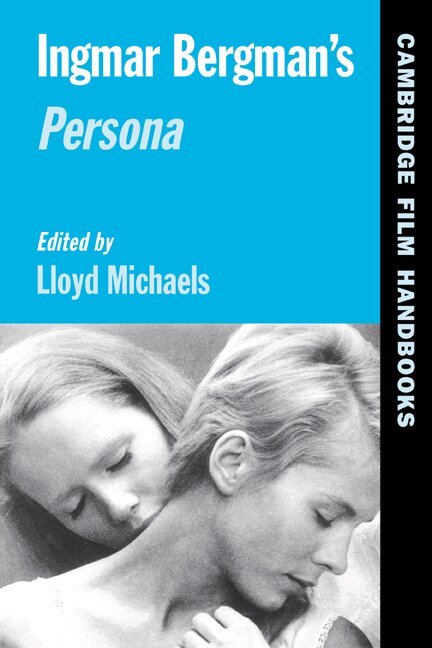
Long held to be among the world's greatest filmmakers, Ingmar Bergman shaped international art cinema from the 1950s to the 1980s. Among his many works, Persona is often considered to be his masterpiece and is often described as one of the central works of Modernism. Bergman himself claimed that this film 'touched wordless secrets only the cinema can discover'. The essays collected in this volume, and published for the first time, use a variety of methodologies to explore topics such as acting technique, genre, and dramaturgy. It also includes translations of Bergman's early writings that have never before been available in English, as well as an updated filmography and bibliography that cover the filmmaker's most recent work.
399 kr
Tillfälligt slut
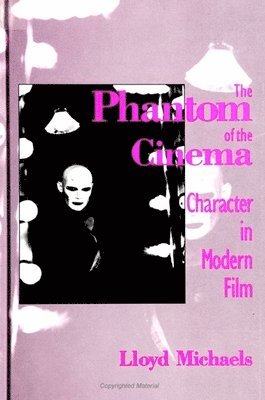
The first book to focus on the representation of character in film, encompassing the art cinema, popular movies, and documentaries.The first extended study to focus on the representation of character in film, The Phantom of the Cinema provides a historically informed, theoretically sophisticated, yet eminently readable account of a broad spectrum of texts that center on elusive, ambiguous protagonists. Ranging across acknowledged classics such as Citizen Kane and Persona, including relatively neglected works such as House of Games, The Last Tycoon, and Badlands, and encompassing the art cinema, popular movies, and documentary, Michaels applies the concept of "presence of absence" to distinguish cinema from other performative arts. He then suggests how this propensity to present images that reflect a constantly mediated sense of reality allows certain reflexive films to project a problematic understanding of human identity.In analyzing these spectral figures haunting the modern cinema, Michaels combines contemporary theory with his own close reading in order to reconcile the structuralist emphasis on textuality with the humanist account of character as representing the autonomous self. Ultimately, he demonstrates how film protagonists reflect both the melancholy and mystery of personhood and the "inner aesthetic" of the medium itself.