Lloyd P. Gerson - Böcker
Visar alla böcker från författaren Lloyd P. Gerson. Handla med fri frakt och snabb leverans.
22 produkter
22 produkter
2 062 kr
Skickas inom 5-8 vardagar
Knowing Persons is an original study of Plato's account of personhood. For Plato, embodied persons are images of a disembodied ideal. The ideal person is a knower. Hence, the lives of embodied persons need to be understood according to Plato's metaphysics of imagery.For Gerson, Plato's account of embodied personhood is not accurately conflated with Cartesian dualism. Plato's dualism is more appropriately seen in the contrast between the ideal disembodied person and the embodied one than in the contrast between mind or soul and body.This study argues that Plato's analysis of personhood is intended to cohere with his two-world metaphysics as well as a radical separation of knowledge and belief. Gerson demonstrates that Plato's account of persons plays a key role not just in his theory of mind, but in his theory of knowledge, his metaphysics, and his ethics. A proper understanding of Plato's account of persons must therefore place it in the context of his doctrines in these areas. Knowing Persons fills a significant gap by showing the way to such an understanding.
773 kr
Skickas inom 5-8 vardagar
Knowing Persons is an original study of Plato's account of personhood. For Plato, embodied persons are images of a disembodied ideal. The ideal person is a knower. Hence, the lives of embodied persons need to be understood according to Plato's metaphysics of imagery.For Gerson, Plato's account of embodied personhood is not accurately conflated with Cartesian dualism. Plato's dualism is more appropriately seen in the contrast between the ideal disembodied person and the embodied one than in the contrast between mind or soul and body.This study argues that Plato's analysis of personhood is intended to cohere with his two-world metaphysics as well as a radical separation of knowledge and belief. Gerson demonstrates that Plato's account of persons plays a key role not just in his theory of mind, but in his theory of knowledge, his metaphysics, and his ethics. A proper understanding of Plato's account of persons must therefore place it in the context of his doctrines in these areas. Knowing Persons fills a significant gap by showing the way to such an understanding.
21 768 kr
Skickas inom 10-15 vardagar
The works of Aristotle are central to the Western philosophical tradition, and scholarship on Aristotle, especially in English, has burgeoned enormously in the last forty years. Aristotle: Critical Assessments collects together articles on Aristotle's philosophy otherwise scattered over many philosophical, classical and historical scientific journals. The set thus provides a significant resource for those approaching the literature for the first time and for those already studying Aristotle in a professional capacity. Aristotle has been so influential and remains so in so many distinct areas that it is often the case that, say, a reader is acquainted with the literature on metaphysics or ethics but knows nothing about the literature on psychology or the philosophy of biology.Guided by new editorial introductions, this set guides the researcher, teacher or student through the issues of major concern in contemporary Aristotelian scholarship in the English-speaking world. The articles are arranged as follows:* Volume I covers Logic and Metaphysics* Volume II covers Physics, Cosmology and Biology* Volume III covers Psychology and Ethics* Volume IV covers Politics, Rhetoric and Aesthetics
685 kr
Skickas inom 10-15 vardagar
First published in 1999. We are fortunate in possessing a fascinating document, The Life of Plotinus, written by the philosopher Porphyry, a pupil and associate of Plotinus for the last eight years of his life. The basic facts contained in this Life can be quickly recounted. Plotinus was likely a Greek born in Egypt in AD 205. It is possible, though, that he came from a Hellenized Egyptian or Roman family. In his 28th year, Plotinus discovered in himself a thirst for philosophy. This is a collection of his works- Ennead I contains treatises on what Porphyry calls “ethical matters”; Enneads II–III contain treatises on natural philosophy or cosmology, with some rationalizations for the inclusion of III. 4, 5, 7, and 8. Ennead IV concerns the soul; V Intellect or and VI being, numbers, and the One. The thematic unity of Enneads I, IV, and V is somewhat greater than the rest.
5 193 kr
Skickas inom 10-15 vardagar
First published in 1999. We are fortunate in possessing a fascinating document, The Life of Plotinus, written by the philosopher Porphyry, a pupil and associate of Plotinus for the last eight years of his life. The basic facts contained in this Life can be quickly recounted. Plotinus was likely a Greek born in Egypt in AD 205. It is possible, though, that he came from a Hellenized Egyptian or Roman family. In his 28th year, Plotinus discovered in himself a thirst for philosophy. This is a collection of his works- Ennead I contains treatises on what Porphyry calls “ethical matters”; Enneads II–III contain treatises on natural philosophy or cosmology, with some rationalizations for the inclusion of III. 4, 5, 7, and 8. Ennead IV concerns the soul; V Intellect or and VI being, numbers, and the One. The thematic unity of Enneads I, IV, and V is somewhat greater than the rest.
460 kr
Skickas inom 7-10 vardagar
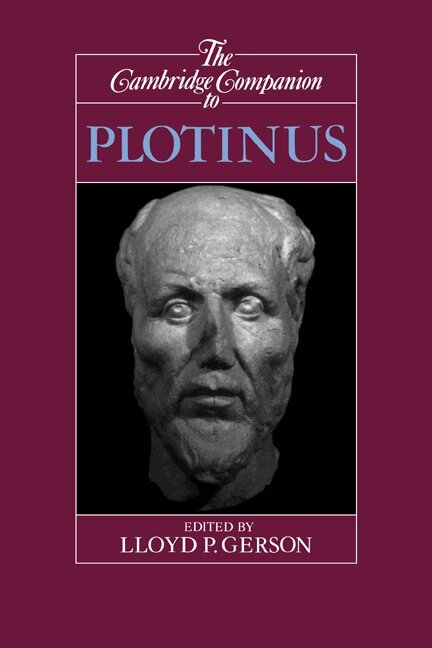
Each volume of this series of companions to major philosophers contains specially commissioned essays by an international team of scholars, together with a substantial bibliography, and will serve as a reference work for students and non-specialists. One aim of the series is to dispel the intimidation such readers often feel when faced with the work of a difficult and challenging thinker. Plotinus was the greatest philosopher in the 700-year period between Aristotle and Augustine. He thought of himself as a disciple of Plato, but in his efforts to defend Platonism against Aristotelians, Stoics, and others, he actually produced a reinvigorated version of Platonism that later came to be known as 'Neoplatonism'. In this volume, sixteen leading scholars introduce and explain the many facets of Plotinus' complex system. They place Plotinus in the history of ancient philosophy while showing that he was a founder of medieval philosophy.
347 kr
Skickas inom 7-10 vardagar
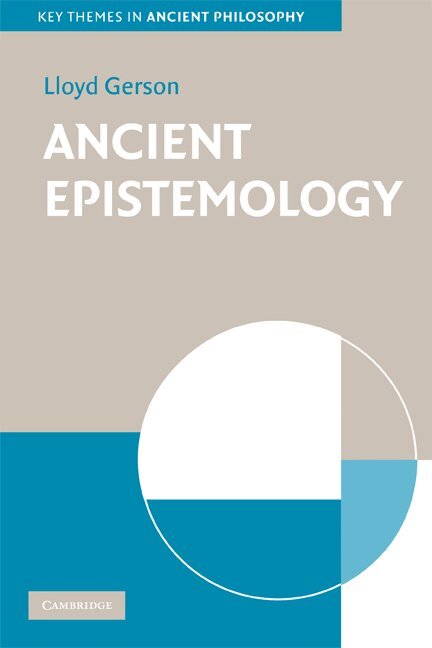
This is the first title in the Key Themes in Ancient Philosophy series, which provides concise books, written by major scholars and accessible to non-specialists, on important themes in ancient philosophy which remain of philosophical interest today. In this book, Professor Gerson explores ancient accounts of the nature of knowledge and belief from the Presocratics up to the Platonists of late antiquity. He argues that ancient philosophers generally held a naturalistic view of knowledge as well as of belief. Hence, knowledge was not viewed as a stipulated or semantically determined type of belief but was rather a real or objectively determinable achievement. In fact, its attainment was identical with the highest possible cognitive achievement, namely wisdom. It was this naturalistic view of knowledge at which the ancient Skeptics took aim. The book concludes by comparing the ancient naturalistic epistemology with some contemporary versions.
1 034 kr
Skickas inom 7-10 vardagar
This is the first title in the Key Themes in Ancient Philosophy series, which provides concise books, written by major scholars and accessible to non-specialists, on important themes in ancient philosophy which remain of philosophical interest today. In this book, Professor Gerson explores ancient accounts of the nature of knowledge and belief from the Presocratics up to the Platonists of late antiquity. He argues that ancient philosophers generally held a naturalistic view of knowledge as well as of belief. Hence, knowledge was not viewed as a stipulated or semantically determined type of belief but was rather a real or objectively determinable achievement. In fact, its attainment was identical with the highest possible cognitive achievement, namely wisdom. It was this naturalistic view of knowledge at which the ancient Skeptics took aim. The book concludes by comparing the ancient naturalistic epistemology with some contemporary versions.
701 kr
Skickas inom 10-15 vardagar
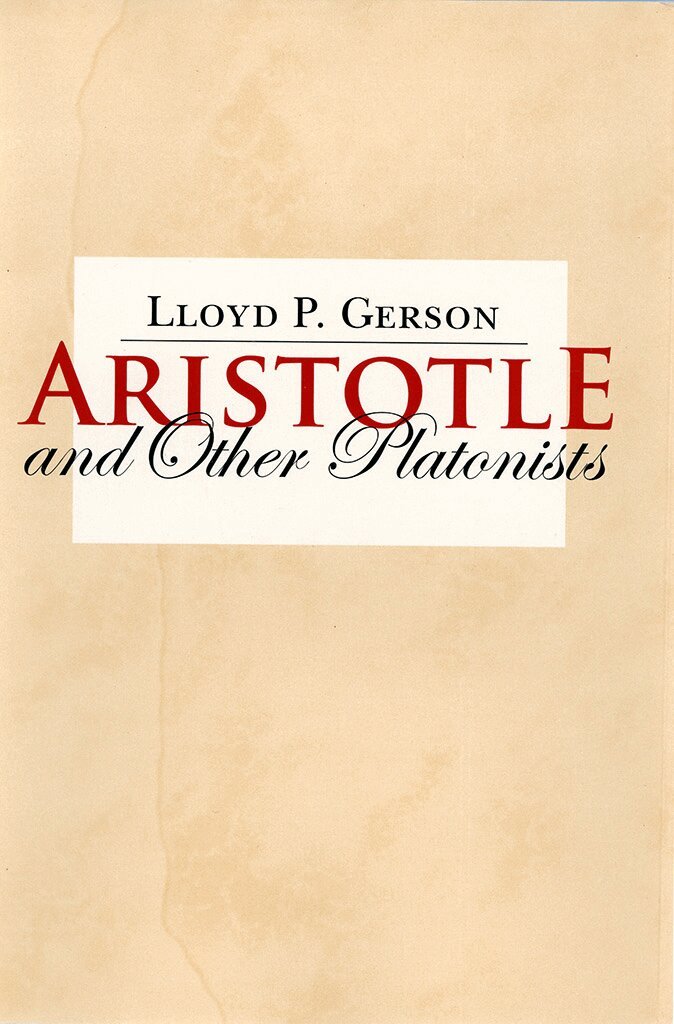
"Aristotle versus Plato. For a long time that is the angle from which the tale has been told, in textbooks on the history of philosophy and to university students. Aristotle's philosophy, so the story goes, was au fond in opposition to Plato's. But it was not always thus."—from the IntroductionIn a wide-ranging book likely to cause controversy, Lloyd P. Gerson sets out the case for the "harmony" of Platonism and Aristotelianism, the standard view in late antiquity. He aims to show that the twentieth-century view that Aristotle started out as a Platonist and ended up as an anti-Platonist is seriously flawed. Gerson examines the Neoplatonic commentators on Aristotle based on their principle of harmony. In considering ancient studies of Aristotle's Categories, Physics, De Anima, Metaphysics, and Nicomachean Ethics, the author shows how the principle of harmony allows us to understand numerous texts that otherwise appear intractable. Gerson also explains how these "esoteric" treatises can be seen not to conflict with the early "exoteric" and admittedly Platonic dialogues of Aristotle. Aristotle and Other Platonists concludes with an assessment of some of the philosophical results of acknowledging harmony.
1 518 kr
Skickas inom 10-15 vardagar
"Gerson's book is a highly valuable, well-written contribution to Platonism research. It persuasively makes a case for understanding Plato's philosophy as a coherent system that has an intricate and meaningful relation to later Platonistic philosophical positions. From this point, Plato appears as a Platonist indeed."— Claas Lattman ― CLASSICAL JOURNALWas Plato a Platonist? While ancient disciples of Plato would have answered this question in the affirmative, modern scholars have generally denied that Plato’s own philosophy was in substantial agreement with that of the Platonists of succeeding centuries. In From Plato to Platonism, Lloyd P. Gerson argues that the ancients are correct in their assessment. He arrives at this conclusion in an especially ingenious manner, challenging fundamental assumptions about how Plato’s teachings have come to be understood. Through deft readings of the philosophical principles found in Plato's dialogues and in the Platonic tradition beginning with Aristotle, he shows that Platonism, broadly conceived, is the polar opposite of naturalism and that the history of philosophy from Plato until the seventeenth century was the history of various efforts to find the most consistent and complete version of "anti-naturalism."Gerson contends that the philosophical position of Plato-Plato’s own Platonism, so to speak-was produced out of a matrix he calls "Ur-Platonism." According to Gerson, Ur-Platonism is the conjunction of five "antis" that in total arrive at anti-naturalism: anti-nominalism, anti-mechanism, anti-materialism, anti-relativism, and anti-skepticism. Plato’s Platonism is an attempt to construct the most consistent and defensible positive system uniting the five "antis." It is also the system that all later Platonists throughout Antiquity attributed to Plato when countering attacks from critics including Peripatetics, Stoics, and Sceptics.In conclusion, Gerson shows that Late Antique philosophers such as Proclus were right in regarding Plotinus as "the great exegete of the Platonic revelation."
421 kr
Skickas inom 10-15 vardagar
"Aristotle versus Plato. For a long time that is the angle from which the tale has been told, in textbooks on the history of philosophy and to university students. Aristotle's philosophy, so the story goes, was au fond in opposition to Plato's. But it was not always thus."—from the IntroductionIn a wide-ranging book likely to cause controversy, Lloyd P. Gerson sets out the case for the "harmony" of Platonism and Aristotelianism, the standard view in late antiquity. He aims to show that the twentieth-century view that Aristotle started out as a Platonist and ended up as an anti-Platonist is seriously flawed. Gerson examines the Neoplatonic commentators on Aristotle based on their principle of harmony. In considering ancient studies of Aristotle's Categories, Physics, De Anima, Metaphysics, and Nicomachean Ethics, the author shows how the principle of harmony allows us to understand numerous texts that otherwise appear intractable. Gerson also explains how these "esoteric" treatises can be seen not to conflict with the early "exoteric" and admittedly Platonic dialogues of Aristotle. Aristotle and Other Platonists concludes with an assessment of some of the philosophical results of acknowledging harmony.
171 kr
Skickas
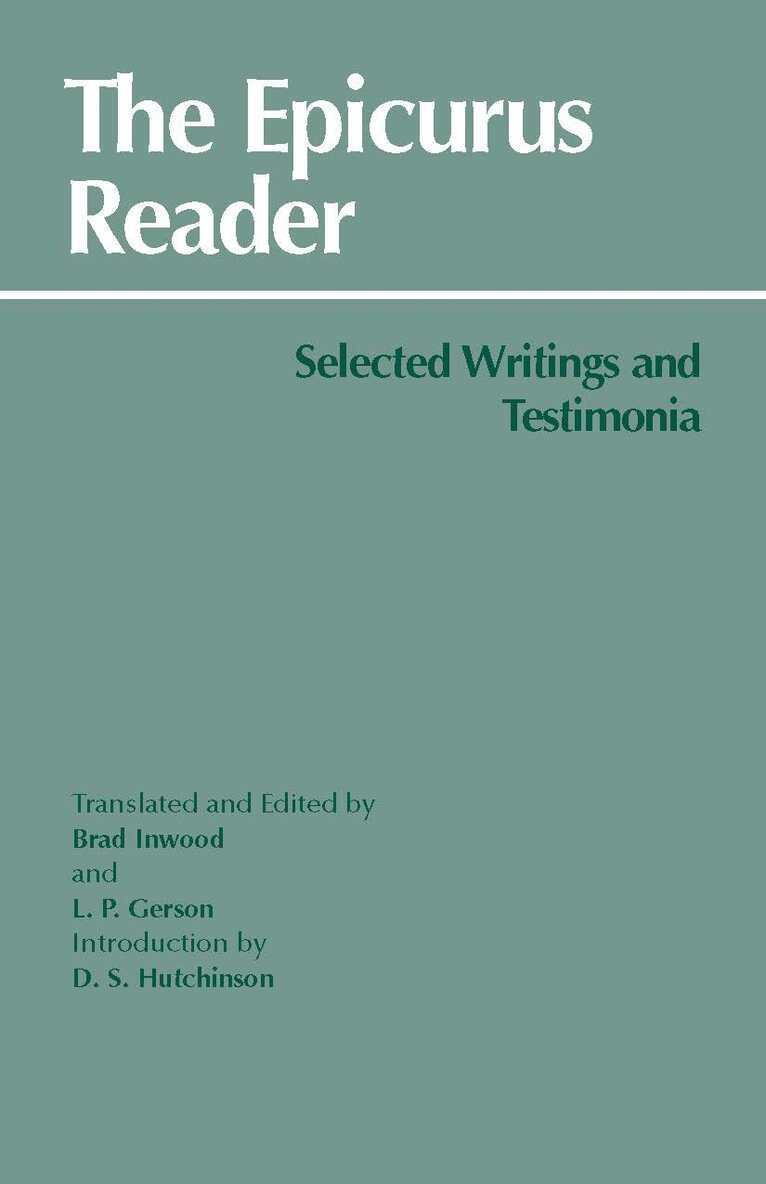
TABLE OF CONTENTS:IntroductionThe ancient biography of EpicurusThe extant lettersAncient collections of maximsDoxographical reportsThe testimony of CiceroThe testimony of LucretiusThe polemic of PlutarchShort fragments and testimonia from known works:* From On Nature* From the Puzzles* From On the Goal* From the Symposium* From Against Theophrastus* Fragments of Epicurus' lettersShort fragments and testimonia from uncertain works:* Logic and epistemology* Physics and theology* EthicsIndex
363 kr
Skickas inom 7-10 vardagar
Plato's moral realism rests on the Idea of the Good, the unhypothetical first principle of all. It is this, as Plato says, that makes just things useful and beneficial. That Plato makes the first principle of all the Idea of the Good sets his approach apart from that of virtually every other philosopher. This fact has been occluded by later Christian Platonists who tried to identify the Good with the God of scripture. But for Plato, theology, though important, is subordinate to metaphysics. For this reason, ethics is independent of theology and attached to metaphysics. This book challenges many contemporary accounts of Plato's ethics that start with the so-called Socratic paradoxes and attempt to construct a psychology of action or moral psychology that makes these paradoxes defensible. Rather, Lloyd Gerson argues that Plato at least never thought that moral realism was defensible outside of a metaphysical framework.
1 126 kr
Skickas inom 7-10 vardagar
Plato's moral realism rests on the Idea of the Good, the unhypothetical first principle of all. It is this, as Plato says, that makes just things useful and beneficial. That Plato makes the first principle of all the Idea of the Good sets his approach apart from that of virtually every other philosopher. This fact has been occluded by later Christian Platonists who tried to identify the Good with the God of scripture. But for Plato, theology, though important, is subordinate to metaphysics. For this reason, ethics is independent of theology and attached to metaphysics. This book challenges many contemporary accounts of Plato's ethics that start with the so-called Socratic paradoxes and attempt to construct a psychology of action or moral psychology that makes these paradoxes defensible. Rather, Lloyd Gerson argues that Plato at least never thought that moral realism was defensible outside of a metaphysical framework.
1 455 kr
Kommande
This book argues that the key to understanding the philosophical connections between Plato and Proclus is found in Proclus' extant commentaries on the dialogues. Although none are complete, they comprise some 3000 pages of detailed exegesis and philosophical argument. Lloyd P. Gerson examines each of these commentaries and demonstrates how Proclus' constructive metaphysics is dedicated to filling in 'gaps' in Plato's own presentation of a philosophical system, gaps that Plato himself repeatedly flags in the dialogues. He shows that Proclus draws out many of the implications of what Plato says, supplies major premises in arguments that are missing, and makes crucial distinctions in terminology that are only implicit in Plato. Gerson asks whether Plato's philosophy and Proclus' philosophy stand or fall together and argues that the answer is highly relevant to understanding the nature of the dominant philosophical doctrine in the West for 2,000 years, namely, Platonism.
534 kr
Kommande
This book argues that the key to understanding the philosophical connections between Plato and Proclus is found in Proclus' extant commentaries on the dialogues. Although none are complete, they comprise some 3000 pages of detailed exegesis and philosophical argument. Lloyd P. Gerson examines each of these commentaries and demonstrates how Proclus' constructive metaphysics is dedicated to filling in 'gaps' in Plato's own presentation of a philosophical system, gaps that Plato himself repeatedly flags in the dialogues. He shows that Proclus draws out many of the implications of what Plato says, supplies major premises in arguments that are missing, and makes crucial distinctions in terminology that are only implicit in Plato. Gerson asks whether Plato's philosophy and Proclus' philosophy stand or fall together and argues that the answer is highly relevant to understanding the nature of the dominant philosophical doctrine in the West for 2,000 years, namely, Platonism.
314 kr
Skickas inom 10-15 vardagar
"Gerson's book is a highly valuable, well-written contribution to Platonism research. It persuasively makes a case for understanding Plato's philosophy as a coherent system that has an intricate and meaningful relation to later Platonistic philosophical positions. From this point, Plato appears as a Platonist indeed."— Claas Lattman ― CLASSICAL JOURNALWas Plato a Platonist? While ancient disciples of Plato would have answered this question in the affirmative, modern scholars have generally denied that Plato’s own philosophy was in substantial agreement with that of the Platonists of succeeding centuries. In From Plato to Platonism, Lloyd P. Gerson argues that the ancients are correct in their assessment. He arrives at this conclusion in an especially ingenious manner, challenging fundamental assumptions about how Plato’s teachings have come to be understood. Through deft readings of the philosophical principles found in Plato's dialogues and in the Platonic tradition beginning with Aristotle, he shows that Platonism, broadly conceived, is the polar opposite of naturalism and that the history of philosophy from Plato until the seventeenth century was the history of various efforts to find the most consistent and complete version of "anti-naturalism."Gerson contends that the philosophical position of Plato-Plato’s own Platonism, so to speak-was produced out of a matrix he calls "Ur-Platonism." According to Gerson, Ur-Platonism is the conjunction of five "antis" that in total arrive at anti-naturalism: anti-nominalism, anti-mechanism, anti-materialism, anti-relativism, and anti-skepticism. Plato’s Platonism is an attempt to construct the most consistent and defensible positive system uniting the five "antis." It is also the system that all later Platonists throughout Antiquity attributed to Plato when countering attacks from critics including Peripatetics, Stoics, and Sceptics.In conclusion, Gerson shows that Late Antique philosophers such as Proclus were right in regarding Plotinus as "the great exegete of the Platonic revelation."
1 518 kr
Skickas inom 10-15 vardagar
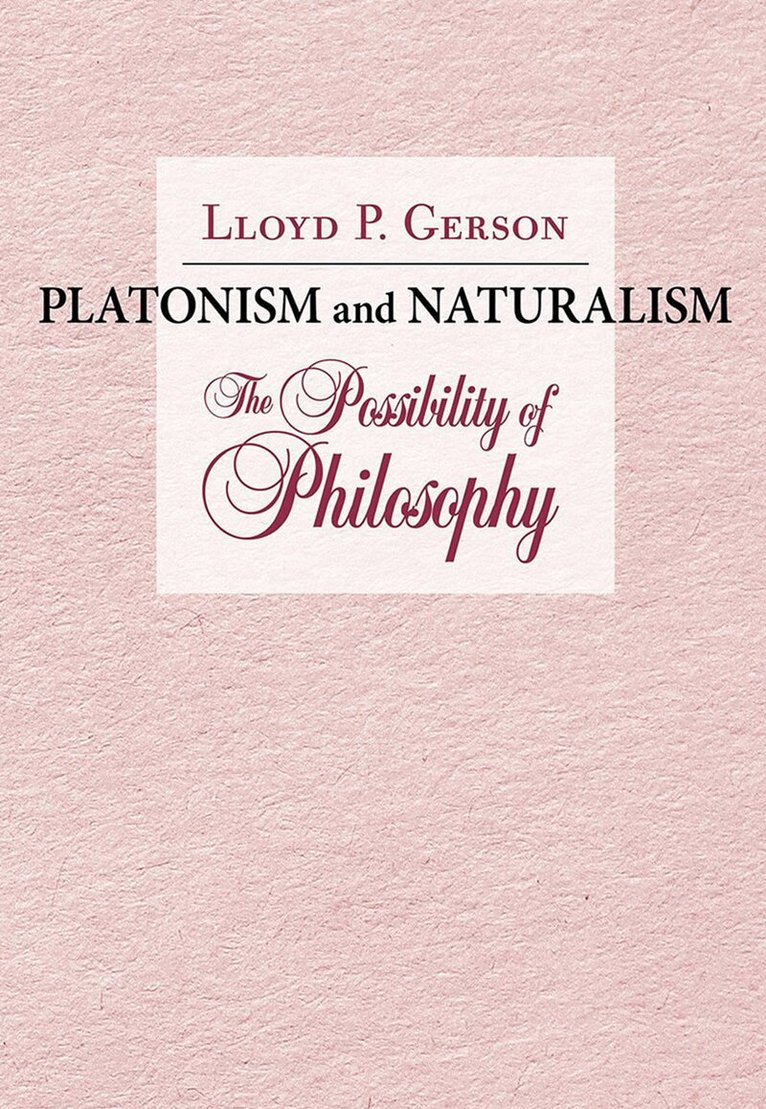
In his third and concluding volume, Lloyd P. Gerson presents an innovative account of Platonism, the central tradition in the history of philosophy, in conjunction with Naturalism, the "anti-Platonism" in antiquity and contemporary philosophy. Gerson contends that Platonism identifies philosophy with a distinct subject matter, namely, the intelligible world and seeks to show that the Naturalist rejection of Platonism entails the elimination of a distinct subject matter for philosophy. Thus, the possibility of philosophy depends on the truth of Platonism. From Aristotle to Plotinus to Proclus, Gerson clearly links the construction of the Platonic system well beyond simply Plato's dialogues, providing strong evidence of the vast impact of Platonism on philosophy throughout history. Platonism and Naturalism concludes that attempts to seek a rapprochement between Platonism and Naturalism are unstable and likely indefensible.
394 kr
Skickas inom 10-15 vardagar
In his third and concluding volume, Lloyd P. Gerson presents an innovative account of Platonism, the central tradition in the history of philosophy, in conjunction with Naturalism, the "anti-Platonism" in antiquity and contemporary philosophy. Gerson contends that Platonism identifies philosophy with a distinct subject matter, namely, the intelligible world and seeks to show that the Naturalist rejection of Platonism entails the elimination of a distinct subject matter for philosophy. Thus, the possibility of philosophy depends on the truth of Platonism. From Aristotle to Plotinus to Proclus, Gerson clearly links the construction of the Platonic system well beyond simply Plato's dialogues, providing strong evidence of the vast impact of Platonism on philosophy throughout history. Platonism and Naturalism concludes that attempts to seek a rapprochement between Platonism and Naturalism are unstable and likely indefensible.
1 579 kr
Kommande
Unearthing Platonism explores various aspects of Platonism, the dominant philosophical tradition in the west until the nineteenth century. Contemporary Plato scholarship, however, rejects a distinct philosophical position properly called "Platonism." The very idea that Plato has a philosophical "system" is mostly held to be anathema within the English-speaking academic world, but prevailed among self-declared Platonists for nearly 800 years. Lloyd P. Gerson challenges this view as he "unearths" Platonism in both historical and theoretical essays. Historical essays explore Plato's engagement with the history of philosophy as he knew it and also how his most prominent disciples understood the architecture of the Platonic system as well as the dynamic principles according to which it operates. Theoretical essays focus on the Idea of the Good, what Plato calls "the unhypothetical first principle of all," the world of Forms and the eternal Intellect contemplating them, the soul, and the human person. Unearthing Platonism shows that underlying Plato's dialogues there is a philosophical system. Recognizing this system enables us to resolve many interpretative issues that repeatedly turn up in contemporary scholarship.
347 kr
Kommande
Unearthing Platonism explores various aspects of Platonism, the dominant philosophical tradition in the west until the nineteenth century. Contemporary Plato scholarship, however, rejects a distinct philosophical position properly called "Platonism." The very idea that Plato has a philosophical "system" is mostly held to be anathema within the English-speaking academic world, but prevailed among self-declared Platonists for nearly 800 years. Lloyd P. Gerson challenges this view as he "unearths" Platonism in both historical and theoretical essays. Historical essays explore Plato's engagement with the history of philosophy as he knew it and also how his most prominent disciples understood the architecture of the Platonic system as well as the dynamic principles according to which it operates. Theoretical essays focus on the Idea of the Good, what Plato calls "the unhypothetical first principle of all," the world of Forms and the eternal Intellect contemplating them, the soul, and the human person. Unearthing Platonism shows that underlying Plato's dialogues there is a philosophical system. Recognizing this system enables us to resolve many interpretative issues that repeatedly turn up in contemporary scholarship.
712 kr
Skickas inom 11-20 vardagar
The Plotinus Reader provides a generous selection of translations from the fifty-four treatises that together make up the Enneads of Plotinus, a central work in the history of philosophy. They were prepared by a team of specialists in ancient philosophy and edited by Lloyd P. Gerson. Based on the definitive critical edition of the Greek along with decades of additional textual criticism by many scholars, these translations aim to provide a readable, accurate rendering of Plotinus’s often very difficult language. Included are extensive references to Plotinus’s sources, scores of cross-references, and an extensive glossary of technical terms.