L.M. Kopelman - Böcker
Visar alla böcker från författaren L.M. Kopelman. Handla med fri frakt och snabb leverans.
9 produkter
9 produkter
1 589 kr
Skickas inom 10-15 vardagar
K. Danner Clouser is one of the most important figures in establishing and shaping the fields of medical ethics, bioethics and the philosophy of education in the second half of the 20th century. Clouser challenged many established approaches to moral theory and offered innovative strategies for integrating the humanities into professional education, especially that of physicians and nurses. The contributions in this text contain a critical review of his contributions and bring together internationally known figures in bioethics, medical ethics and philosophy of medicine to comment upon Clouser's work. These leaders of the field include Tom Beauchamp, Daniel Callahan, James Childress, Nancy Dubler, H. Tristram Engelhardt, Al Jonsen, Loretta Kopelman, Larry McCullough, John Moskop, and Robert Veatch. This book should be useful for those interested in bioethics, philosophy of medicine, medical ethics, philosophy, medical education, religious studies, and nursing education.
1 636 kr
Skickas inom 10-15 vardagar
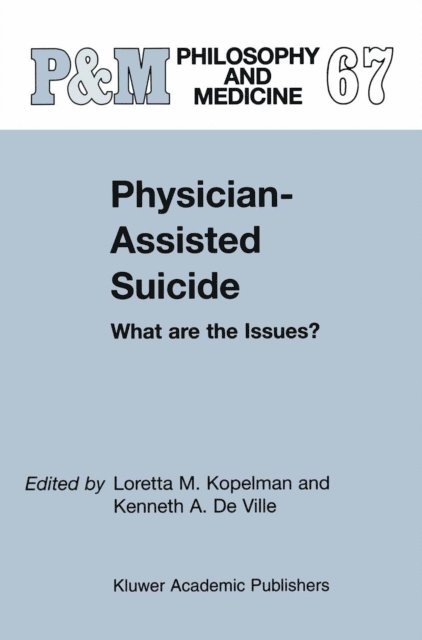
Physician-Assisted Suicide: What are the Issues? offers a detailed discussion of recent supreme court rulings that have had an impact on the contemporary debate in the United States and elsewhere over physician-assisted suicide. Two rulings by the U.S. Supreme Court have altered the contemporary debate on physician-assisted suicide: Washington v. Glucksberg (1997) and Vacco v. Quill (1997). In these cases, the Supreme Court ruled that state laws could prohibit assisted suicide and, therefore, physician-assisted suicide. These rulings mark the apex of over two decades of unprecedented litigation regarding end-of-life care and signal the beginning of a new clinical, ethical, and legal debate over the extent of an individual's rights to control the timing, manner, and means of his/her death. The debate over suicide and assisting suicide is ancient and contentious and intertwined with questions about the permissibility of voluntary active euthanasia or mercy killing. Responses to these issues can be divided into those who defend physician-assisted suicide and many of these other activities and those who object. But those who object may do so on principled grounds in that they regard these activities as wrong in all cases, or non-principled, in that they believe there are more prudent, less disruptive or more efficient policies. The authors in this book sort out these responses and look at the assumptions underlying them. Several of these authors give startling new interpretations that a culture gap, deeper and wider than that in the abortion debate, exists.
1 589 kr
Skickas inom 10-15 vardagar
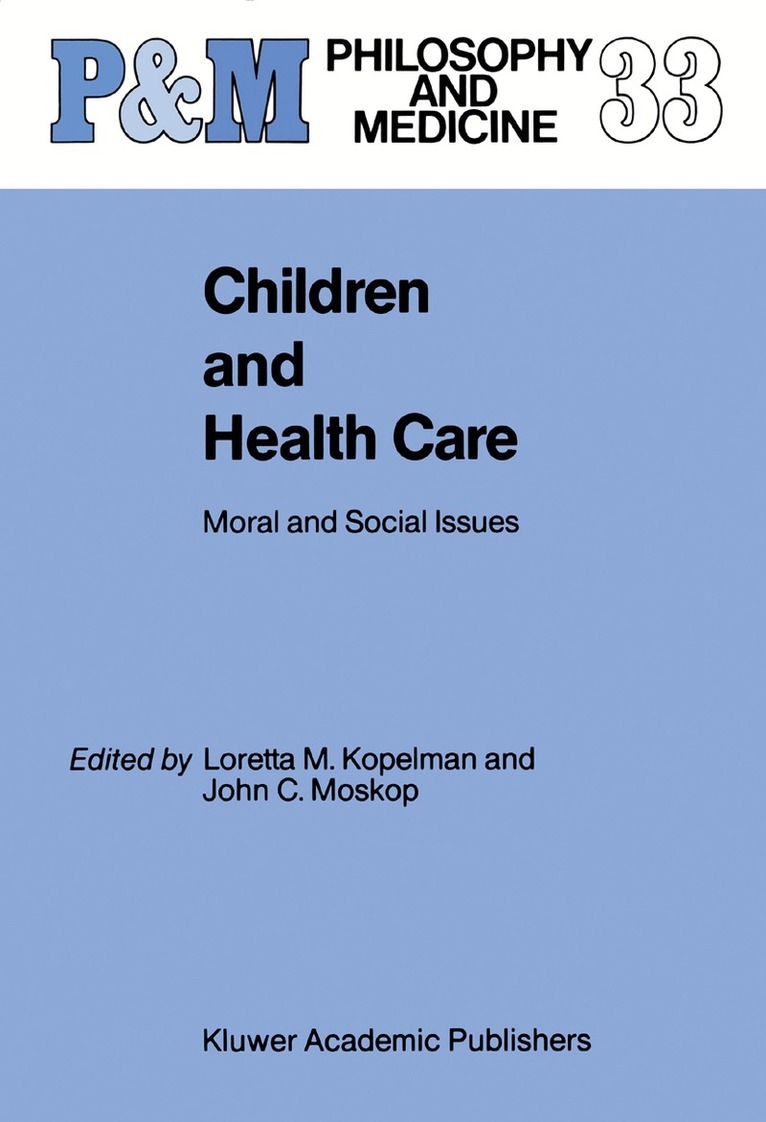
Before a separate Department of Medical Humanities was formed, the editors of this volume were faculty members of the Department of Pediatrics at our medical school. Colleagues daily spoke of the moral and social problems of children's health care. Our offices were near the examining rooms where children had their bone-marrow procedures done. Since this is a painful test, we often heard them cry. The hospital floor where the sickest children stayed was also nearby. The physicians, nurses, and social workers believed that children's health care needs were not being met and that more could and should be done. Fewer resources are available for a child than for an adult with a comparable illness, they said. These experiences prompted us to prepare this volume and to ask whether children do get their fair share of the health care dollar. Since the question "What kind of health care do we owe to our children?" is complex, responses should be rooted in many disciplines. These include philosophy, law, public policy and, of course, the health professions. Representing all of these disciplines, contributors to this volume reflect on moral and social issues in children's health care. The last hundred years have brought great changes in health care tor children. The specialty of pediatrics developed during this period, and with it, a new group of advocates for children's health care. Women's suffrage gave a political boost to the recognition of children's special health needs.
1 589 kr
Skickas inom 10-15 vardagar
This volume offers a collection of writings on ethical issues regarding retarded persons. Because this important subject has been generally omitted from formal discussions of ethics, there is a great deal which needs to be addressed in a theoretical and critical way. Of course, many people have been very concerned with practical matters concerning the care of retarded persons such as what liberties, entitlements or advocacy they should have. Interestingly, because so much practical attention has been given to issues which are not discussed by ethical theorists, they offer a rare opportunity to evaluate ethical theories themselves. That is, certain theories which appear convincing on other subjects seem implausible when they are applied to reasoned and com pelling views we hold concerning retarded individuals. Our subject, then, has both practical and conceptual dimensions. More over, because it is one where pertinent information comes from many sources, contributors to this volume represent many fields, including philosophy, religion, history, law and medicine. We regret that it was not possible to include more points of view, like those of psychologists, sociologists, nurses and families. There is however, a good and longstanding literature on mental retardation from these perspectives.
1 057 kr
Skickas inom 7-10 vardagar
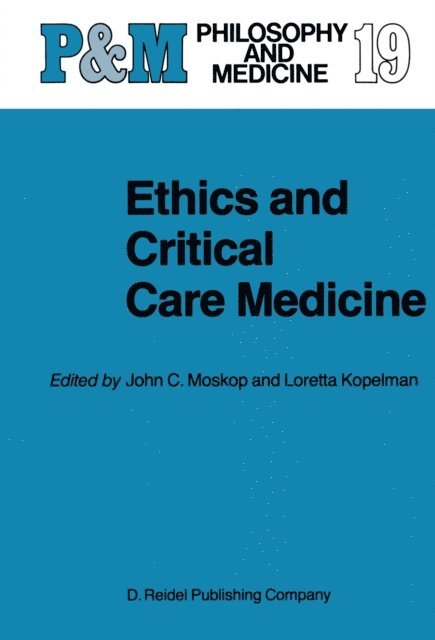
The expense of critical care and emergency medicine, along with widespread expectations for good care when the need arises, pose hard moral and political problems. How should we spend our tax d'ollars, and who should get help? The purpose of this volume is to reflect upon our choices. The authors whose papers appear herein identify major difficulties and offer various solutions to them. Four topics are discussed throughout the volume: First, encounters between patients and health professionals in critical situations in general, and where scarcity makes rationing necessary; second, allocation and social policy, including how much to spend on preventive, chronic or critical care medicine, or for medicine in general compared to other important social projects; third, conflicts between or ranking of important goals and values; and fourth, conceptual issues affecting the choices we make. Since these topics are raised by the authors in almost every essay, we did not divide the papers into separate sections within the volume. Warren Reich begins the volume with a parable illustrating a key problem for contemporary medicine and two very different approaches to its solution. His story begins with the "delivery" of three indigent, critically ill, foreign patients to the emergency room of a large American private hospital. Although the hospital is legally bound to care for these patients, providing long term, high cost care for them and others soon becomes a major financial strain.
1 589 kr
Skickas inom 10-15 vardagar
K. Danner Clouser is one of the most important figures in establishing and shaping the fields of medical ethics, bioethics, and the philosophy of education in the second half of the twentieth century. Clouser challenged many established approaches to moral theory and offered innovative strategies for integrating the humanities into professional education, especially that of physicians and nurses. The contributions published in Building Bioethics: Conversations with Clouser and Friends on Medical Ethics are unique both in their devotion to a critical review of his contributions, and in bringing together internationally known figures in bioethics, medical ethics, and philosophy of medicine to comment upon Clouser's work. These leaders of the field include Tom Beauchamp, Daniel Callahan, James Childress, Nancy Dubler, H. Tristram Engelhardt, Al Jonsen, Loretta Kopelman, Larry McCullough, John Moskop, and Robert Veatch. This book merits special attention from those interested in bioethics, philosophy of medicine, medical ethics, philosophy, medical education, religious studies, and nursing education.
1 589 kr
Skickas inom 10-15 vardagar
This volume offers a collection of writings on ethical issues regarding retarded persons. Because this important subject has been generally omitted from formal discussions of ethics, there is a great deal which needs to be addressed in a theoretical and critical way. Of course, many people have been very concerned with practical matters concerning the care of retarded persons such as what liberties, entitlements or advocacy they should have. Interestingly, because so much practical attention has been given to issues which are not discussed by ethical theorists, they offer a rare opportunity to evaluate ethical theories themselves. That is, certain theories which appear convincing on other subjects seem implausible when they are applied to reasoned and com pelling views we hold concerning retarded individuals. Our subject, then, has both practical and conceptual dimensions. More over, because it is one where pertinent information comes from many sources, contributors to this volume represent many fields, including philosophy, religion, history, law and medicine. We regret that it was not possible to include more points of view, like those of psychologists, sociologists, nurses and families. There is however, a good and longstanding literature on mental retardation from these perspectives.
1 062 kr
Skickas inom 10-15 vardagar
The expense of critical care and emergency medicine, along with widespread expectations for good care when the need arises, pose hard moral and political problems. How should we spend our tax d'ollars, and who should get help? The purpose of this volume is to reflect upon our choices. The authors whose papers appear herein identify major difficulties and offer various solutions to them. Four topics are discussed throughout the volume: First, encounters between patients and health professionals in critical situations in general, and where scarcity makes rationing necessary; second, allocation and social policy, including how much to spend on preventive, chronic or critical care medicine, or for medicine in general compared to other important social projects; third, conflicts between or ranking of important goals and values; and fourth, conceptual issues affecting the choices we make. Since these topics are raised by the authors in almost every essay, we did not divide the papers into separate sections within the volume. Warren Reich begins the volume with a parable illustrating a key problem for contemporary medicine and two very different approaches to its solution. His story begins with the "delivery" of three indigent, critically ill, foreign patients to the emergency room of a large American private hospital. Although the hospital is legally bound to care for these patients, providing long term, high cost care for them and others soon becomes a major financial strain.
1 589 kr
Skickas inom 10-15 vardagar
Before a separate Department of Medical Humanities was formed, the editors of this volume were faculty members of the Department of Pediatrics at our medical school. Colleagues daily spoke of the moral and social problems of children's health care. Our offices were near the examining rooms where children had their bone-marrow procedures done. Since this is a painful test, we often heard them cry. The hospital floor where the sickest children stayed was also nearby. The physicians, nurses, and social workers believed that children's health care needs were not being met and that more could and should be done. Fewer resources are available for a child than for an adult with a comparable illness, they said. These experiences prompted us to prepare this volume and to ask whether children do get their fair share of the health care dollar. Since the question "What kind of health care do we owe to our children?" is complex, responses should be rooted in many disciplines. These include philosophy, law, public policy and, of course, the health professions. Representing all of these disciplines, contributors to this volume reflect on moral and social issues in children's health care. The last hundred years have brought great changes in health care tor children. The specialty of pediatrics developed during this period, and with it, a new group of advocates for children's health care. Women's suffrage gave a political boost to the recognition of children's special health needs.