Lois Beck - Böcker
Visar alla böcker från författaren Lois Beck. Handla med fri frakt och snabb leverans.
6 produkter
6 produkter
290 kr
Skickas inom 7-10 vardagar
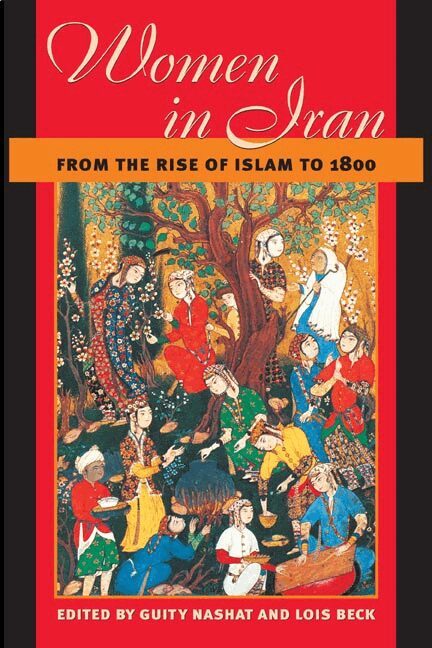
Combining scholarship from a range of disciplines, this collection of essays is a comprehensive examination of the role of women in Iranian society and culture, from pre-Islamic times to 1800. The contributors challenge common assumptions about women in Iran and Islam. Sweeping away modern myths, these essays show that women have had significant influence in almost every area of Iranian life. Focusing on a region wider than today's nation-state of Iran, this book explores developments in the spheres that most affect women: gender constructs, family structure, community roles, education, economic participation, Islamic practices and institutions, politics, and artistic representations. The contributors to this volume are prominent international scholars working in this field, and each draws on decades of research to address the history of Iranian women within the context of his or her area of expertise. This broad framework allows for a thorough and nuanced examination of the history of a complex society.
221 kr
Skickas inom 11-20 vardagar
The role of women in Iran has often been downplayed or obscured, particularly in the modern era. This volume demonstrates that women have long played important roles in different facets of Iranian society. Together with its companion, Women in Iran from the Rise of Islam to 1800, this volume completes a two-book project on the central importance of Iranian women from pre-Islamic times through the creation and establishment of the Islamic Republic. It includes essays from various disciplines by prominent scholars who examine women's roles in politics, society, and culture and the rise and development of the women's movement before and during the Islamic Republic. Several contributors address the issue of regional, ethnic, linguistic, and tribal diversity in Iran, which has long contained complex, heterogeneous societies.
684 kr
Skickas inom 3-6 vardagar
2 235 kr
Skickas inom 10-15 vardagar
Examining the rapid transition in Iran from a modernizing, westernizing, secularizing monarchy (1941-79) to a hard-line, conservative, clergy-run Islamic republic (1979-), this book focuses on the ways this process has impacted the Qashqa’i—a rural, nomadic, tribally organized, Turkish-speaking, ethnic minority of a million and a half people who are dispersed across the southern Zagros Mountains.Analysing the relationship between the tribal polity and each of the two regimes, the book goes on to explain the resilience of the people’s tribal organizations, kinship networks, and politicized ethnolinguistic identities to demonstrate how these structures and ideologies offered the Qashqa’i a way to confront the pressures emanating from the two central governments. Existing scholarly works on politics in Iran rarely consider Iranian society outside the capital of Tehran and beyond the reach of the details of national politics. Local-level studies on Iran—accounts of the ways people actually lived—are now rare, especially after the revolution. Based on long-term anthropological research, Nomads in Postrevolutionary Iran provides a unique insight into how national-level issues relate to the local level and will be of interest to scholars and researchers in Anthropolgy, Iranian Studies and Middle Eastern Studies.
695 kr
Skickas inom 10-15 vardagar
Examining the rapid transition in Iran from a modernizing, westernizing, secularizing monarchy (1941-79) to a hard-line, conservative, clergy-run Islamic republic (1979-), this book focuses on the ways this process has impacted the Qashqa’i—a rural, nomadic, tribally organized, Turkish-speaking, ethnic minority of a million and a half people who are dispersed across the southern Zagros Mountains.Analysing the relationship between the tribal polity and each of the two regimes, the book goes on to explain the resilience of the people’s tribal organizations, kinship networks, and politicized ethnolinguistic identities to demonstrate how these structures and ideologies offered the Qashqa’i a way to confront the pressures emanating from the two central governments. Existing scholarly works on politics in Iran rarely consider Iranian society outside the capital of Tehran and beyond the reach of the details of national politics. Local-level studies on Iran—accounts of the ways people actually lived—are now rare, especially after the revolution. Based on long-term anthropological research, Nomads in Postrevolutionary Iran provides a unique insight into how national-level issues relate to the local level and will be of interest to scholars and researchers in Anthropolgy, Iranian Studies and Middle Eastern Studies.
1 906 kr
Kommande
In the wake of Iran's revolution in 1978-79, a fundamentalist Islamic theocracy took control of the country. These dramatic changes impacted all sectors of society including a vast array of diverse peoples and cultures. In this book, Lois Beck provides an anthropological and historical account of Iran's many minorities. She focuses on the aftermath of the revolution, declaration of an Islamic republic, and Iraq-Iran war. Drawing on six decades of anthropological research, Beck provides frameworks for understanding how each of Iran's linguistic, religious, ethnic, ethno-national, and tribal minorities fashioned unique identities. These identities stem from factors relating to history, location, socioeconomic patterns, and sociocultural traits. They reflect the people's interactions with Iran's rulers and governments as they changed over time. A modern nation-state cannot be fully understood without knowing the extent of its reach in the peripheries and border regions and among its diverse peoples. This landmark study challenges existing scholarly accounts by offering broad and detailed perspectives on Iran's many distinct languages, religions, ethnicities, ethno-nations, and tribes.