Lois Gordon - Böcker
Visar alla böcker från författaren Lois Gordon. Handla med fri frakt och snabb leverans.
6 produkter
6 produkter
304 kr
Skickas inom 7-10 vardagar
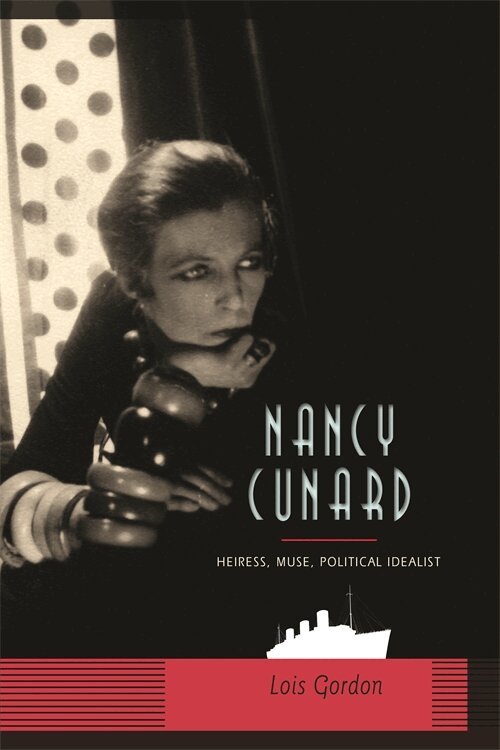
Lois Gordon's absorbing biography tells the story of a writer, activist, and cultural icon who embodied the dazzling energy and tumultuous spirit of her age, and whom William Carlos Williams once called "one of the major phenomena of history." Nancy Cunard (1896-1965) led a life that surpasses Hollywood fantasy. The only child of an English baronet (and heir to the Cunard shipping fortune) and an American beauty, Cunard abandoned the world of a celebrated socialite and Jazz Age icon to pursue a lifelong battle against social injustice as a wartime journalist, humanitarian aid worker, and civil rights champion. Cunard fought fascism on the battlefields of Spain and reported firsthand on the atrocities of the French concentration camps. Intelligent and beautiful, she romanced the great writers of her era, including three Nobel Prize winners, and was the inspiration for characters in the works of Ezra Pound, T. S. Eliot, Aldous Huxley, Pablo Neruda, Samuel Beckett, and Ernest Hemingway, among others. Cunard was also a prolific poet, publisher, and translator and, after falling in love with a black American jazz pianist, became deeply committed to fighting for black rights.She edited the controversial anthology Negro, the first comprehensive study of the achievement and plight of blacks around the world. Her contributors included Langston Hughes, W. E. B. Du Bois, and Zora Neale Hurston, among scores of others. Cunard's personal life was as complex as her public persona. Her involvement with the civil rights movement led her to be ridiculed and rejected by both family and friends. Throughout her life, she was plagued by insecurities and suffered a series of breakdowns, struggling with a sense of guilt over her promiscuous behavior and her ability to survive so much war and tragedy. Yet Cunard's writings also reveal an immense kindness and wit, as well as her renowned, often flamboyant defiance of prejudiced social conventions. Drawing on diaries, correspondence, historical accounts, and the remembrances of others, Lois Gordon revisits the major movements of the first half of the twentieth century through the life of a truly gifted and extraordinary woman. She also returns Nancy Cunard to her rightful place as a major figure in the historical, social, and artistic events of a critical era.
323 kr
Tillfälligt slut
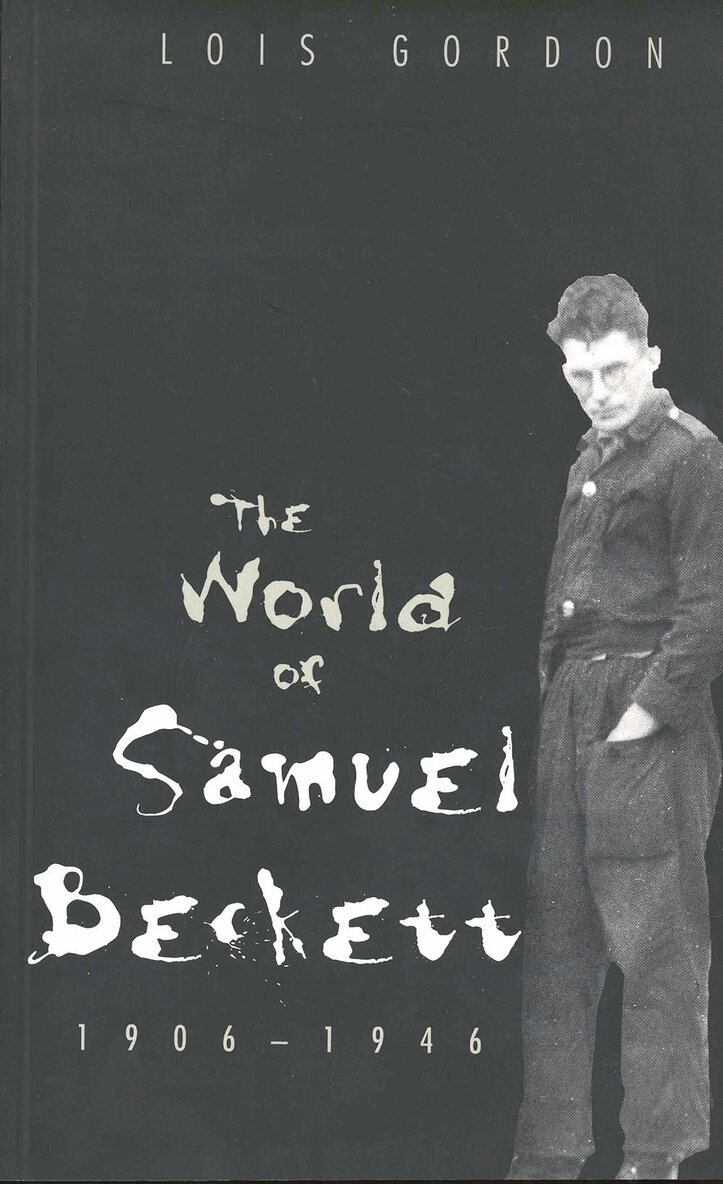
Samuel Beckett, whose play Waiting for Godot was one of the most influential works for the post-World War II generation, has long been identified with the debilitated and impotent characters he created. In this provocative book, Lois Gordon offers a new perspective on Beckett, challenging the prevalent image of him as reclusive, self-absorbed, and disturbed. Gordon investigates the first forty years of Beckett's life and finds that he was, on the contrary, a kind and generous man who responded sensitively and even heroically to the world around him.Gordon describes the various places and events that affected Beckett during this formative period: war-torn Dublin during the Easter Uprising and World War I, where he spent his childhood and student days; Belfast and Paris in the 1920s and London during the Depression, where he lived and worked; Germany in 1937, where he traveled and witnessed Hitler's brutal domestic policies; prewar and occupied France, where he was active in the Resistance (for which he was later decorated); and the war-ravaged town of Saint-Lô in Normandy, which he helped to restore following the liberation. Gordon also portrays the individuals who were important to Beckett, including Jack B. Yeats, Alfred Péron, Thomas McGreevy, and, most significantly, James Joyce, who was a model for Beckett personally, artistically, and politically. Gordon argues convincingly that Beckett was very much aware of the political and cultural turmoil of this period and that the enormously creative works he wrote after World War II can, in fact, be viewed as a product of and testament to those tumultuous times.
2 140 kr
Skickas inom 3-6 vardagar
This mesmerizing book is the ultimate American almanac, a unique record of life in the United States since 1900. For the first time, all the news, entertainment, art, literature, science and technology, sports, and fashion highlights are recorded in a single book, and this documentation is enriched by anecdotes, facts and figures, ads and fads, headlines, and memorable quotations—as well by as more than a thousand photographs. And in addition to the listings, a lively and perceptive essay by Lois and Alan Gordon introduces each decade, capturing the flavor of each period. The section on the 1900s, for example, commemorates Teddy Roosevelt, conservation, the first movie theater, the first World Series, vaudeville, ragtime, Henry James, and Frank Lloyd Wright. The section on the fifties considers the significance of Joseph McCarthy, I Like Ike, The Man in the Gray Flannel Suit, The Power of Positive Thinking, “Father Knows Best,” “Rebel Without a Cause,” The Lonely Crowd, Marilyn Monroe, Rosa Parks, and Sputnik. With its extraordinary wealth of information, American Chronicle ultimately conveys the unique imprint of each year and provides the stuff of contemporary memory. It will evoke and expand the contexts of all our lives.
458 kr
Skickas inom 5-8 vardagar
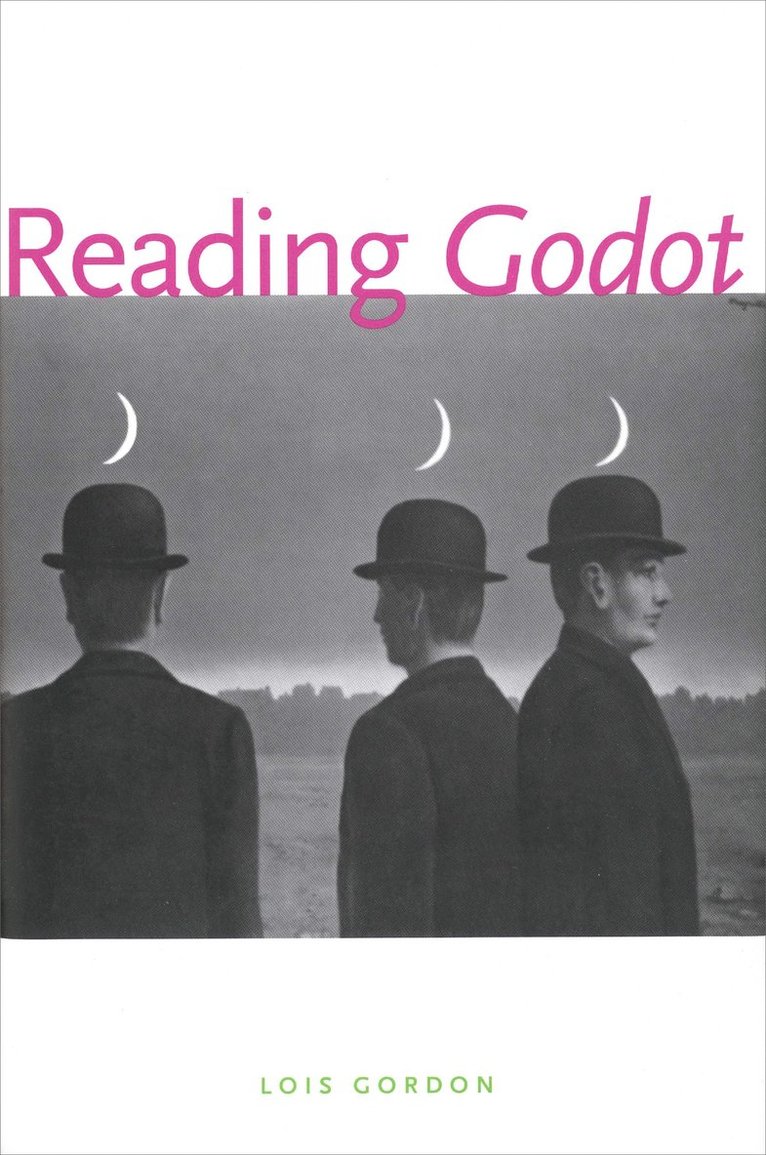
Waiting for Godot has been acclaimed as the greatest play of the twentieth century. It is also the most elusive: two lifelong friends sing, dance, laugh, weep, and question their fate on a road that descends from and goes nowhere. Throughout, they repeat their intention “Let’s go,” but this is inevitably followed by the direction “(They do not move.).” This is Beckett’s poetic construct of the human condition.Lois Gordon, author of The World of Samuel Beckett, has written a fascinating and illuminating introduction to Beckett’s great work for general readers, students, and specialists. Critically sophisticated and historically informed, it approaches the play scene by scene, exploring the text linguistically, philosophically, critically, and biographically. Gordon argues that the play portrays more than the rational mind’s search for self and worldly definition. It also dramatizes Beckett’s insights into human nature, into the emotional life that frequently invades rationality and liberates, victimizes, or paralyzes the individual. Gordon shows that Beckett portrays humanity in conflict with mysterious forces both within and outside the self, that he is an artist of the psychic distress born of relativism.
620 kr
Skickas inom 10-15 vardagar
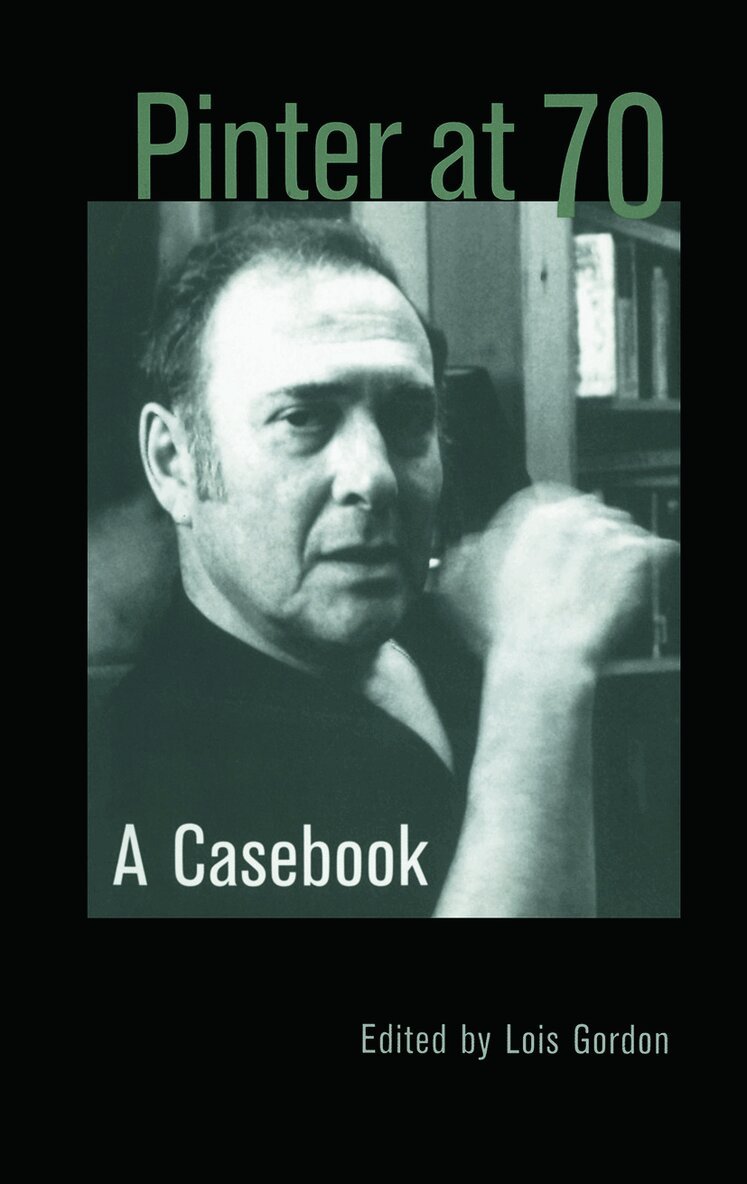
This comprehensive and authoritative casebook includes cornerstone essays on Pinter's creative process, his politics, film adaptations, and acting career. It also includes a collection of photos found nowhere else that document Pinter's "golden time"--his early acting days in Ireland--, a substantial introduction, a chronology, and bibliography.
292 kr
Tillfälligt slut