Lois McNay - Böcker
Visar alla böcker från författaren Lois McNay. Handla med fri frakt och snabb leverans.
10 produkter
10 produkter
1 396 kr
Skickas inom 5-8 vardagar
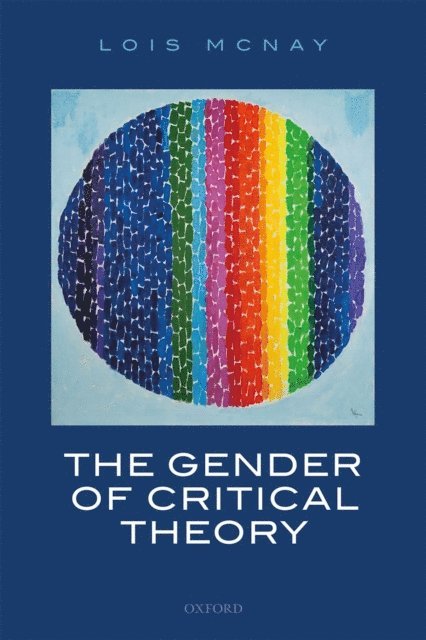
Frankfurt School Critical Theory describes itself as an unmasking critique of power. However, it has surprisingly little to say about major structural oppressions, including gender. A distinctive feature of critique is that, in diagnosing what is wrong with the world, it ought to be guided by the experiences of oppressed groups. Yet, in practice, it tends to pay little heed to these experiences. The Gender of Critical Theory shows how these oversights and tensions stem from the preoccupation with normative foundations that has dominated Frankfurt School theory since Habermas and has given rise to a mode of paradigm-led inquiry that undermines an effective critique of oppression. The assumption of paradigm-led inquiry that too strong a focus on lived experience has parochializing effects on theory stands in tension with its other tenet that emancipatory critique ought to be primarily concerned with the situation of oppressed groups. To alleviate this tension, this book offers a reconfigured account of context-transcendence as the critical insight afforded not by a monist interpretative paradigm but by reasoning dialogically across experiential and theoretical perspectives. By bringing feminist work on gender to bear on Frankfurt School critical theory, it argues that, far from stymying emancipatory critique, attentiveness to the experiences of oppressed groups is one of its enabling conditions. Lived experience can reveal dimensions to oppression that are not necessarily visible from the external vantage point of the theorist. The ways in which vulnerable groups respond to their circumstances may also make an invaluable contribution to the development of models of transformative social practice. Combining feminist ideas with inherent but underutilised resources in the Frankfurt School tradition, this book proposes the idea of critique as theorising from experience.
427 kr
Skickas inom 5-8 vardagar
Frankfurt School Critical Theory describes itself as an unmasking critique of power. However, it has surprisingly little to say about major structural oppressions, including gender. A distinctive feature of critique is that, in diagnosing what is wrong with the world, it ought to be guided by the experiences of oppressed groups. Yet, in practice, it tends to pay little heed to these experiences. The Gender of Critical Theory shows how these oversights and tensions stem from the preoccupation with normative foundations that has dominated Frankfurt School theory since Habermas and has given rise to a mode of paradigm-led inquiry that undermines an effective critique of oppression. The assumption of paradigm-led inquiry that too strong a focus on lived experience has parochializing effects on theory stands in tension with its other tenet that emancipatory critique ought to be primarily concerned with the situation of oppressed groups. To alleviate this tension, this book offers a reconfigured account of context-transcendence as the critical insight afforded not by a monist interpretative paradigm but by reasoning dialogically across experiential and theoretical perspectives. By bringing feminist work on gender to bear on Frankfurt School critical theory, it argues that, far from stymying emancipatory critique, attentiveness to the experiences of oppressed groups is one of its enabling conditions. Lived experience can reveal dimensions to oppression that are not necessarily visible from the external vantage point of the theorist. The ways in which vulnerable groups respond to their circumstances may also make an invaluable contribution to the development of models of transformative social practice. Combining feminist ideas with inherent but underutilised resources in the Frankfurt School tradition, this book proposes the idea of critique as theorising from experience.
237 kr
Skickas inom 11-20 vardagar
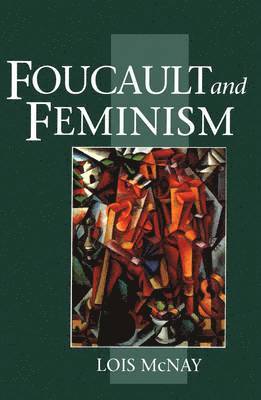
This book offers a systematic attempt to explore the point of convergance between feminist theory and the work of Michel Foucault.
237 kr
Skickas inom 11-20 vardagar
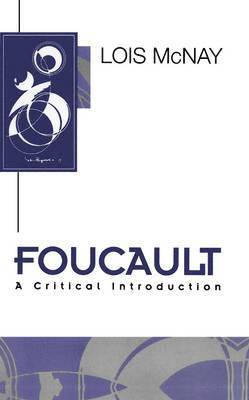
This work provides an introduction to the work of Michel Foucault. It offers an assessment of all of Foucault's work, including his final writings on governmentality and the self. McNay argues that the later work initiates an important shift in his intellectual concerns which alters any retrospective reading of his writings as a whole. Throughout, McNay is concerned to assess the normative and political implications of Foucault's social criticism. She goes beyond the level of many commentators to look at the values from which Foucault's work springs and reveals the implicit assumptions underlying his social critique. The author also provides an account and assessment of recent literature on Foucault, including that of Habermas and Taylor. She discusses Foucault's position in the modernity/postmodernity debate, his own ambivalence to Enlightenment thought and his place in recent developments in feminist and cultural theory.
716 kr
Skickas inom 7-10 vardagar
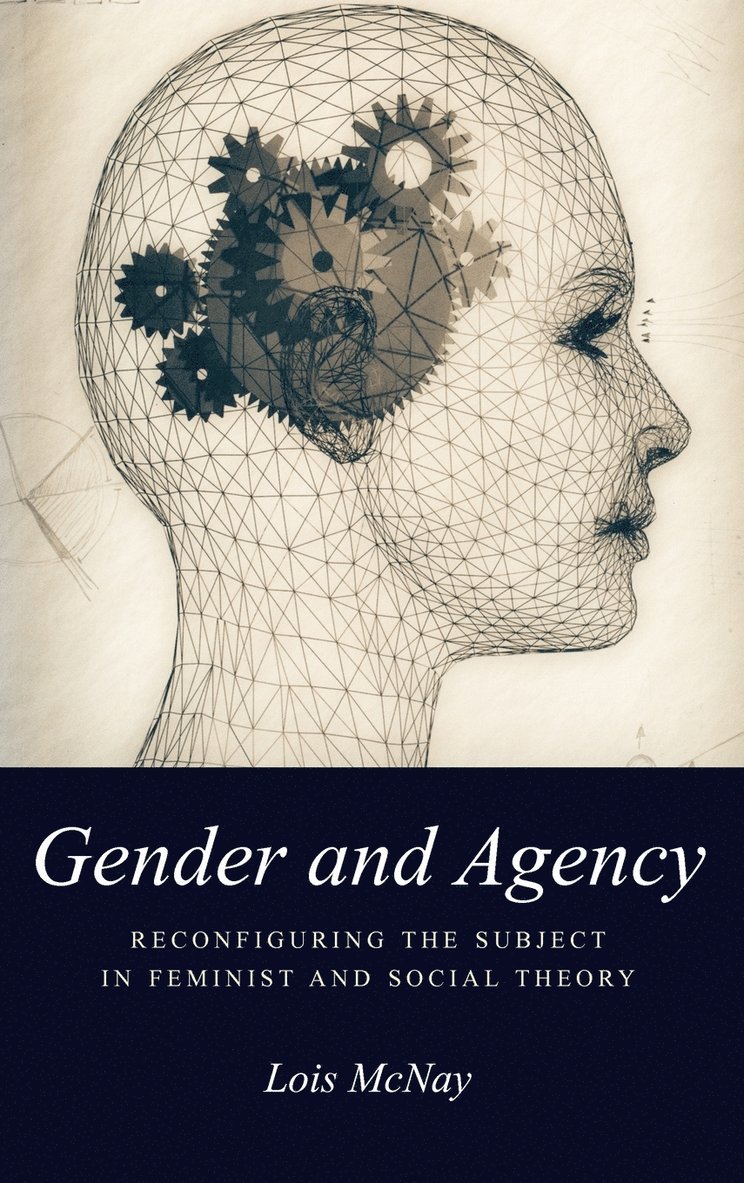
This book reassesses theories of agency and gender identity against the backdrop of changing relations between men and women in contemporary societies. McNay argues that recent thought on the formation of the modern subject offers a one-sided or negative account of agency, which underplays the creative dimension present in the responses of individuals to changing social relations. An understanding of this creative element is central to a theory of autonomous agency, and also to an explanation of the ways in which women and men negotiate changes within gender relations. In exploring the implications of this idea of agency for a theory of gender identity, McNay brings together the work of leading feminist theorists - such as Judith Butler and Nancy Fraser - with the work of key continental social theorists. In particular, she examines the work of Pierre Bourdieu, Paul Ricoeur and Cornelius Castoriadis, each of whom has explored different aspects of the idea of the creativity of action. McNay argues that their thought has interesting implications for feminist ideas of gender, but these have been relatively neglected partly because of the huge influence of the work of Michel Foucault and Jacques Lacan in this area. She argues that, despite its suggestive nature, feminist theory must move away from the ideas of Foucault and Lacan if a more substantive account of agency is to be introduced into ideas of gender identity.This book will appeal to students and scholars in the areas of social theory, gender studies and feminist theory.
230 kr
Skickas inom 7-10 vardagar
This book reassesses theories of agency and gender identity against the backdrop of changing relations between men and women in contemporary societies. McNay argues that recent thought on the formation of the modern subject offers a one-sided or negative account of agency, which underplays the creative dimension present in the responses of individuals to changing social relations. An understanding of this creative element is central to a theory of autonomous agency, and also to an explanation of the ways in which women and men negotiate changes within gender relations. In exploring the implications of this idea of agency for a theory of gender identity, McNay brings together the work of leading feminist theorists - such as Judith Butler and Nancy Fraser - with the work of key continental social theorists. In particular, she examines the work of Pierre Bourdieu, Paul Ricoeur and Cornelius Castoriadis, each of whom has explored different aspects of the idea of the creativity of action. McNay argues that their thought has interesting implications for feminist ideas of gender, but these have been relatively neglected partly because of the huge influence of the work of Michel Foucault and Jacques Lacan in this area. She argues that, despite its suggestive nature, feminist theory must move away from the ideas of Foucault and Lacan if a more substantive account of agency is to be introduced into ideas of gender identity.This book will appeal to students and scholars in the areas of social theory, gender studies and feminist theory.
716 kr
Skickas inom 7-10 vardagar
The idea of the struggle for recognition features prominently in the work of various thinkers from Charles Taylor and Jurgen Habermas to Axel Honneth and Nancy Fraser who are concerned with the centrality of issues of identity in modern society. In differing ways, these thinkers use the idea of recognition to develop accounts of the individual which are opposed to the asocial individualism of liberal thought and to the abstraction of much work on the subject. The idea of recognition expresses the notion that individuality is an intersubjective phenomenon formed through pragmatic interactions with others. By highlighting the intersubjective features of individuality, the idea of recognition has both descriptive and normative content and it has important implications for a feminist account of gender identity.In this brilliant and original book, Lois McNay argues that the insights of the recognition theorists are undercut by their reliance on an inadequate account of power. The idea of recognition relies on an account of social relations as extrapolations of a primal dyad of interaction that overlooks the complex ways in which individuality is connected to abstract social structures in contemporary society. Using Bourdieu's relational sociology, McNay develops an alternative account of individual agency that connects identity to structure. By focussing on issues of gender identity and agency, she opens up new pathways to move beyond the oppositions between material and cultural feminisms.
294 kr
Skickas inom 5-8 vardagar
The idea of the struggle for recognition features prominently in the work of various thinkers from Charles Taylor and Jurgen Habermas to Axel Honneth and Nancy Fraser who are concerned with the centrality of issues of identity in modern society. In differing ways, these thinkers use the idea of recognition to develop accounts of the individual which are opposed to the asocial individualism of liberal thought and to the abstraction of much work on the subject. The idea of recognition expresses the notion that individuality is an intersubjective phenomenon formed through pragmatic interactions with others. By highlighting the intersubjective features of individuality, the idea of recognition has both descriptive and normative content and it has important implications for a feminist account of gender identity.In this brilliant and original book, Lois McNay argues that the insights of the recognition theorists are undercut by their reliance on an inadequate account of power. The idea of recognition relies on an account of social relations as extrapolations of a primal dyad of interaction that overlooks the complex ways in which individuality is connected to abstract social structures in contemporary society. Using Bourdieu's relational sociology, McNay develops an alternative account of individual agency that connects identity to structure. By focussing on issues of gender identity and agency, she opens up new pathways to move beyond the oppositions between material and cultural feminisms.
716 kr
Skickas inom 7-10 vardagar
There has been a lively debate amongst political theorists about whether certain liberal concepts of democracy are so idealized that they lack relevance to ‘real’ politics. Echoing these debates, Lois McNay examines in this book some theories of radical democracy and argues that they too tend to rely on troubling abstractions - or what she terms ‘socially weightless’ thinking. They often propose ideas of the political that are so far removed from the logic of everyday practice that, ultimately, their supposed emancipatory potential is thrown into question. Radical democrats frequently maintain that what distinguishes their ideas of the political from others is the fundamental concern with unmasking and challenging unrecognized forms of inequality and domination that distort everyday life. But this supposed attentiveness to power is undermined by the invocation of rarefied models of political action that treat agency as an unproblematic given and overlook certain features of the embodied experience of oppression. The tendency of radical democrats to define democratic agency in terms of dynamics of perpetual flux, mobility and agonism passes over too swiftly the way in which objective structures of oppression are often taken into the body as subjective dispositions, leaving individuals with the feeling that they are unable to do little more than endure a state of affairs beyond their control. Drawing on the work of Adorno, Bourdieu and Honneth, amongst others, McNay argues that in order to make good the critique of power, radical democratic theory should attend more closely to a phenomenology of negative social experience and what it can reveal about the social conditions necessary for effective political agency.
244 kr
Skickas inom 7-10 vardagar
There has been a lively debate amongst political theorists about whether certain liberal concepts of democracy are so idealized that they lack relevance to ‘real’ politics. Echoing these debates, Lois McNay examines in this book some theories of radical democracy and argues that they too tend to rely on troubling abstractions - or what she terms ‘socially weightless’ thinking. They often propose ideas of the political that are so far removed from the logic of everyday practice that, ultimately, their supposed emancipatory potential is thrown into question. Radical democrats frequently maintain that what distinguishes their ideas of the political from others is the fundamental concern with unmasking and challenging unrecognized forms of inequality and domination that distort everyday life. But this supposed attentiveness to power is undermined by the invocation of rarefied models of political action that treat agency as an unproblematic given and overlook certain features of the embodied experience of oppression. The tendency of radical democrats to define democratic agency in terms of dynamics of perpetual flux, mobility and agonism passes over too swiftly the way in which objective structures of oppression are often taken into the body as subjective dispositions, leaving individuals with the feeling that they are unable to do little more than endure a state of affairs beyond their control. Drawing on the work of Adorno, Bourdieu and Honneth, amongst others, McNay argues that in order to make good the critique of power, radical democratic theory should attend more closely to a phenomenology of negative social experience and what it can reveal about the social conditions necessary for effective political agency.