Lolita Buckner Inniss - Böcker
Visar alla böcker från författaren Lolita Buckner Inniss. Handla med fri frakt och snabb leverans.
4 produkter
4 produkter
693 kr
Skickas inom 7-10 vardagar
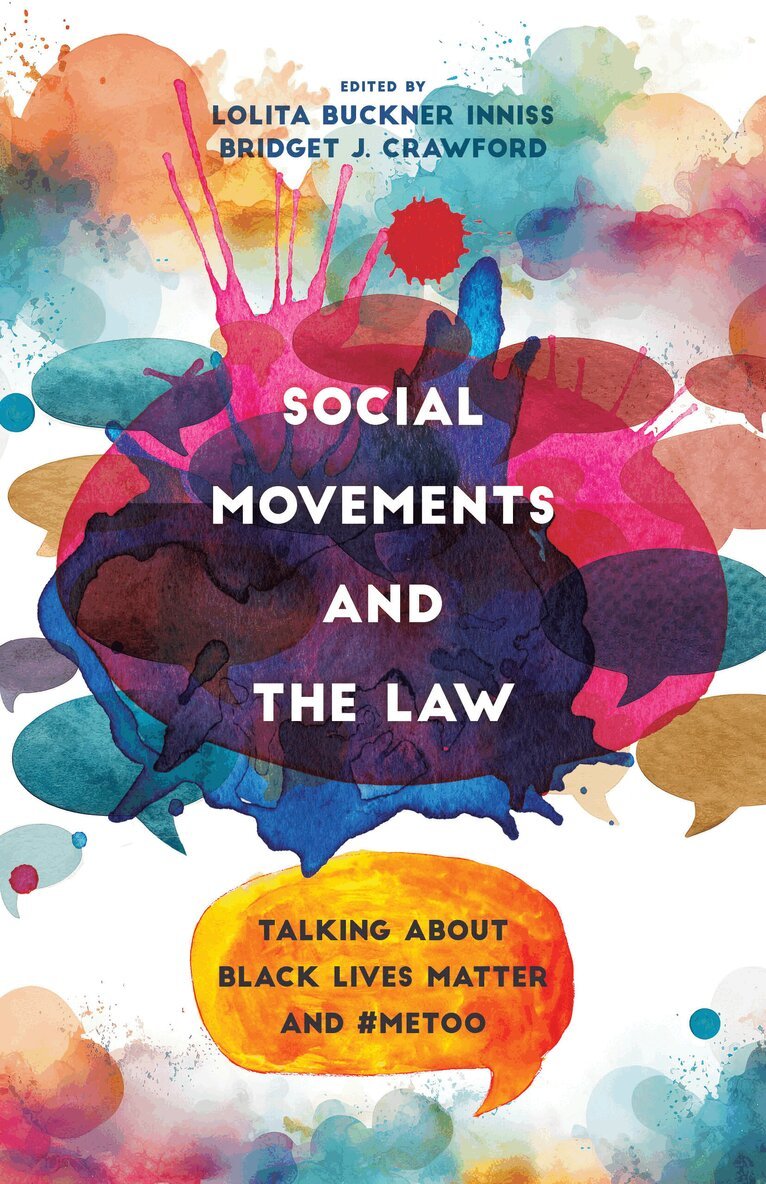
Black Lives Matter and #MeToo are two of the most prominent twenty-first-century social movements in the United States. On the ground and on social media, more people have taken an active stance in support of either or both movements than almost any others in the country's history. Social Movements and the Law brings together the voices of twelve scholars and public intellectuals to explore how Black Lives Matter and #MeToo unfolded—separately and together—and how they enrich, inform, and complicate each other. Structured in dialogues and punctuated with informative text boxes, illustrations, and discussion questions, this accessible guide to an increasingly influential area of the law centers rich intersectional analysis of both movements and prompts readers to undertake further reflection and conversation. At a time of heightened public attention to the broader implications of human social behavior and interaction, this book shows rather than tells how people with different perspectives can engage one another with open minds and generosity of spirit.
223 kr
Skickas inom 7-10 vardagar
Black Lives Matter and #MeToo are two of the most prominent twenty-first-century social movements in the United States. On the ground and on social media, more people have taken an active stance in support of either or both movements than almost any others in the country's history. Social Movements and the Law brings together the voices of twelve scholars and public intellectuals to explore how Black Lives Matter and #MeToo unfolded—separately and together—and how they enrich, inform, and complicate each other. Structured in dialogues and punctuated with informative text boxes, illustrations, and discussion questions, this accessible guide to an increasingly influential area of the law centers rich intersectional analysis of both movements and prompts readers to undertake further reflection and conversation. At a time of heightened public attention to the broader implications of human social behavior and interaction, this book shows rather than tells how people with different perspectives can engage one another with open minds and generosity of spirit.
869 kr
Skickas inom 7-10 vardagar
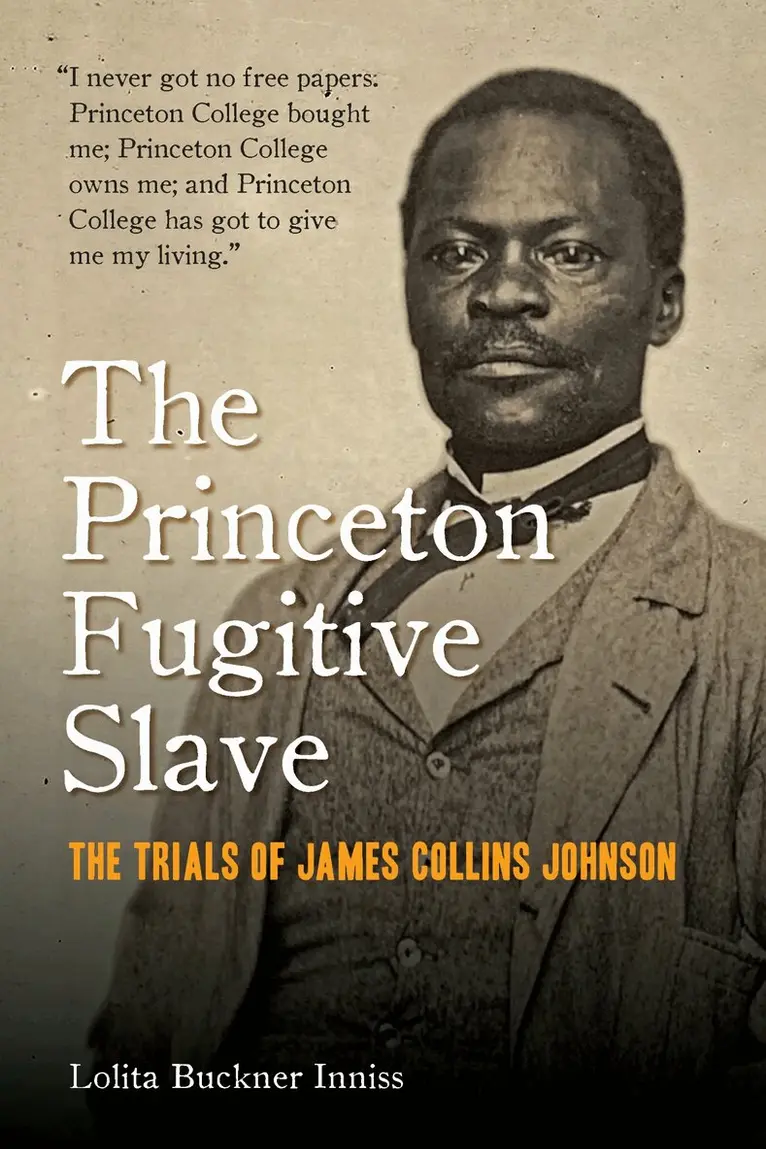
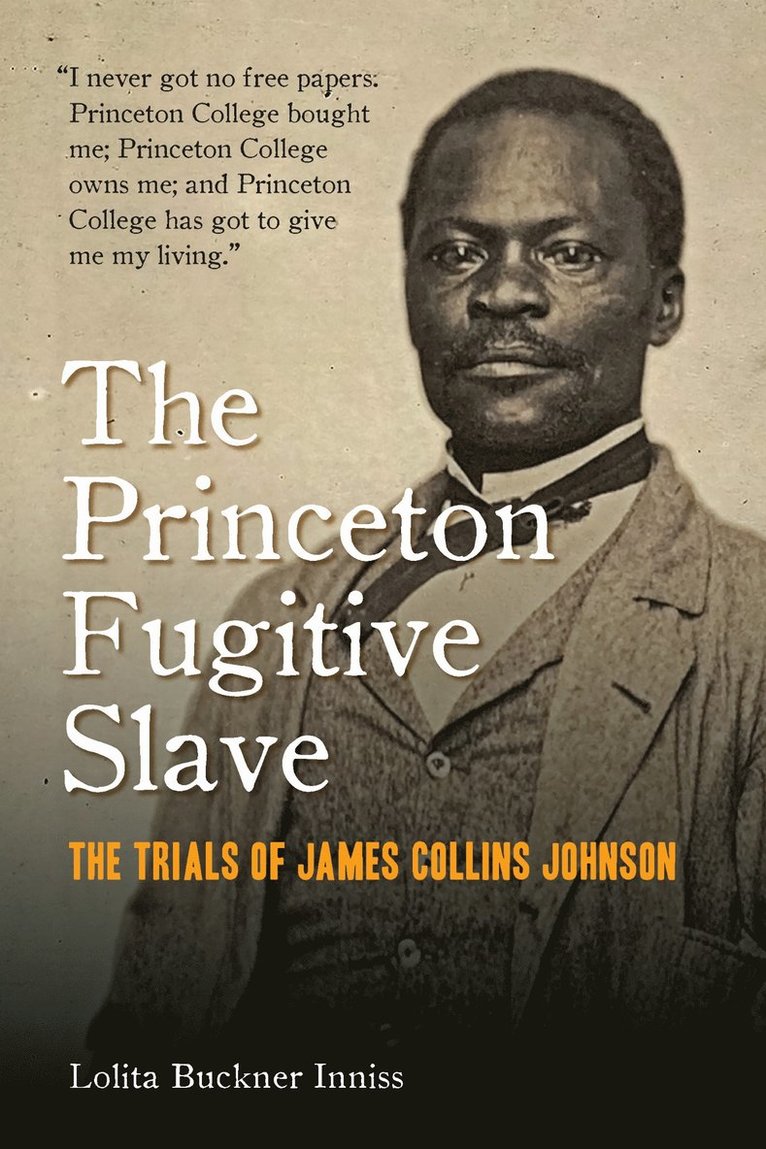
WINNER, NEW JERSEY STUDIES ACADEMIC ALLIANCE BOOK AWARDJames Collins Johnson made his name by escaping slavery in Maryland and fleeing to Princeton, New Jersey, where he built a life in a bustling community of African Americans working at what is now Princeton University. After only four years, he was recognized by a student from Maryland, arrested, and subjected to a trial for extradition under the 1793 Fugitive Slave Act. On the eve of his rendition, after attempts to free Johnson by force had failed, a local aristocratic white woman purchased Johnson's freedom, allowing him to avoid re-enslavement. The Princeton Fugitive Slave reconstructs James Collins Johnson's life, from birth and enslaved life in Maryland to his daring escape, sensational trial for re-enslavement, and last-minute change of fortune, and through to the end of his life in Princeton, where he remained a figure of local fascination.Stories of Johnson's life in Princeton often describe him as a contented, jovial soul, beloved on campus and memorialized on his gravestone as "The Students Friend." But these familiar accounts come from student writings and sentimental recollections in alumni reports—stories from elite, predominantly white, often southern sources whose relationships with Johnson were hopelessly distorted by differences in race and social standing. In interrogating these stories against archival records, newspaper accounts, courtroom narratives, photographs, and family histories, author Lolita Buckner Inniss builds a picture of Johnson on his own terms, piecing together the sparse evidence and disaggregating him from the other black vendors with whom he was sometimes confused.By telling Johnson's story and examining the relationship between antebellum Princeton's black residents and the economic engine that supported their community, the book questions the distinction between employment and servitude that shrinks and threatens to disappear when an individual's freedom is circumscribed by immobility, lack of opportunity, and contingency on local interpretations of a hotly contested body of law.
236 kr
Skickas inom 7-10 vardagar
WINNER, NEW JERSEY STUDIES ACADEMIC ALLIANCE BOOK AWARDJames Collins Johnson made his name by escaping slavery in Maryland and fleeing to Princeton, New Jersey, where he built a life in a bustling community of African Americans working at what is now Princeton University. After only four years, he was recognized by a student from Maryland, arrested, and subjected to a trial for extradition under the 1793 Fugitive Slave Act. On the eve of his rendition, after attempts to free Johnson by force had failed, a local aristocratic white woman purchased Johnson's freedom, allowing him to avoid re-enslavement. The Princeton Fugitive Slave reconstructs James Collins Johnson's life, from birth and enslaved life in Maryland to his daring escape, sensational trial for re-enslavement, and last-minute change of fortune, and through to the end of his life in Princeton, where he remained a figure of local fascination.Stories of Johnson's life in Princeton often describe him as a contented, jovial soul, beloved on campus and memorialized on his gravestone as "The Students Friend." But these familiar accounts come from student writings and sentimental recollections in alumni reports—stories from elite, predominantly white, often southern sources whose relationships with Johnson were hopelessly distorted by differences in race and social standing. In interrogating these stories against archival records, newspaper accounts, courtroom narratives, photographs, and family histories, author Lolita Buckner Inniss builds a picture of Johnson on his own terms, piecing together the sparse evidence and disaggregating him from the other black vendors with whom he was sometimes confused.By telling Johnson's story and examining the relationship between antebellum Princeton's black residents and the economic engine that supported their community, the book questions the distinction between employment and servitude that shrinks and threatens to disappear when an individual's freedom is circumscribed by immobility, lack of opportunity, and contingency on local interpretations of a hotly contested body of law.