London County Council – författare
Visar alla böcker från författaren London County Council. Handla med fri frakt och snabb leverans.
19 produkter
19 produkter
209 kr
Skickas inom 5-8 vardagar
389 kr
Skickas inom 5-8 vardagar
Arrest in the Growth of the Rateable Value of London
Report as to the Decrease in the Rateable Value of London Produced by the Quinquennial Valuation Which Came Into Force on the 6th April 1911
Häftad, Engelska, 2021
167 kr
Skickas inom 5-8 vardagar
278 kr
Skickas inom 5-8 vardagar
Note Book On the Parks, Gardens, Recreation Grounds, and Open Spaces of London
Inbunden, Engelska, 2022
348 kr
Tillfälligt slut
362 kr
Skickas inom 5-8 vardagar
209 kr
Skickas inom 5-8 vardagar
Proposed Demolition of Nineteen City Churches. Report by the Clerk of the Council and the Architct of the Council
Inbunden, Engelska, 2023
348 kr
Skickas inom 5-8 vardagar
570 kr
Skickas inom 5-8 vardagar
570 kr
Tillfälligt slut
570 kr
Skickas inom 5-8 vardagar
334 kr
Skickas inom 5-8 vardagar
Proposed Demolition of Nineteen City Churches. Report by the Clerk of the Council and the Architct of the Council
Häftad, Engelska, 2023
182 kr
Skickas inom 5-8 vardagar
500 kr
Tillfälligt slut
459 kr
Skickas inom 5-8 vardagar
500 kr
Skickas inom 5-8 vardagar
167 kr
Skickas inom 5-8 vardagar
1 591 kr
Tillfälligt slut
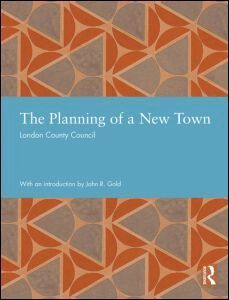
The publication of The Planning of a New Town in 1961 aroused remarkable interest. Its pages described a private new town, sponsored by the London County Council (LCC), to be built at Hook in Hampshire; a scheme that innovatively combined Garden City/New Town traditions with sensitivity to modern design. At its heart lay a multilevel and megastructural town centre intended to serve as a genuine focus for the gathering community, featuring shops and amenities placed on a pedestrian deck with cars and servicing beneath. The report itself proved extremely popular even though the New Town had fallen foul of political opposition at local and national levels and had been abandoned before any construction took place. It offers an insight into the flux of ideas that surrounded New Town development in the early 1960s. Analysing the world as it might have been not only identifies choices that were once available for shaping the built environment, it also often reveals once-cherished hopes and aspirations about how people might live in cities.