Loren Partridge - Böcker
Visar alla böcker från författaren Loren Partridge. Handla med fri frakt och snabb leverans.
3 produkter
3 produkter
332 kr
Skickas inom 7-10 vardagar
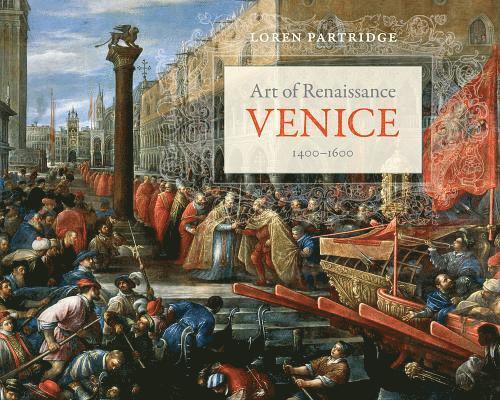
Chronicling the fifteenth and sixteenth centuries and journeying from the Piazza San Marco to the villas of the Veneto, this vivid and authoritative survey of architecture, sculpture, and painting offers a rich perspective on the history and artistic achievements of Renaissance Venice. Distinguished scholar Loren Partridge examines the masterpieces of Venice's urban design, civic buildings, churches, and palaces within their distinctive cultural and geographic milieus, exploring issues of function, style, iconography, patronage, and gender. Readers will also discover fascinating in-depth analyses of major works of such artists as Giovanni Bellini, Carpaccio, Giorgione, Palladio, Tintoretto, Titian, and Veronese. Designed to appeal to students and travelers alike, this essential guide to the art and architecture of Renaissance Venice brings La Serenissima to life as never before.
665 kr
Skickas inom 3-6 vardagar
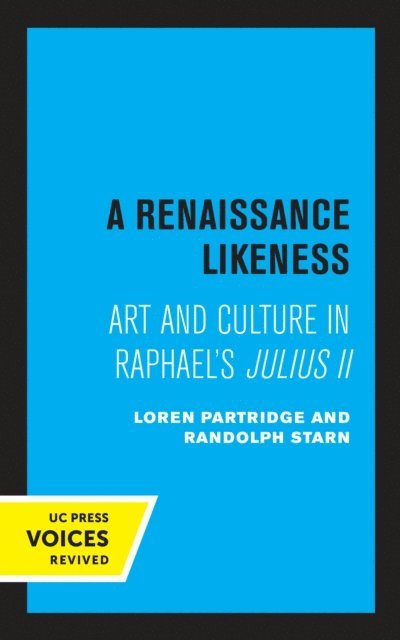
A Renaissance Likeness: Art and Culture in Raphael’s Julius II, by Loren Partridge and Randolph Starn, is both a focused study of one of Raphael’s most compelling portraits and a wide-ranging exploration of the cultural world it represents. At the center is Raphael’s Portrait of Pope Julius II, today in the National Gallery, London—a likeness created during a period of intense crisis and astonishing artistic achievement in early sixteenth-century Rome. Painted between 1511 and 1512, when Julius was facing military defeat, rebellion, and illness, the portrait captures not only the man but also the turbulent moment in which he ruled. Seen alongside Bramante’s architecture, Michelangelo’s Sistine Ceiling, and Raphael’s own frescoes in the papal apartments, the painting belongs to the great cycle of Julian projects that defined the High Renaissance.Partridge and Starn use Raphael’s portrait as a point of entry into the wider cultural and historical setting of Julian Rome. They examine how Julius II’s image circulated in medals, chronicles, and satire; how his character as papa terribile inspired admiration, fear, and critique; and how art functioned within a dense web of patronage, politics, and theology. Moving between close visual analysis and cultural history, the authors highlight the interplay of form, content, and style with the circumstances of patronage and power. In doing so, they resist narrow readings that treat the work solely as art object or historical document, instead revealing it as a microcosm of Renaissance culture. Richly interdisciplinary, A Renaissance Likeness restores Raphael’s Julius to its rightful place as both masterpiece and cultural artifact, showing how, in the renewed radiance of this portrait, art and history illuminate each other.This title is part of UC Press's Voices Revived program, which commemorates University of California Press’s mission to seek out and cultivate the brightest minds and give them voice, reach, and impact. Drawing on a backlist dating to 1893, Voices Revived makes high-quality, peer-reviewed scholarship accessible once again using print-on-demand technology. This title was originally published in 1980.
758 kr
Skickas inom 7-10 vardagar
A Renaissance Likeness: Art and Culture in Raphael’s Julius II, by Loren Partridge and Randolph Starn, is both a focused study of one of Raphael’s most compelling portraits and a wide-ranging exploration of the cultural world it represents. At the center is Raphael’s Portrait of Pope Julius II, today in the National Gallery, London—a likeness created during a period of intense crisis and astonishing artistic achievement in early sixteenth-century Rome. Painted between 1511 and 1512, when Julius was facing military defeat, rebellion, and illness, the portrait captures not only the man but also the turbulent moment in which he ruled. Seen alongside Bramante’s architecture, Michelangelo’s Sistine Ceiling, and Raphael’s own frescoes in the papal apartments, the painting belongs to the great cycle of Julian projects that defined the High Renaissance.Partridge and Starn use Raphael’s portrait as a point of entry into the wider cultural and historical setting of Julian Rome. They examine how Julius II’s image circulated in medals, chronicles, and satire; how his character as papa terribile inspired admiration, fear, and critique; and how art functioned within a dense web of patronage, politics, and theology. Moving between close visual analysis and cultural history, the authors highlight the interplay of form, content, and style with the circumstances of patronage and power. In doing so, they resist narrow readings that treat the work solely as art object or historical document, instead revealing it as a microcosm of Renaissance culture. Richly interdisciplinary, A Renaissance Likeness restores Raphael’s Julius to its rightful place as both masterpiece and cultural artifact, showing how, in the renewed radiance of this portrait, art and history illuminate each other.This title is part of UC Press's Voices Revived program, which commemorates University of California Press’s mission to seek out and cultivate the brightest minds and give them voice, reach, and impact. Drawing on a backlist dating to 1893, Voices Revived makes high-quality, peer-reviewed scholarship accessible once again using print-on-demand technology. This title was originally published in 1980.