Lorena De Vita - Böcker
Visar alla böcker från författaren Lorena De Vita. Handla med fri frakt och snabb leverans.
3 produkter
3 produkter
2 150 kr
Skickas inom 10-15 vardagar
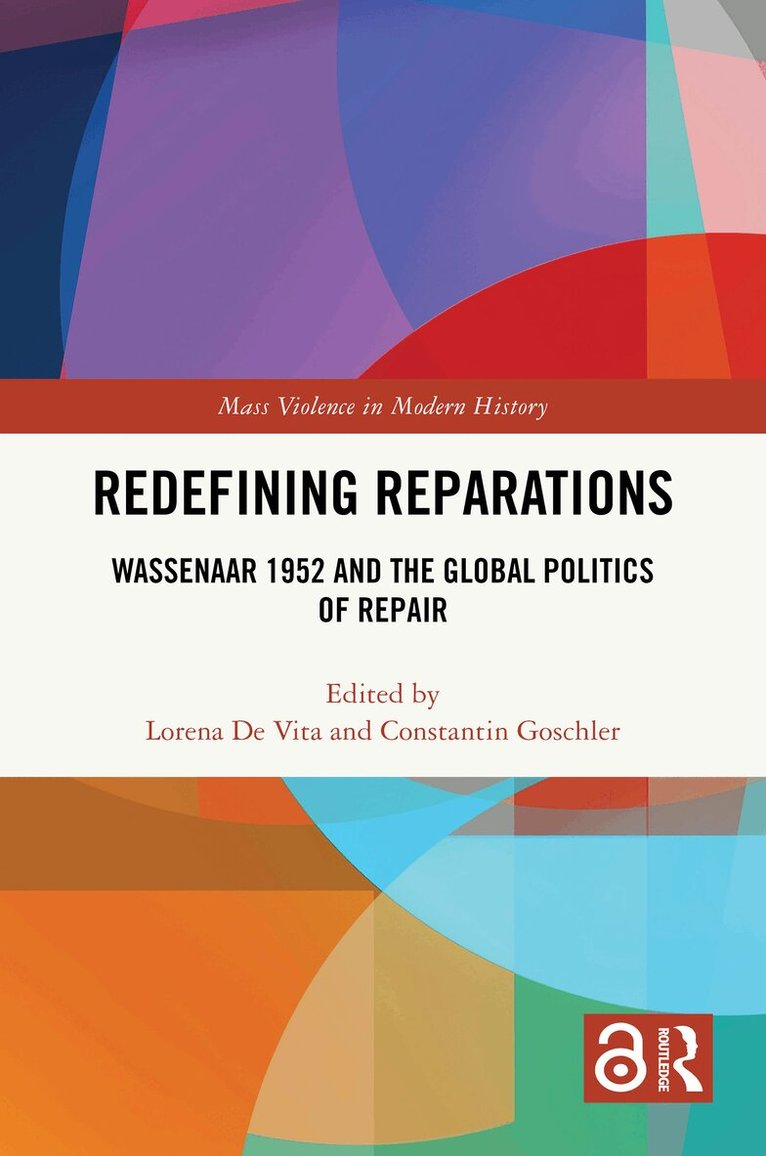
This edited volume offers a new interpretation of the historically momentous 1952 Wassenaar negotiations between representatives of the Federal Republic of Germany, Israel, and the Jewish Claims Conference to negotiate reparations, compensation, and restitution in the aftermath of the Holocaust.Wassenaar 1952 marked the first time that reparations were the subject of negotiations between representatives of victims and perpetrators following mass human rights violations and genocide. The reparations program that Germany established after the Holocaust eventually became a point of reference for many calling for reparations to deal with the aftermath of other atrocities – from colonialism to slavery – in contexts as diverse as Namibia, the United States, and beyond. Combining perspectives from history, anthropology, international relations, and transitional justice, this volume reassesses the course and global legacy of these negotiations.The book’s holistic and nuanced intervention in the study of the politics of repair makes it essential reading for students of history, law, transitional justice, and political science interested in the complex topic of reparations.The Introduction of this book is freely available as a downloadable Open Access PDF at http://www.taylorfrancis.com under a Creative Commons Attribution-Non Commercial-No Derivatives (CC BY-NC-ND) 4.0 license.
748 kr
Skickas
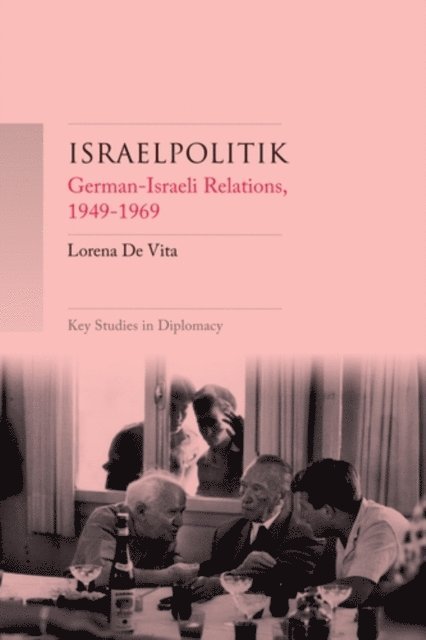
The rapprochement between Germany and Israel in the aftermath of the Holocaust is one of the most striking political developments of the twentieth century. German Chancellor Angela Merkel recently referred to it as a ‘miracle’. But how did this ‘miracle’ come about? In this book, Lorena De Vita traces the contradictions and dilemmas that shaped the making of German–Israeli relations at the outset of the global Cold War.Examining well known events like the Suez Crisis, the Eichmann Trial, and the Six-Day War, the book adopts a ‘pericentric’ perspective on the Cold War era, drawing attention to the actions and experiences of minor players within the confrontation and highlighting the consequences of their political calculations. Israelpolitik takes two of the most interesting dimensions of the Cold War – the German problem and the Middle East conflict – and weaves them together, providing a bipolar history of German-Israeli relations in the aftermath of the Holocaust.Drawing upon sources from both sides of the Iron Curtain and of the Arab–Israeli conflict, the book offers new insights not only into the early history of German–Israeli relations, but also into the dynamics of the Cold War competition between the two German states, as each attempted to strengthen its position in the Middle East and in the international arena while struggling with the legacy of the Nazi past.
354 kr
Skickas inom 5-8 vardagar
The rapprochement between Germany and Israel in the aftermath of the Holocaust is one of the most striking political developments of the twentieth century. German Chancellor Angela Merkel recently referred to it as a ‘miracle’. But how did this ‘miracle’ come about? In this book, Lorena De Vita traces the contradictions and dilemmas that shaped the making of German–Israeli relations at the outset of the global Cold War.Examining well known events like the Suez Crisis, the Eichmann Trial, and the Six-Day War, the book adopts a ‘pericentric’ perspective on the Cold War era, drawing attention to the actions and experiences of minor players within the confrontation and highlighting the consequences of their political calculations. Israelpolitik takes two of the most interesting dimensions of the Cold War – the German problem and the Middle East conflict – and weaves them together, providing a bipolar history of German-Israeli relations in the aftermath of the Holocaust.Drawing upon sources from both sides of the Iron Curtain and of the Arab–Israeli conflict, the book offers new insights not only into the early history of German–Israeli relations, but also into the dynamics of the Cold War competition between the two German states, as each attempted to strengthen its position in the Middle East and in the international arena while struggling with the legacy of the Nazi past.